Kennedy Space Center: Named for JFK a Week After Dallas
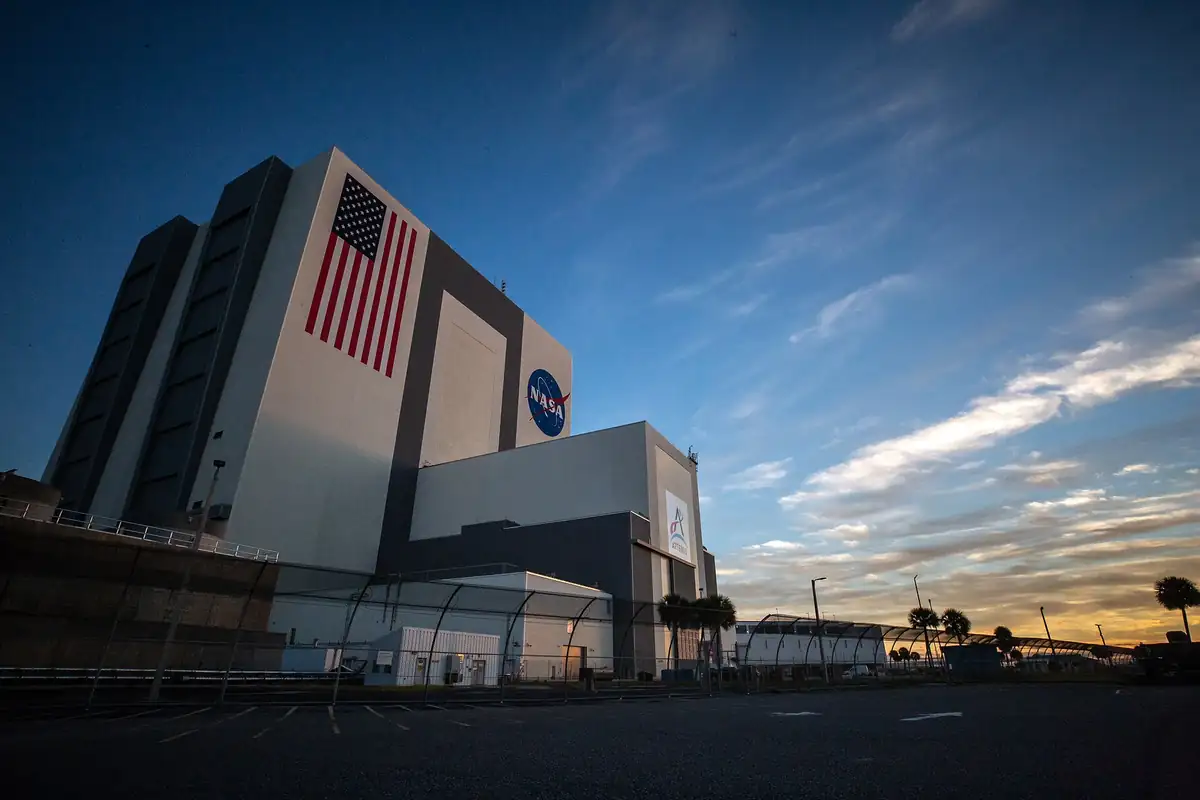
Kennedy Space Center got its name a week after John F. Kennedy died, when Lyndon B. Johnson renamed NASA’s Launch Operations Center for him. Johnson signed the order on November 29, 1963, and said in writing why he picked Kennedy: the Moon.
That makes this one of the easiest name stories you’ll ever check. There’s no legend to untangle and no old settler to quote. The reason is printed in a presidential order you can still read at the National Archives. The confusing part is next door, where a cape got the same name and then gave it back.
A launch center with a job title for a name
Before it honored anybody, the place had a name that just described the work. NASA’s history office says the Launch Operations Center was set up on March 7, 1962, as a separate NASA field center on Merritt Island, right beside the Air Force launch pads at Cape Canaveral. A 2002 anniversary issue of the center’s own newspaper, Spaceport News, dates its start as a NASA center to July 1, 1962.
NASA says the center director, Dr. Kurt H. Debus, and his staff worked for a while out of a 1950s Defense Department building before the new headquarters went up.
Johnson’s order, seven days after Dallas
Kennedy was killed in Dallas on November 22, 1963, as the Warren Commission’s report opens by saying. Seven days later, Johnson signed Executive Order 11129. It took two things, the facilities of NASA’s Launch Operations Center and those of Station No. 1 of the Atlantic Missile Range, and named them both the John F. Kennedy Space Center. The order opens with its reason:
“WHEREAS President John F. Kennedy lighted the imagination of our people when he set the moon as our target and man as the means to reach it”
So the name doesn’t just honor a president who died. It points to one decision of his, the Moon goal, and puts it on the place built to carry it out.
You’ll see two dates for the change, and both are right. November 29 is the day Johnson signed. Spaceport News says the name change “officially took effect on Dec. 20, 1963.” Kennedy never saw any of it. Just six days before he died, on November 16, 1963, NASA says he toured the Cape Canaveral Missile Test Annex, with a stop at Launch Complex 37.
Cape Kennedy didn’t last
The day before the order, Johnson had announced something bigger. On November 28, 1963, according to Spaceport News, he said Cape Canaveral itself would be renamed Cape Kennedy. The Air Force followed along and called its launch base Cape Kennedy Air Force Station.
That one didn’t stick. Cape Canaveral was a name on the map long before rockets, and the same NASA article says it’s credited to the Spanish explorer Ponce de León, with translations that describe the cape as “a place of canes.” Florida residents campaigned for 10 years to get it back. On May 18, 1973, Governor Reubin Askew signed a state law requiring the old name on Florida’s documents and maps, and the U.S. Board on Geographic Names agreed that same year. The federal listing for the cape still shows a board decision dated 1973.
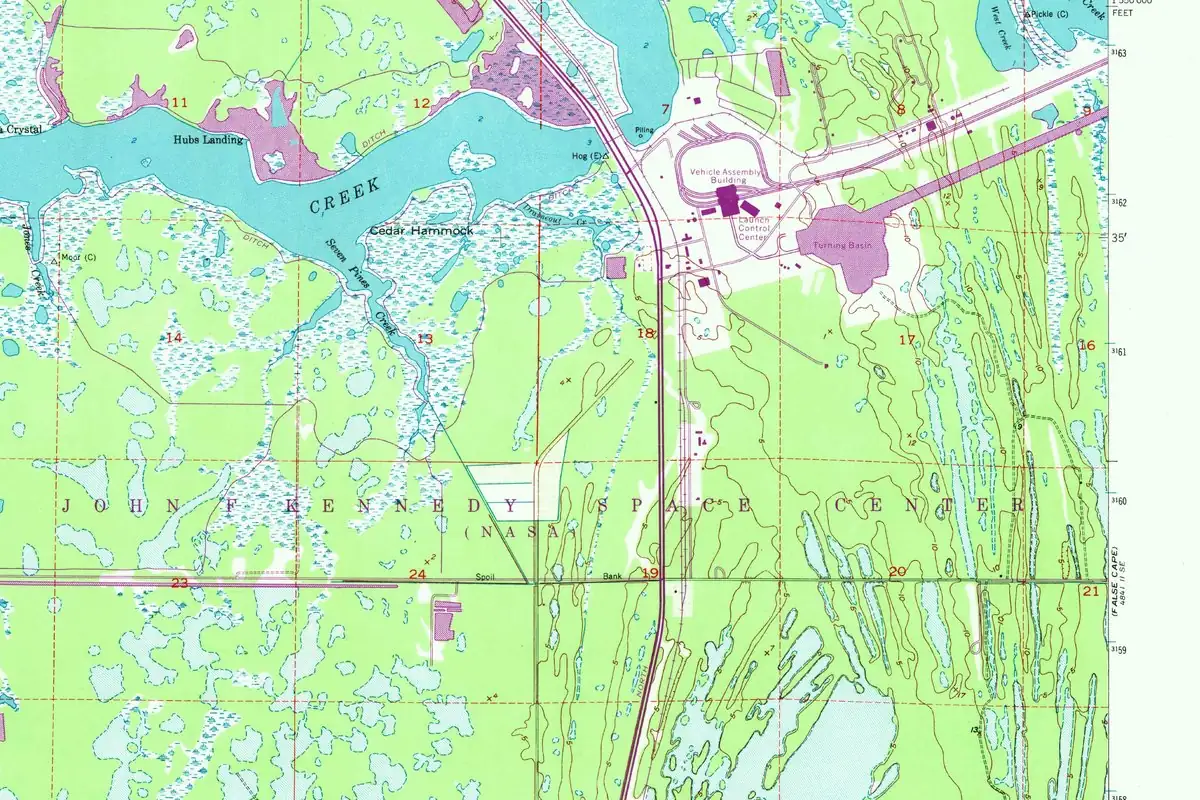
Here’s the part people mix up. Only the cape changed back. NASA’s center kept Kennedy, and the government’s 1970 map revision shows it in big letters across Merritt Island. The same thing happened up north, where the airport long known as Idlewild became John F. Kennedy International Airport in late 1963 and kept the name for good.
The Visitor Complex has a story of its own
The place most visitors buy tickets for is Kennedy Space Center Visitor Complex, and it isn’t the whole space center. The Visitor Complex says public bus tours began on July 22, 1966, and a new Visitor Information Center opened on August 1, 1967, with examples of Mercury, Gemini and Apollo hardware on display. Over the years it went by other names too, including Spaceport USA, before it settled on the one it uses now.
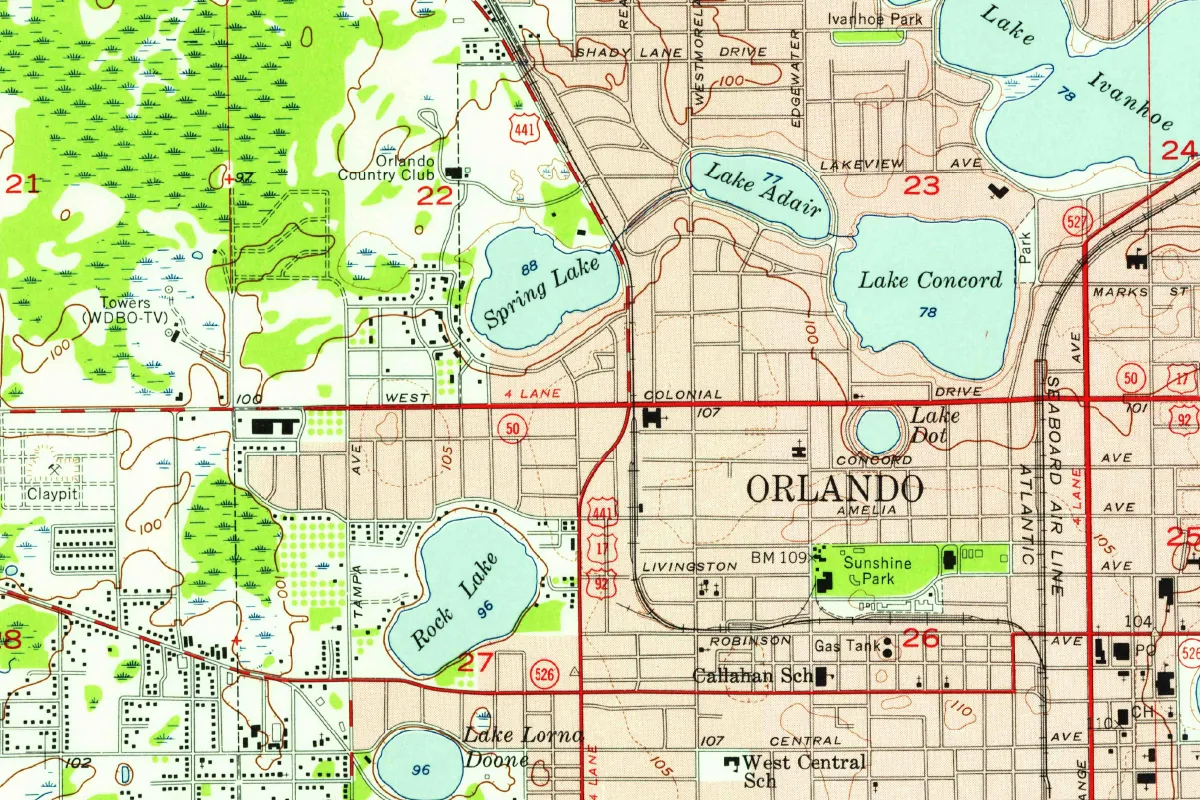
The Visitor Complex calls itself “just one small step from Orlando,” and its driving directions from Orlando start with about 50 miles (80 km) east on State Road 50. It’s actually on Merritt Island, on the Atlantic side of Florida, and the entrance is on Space Commerce Way. If you’re driving, the Visitor Complex has a tip you should take: put “Kennedy Space Center Visitor Complex” in your GPS, not just “Kennedy Space Center.” The short version, it warns, “will send you to the wrong location.”
Which is a fitting end for a name story. Sixty-some years after Johnson’s order, even your GPS has to be told which Kennedy Space Center you mean.
Quick answers
Who is Kennedy Space Center named after?
President John F. Kennedy. Lyndon B. Johnson named it for him in Executive Order 11129, saying Kennedy “set the moon as our target.”
What was Kennedy Space Center called before?
The Launch Operations Center. NASA set it up on Merritt Island in March 1962, and it took Kennedy’s name at the end of 1963.
Is Cape Canaveral the same as Kennedy Space Center?
No. Cape Canaveral is the cape, a piece of the coast. Kennedy Space Center is NASA’s center next to it on Merritt Island. The cape was called Cape Kennedy for about 10 years and got its old name back in 1973, but the space center kept Kennedy.
When did Kennedy Space Center get its name?
On November 29, 1963, when Johnson signed the order. NASA’s Spaceport News says the change officially took effect on December 20, 1963.
Key dates
- 1962NASA sets up the Launch Operations Center on Merritt Island on March 7. It starts work as its own center on July 1.
- 1963Johnson signs Executive Order 11129 on November 29. The new name takes effect on December 20.
- 1966Public bus tours of Kennedy Space Center begin on July 22.
- 1967The new Visitor Information Center opens on August 1.
- 1973Florida puts Cape Canaveral back on its maps on May 18, and the federal names board agrees.
Find it in Google Maps
Opens in a new tab. The pin is a point from the USGS place-name record, so it may not be the middle of the area.
Sponsored
Planning a visit?
Compare hotels in the area on Expedia.
See hotels nearbyWe may earn a commission if you buy through this link. It never changes what we write. Read our affiliate disclosure
Historical Sources & References
- Executive Order 11129, November 29, 1963 (National Archives). The order itself: the Launch Operations Center and Station No. 1 of the Atlantic Missile Range named the John F. Kennedy Space Center, and the “WHEREAS” line about setting “the moon as our target.”
- Anita Barrett, “Cape Canaveral named and renamed,” Spaceport News, July 12, 2002, p. 12 (NASA). Johnson’s Cape Kennedy announcement on November 28, 1963, the December 20, 1963 effective date, Cape Kennedy Air Force Station, Ponce de León and “a place of canes,” the 10-year campaign, Askew’s law of May 18, 1973, and the names board’s agreement. Page 1 of the same issue dates the Launch Operations Center to July 1, 1962.
- Creating NASA’s Launch Operations Center (NASA History). The center set up on March 7, 1962, on Merritt Island, and Kurt H. Debus’s first offices.
- Kennedy Space Center (NASA). Kennedy’s tour of the Cape Canaveral Missile Test Annex and Launch Complex 37 on November 16, 1963.
- History of Kennedy Space Center Visitor Complex. Bus tours from July 22, 1966, the Visitor Information Center of August 1, 1967, and the Spaceport USA name.
- Travel Information and Parking (Kennedy Space Center Visitor Complex). The Space Commerce Way entrance, “just one small step from Orlando,” the directions from Orlando (about 50 miles, or 80 km, east on SR 50 before the last turns), and the GPS warning.
- Warren Commission report, chapter 1 (National Archives). The date of the assassination, November 22, 1963, and the arrival at Love Field, Dallas.
- GNIS feature 304993, Cape Canaveral (U.S. Geological Survey). The U.S. gazetteer listing for the cape, with its Board on Geographic Names decision dated 1973.
- GNIS feature 307744, John F Kennedy Space Center (U.S. Geological Survey, Florida file of 2021). The USGS record for the space center as a reserve in Brevard County, with its coordinates.
Spot something wrong, or know more? Tell us here. You can also email us or use our contact page. Corrections are noted here with their date, never made silently.