Daytona Beach, Florida: The Ohio Founder Behind the Name
Daytona Beach is named for Matthias Day of Mansfield, Ohio, who founded Daytona on the Halifax River in 1870. An 1896 booklet says landscape gardener Thomas Saunders gave it the name in 1871, in Day's honor. The Beach part arrived in 1926, when Daytona merged with Seabreeze and the town of Daytona Beach.
A gardener’s word for an Ohio man
Daytona Beach, Florida, carries the name of Matthias Day, an Ohio man who started the town in 1870, and a booklet from 1896 says a gardener coined it. So the name you see on race-day T-shirts began as a compliment, paid by one newcomer to another on the bank of the Halifax River.
That booklet is Daytona and Its Suburbs, put out in 1896 by the town’s newspaper, The Halifax Journal, and written by J. M. Jolley. It’s a sales pitch, full of breezes and “skies of deepest blue,” but it’s also the oldest account of the naming we could open. In the middle of all that sunshine, it gets very specific:
“It was founded in 1870 by Matthias Day of Mansfield, Ohio, and was first known as Tomoka post office, but in 1871 … name of Daytona was given to it by Thomas Saunders, a landscape gardener of Washington, in honor of its founder.”
So there are three names in one sentence: the founder, the man who turned his surname into a town, and Tomoka, the post office name that came first.
Matthias Day of Mansfield, Ohio
Who was Day? The sources sketch him a little differently, and you’ll notice it as soon as you compare them.
The City of Daytona Beach calls him Matthias D. Day, “a business tycoon from Mansfield, Ohio.” It says he bought 2,144.5 acres in the spring of 1871 for $8,000, with a $1,200 down payment. The city hedges its bet on the naming in a way we like: “Most sources agree” the town got its name from him.
The Advisory Council on Historic Preservation, a federal agency that writes up each Preserve America community, spells him “Mathias Day, Jr.” and calls him “an inventor and newspaper publisher.” In its version, he bought property on the Halifax River in 1870 and built a hotel, and a small community grew up around it.
So the dates wobble between 1870 and 1871, and so does the spelling. The founder, the hometown and the river don’t.
The man lost the land, the town kept his name
Here’s the twist the federal summary adds. Day “lost his land in 1872 due to financial troubles,” it says, yet “residents named the adjacent city Daytona.” That’s a slightly different picture from the booklet. The 1896 account gives the naming to Saunders in 1871; the federal summary gives it to the residents and doesn’t name a year. Both agree on whose name it was.
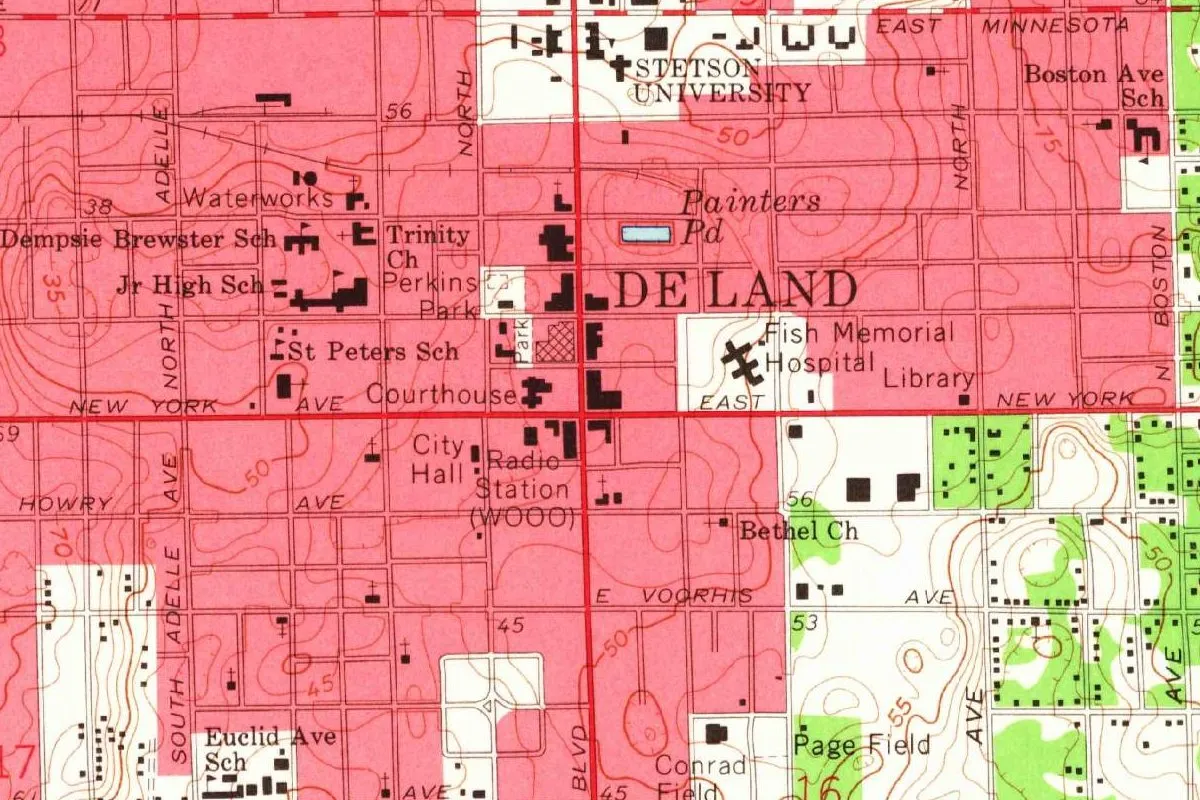
Either way, the name outlasted the man’s stake in the place. Daytona was incorporated in 1876, the city and the federal summary both say. That’s the same year settlers farther inland in Volusia County voted to name their own town after a businessman from the North, as our story of DeLand tells. Two Northern names went on the county map in the same decade.
A state directory from the mid-1880s shows how small the new town still was. The Florida State Gazetteer and Business Directory for 1884-85 lists Daytona with 250 inhabitants on the Halifax River, 45 miles (72 km) from Enterprise, then the county seat. It had one private school, one church, two hotels, a sawmill and a weekly paper, with a stage line to St. Augustine three times a week and a steamboat from Jacksonville once a week.
How Daytona picked up the Beach
For half a century, Daytona was a river town on the mainland bank of the Halifax. Across the river, toward the Atlantic, separate settlements grew up, and two of them, Seabreeze and Daytona Beach, became towns of their own.
The railroad arrived in 1890, the federal summary says, and growth followed. Then in 1926, the city’s history says, “the three separate towns of Daytona, Daytona Beach and Seabreeze merged as Daytona Beach.” The merged city kept the longest of the three names. You could say Matthias Day’s name crossed the river and picked up a beach on the way.
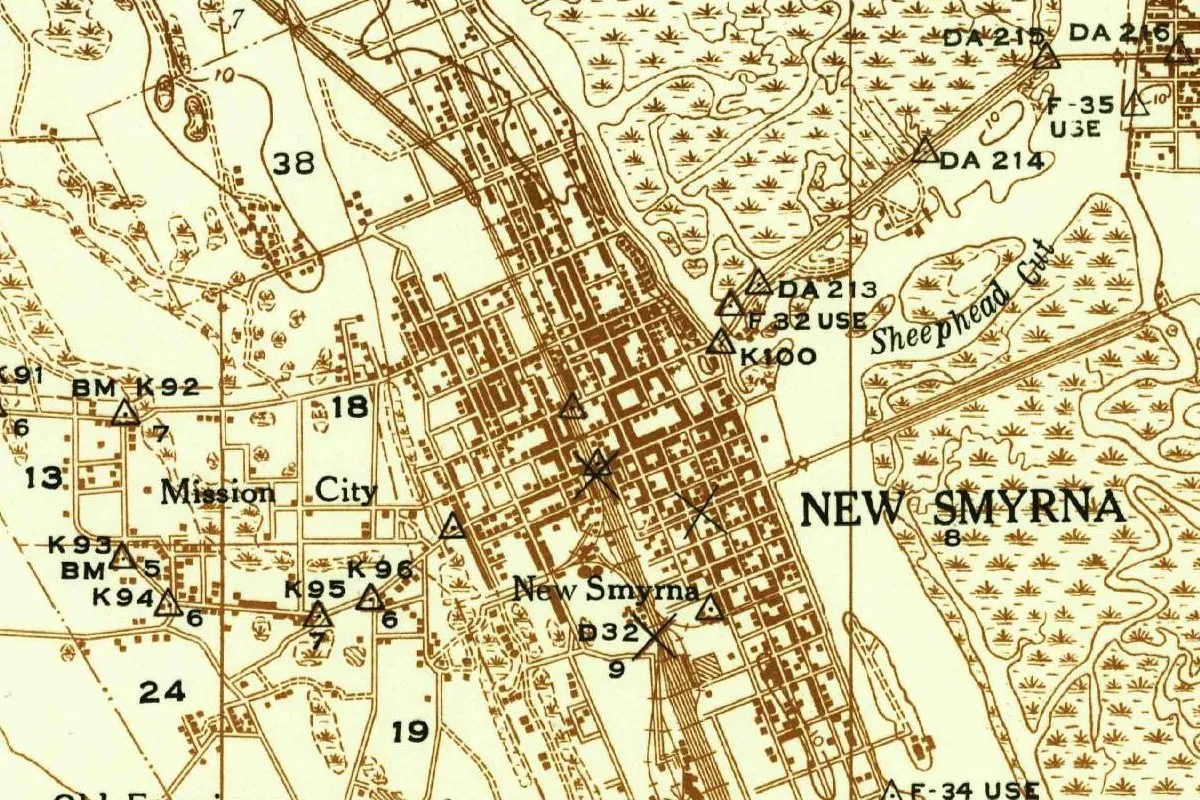
It’s a familiar move in this county. Down the coast, New Smyrna Beach also added “Beach” to a much older name in the 20th century.
Why the sand made the name famous
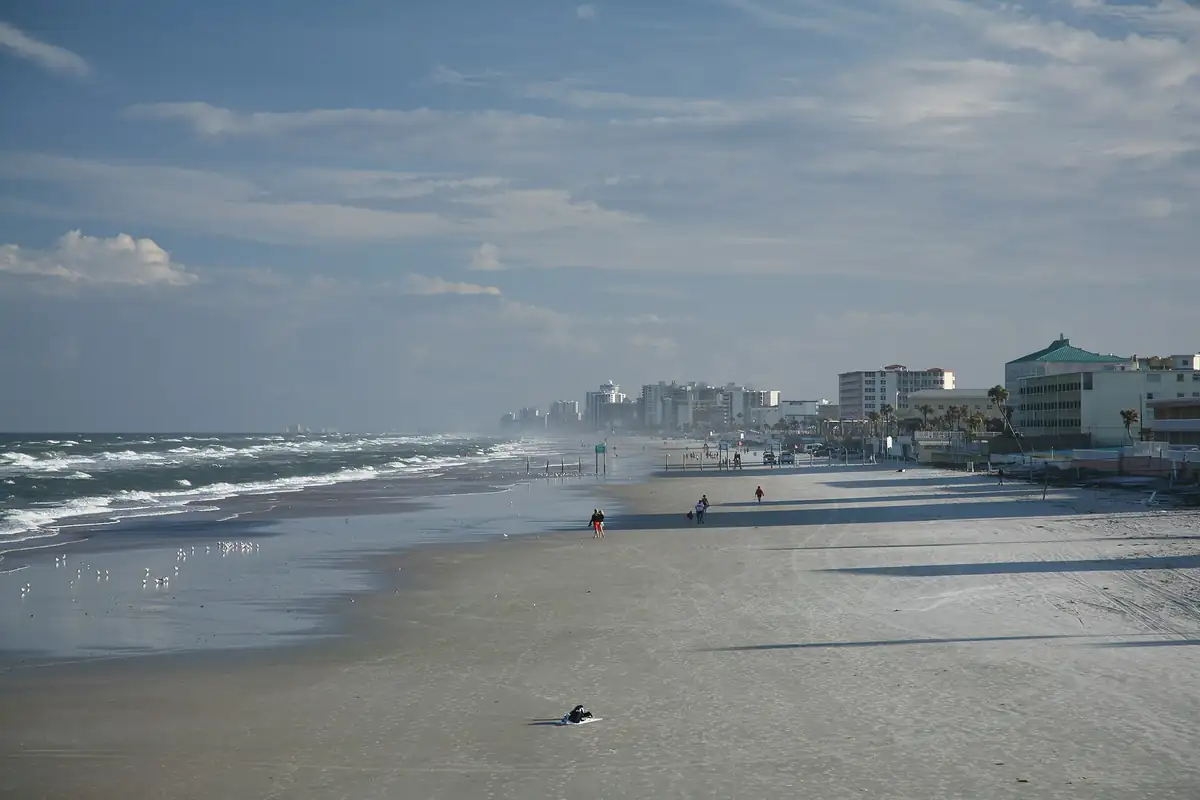
By then, the beach was already doing the advertising. The city says the “wide beach and smooth, hard-packed sands” made Daytona Beach widely known in the early 1900s for high-speed automobile testing and then racing, and that by the 1920s it had been dubbed the “World’s Most Famous Beach.”
Racing on the sand eventually moved to a track. The city credits NASCAR founder William “Bill” France with building Daytona International Speedway, which has hosted the Daytona 500 since 1959. So when people hear “Daytona” today, they hear engines. That’s fair enough, but the word itself is older than the first car on the beach by about three decades.
A name that started on the river side
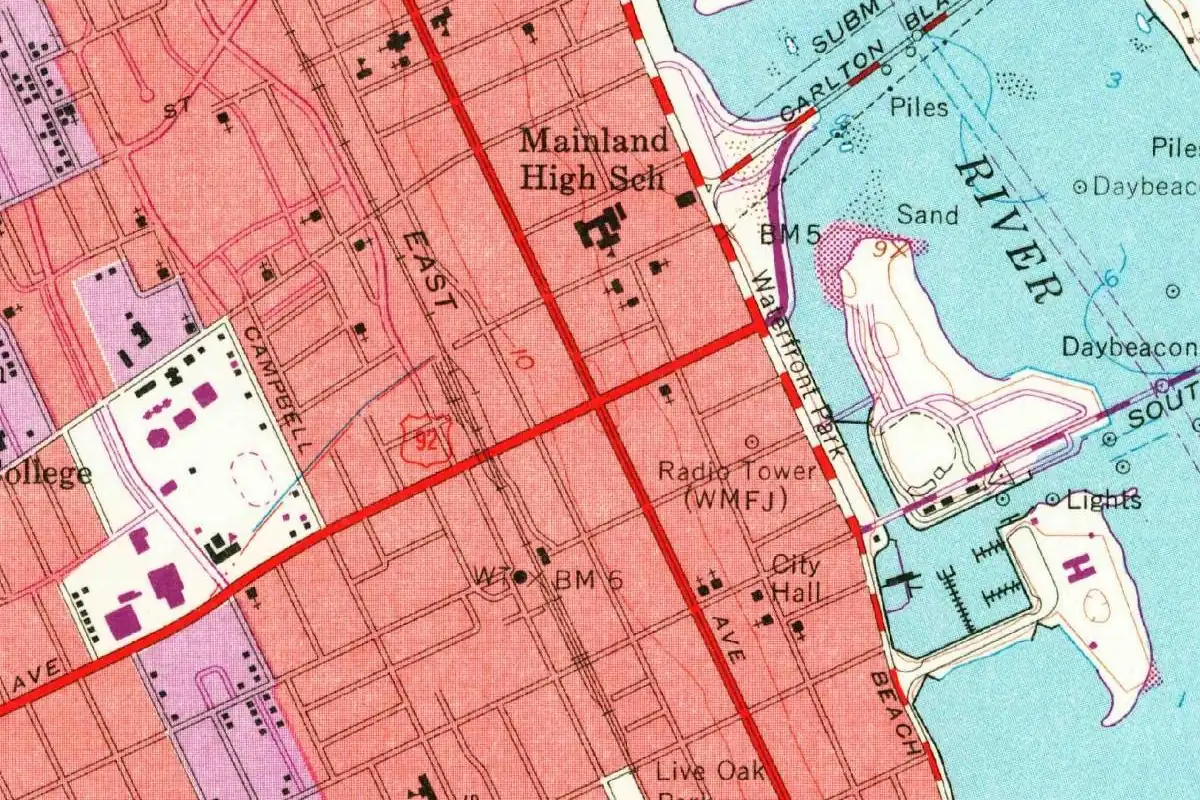
If you want to see where the story began, look at the mainland. The 1896 booklet describes a village on the west bank of the Halifax, laid out “parallel with the river, with avenues 100 feet wide.” The old map at the top of this page shows that same riverfront grid in 1952, with Beach Street running along the water on the mainland side.
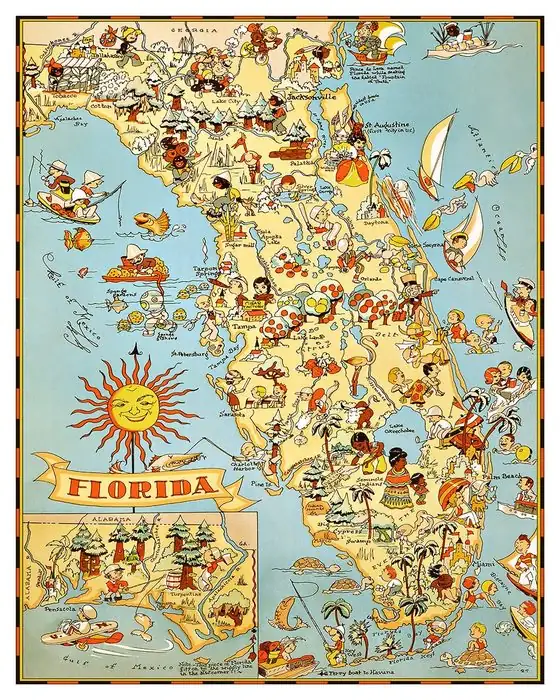
Long before Day, the federal summary notes, the Timucua lived in and around the area. The name on the map came much later, from an Ohio man, a gardener with a good ear and a merger in 1926. For more Sunshine State names, see our Florida page.
Quick answers
Who is Daytona Beach named after?
Matthias Day of Mansfield, Ohio, who founded Daytona in 1870. The city says “most sources agree” on him; a federal summary spells him Mathias Day, Jr.
Who came up with the name Daytona?
An 1896 booklet says Thomas Saunders, a landscape gardener from Washington, named it in 1871 in honor of the founder. The Advisory Council on Historic Preservation says the residents named it, without giving a year.
What was Daytona called before?
Tomoka. The 1896 booklet says the settlement was “first known as Tomoka post office” before it became Daytona.
When did Daytona become Daytona Beach?
In 1926, when Daytona, Seabreeze and the town of Daytona Beach merged into one city under the name Daytona Beach.
Key dates
- 1870Matthias Day of Mansfield, Ohio, starts a settlement on the Halifax River, first known as the Tomoka post office.
- 1871Thomas Saunders, a landscape gardener from Washington, names the place Daytona in Day's honor, according to an 1896 booklet.
- 1872Day loses his land to financial trouble, the Advisory Council on Historic Preservation says.
- 1876Daytona is incorporated.
- 1926Daytona, Seabreeze and the town of Daytona Beach merge into one city called Daytona Beach.
Things to do in Daytona Beach, Florida
Halifax Historical Museum
Local history museum inside Daytona's 1910 Merchants Bank building on Beach Street, a Beaux Arts landmark listed on the National Register of Historic Places, with more than 100 years of local history and rotating exhibits.
Mary McLeod Bethune Home
The two-story home of educator Mary McLeod Bethune, founder of what became Bethune-Cookman University, kept as it was when she died in 1955, with her original furnishings. A National Historic Landmark you can tour.
Jackie Robinson Ballpark
Opened in 1914 on City Island, this is where Jackie Robinson played a spring training game for the Montreal Royals on March 17, 1946, integrating modern professional baseball. A bronze statue of Robinson stands at the park.
Daytona International Speedway
Home of the Daytona 500 since 1959. Guided track tours take you through what the speedway calls the World Center of Racing, onto the high banks and into a museum with the Daytona 500 champion car.
Museum of Arts & Sciences
An art, science and history museum whose wings include the Cici and Hyatt Brown Museum of Art, which tells Florida history through art, and the Lohman Family Planetarium.
Getting there
Open Daytona Beach in Google Maps
Opens in a new tab. The pin is the center of Daytona Beach in the USGS place-name record.
The closest airports, Amtrak stations and intercity bus stops, measured in a straight line from the center of Daytona Beach.
Airports
- Daytona Beach International (DAB) 3 mi 5 km
- Orlando Sanford International (SFB) 33 mi 52 km
- Orlando International (MCO) 57 mi 91 km
Amtrak trains
- DeLand station (DLD) 24 mi 39 km
- Sanford station (SFA) 32 mi 52 km
Intercity buses
- FlixBus Daytona Beach Bus Station under 1 mi 0.2 km
- Greyhound New Smyrna Beach Tropical 14 mi 22 km
- Amtrak Chartered Vehicle Amtrak Connecting Service · Orlando 52 mi 84 km
Distances are as the crow flies, not by road. We don't list schedules or fares because they change; check with the airline, Amtrak or the bus company before you go. Official data (FAA commercial service airports (2025), FAA airport locations, Amtrak stations and Intercity Bus Atlas) from the FAA and the U.S. Bureau of Transportation Statistics, checked Nov 14, 2026.
Sponsored
Staying in Daytona Beach?
Compare hotels in Daytona Beach, Florida, on Expedia.
See hotels in Daytona BeachWe may earn a commission if you buy through this link. It never changes what we write. Read our affiliate disclosure
Sponsored
Want the spooky side of Daytona Beach?
The name has its story above. For the ghost stories, US Ghost Adventures runs walking ghost tours in Daytona Beach.
See ghost tours in Daytona BeachWe may earn a commission if you book through this link. It never changes what we write. Read our affiliate disclosure
Historical Sources & References
- J. M. Jolley, Daytona and Its Suburbs (The Halifax Journal, 1896), “Daytona the Beautiful”. The founding in 1870 by Matthias Day of Mansfield, Ohio, the earlier name Tomoka post office, the name Daytona given in 1871 by Thomas Saunders, landscape gardener of Washington, “in honor of its founder,” and the town laid out along the river with avenues 100 feet wide. The page has no printed number; the link opens it.
- The Florida State Gazetteer and Business Directory, 1884-85, p. 175. Daytona’s 250 inhabitants on the Halifax River, 45 miles from Enterprise, “the seat of justice,” its school, church, two hotels, sawmill and weekly paper, the stage line to St. Augustine and the steamboat from Jacksonville.
- City of Daytona Beach, “History of City”. Founded in 1870 and incorporated in 1876; “most sources agree” on Matthias D. Day of Mansfield; the 2,144.5 acres bought in the spring of 1871; the 1926 merger of Daytona, Daytona Beach and Seabreeze; the hard-packed sand, racing, “World’s Most Famous Beach” and the Daytona 500 since 1959.
- Advisory Council on Historic Preservation, “Daytona Beach, Florida”. The Timucua; Mathias Day, Jr., inventor and newspaper publisher, his 1870 purchase on the Halifax River and his hotel; the land lost in 1872; residents naming the city Daytona; incorporation in 1876, the railroad in 1890 and the 1926 merger with Seabreeze and Daytona Beach, across the river.
- GNIS feature 281353 (U.S. Geological Survey). The official name record lists Daytona Beach as a populated place in Volusia County.
- U.S. Geological Survey, Daytona Beach sheet (1952). The 1:24,000 quadrangle the map at the top of this page was cropped from.
Spot something wrong, or know more? Tell us here. You can also email us or use our contact page. Corrections are noted here with their date, never made silently.