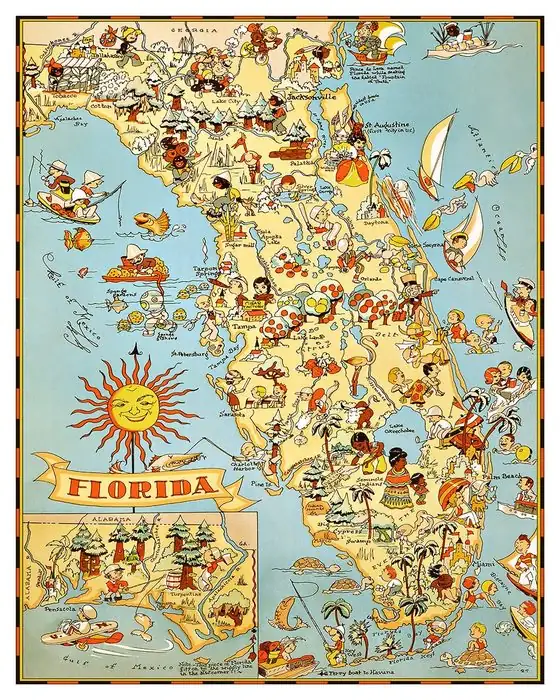
Why Is Orlando Called Orlando? Four Stories, No Record
Nobody knows for sure why Orlando, Florida, is called Orlando. The settlement was first called Jernigan and took the new name in 1856 or 1857. The City of Orlando says no official document explains it and lists four stories: a soldier named Orlando Reeves, a man who worked for Judge J. G. Speer, Shakespeare, and a traveler with oxen.
First it was Jernigan
Before anyone called it Orlando, the place had a family’s name. The City of Orlando’s history page says the Army built Fort Gatlin in 1838, during the Seminole Wars, just south of today’s city limits. By 1840 a small community had grown up around the fort, known as Jernigan after the family who made the first permanent settlement there. The Florida Historical Society names the man: Aaron Jernigan, a Georgian who started a successful farm in the area in 1842.
Jernigan got a post office on May 30, 1850. The city says the community officially changed its name to Orlando in 1856, and the post office followed in 1857; the historical society gives 1857 for the change. Either way, the new name stuck, and the town was incorporated in 1875.
What nobody wrote down was why. The city is blunt about it in a list of facts on its own website: “There is no official documentation of how Orlando received its name.” It counts four stories, and says no conclusion has ever been reached.
The sentry at Lake Eola
The best known story is a war story. As the city tells it, a company of soldiers camped near Lake Minnie, now Lake Cherokee, during the Seminole Wars. A sentinel named Orlando Reeves saw a log floating toward him, recognized a disguise, and fired his gun to warn the camp before he was killed. He was buried on the south side of Lake Eola, where a plaque remembers him today.
The city adds that no official documentation supports the idea that Orlando is named for him, and the Florida Historical Society has found more reasons for doubt. An 1884 newspaper gave the soldier’s name as Orlando Jennings. Neither an Orlando Reeves nor an Orlando Jennings is on the War Department’s roster of the 1,466 soldiers killed in the Seminole Wars. The society also points to a real man nearby: Orlando J. Rees, a wealthy plantation owner near Fort Gatlin in the 1830s, nicknamed “Colonel” though he never served. Could the soldier be a garbled memory of Rees? Historians are still trying to answer that, the society says.
Judge Speer and Shakespeare
Two of the city’s four stories point to Judge J. G. Speer, who pushed to make the place the county seat. In one, he named it for a man who’d once worked for him. In the other, he took it from Shakespeare’s As You Like It.
The oldest printed version of the Shakespeare story we could read in full is in Clarence Howard’s Early Settlers of Orange County, Florida (1915). Howard says Speer, who came to Florida in 1854, was living at Fort Gatlin when three settlements fought over the county seat: Fort Reid, “The Lodge” (now Apopka) and Fort Gatlin. Fort Gatlin won, and then:
“At once the question of a name came up and was named ‘Orlando’ by Judge Speer for one of Shakespeare’s characters.”
Howard wrote some six decades after the fact and doesn’t say which character. The historical society, which says Speer got the county seat moved from Enterprise in 1856, calls the theory circumstantial. If you want one more clue, though, it offers this: Orlando’s love in the play is Rosalind, and so is the main street heading north through the heart of the city.
Speer had firm opinions about names, too. Grismer’s 1924 history of St. Petersburg says he gave the Orange Belt Railway half of a 200-acre townsite near the southern edge of Lake Apopka, about 18 miles (29 km) west of Orlando, and the town of Oakland grew there. The railroad’s builder wanted to call it St. Petersburg. Speer didn’t like the idea and insisted on Oakland.
An ox driver and a Spanish word
The fourth story is the saddest. A traveler called Mr. Orlando was taking a caravan of oxen to Tampa when he fell ill, died and was buried near Fort Gatlin. People passing by would say “There lies Orlando,” and the name stuck. The historical society says this one has been doubted too.
There’s a fifth explanation the city doesn’t list at all. In 1905, Henry Gannett’s federal guide to place names called Orlando “a Spanish word meaning ‘seat of justice.’” Gannett gave no source, and none of the local accounts mentions it. So you’re left with a city that has a soldier’s plaque, a judge’s story, a street called Rosalind and no paper trail.
Quick answers
Why is Orlando called Orlando?
No one knows for sure. The city says there’s no official record and lists four stories: a soldier named Orlando Reeves, a man who worked for Judge Speer, Shakespeare’s As You Like It, and a traveler named Mr. Orlando.
What was Orlando called before?
Jernigan, after the Jernigan family. The community changed its name to Orlando in 1856, the city says, and the post office followed in 1857.
Was Orlando named after Orlando Reeves?
It’s the best known story, but the city says no official documentation supports it. Neither Reeves nor an Orlando Jennings appears on the War Department’s list of soldiers killed in the Seminole Wars.
Is Orlando named after a Shakespeare character?
Maybe. A 1915 county history says Judge J. G. Speer named it for one of Shakespeare’s characters, but it’s a late account and the Florida Historical Society calls the evidence circumstantial.
Key dates
- 1838The U.S. Army builds Fort Gatlin, south of today's city limits, during the Seminole Wars.
- 1850May 30: a post office opens at Jernigan, the community named for the Jernigan family.
- 1856The community changes its name to Orlando, according to the City of Orlando.
- 1857The post office adopts the name Orlando.
- 1915Clarence Howard's Early Settlers of Orange County says Judge J. G. Speer named Orlando for a Shakespeare character.
Getting there
Open Orlando in Google Maps
Opens in a new tab. The pin is the center of Orlando in the USGS place-name record.
The closest airports, Amtrak stations and intercity bus stops, measured in a straight line from the center of Orlando.
Airports
- Orlando International (MCO) 9 mi 14 km
- Orlando Sanford International (SFB) 19 mi 30 km
Amtrak trains
- Orlando station (ORL) under 1 mi 1 km
- Winter Park station (WPK) 4 mi 7 km
Intercity buses
- Amtrak Chartered Vehicle Amtrak Connecting Service · Orlando under 1 mi 1 km
- FlixBus Orlando Bus Station 2 mi 3 km
- Greyhound Titusville Sunshine Express 32 mi 52 km
Distances are as the crow flies, not by road. We don't list schedules or fares because they change; check with the airline, Amtrak or the bus company before you go. Official data (FAA commercial service airports (2024), FAA airport locations, Amtrak stations and Intercity Bus Atlas) from the FAA and the U.S. Bureau of Transportation Statistics, checked Nov 11, 2026.
Sponsored
Staying in Orlando?
Compare hotels in Orlando, Florida, on Expedia.
See hotels in OrlandoWe may earn a commission if you buy through this link. It never changes what we write. Read our affiliate disclosure
Sponsored
Want the spooky side of Orlando?
The name has its story above. For the ghost stories, US Ghost Adventures runs walking ghost tours in Orlando.
See ghost tours in OrlandoWe may earn a commission if you book through this link. It never changes what we write. Read our affiliate disclosure
Historical Sources & References
- City of Orlando, “Orlando History”. Fort Gatlin in 1838, the Jernigan community by 1840, the post office of May 30, 1850, the name change in 1856 and the post office’s in 1857, incorporation in 1875, and the four stories, told in full.
- City of Orlando, “40 Fun Orlando Facts” (2021). “There is no official documentation of how Orlando received its name,” the four stories with no conclusion, and the Orlando Reeves plaque at Lake Eola.
- Ben Brotemarkle, “Florida Frontiers: How Did Orlando Get Its Name?,” Florida Historical Society (2014). Aaron Jernigan in 1842, the 1884 newspaper’s Orlando Jennings, the War Department roster of 1,466 soldiers, Orlando J. Rees, the ox caravan, Speer and the county seat in 1856, and Rosalind.
- Clarence E. Howard, Early Settlers of Orange County, Florida (1915), p. 12. The sketch of Judge J. G. Speer: his arrival in 1854, the three-way county seat fight, and the name “Orlando” given “for one of Shakespeare’s characters.”
- Henry Gannett, The Origin of Certain Place Names in the United States (USGS, 1905), p. 233. The entry calling Orlando “A Spanish word meaning ‘seat of justice,’” with no source.
- Karl H. Grismer, History of St. Petersburg (1924), pp. 7, 9. Oakland, about 18 miles (29 km) west of Orlando, Speer’s gift of half the townsite (p. 7), and his refusal to call it St. Petersburg (p. 9).
- GNIS feature 288240 (U.S. Geological Survey). Orlando’s official record as a populated place in Orange County.
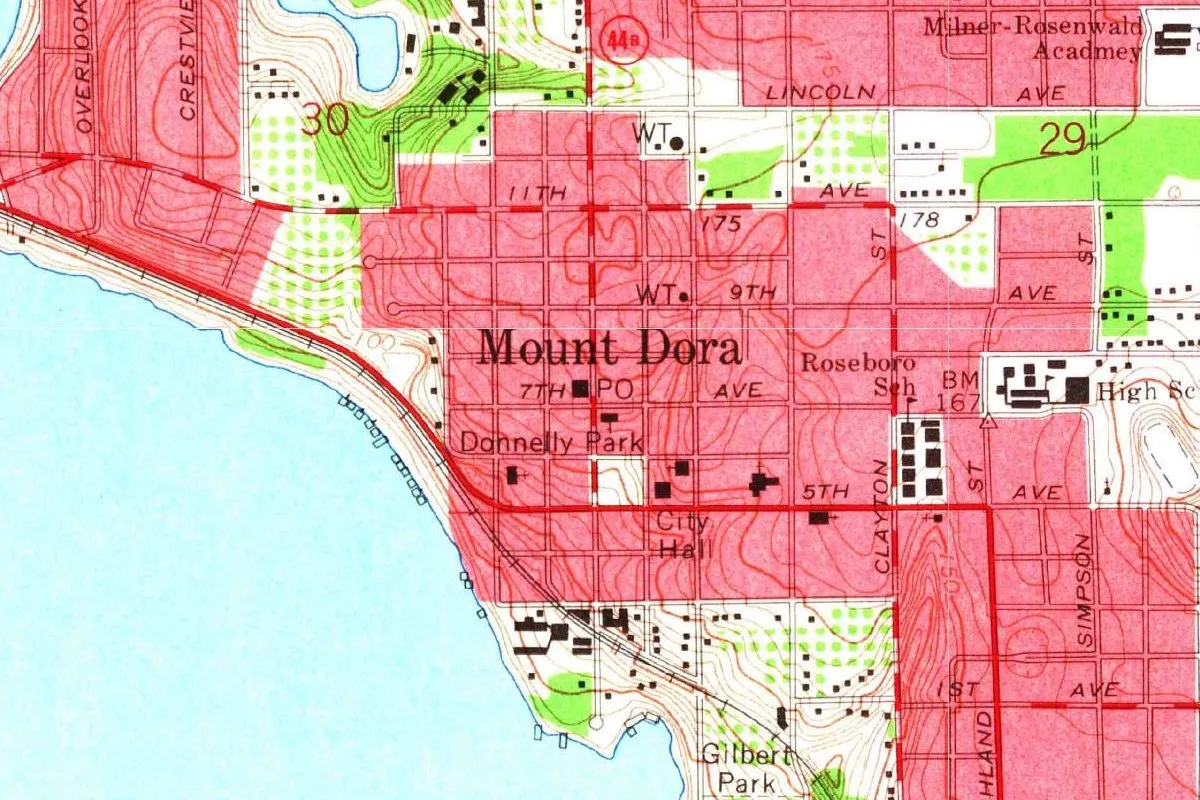
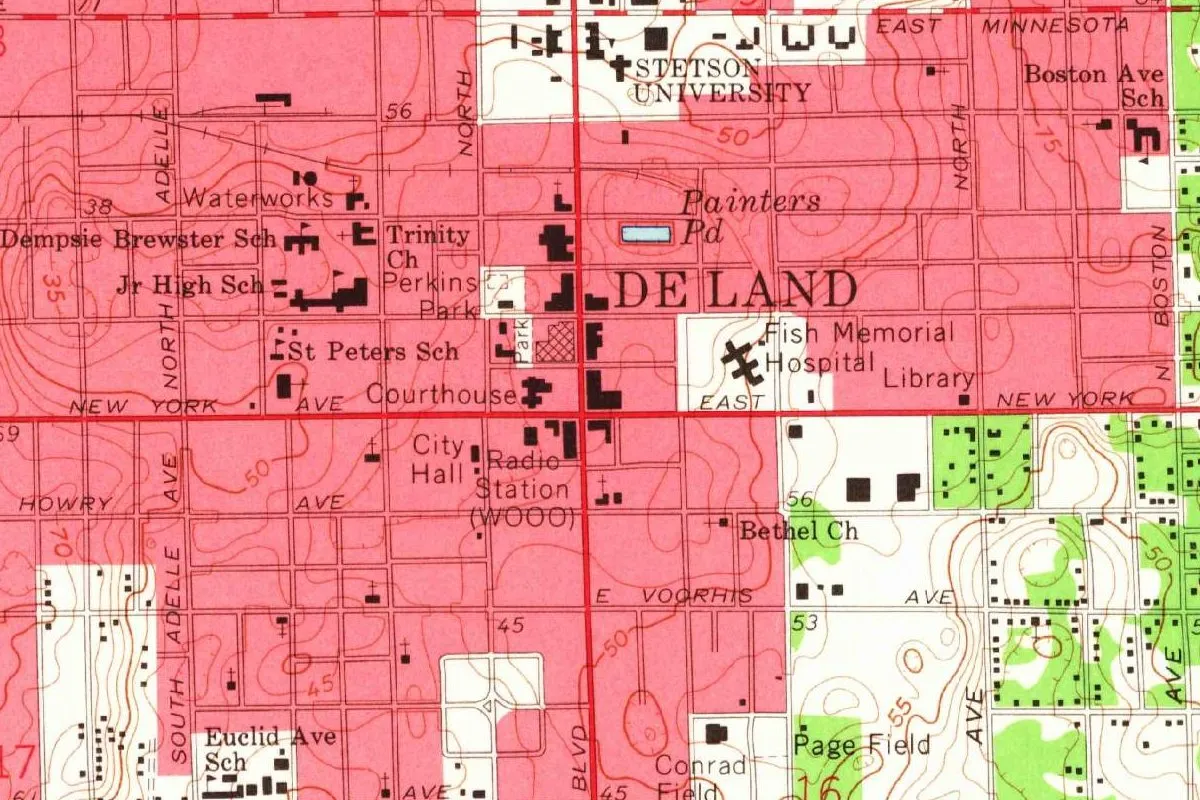
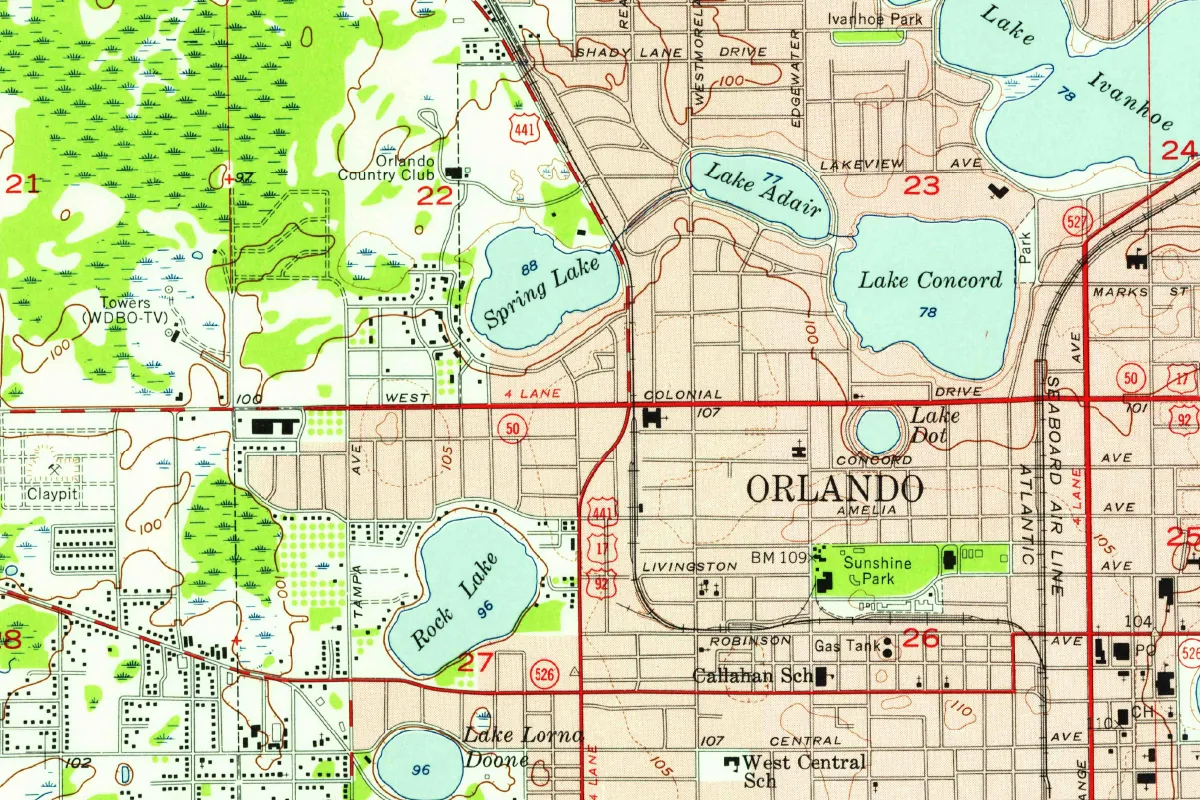
- U.S. Geological Survey, Orlando West sheet (1956). The source of the map at the top of this page.
Spot something wrong, or know more? Tell us here. You can also email us or use our contact page. Corrections are noted here with their date, never made silently.