Why Is St. Petersburg, Florida Named for a Russian City?
St. Petersburg, Florida, carries the name of St. Petersburg, Russia, because Peter Demens, the Russian-born builder of the Orange Belt Railway, wanted a town called that. He was already using the name in letters in September 1887. The famous coin flip with landowner John C. Williams is a legend the city's history museum says never happened.
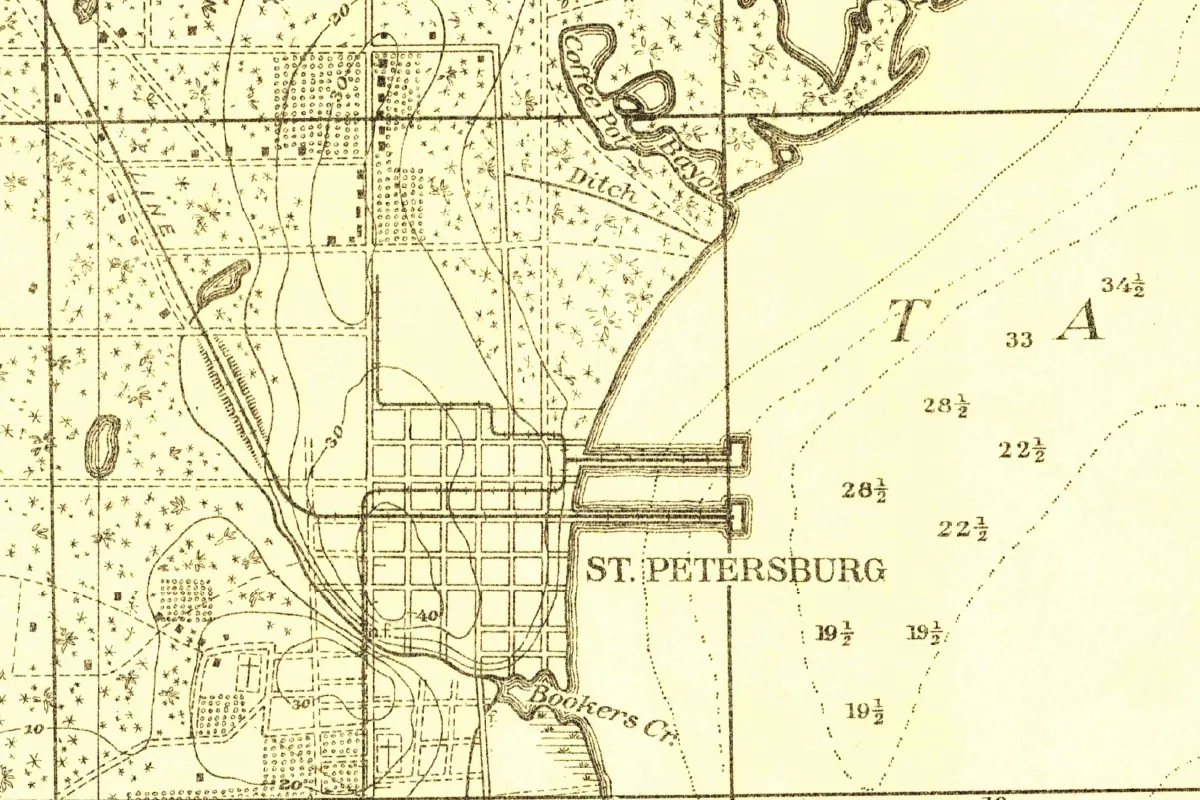
A Russian name at the end of the line
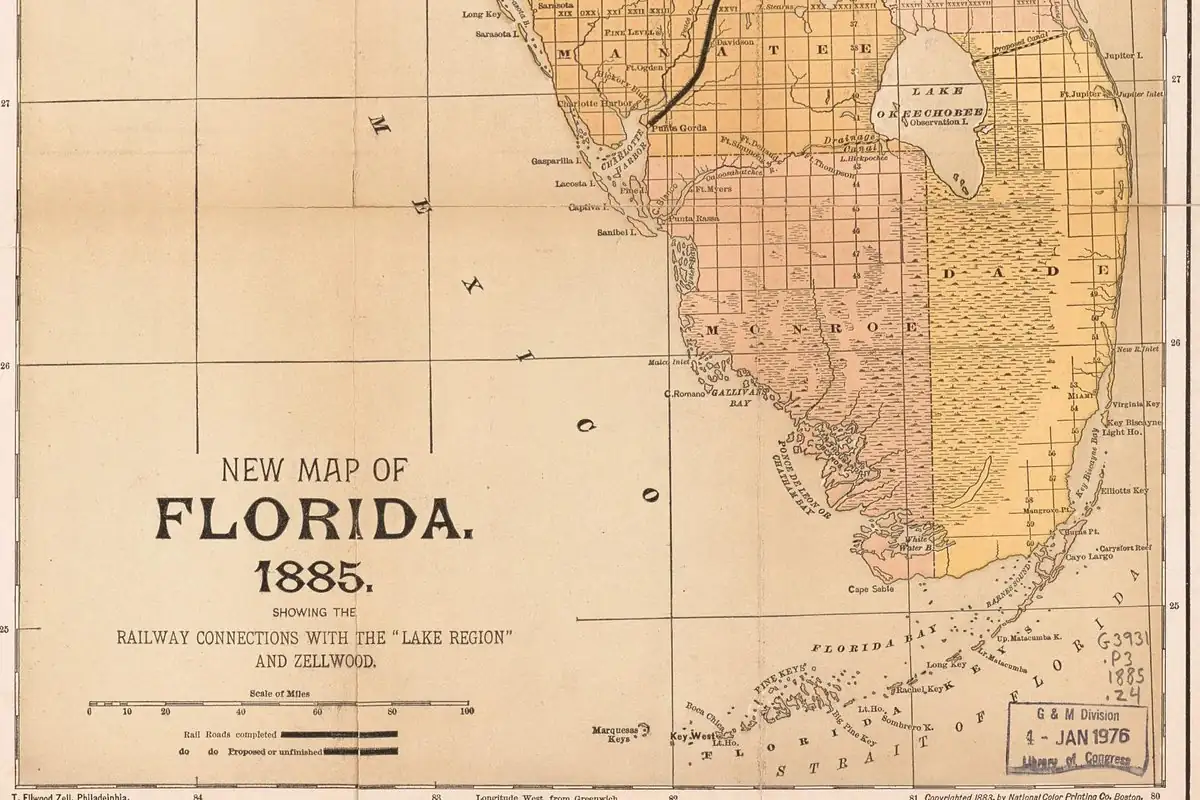
St. Petersburg owes its name to a railroad and the man who built it. Peter Demens came to Florida from Russia in 1880, Karl Grismer writes in his History of St. Petersburg (1924). He ran a sawmill at Longwood, then put together the narrow-gauge Orange Belt Railway and pushed it west toward the Gulf.
The end of the line landed on property owned by John Constantine Williams, a Detroit man who’d been buying land on the Pinellas Peninsula. The St. Petersburg Museum of History says Williams bought 900 acres from the State and about 500 more from a struggling earlier owner. Demens’s treasurer, Henry Sweetapple, made the deal, and Demens wrote to his brokers that it came with “a splendid townsite.”
On the namesake itself, the sources don’t argue. Grismer’s sketch of Demens says the town was “made possible and named by Peter A. Demens.” A speaker on WUCF’s Florida Road Trip in 2022 put it simply: the city is named after St. Petersburg, Russia, and Demens chose it in honor of the capital of his home country. What people do argue about is how the choice got made.
The straws that turned into a coin flip
You’ve probably heard the colorful version. Grismer calls it “the old familiar story”: Demens and Williams both wanted to name the town they’d founded, so they drew straws. Demens won and named it for the Russian city he loved best, and Williams got to name the first hotel, which he called the Detroit after his Michigan birthplace.
The person who told that story was Williams’s wife, Sarah. Grismer’s own sketch of her says she held broom straws for the two men to draw. When she died in 1917 as Sarah Armistead, obituaries in the St. Petersburg Times and the Tampa Tribune repeated it. The museum, in a 2024 series on her life, says the straws later turned into a coin flip, “a story which we now know never happened.” The real story, it adds, is “a much less interesting clerical adventure involving the post office.”
Henschen’s post office story
Grismer printed a post office story back in 1924, from Josef Henschen, the last living member of the original Orange Belt group. Henschen called the straws “a figment of someone’s imagination.”
In his telling, E. R. Ward was named postmaster for the town at the end of the road early in 1887 and needed a name before he could write to the post office department. Williams told him to pick one of the four Orange Belt backers: Demens, Henschen, Sweetapple or Taylor. Ward found only Henschen at the Oakland headquarters. There was already a Taylorville, Sweetapple sounded doomed, and nobody could spell Henschen. But Henschen knew Demens wanted a St. Petersburg. Demens had tried to give that name to Oakland itself, until Judge J. G. Speer, who’d donated half the townsite, insisted on Oakland. It’s the same Speer a 1915 history credits with naming Orlando.
“So I told Ward we’d call it St. Petersburg. And St. Petersburg it became.”
Henschen said he signed a petition, got four or five others to sign it, and the post office approved it. Either way, notice that the name comes back to Demens.
What the dates settle
Grismer admits there’s no way to prove which version is right. But he points to one record that cuts against the straws: Demens was calling the town “St. Petersburgh” in letters to his brokers as early as September 6, 1887, before anyone had even planned the Detroit Hotel. If the town and the hotel weren’t named at the same moment, Grismer says, the straws story loses some of its weight.
The trains came later. Grismer says the tracks reached Ninth Street on April 1, 1888, and the first through train from Oakland pulled in on June 8; the museum names its locomotive, the Mattie. Henschen’s reason for not worrying over the name is the part you’d least expect. He figured the town on the Gulf “will never amount to anything anyhow, so its name doesn’t make any difference.”
Quick answers
Why is St. Petersburg, Florida, named St. Petersburg?
It’s named for St. Petersburg, Russia. Peter Demens, the Russian-born builder of the Orange Belt Railway, wanted a town with that name on his line.
Was St. Petersburg named in a coin toss?
No record supports it. The story began as a drawing of straws told by Sarah Williams Armistead, and the St. Petersburg Museum of History says it never happened.
Who actually picked the name?
Grismer’s 1924 history credits Demens. Orange Belt partner Josef Henschen said he chose it himself for the post office in 1887, because he knew Demens wanted it.
Why does the federal names database say Saint Petersburg?
The U.S. Geological Survey’s names database spells out Saint in its official record. It’s the same city that everyday usage writes as St. Petersburg.
Key dates
- 1880Peter Demens comes to Florida from Russia, according to Karl Grismer's 1924 history.
- 1887Early in the year, E. R. Ward is named postmaster for the town at the end of the Orange Belt line and needs a name for it, in Josef Henschen's account.
- 1887September 6: Demens refers to the town as St. Petersburgh in letters to his brokers.
- 1888June 8: the first through train, pulled by the locomotive Mattie, arrives on the Orange Belt Railway.
- 1917Sarah Armistead dies; her obituaries credit her with holding the straws that decided the name.
- 2024The St. Petersburg Museum of History says the straws, and the coin flip that grew out of them, never happened.
Getting there
Open St. Petersburg in Google Maps
Opens in a new tab. The pin is the center of St. Petersburg in the USGS place-name record.
The closest airports, Amtrak stations and intercity bus stops, measured in a straight line from the center of St. Petersburg.
Airports
- St Pete-Clearwater International (PIE) 10 mi 15 km
- Tampa International (TPA) 17 mi 27 km
Amtrak trains
- Tampa station (TPA) 19 mi 30 km
- Lakeland station (LKL) 48 mi 78 km
Intercity buses
- FlixBus St. Petersburg 2 mi 3 km
- Greyhound St Petersburg Psta Transit Center 4 mi 7 km
- Amtrak Chartered Vehicle Amtrak Connecting Service · St. Petersburg 5 mi 9 km
Distances are as the crow flies, not by road. We don't list schedules or fares because they change; check with the airline, Amtrak or the bus company before you go. Official data (FAA commercial service airports (2024), FAA airport locations, Amtrak stations and Intercity Bus Atlas) from the FAA and the U.S. Bureau of Transportation Statistics, checked Nov 11, 2026.
Sponsored
Staying in St. Petersburg?
Compare hotels in St. Petersburg, Florida, on Expedia.
See hotels in St. PetersburgWe may earn a commission if you buy through this link. It never changes what we write. Read our affiliate disclosure
Sponsored
Want the spooky side of St. Petersburg?
The name has its story above. For the ghost stories, US Ghost Adventures runs walking ghost tours in St. Petersburg.
See ghost tours in St. PetersburgWe may earn a commission if you book through this link. It never changes what we write. Read our affiliate disclosure
Historical Sources & References
- Karl H. Grismer, History of St. Petersburg (1924), pp. 7-9, 218, 224. Demens’s arrival from Russia in 1880, the Longwood sawmill, Oakland and Judge Speer’s townsite, and the Sweetapple deal with Williams (p. 7), the straws legend and Henschen’s denial (p. 8), Henschen’s post office account, the “St. Petersburgh” letters of September 6, 1887, and the trains of April 1 and June 8, 1888 (p. 9), “named by Peter A. Demens” (p. 218), and Sarah Williams’s own straws story (p. 224).
- St. Petersburg Museum of History, “The Life & Lies of St. Pete’s Founding Mother,” Part One (2024). The 1917 obituaries in the St. Petersburg Times and the Tampa Tribune, the straws that became a coin flip, “a story which we now know never happened,” and the post office explanation.
- St. Petersburg Museum of History, “The Life & Lies of St. Pete’s Founding Mother,” Part Three (2024). The 1887 deal between Williams and Demens, made through Henry Sweetapple.
- St. Petersburg Museum of History, “Bayboro Harbor: Dredging Up History” (2023). Williams’s land purchases and the arrival of the locomotive Mattie on June 8, 1888.
- WUCF, Florida Road Trip: St. Petersburg (PBS, 2022). An interviewee on the coin toss (“there’s no proof that that ever happened”) and the name’s tie to St. Petersburg, Russia.
- GNIS feature 290375 (U.S. Geological Survey). The official record, spelled Saint Petersburg, as a populated place in Pinellas County.
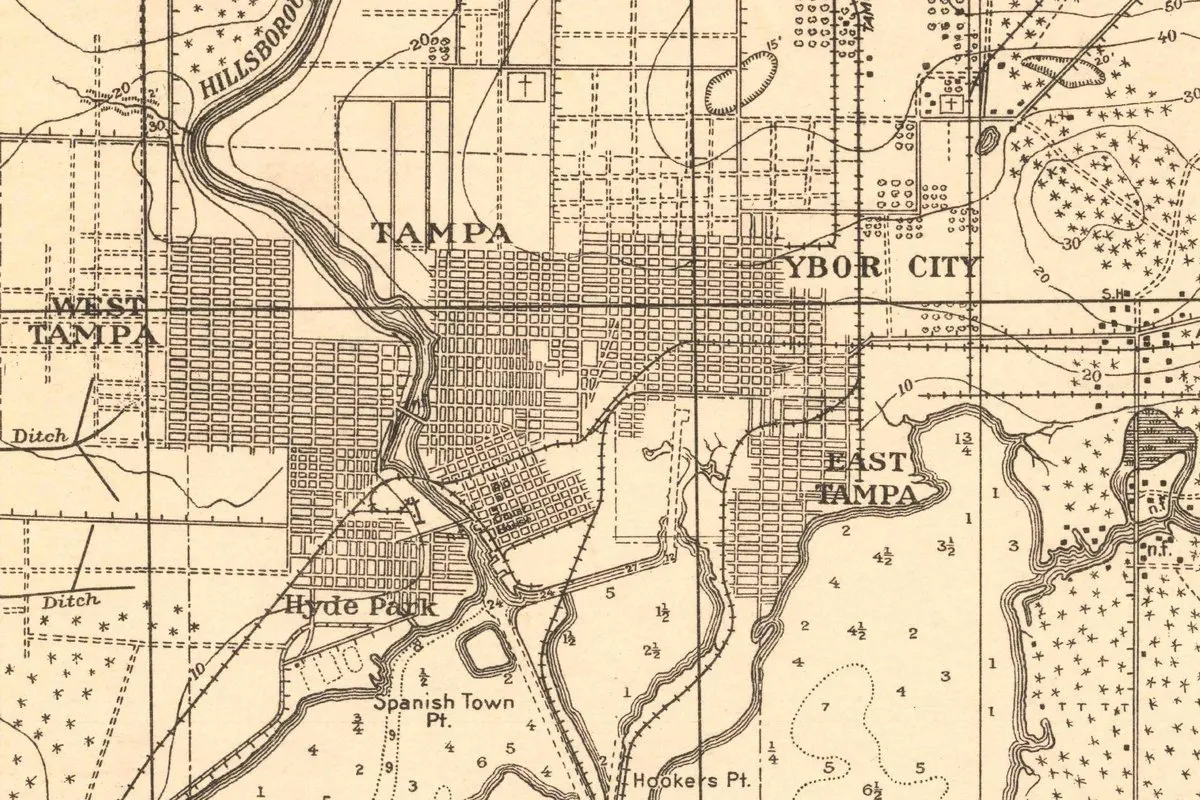
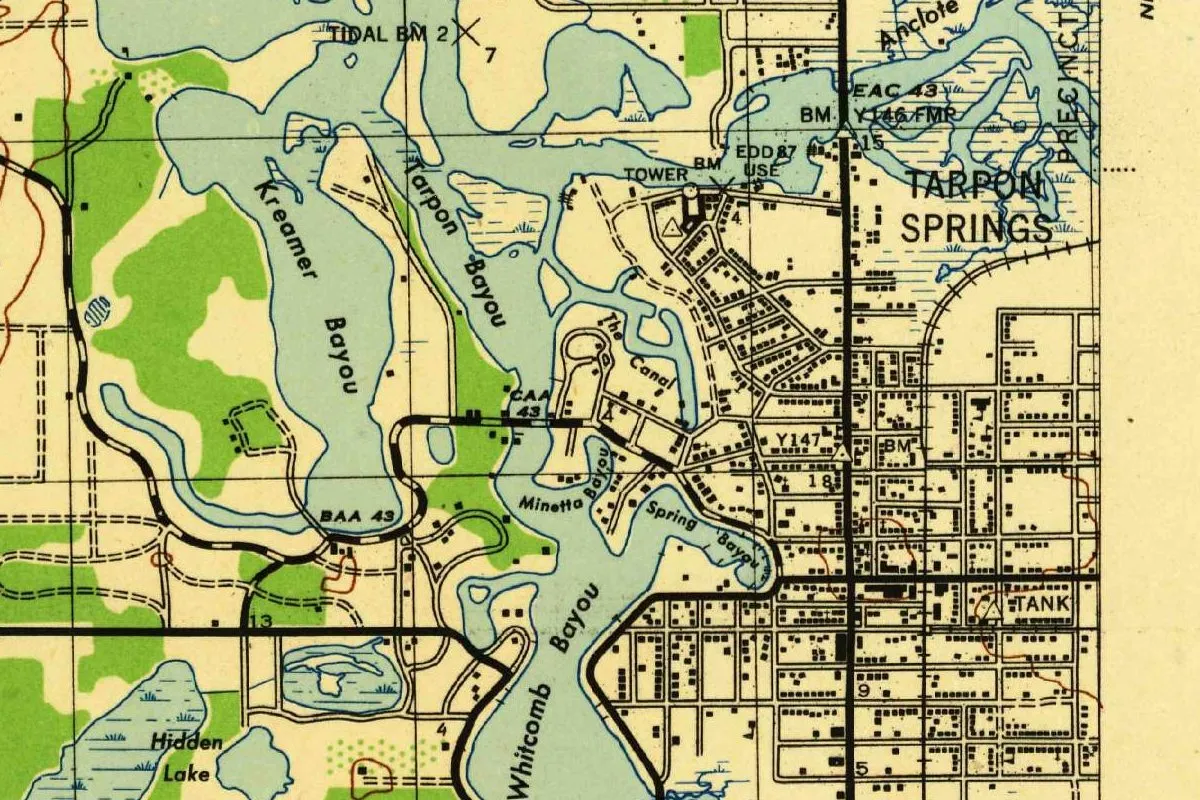
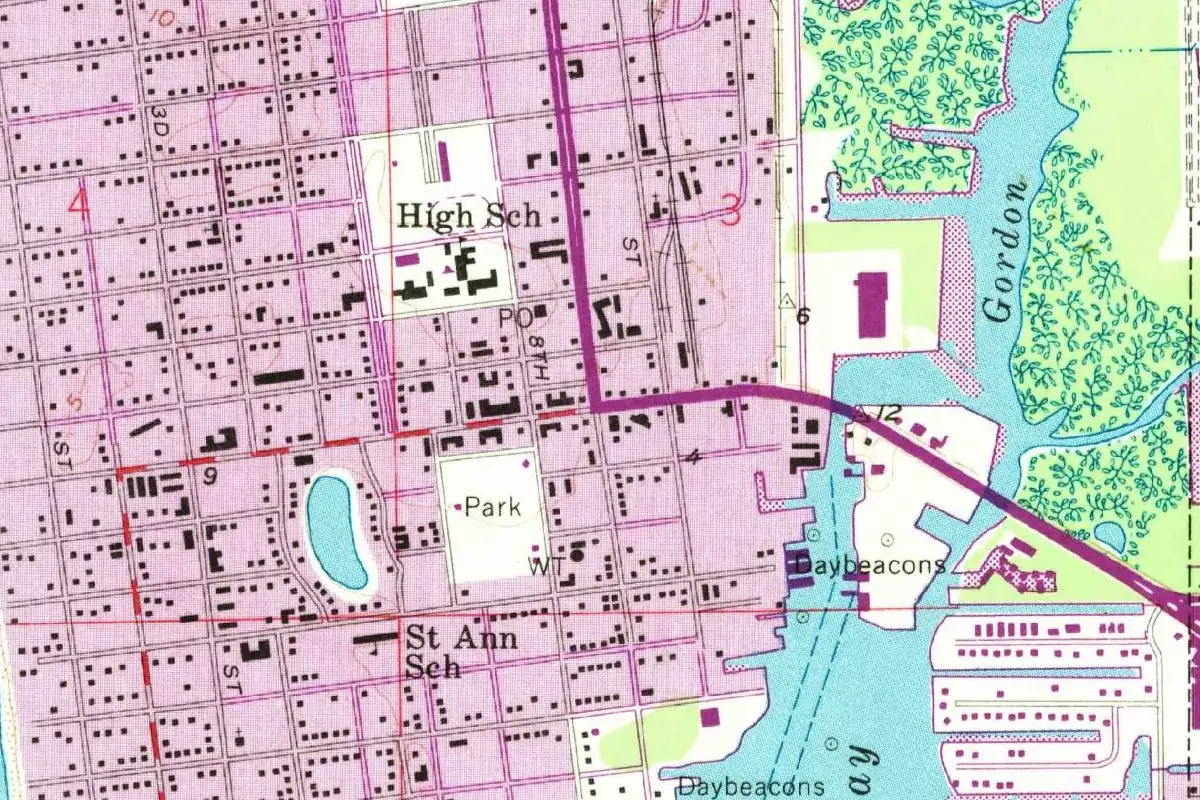
- U.S. Army Corps of Engineers, St. Petersburg quadrangle (USGS scan 348674). The source of the map at the top of this page.
Spot something wrong, or know more? Tell us here. You can also email us or use our contact page. Corrections are noted here with their date, never made silently.