Houma, Louisiana: A Tribe's Name, and Maybe a Red Crawfish
It's the name of the Houma people, a tribe of the Muskogean family that lived on the lower Mississippi before moving toward the coast. William Read wrote in 1927 that the word comes from Choctaw humma, red, perhaps for war paint or the color of moccasins and leggings, or from red crawfish, the tribe's war emblem.
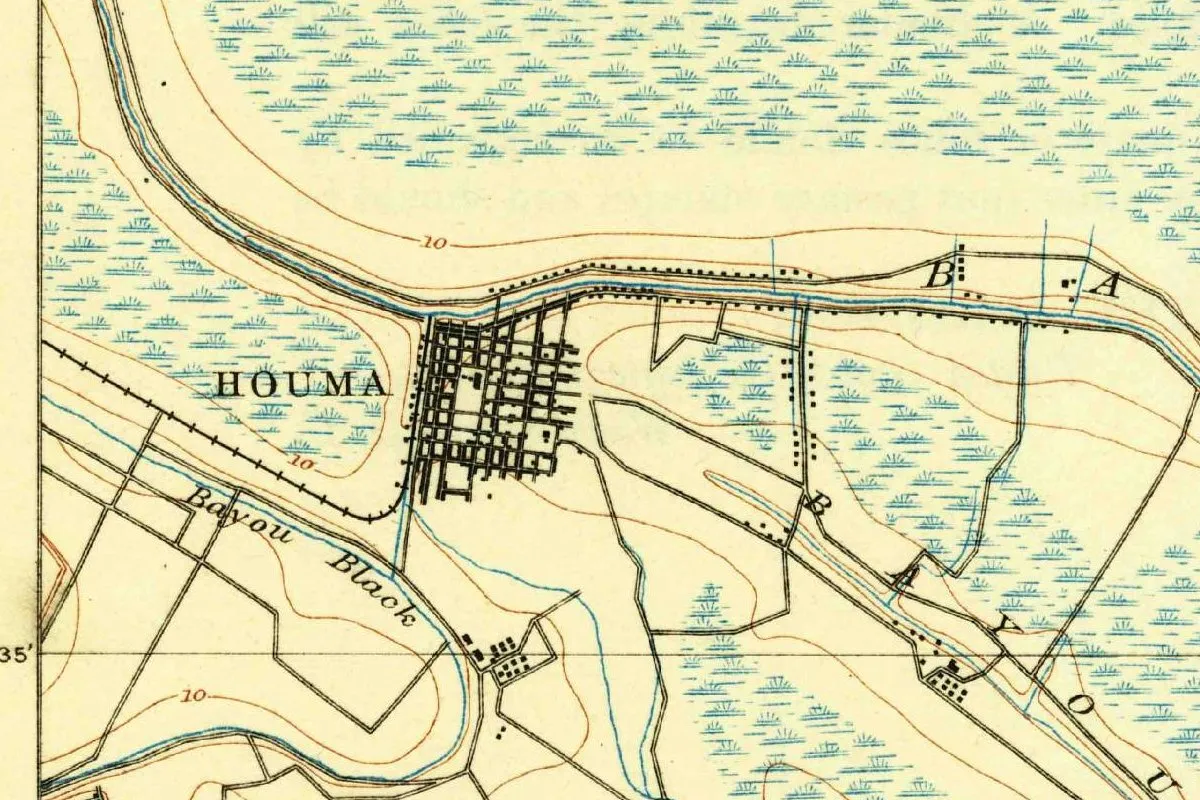
Houma, Louisiana, carries the name of the Houma people, a word traced to the Choctaw for red, and maybe to the red crawfish the tribe used as a war emblem. Which red it meant is where the sources part ways. That the town took the tribe’s name isn’t in question.
Three kinds of red
William A. Read laid out the options in Louisiana Place-Names of Indian Origin, a study Louisiana State University published in 1927. “The word Houma is taken from the Choctaw adjective humma or homma, ‘red,’” he wrote. Then he gave three ways the color might have attached to a people. It may have referred to the paint Houma warriors put on their bodies. It may have described the color of their moccasins and leggings. Or Houma may be a clipped form of the Choctaw Shakchi humma, “red crawfish,” because the red crawfish was the tribe’s war emblem.
That last idea came from John R. Swanton of the Bureau of American Ethnology. In 1911 he wrote that saktci-homa means red crawfish while houma “means simply ‘red,’” and that the French writer Dumont had reported the red crawfish as the Houma’s war emblem. An elderly Native woman who gave Swanton words in her language seemed to know of it too, he said. So the crawfish isn’t a modern tourist story, but it’s still only one of three readings. Read didn’t pick one, and if you want a single answer, he won’t give you one.
The spelling wandered as much as the meaning. Read lists Houma, Ouma, Homas, Omats, Oumats and Ommas.
From the Mississippi to the bayous
The Houma didn’t start out near today’s city. At the end of the 1600s, Read says, they lived in the northern part of what’s now West Feliciana Parish, where Tonti and then Iberville met them. In 1699 their settlement had 140 cabins and about 350 warriors. Fortier writes that a red pole marked the line between their hunting grounds and the Bayogoula’s, and that’s one of the stories, probably the likeliest, of how Baton Rouge got its name. After a disastrous fight with the Tunica in 1706 or 1709, the survivors moved to Bayou St. John and then to what’s now Ascension Parish. D’Anville’s map of 1732 shows a “Petits Houmas” settlement several miles north of the mouth of Bayou Lafourche.
Outsiders kept writing them off. John Sibley reported in 1805 that a few of the “Humas” were still living below Manchac “but scarcely exist, as a nation.” On February 17, 1820, Thomas Nuttall, traveling down the Mississippi toward New Orleans, passed General Hampton’s plantation and wrote:
“…at Ouma point, the name of a nation or tribe of Indians now nearly extinct…”
Alcée Fortier’s Louisiana went further in 1914 and called the tribe extinct. They were wrong. In 1907, according to Read, Swanton counted from 876 to 890 Houma, and Read wrote in 1927 that they lived along the coasts of Terrebonne and Lafourche parishes. Today the United Houma Nation lists its own addresses in Houma.
A parish seat on Bayou Terrebonne
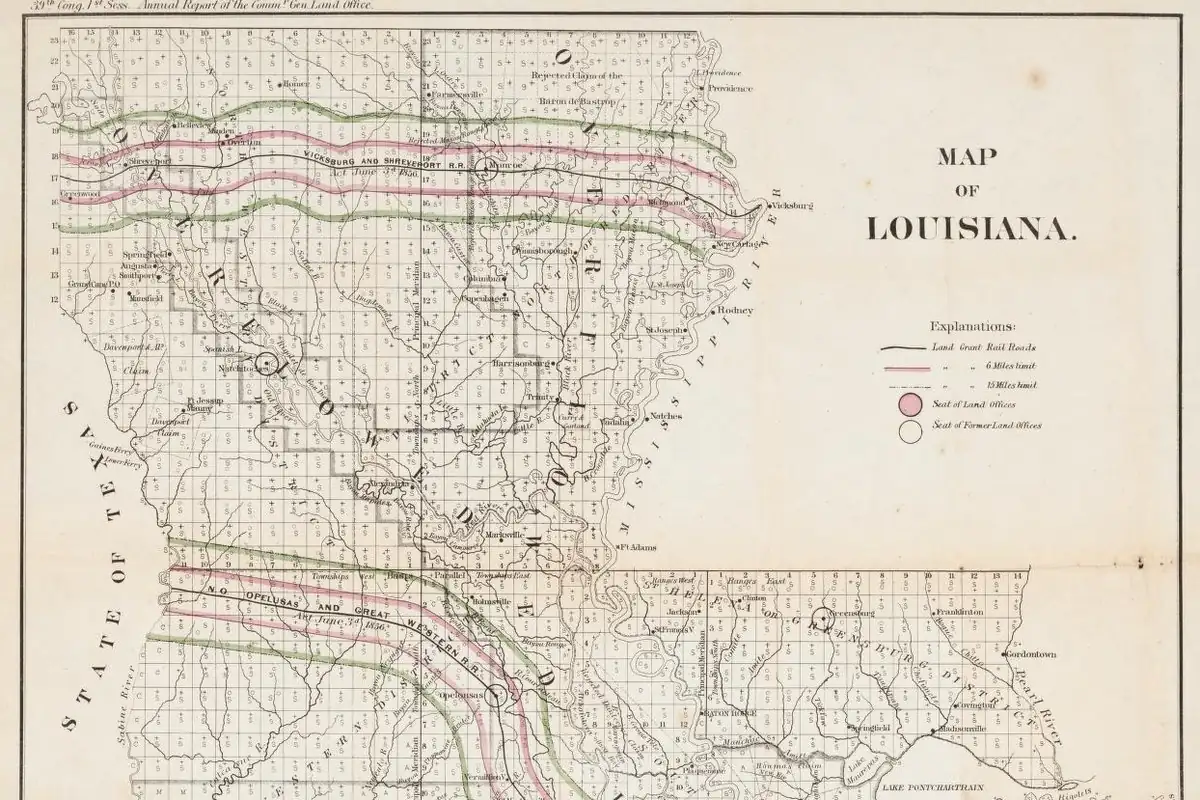
The town came later, and it was founded by settlers, not by the tribe. Read says Houma “was founded by R. H. and James B. Grinage” and in 1834 became the seat of justice of Terrebonne Parish, on Bayou Terrebonne, 52 miles (84 km) from the Walnut Street ferry in New Orleans. Fortier also says the town was made the parish seat in 1834. Louisiana’s historic district guidelines for Houma say the town was incorporated in 1848. According to the Thibodaux Chamber of Commerce, Terrebonne itself was split off in 1822 from Lafourche Interior, the parish whose seat is Thibodaux.
Two ways to say it
Read noted two local pronunciations, HOO-muh and HOH-muh, and saw a parallel in the word itself. “The fact that the local pronunciation is often [ho:mə], by the side of [hu:mə], reminds one of the similar variation in the Indian source,” he wrote, since the Choctaw word itself shows up as both humma and homma. So if you hear both around town, neither one is wrong. That’s a good rule for a name that’s been spelled at least six ways in Louisiana history.
Quick answers
What does the name Houma mean?
The old sources say “red,” from the Choctaw humma or homma. William Read gave three possible reasons, war paint, red moccasins and leggings, or “red crawfish,” the tribe’s war emblem, and didn’t choose among them.
Is it HOO-ma or HOH-ma?
Both. Read wrote in 1927 that the local pronunciation is often HOH-muh alongside HOO-muh, matching the two forms of the Choctaw word.
Are the Houma people extinct?
No. Nuttall called them “nearly extinct” in 1820, but Swanton counted 876 to 890 Houma in 1907, and the United Houma Nation is based in Houma today.
When did Houma become the parish seat?
In 1834, according to both Read and Fortier.
Key dates
- 1699The Houma settlement, in what is now West Feliciana Parish, has 140 cabins and about 350 warriors, William Read writes.
- 1732D'Anville's map shows a settlement of "Petits Houmas" several miles north of the mouth of Bayou Lafourche.
- 1805John Sibley reports a few Houma still living on the east side of the Mississippi below Manchac.
- 1820February 17: Thomas Nuttall passes Ouma point and calls the tribe "now nearly extinct."
- 1834Houma becomes the seat of justice of Terrebonne Parish.
- 1848Houma is incorporated, according to the state's historic district guidelines.
Getting there
Open Houma in Google Maps
Opens in a new tab. The pin is the center of Houma in the USGS place-name record.
The closest airports, Amtrak stations and intercity bus stops, measured in a straight line from the center of Houma.
Airports
- Louis Armstrong New Orleans International (MSY) Kenner 39 mi 63 km
- Baton Rouge Metro, Ryan Field (BTR) 70 mi 112 km
Amtrak trains
- Schriever station (SCH) 12 mi 19 km
- New Orleans station (NOL) 45 mi 73 km
Intercity buses
- Greyhound Gray Terrabone Casino 7 mi 11 km
- FlixBus New Orleans Bus Station 45 mi 73 km
Distances are as the crow flies, not by road. We don't list schedules or fares because they change; check with the airline, Amtrak or the bus company before you go. Official data (FAA commercial service airports (2025), FAA airport locations, Amtrak stations and Intercity Bus Atlas) from the FAA and the U.S. Bureau of Transportation Statistics, checked Nov 13, 2026.
Sponsored
Staying in Houma?
Compare hotels in Houma, Louisiana, on Expedia.
See hotels in HoumaWe may earn a commission if you buy through this link. It never changes what we write. Read our affiliate disclosure
Historical Sources & References
- William A. Read, Louisiana Place-Names of Indian Origin (1927), pp. 31-32. The Choctaw humma or homma, “red,” the three readings, the spellings, the tribe’s moves from 1699 on, d’Anville’s “Petits Houmas,” the 1907 count, the Grinage founders, the 1834 parish seat, the 52 miles from the Walnut Street ferry and the two local pronunciations.
- John R. Swanton, Indian Tribes of the Lower Mississippi Valley (1911), p. 29. Saktci-homa, “red crawfish,” houma “simply ‘red,’” and Dumont’s report of the red crawfish as the Houma war emblem.
- Thomas Nuttall, A Journal of Travels into the Arkansa Territory (1821), p. 241. The entry for February 17, 1820: General Hampton’s plantation “at Ouma point, the name of a nation or tribe of Indians now nearly extinct.”
- John Sibley, “Historical Sketches of the Several Indian Tribes in Louisiana” (1805), in Travels in the Interior Parts of America (1807), p. 53. “A few of the Humas still living on the east side of the Mississippi… below Manchack, but scarcely exist, as a nation.”
- Alcée Fortier, ed., Louisiana, vol. 1 (1914), pp. 515, 540. Houma made the parish seat in 1834 (p. 515); the Houma tribe, the red pole and the town “named for them” (p. 540). Also online: page 540.
- Louisiana Office of Cultural Development, Houma Historic District Design Review Guidelines, p. 11. Houma established in 1834 and incorporated in 1848.
- Thibodaux Chamber of Commerce, “Thibodaux & Parish History”. Terrebonne Parish formed in 1822 from the western part of Lafourche Interior.
- United Houma Nation, History. The tribe’s own site, with its addresses in Houma.
- GNIS feature 1629958 (U.S. Geological Survey). Houma’s entry and ID number, under Terrebonne Parish.
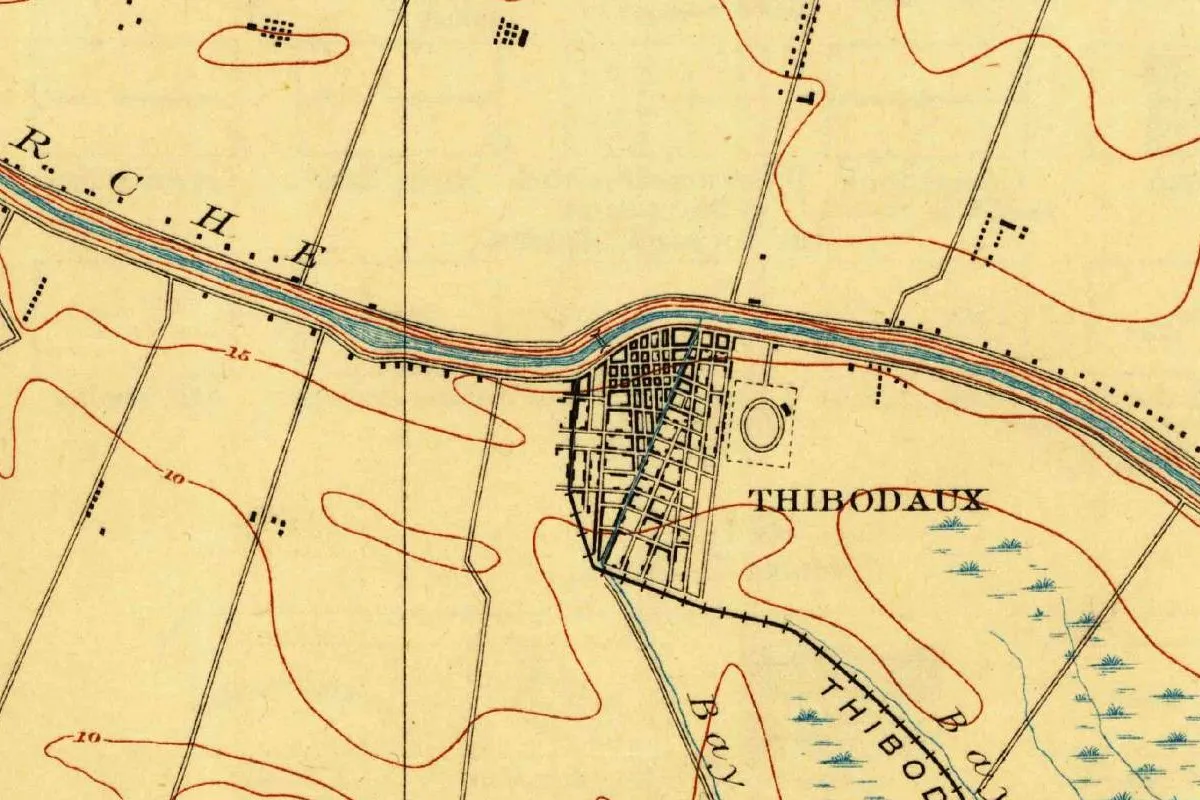
- U.S. Geological Survey, Houma sheet (1892). Houma’s small street grid and Bayou Black in 1892.
Spot something wrong, or know more? Tell us here. You can also email us or use our contact page. Corrections are noted here with their date, never made silently.