Bar Harbor, Maine: The Town Named for a Sandbar You Can Walk
Bar Harbor, Maine, takes its name from a sandbar that rises out of the water at low tide and lets you walk out to Bar Island. For most of its history, though, the town wasn’t called Bar Harbor at all. It was Eden, and Bar Harbor was its principal village.
The bar behind the name
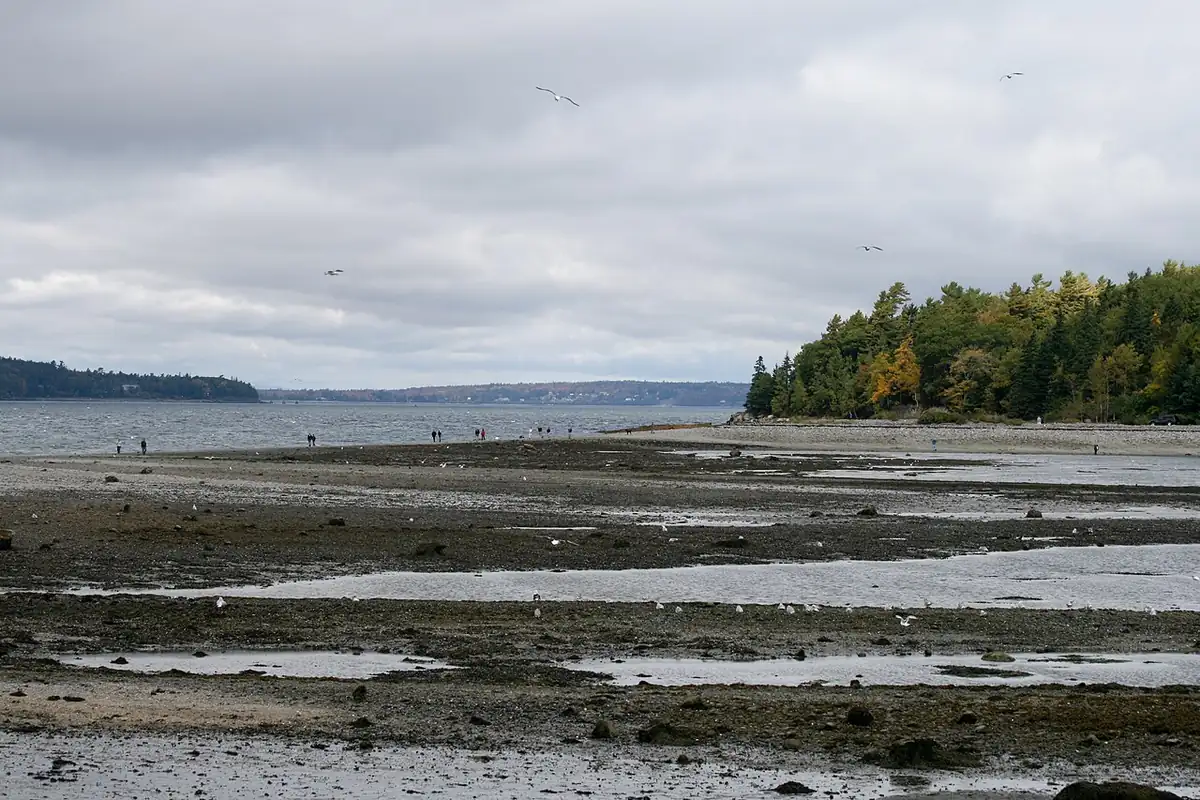
The 1911 edition of the Encyclopaedia Britannica put it in one line: “The name Bar Harbor, which displaced East Eden, was suggested by the bar which appears at low water between it and Bar Island.” The National Park Service says the same thing on an interpretive sign for nearby Acadia: the names Bar Island and Bar Harbor “are related to a sandbar that connects the island with the village.”
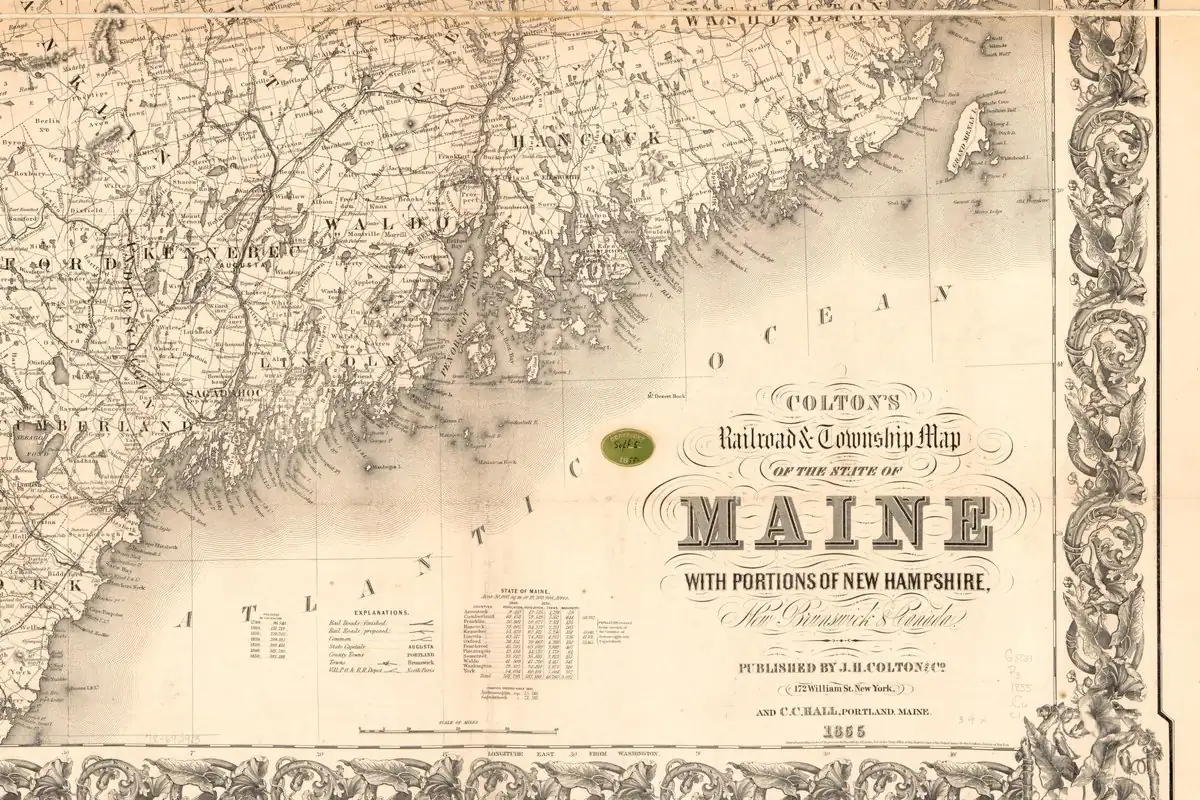
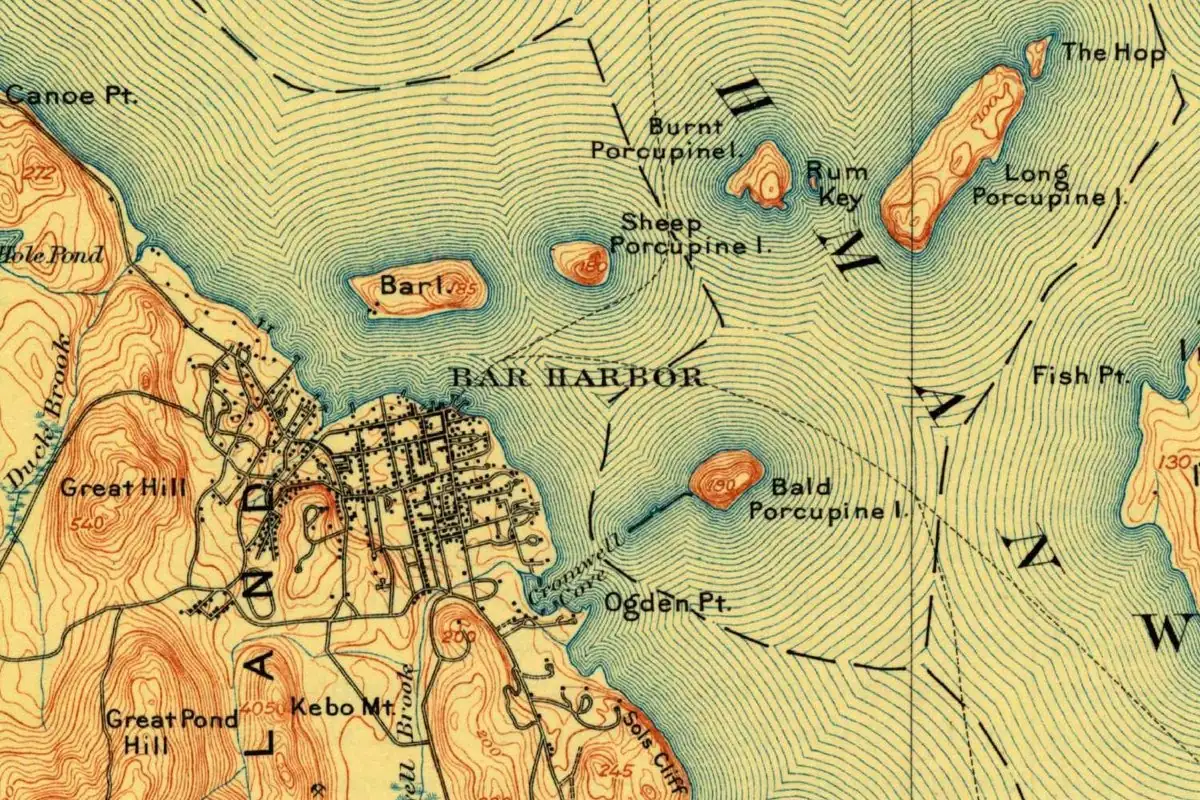
That bar still does its job. The Park Service sign says it makes the island “accessible by foot for about 1.5 hours either side of low tide,” so if you time it right, you can walk across the same bar that gave the town its name. The federal place-names database still lists Bar Harbor three ways: the village, the town and the bay itself. On the old map at the top of this page, the words BAR HARBOR sit right on the water, between the village and the island.
A town called Eden
The town around the village had another name. George J. Varney’s Gazetteer of the State of Maine (1881) says the first English settlement there came in 1763, by two families named Thomas and Higgins, and that Eden “was taken from Mount Desert and incorporated in 1796.” The Bar Harbor Historical Society still has the incorporation document, signed by Samuel Adams, along with the warrant that called the first town meeting.
Where Eden came from is less certain, and Varney gives two answers.
Richard Eden, the author
“The name was probably adopted in honor of Richard Eden, an early English author,” Varney wrote. Henry Gannett’s place-name books for the U.S. Geological Survey say the same in 1902 and 1905, with the same “probably” attached. Neither one explains why a town on a Maine island would honor him, and neither entry cites a source.
Or just the view
In the next sentence, Varney adds: “There is also a tradition that its natural beauties suggested its name.” His entry even quotes a description of the view from Green Mountain, the island’s highest peak, that ends: “The name of Eden is truly appropriate to this beautiful place.” That’s a compliment, not a record of who picked the name, so you can take your pick.
Eden votes to become Bar Harbor
By the early 1900s, the village was the famous one. Varney listed “Bar Harbor” in 1881 as “a village and post-office in Eden,” and by 1911 the Britannica called it “a well-known summer resort,” still an unincorporated village in the township of Eden. The island around it was the one Champlain had named in 1604 for its bare mountain summits, but the resort itself went by Bar Harbor.
In 1913, the Maine Legislature passed “An Act to Change the Name of the Town of Eden to the Town of Bar Harbor.” It said that “the name of the town of Eden, in the county of Hancock, shall cease,” but it didn’t force the change. The act would take effect only “upon acceptance of the same by the voters of the town of Eden, at any annual meeting.” The act was approved on March 25, 1913. The change didn’t come right away. The Bar Harbor Historical Society says the town’s name changed in 1918, five years later.
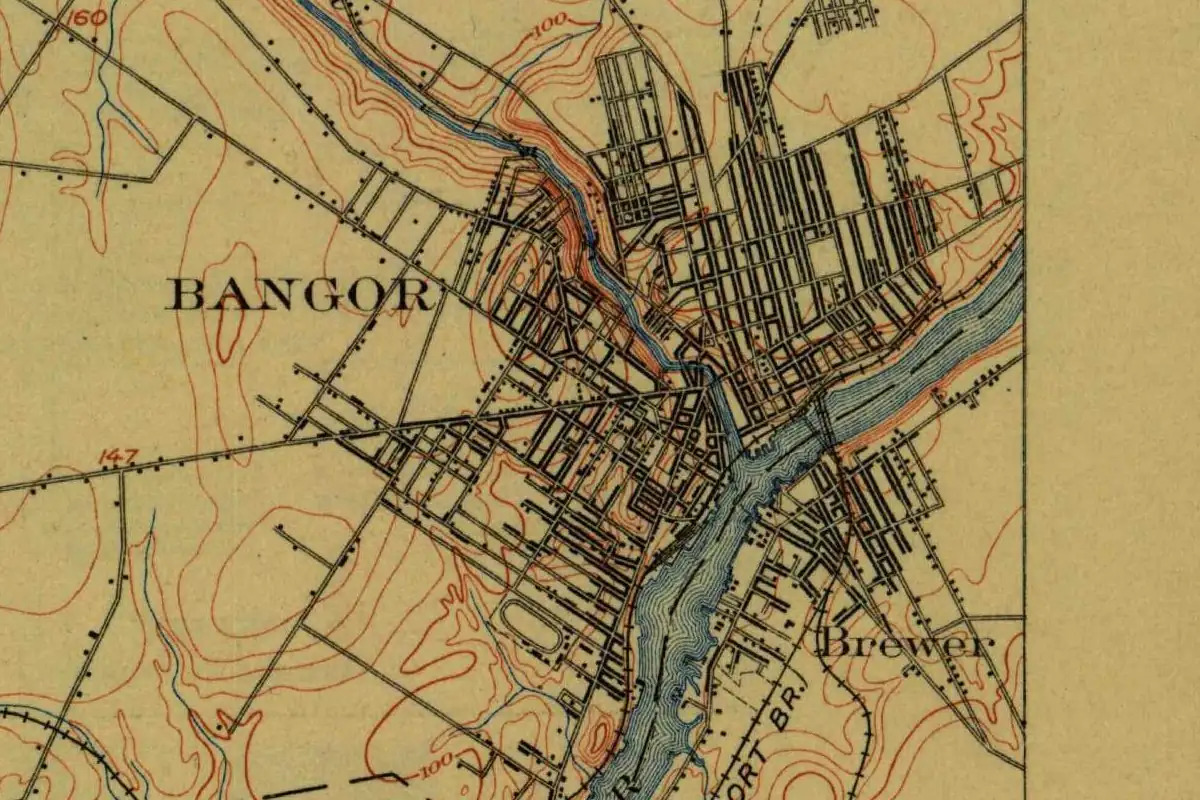
Getting a name through a law wasn’t new in these parts. Bangor, about 45 miles (72 km) to the northwest by the Britannica’s count, got its name in an act of incorporation in 1791. What’s unusual here is the direction: a town gave up the name of Eden for the name of its sandbar. During the Lafayette years, between 1919 and 1929, a local booklet was selling Bar Harbor as “The Gateway of the Lafayette National Park,” the park that later became Acadia. In Maine, it turns out, a bar you can walk across beat Eden.
Quick answers
Why is it called Bar Harbor?
Because of the bar. The 1911 Encyclopaedia Britannica says the name “was suggested by the bar which appears at low water between it and Bar Island,” and the National Park Service says the names Bar Island and Bar Harbor come from the sandbar that connects the island to the village.
When was Bar Harbor founded?
It depends on what you count. Varney’s 1881 gazetteer dates the first English settlement to 1763 and says the town was incorporated in 1796, but under the name Eden. It became Bar Harbor in 1918.
What was Bar Harbor called before?
Eden. The town carried that name from its incorporation in 1796 until 1918, and the 1911 Britannica says the village name Bar Harbor replaced an earlier one, East Eden.
When did Eden become Bar Harbor?
In 1918, according to the Bar Harbor Historical Society. A state act approved on March 25, 1913, allowed the change, but only once Eden’s voters accepted it at an annual town meeting.
Key dates
- 1763The first English settlement in what became Eden, by two families named Thomas and Higgins, per Varney's gazetteer.
- 1796Eden is taken from Mount Desert and incorporated as a town.
- 1881Varney's gazetteer lists Bar Harbor as a village and post office in Eden.
- 1913March 25: an act of the Maine Legislature to rename Eden as Bar Harbor is approved, to take effect once the town's voters accept it.
- 1918The town's name changes to Bar Harbor, according to the Bar Harbor Historical Society.
Getting there
The closest airports, Amtrak stations and intercity bus stops, measured in a straight line from the center of Bar Harbor.
Airports
- Bangor International (BGR) 42 mi 68 km
- Portland International Jetport (PWM) 116 mi 187 km
Amtrak trains
- Brunswick station (BRK) 93 mi 150 km
Intercity buses
- Concord Coach Lines Searsport 35 mi 57 km
- FlixBus Bangor Park & Ride 41 mi 66 km
Distances are as the crow flies, not by road. We don't list schedules or fares because they change; check with the airline, Amtrak or the bus company before you go. Official data (FAA commercial service airports (2025), FAA airport locations, Amtrak stations and Intercity Bus Atlas) from the FAA and the U.S. Bureau of Transportation Statistics, checked Nov 1, 2026.
Historical Sources & References
- Encyclopaedia Britannica, 11th ed. (1911), “Bar Harbor”. “The name Bar Harbor, which displaced East Eden, was suggested by the bar which appears at low water between it and Bar Island”; the village in the township of Eden, about 45 miles from Bangor.
- National Park Service, “Wayside: Ocean Highways”. The names Bar Island and Bar Harbor “are related to a sandbar that connects the island with the village,” walkable “for about 1.5 hours either side of low tide.”
- George J. Varney, A Gazetteer of the State of Maine (1881), pp. 100, 214-215. Bar Harbor as “a village and post-office in Eden”; the 1763 settlement; Eden “taken from Mount Desert and incorporated in 1796”; Richard Eden “probably,” and the tradition about its natural beauties.
- Henry Gannett, The Origin of Certain Place Names in the United States (USGS, 1902), p. 101. Eden, “named probably for Richard Eden, an early English author.” Also online: the 1905 second edition, p. 114, with the same entry.
- Bar Harbor Historical Society, “Town History”. The 1796 incorporation document signed by Samuel Adams, and the change of name to Bar Harbor in 1918.
- Acts and Resolves of the State of Maine (1913), Private and Special Laws, chapter 188. “An Act to Change the Name of the Town of Eden to the Town of Bar Harbor,” approved March 25, 1913, effective only when Eden’s voters accepted it at an annual meeting.
- Bar Harbor Publicity Committee, Maine’s Great Coast Resort, Bar Harbor. A promotional booklet from the Lafayette years calling Bar Harbor “The Gateway of the Lafayette National Park.”
- W. L. Grant, ed., Voyages of Samuel de Champlain, 1604-1618 (1907), p. 45. Champlain’s 1604 description of the island, whose summits were “destitute of trees,” and his name for it, Isle des Monts Déserts.
- GNIS feature 561569, Bar Harbor (U.S. Geological Survey). The official record and coordinates for the village, in Hancock County, alongside separate entries for the town (582341), the bay called Bar Harbor (561567) and Bar Island (561578).
Spot something wrong, or know more? Tell us here. You can also email us or use our contact page. Corrections are noted here with their date, never made silently.