Belfast, Maine: An Irish Name and a Penny-Toss Legend
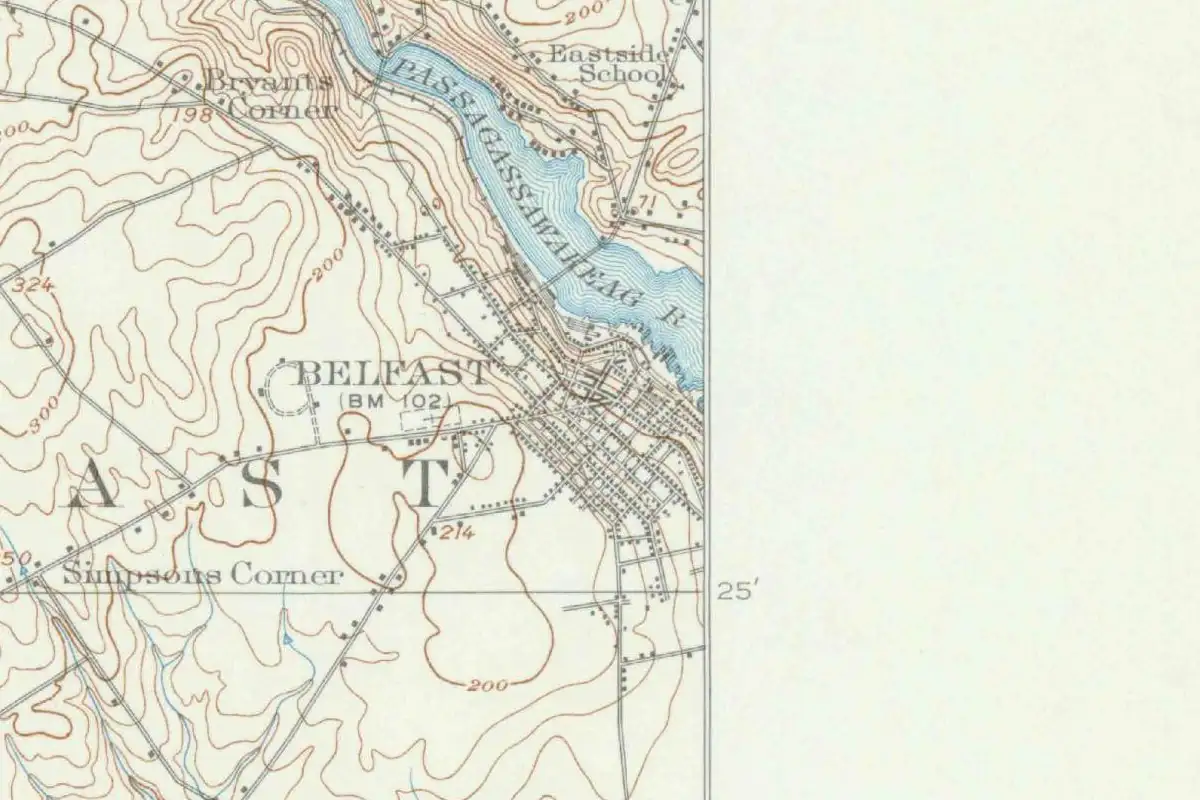
Belfast, Maine, is named for Belfast, Ireland, where settler James Miller was born. An old local tradition says a penny toss beat out Londonderry, the New Hampshire town most of his neighbors came from.
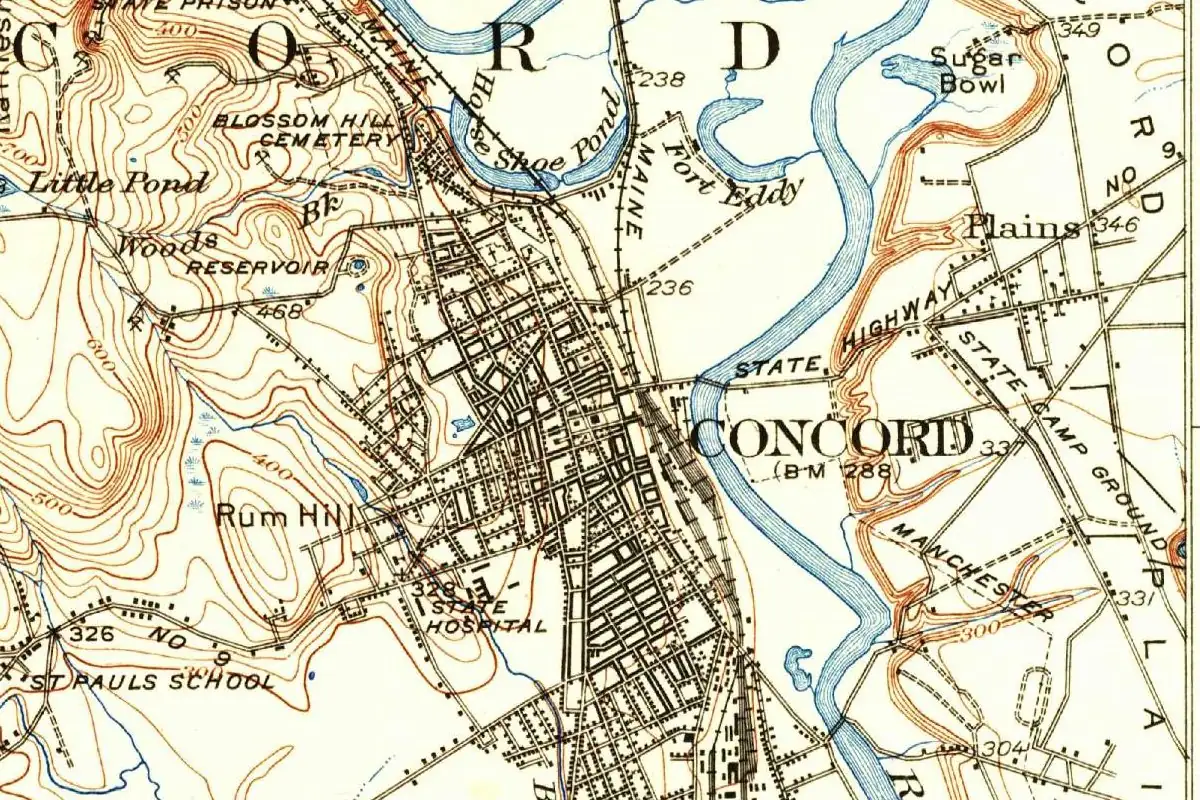
Settlers from Londonderry
The people who settled Belfast in 1770 mostly came from Londonderry, New Hampshire. Joseph Williamson, who wrote the city’s history in 1877, gives a whole chapter, “The Scotch-Irish,” to where those families came from: Scotch Presbyterians who had resettled Ulster, in the north of Ireland. His summary of that chapter says the newcomers were “erroneously regarded as Irish” when they reached Boston.
James Miller was one of the group that arrived in May 1770. His father, Alexander Miller, “emigrated from Belfast, Ireland, where the son was born, in 1712,” Williamson writes. The family had Maine ties, too. His father first settled “in Saco or Kennebunk,” Williamson says, and was lost at sea in 1740 sailing from Falmouth to Boston. Only then did the family move to Londonderry. James came to the Penobscot with his neighbors at about 58 and died in Belfast in 1794, at 82.
A blank space in the law
In June 1773 the settlers asked the Massachusetts General Court to make them a town. Their petition asked lawmakers to “Incorporate the Premises into a township by the name of Belfast.”
Here’s a small surprise. In the act that passed, the space for the name was left blank. A footnote in Williamson passes along a reported custom of leaving the name blank in these acts, for the governor to fill in. Belfast went in anyway, “according to the prayer of the petitioners,” and it’s the name in the printed copy. Williamson is clear about who came up with it: “It was suggested by James Miller.”
The penny
Then Williamson adds the part people remember. “One tradition is that many of the settlers preferred Londonderry, but Miller was strenuous for its present appellation, and that the dispute terminated by tossing a penny.”
Look at how carefully he puts it, and you can see the hedge. It’s “one tradition,” and he doesn’t give a source, a date or a witness. What the papers do show is that by the time the petition went to Boston, the choice was already made. So if you hear that Belfast was named by a coin flip, treat it as a good local story, not as part of the record.
Not the only one
Miller’s choice wasn’t unusual. Williamson counted six other towns named Belfast in the United States in 1874, in Arkansas, Iowa, Maryland, New York, Ohio and Virginia. Henry Gannett, in his 1905 government book on place names, confirms the basics, saying the town was “named by James Miller, an early settler, from his native city in Ireland,” and adds that “numerous other places in the country bear this name.” Whatever the other Belfasts’ stories are, the one in Maine can point to the man who picked its name, and to the petition where his neighbors asked for it.
Sources & further reading
- Joseph Williamson, History of the City of Belfast in the State of Maine (Portland, 1877). James Miller of Londonderry, arrived May 1770, born in Belfast, Ireland, in 1712, died January 11, 1794, aged 82 (p. 99); the petition endorsed June 8, 1773, asking for “a township by the name of Belfast” (pp. 124-125); the act with the name left blank and the custom behind it (pp. 125-126); “It was suggested by James Miller” and the penny tradition; six other Belfasts in 1874 (p. 126). Chapter V, “The Scotch-Irish,” with its summary line “Erroneously regarded as Irish” (p. 59). Alexander Miller “settled in Saco or Kennebunk” and was lost at sea in 1740 (p. 99).
- Henry Gannett, The Origin of Certain Place Names in the United States, 2nd ed. (USGS Bulletin 258, 1905), p. 41. “Named by James Miller, an early settler, from his native city in Ireland. Numerous other places in the country bear this name.”
- GNIS feature 562011 (U.S. Geological Survey). The federal record for the city of Belfast.
Spot something wrong, or know more? Tell us here. You can also email us or use our contact page. Corrections are noted here with their date, never made silently.