How Paterson, New Jersey, Got a Governor's Name
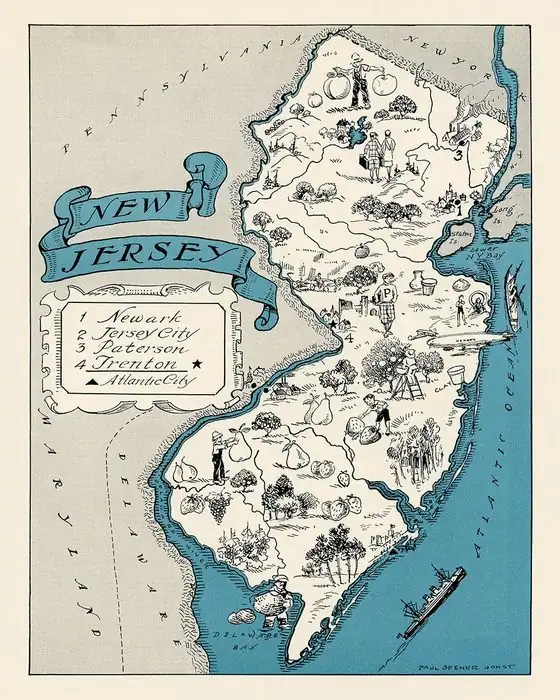
New Jersey's 1791 charter for Alexander Hamilton's Society for Establishing Useful Manufactures said its future mill district would become "The Corporation of the Town of Paterson," honoring Governor William Paterson, who signed it. The society only settled on the Great Falls of the Passaic in 1792. Gannett, William Nelson and the National Park Service all name the governor.
A town on paper, with a name and no address
Paterson, New Jersey, had its name before it had a location: a 1791 state charter named the future factory town for Governor William Paterson. The law created the Society for Establishing Useful Manufactures, the company behind Alexander Hamilton’s plan for American industry, and it said that once the society chose a district for its mills, the people living there would become a town called Paterson.
Section 26 of the act spells it out. If a majority of the taxpayers in the chosen district, up to six miles (10 km) square, didn’t object in writing within 60 days, they would
“…be created and become a body corporate and politic in deed and law, by the name and title of, ‘The Corporation of the Town of Paterson,’ to have perpetual succession…”
The New Jersey Legislature passed the charter on November 22, 1791, according to William Nelson, who wrote its history for the New Jersey Historical Society in 1887. The National Park Service says Paterson, “an ardent supporter of Hamilton’s plans,” signed it that November. So the governor put his name to a law that named a town after him, a town that didn’t yet have a single street, house or site.
Hamilton’s company, the governor’s name
Nelson sums it up in one sentence: “The charter having been passed, it was decided to name the new town after William Paterson, then Governor of the State.” The name was already in the charter’s text, as Nelson himself quotes two pages earlier, so his “decided” reads best as a summary, not a second vote. Henry Gannett’s 1905 place-name book for the U.S. Geological Survey says it in fewer words: Paterson was “named for William Paterson, an early governor.”
He was more than an early governor. The Federal Judicial Center’s biography says Paterson was born in County Antrim, Ireland, in 1745, went to the Constitutional Convention in 1787 as a delegate, sat in the U.S. Senate from 1789 to 1790, and was governor and chancellor of New Jersey from 1790 to 1793. George Washington put him on the U.S. Supreme Court in March 1793, and he served there until he died in 1806.
You might expect the city to be named for Hamilton, and with reason. The Park Service calls him the society’s co-founder, and Nelson notes that “the Secretary of the Treasury” sat in on most of the directors’ meetings. But the name on the map came from the governor’s office, not the Treasury.
Then they went looking for a site
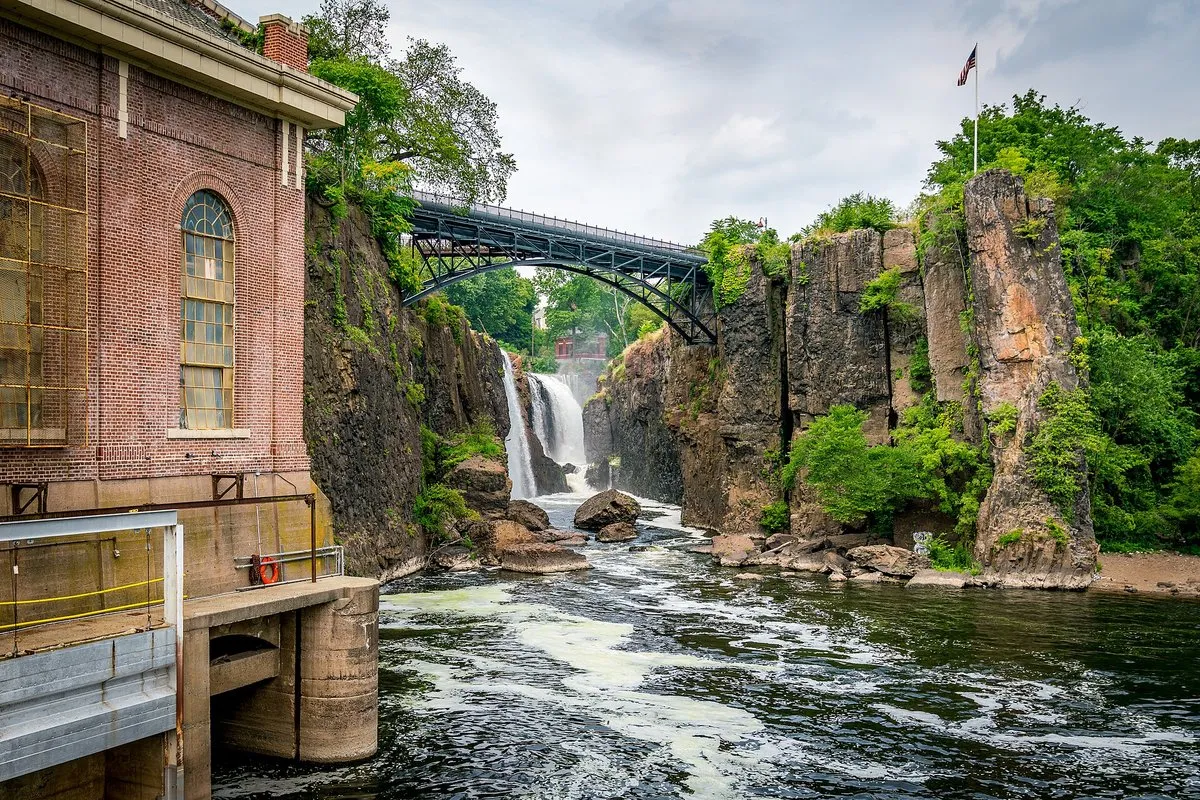
When the bill was first proposed, Nelson says, plenty of people assumed the town would go up on the Raritan River. At a meeting in Newark on May 19, 1792, the directors decided on the Passaic instead, somewhere between Newark and Chatham bridge. On July 4, 1792, at 8 a.m., they met at the Passaic Falls, and a committee reported that “upon consulting with Col. Hamilton they judged it most prudent to fix the principal seat of the factory at the great falls.”
Nelson says the society then bought about 700 acres above and below the falls and soon started digging a raceway, a channel to carry water to the mills. The Park Service dates the purchase of those 700 acres to May 1792 and says the first raceway was built in early 1794. Nelson tells the purchase after the July 4 decision and gives it no month, so the order of events depends on which account you read.
The planner was Pierre Charles L’Enfant, who, in Nelson’s words, “had just mapped out the new national capital.” His plan for avenues radiating from what Nelson calls Colt’s Hill “never got beyond the paper stage.” The Park Service adds that L’Enfant left the project, and the society brought in Peter Colt of Hartford, Connecticut, in 1793.
The corporation that never met
Here’s the strange part. The “Corporation of the Town of Paterson” that the charter described, with a mayor, a recorder, 12 aldermen, 12 assistants and its own courts, never came to life. “The town government never became an accomplished fact,” Nelson wrote. What lasted was the name, which stuck to the mill town at the falls. The Park Service now calls Paterson “the first planned industrial city in the nation.”
The governor stayed close to the law that carried his name. Paterson himself revised New Jersey’s statutes for an edition printed in Newark in 1800, “under the authority of the Legislature,” with “By William Paterson” on the title page. The 1791 charter is in it, on page 112, with “The Corporation of the Town of Paterson” set in type. If you open it, you’ll find the town’s name inside a book with the same name on its title page.
Quick answers
Is Paterson, New Jersey, named after Alexander Hamilton?
No. Hamilton co-founded the society that built the town, but Nelson, Gannett and the National Park Service all say the name honors Governor William Paterson.
Who was William Paterson?
New Jersey’s governor when the 1791 charter passed. The Federal Judicial Center lists him as a delegate to the 1787 Constitutional Convention, a U.S. senator, governor from 1790 to 1793 and a Supreme Court justice from 1793 until his death in 1806.
Was Paterson named before the site was picked?
Yes. The charter of November 22, 1791, already called the future town Paterson. The directors didn’t fix the factory at the Great Falls until July 4, 1792, according to Nelson.
When was Paterson founded?
It depends on what you count. The charter passed in November 1791, the society bought land at the falls in 1792 (in May, says the Park Service), and the first raceway was built in early 1794.
Key dates
- 1745William Paterson is born in County Antrim, Ireland.
- 1791November 22: the New Jersey Legislature passes the charter that calls the society's future town Paterson.
- 1792May 19: the directors, meeting in Newark, pick the Passaic River. July 4: at the falls, they fix the factory at the Great Falls.
- 1793Peter Colt replaces L'Enfant on the project, and Washington puts Paterson on the U.S. Supreme Court.
- 1794The first raceway is built early in the year, carrying water from above the falls to the mills.
- 1800Paterson's revised edition of New Jersey's laws prints the 1791 charter, town name and all, on page 112.
- 1806William Paterson dies, still a Supreme Court justice.
Getting there
Open Paterson in Google Maps
Opens in a new tab. The pin is the center of Paterson in the USGS place-name record.
The closest airports, Amtrak stations and intercity bus stops, measured in a straight line from the center of Paterson.
Airports
- Newark Liberty International (EWR) 15 mi 25 km
- Laguardia (LGA) New York 18 mi 30 km
Amtrak trains
- Newark station (NWK) 13 mi 20 km
- Yonkers station (YNY) 14 mi 23 km
Intercity buses
- OurBus Paterson, NJ (1212 Madison Ave.) 1 mi 2 km
- ShortLine Hudson Grandview Ave & Nancy Ln 5 mi 7 km
- Adirondack Trailways Trailways · Ridgewood 6 mi 10 km
Distances are as the crow flies, not by road. We don't list schedules or fares because they change; check with the airline, Amtrak or the bus company before you go. Official data (FAA commercial service airports (2025), FAA airport locations, Amtrak stations and Intercity Bus Atlas) from the FAA and the U.S. Bureau of Transportation Statistics, checked Nov 13, 2026.
Sponsored
Staying in Paterson?
Compare hotels in Paterson, New Jersey, on Expedia.
See hotels in PatersonWe may earn a commission if you buy through this link. It never changes what we write. Read our affiliate disclosure
Historical Sources & References
- Laws of the State of New-Jersey, revised by William Paterson (Newark, 1800), p. 112. Section XXVI of the 1791 act incorporating the society: a district of up to six miles square, the 60 days for taxpayers to object, and the quoted clause creating “The Corporation of the Town of Paterson” (long s printed as s). The title page shows Paterson as the editor.
- William Nelson, The Founding of Paterson as the Intended Manufacturing Metropolis of the United States (1887), pp. 11-14. The town corporation and its officers (p. 11); the charter passed November 22, 1791, the town government that “never became an accomplished fact” and the Raritan guess (p. 12); “it was decided to name the new town after William Paterson, then Governor of the State” and Hamilton at the directors’ meetings (p. 13); the Newark meeting of May 19, 1792, the Great Falls choice of July 4, 1792, the 700 acres, the raceway and L’Enfant (p. 14).
- Henry Gannett, The Origin of Certain Place Names in the United States (USGS, 1905), p. 239. Paterson, “named for William Paterson, an early governor.”
- National Park Service, “The Birthplace of the American Industrial Revolution”. Hamilton as co-founder of the society in 1791, the 700 acres bought in May 1792, the name for Governor Paterson, who “signed the S.U.M.’s charter in November of 1791,” “the first planned industrial city in the nation,” Peter Colt in 1793 and the first raceway in early 1794.
- Federal Judicial Center, “Paterson, William”. Born in County Antrim in 1745; Constitutional Convention, 1787; U.S. senator, 1789-1790; governor and chancellor of New Jersey, 1790-1793; Supreme Court from March 1793 until his death in 1806.
- GNIS feature 879164 (U.S. Geological Survey). Paterson’s entry in the national names database, filed under Passaic County and the Paterson quadrangle.
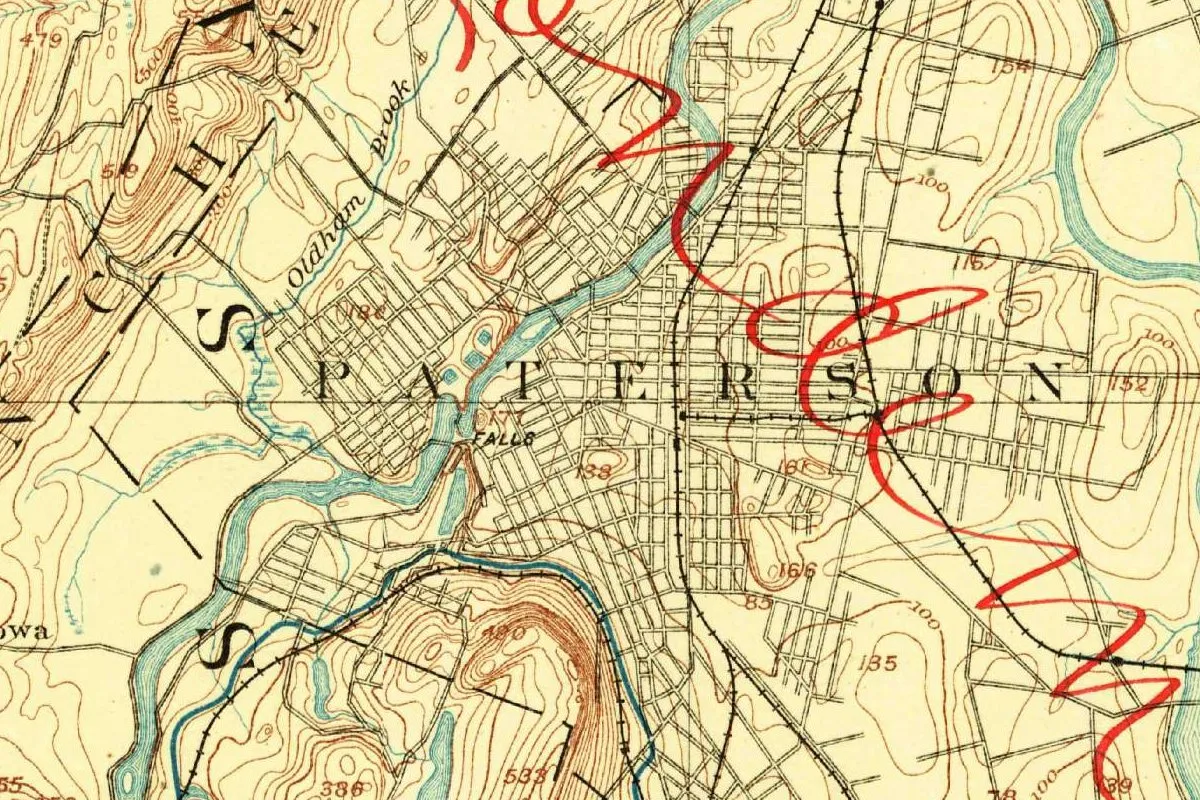
- U.S. Geological Survey, Paterson sheet (1888). An 1888 survey sheet at 1:62,500 that marks the city, the bend of the Passaic and the falls.
Spot something wrong, or know more? Tell us here. You can also email us or use our contact page. Corrections are noted here with their date, never made silently.