Jersey City, New Jersey: Chartered as the City of Jersey
Jersey City, New Jersey, takes its name from a state law of January 28, 1820. The title incorporated the City of Jersey, but the first section named the new corporation Jersey City, and that form stuck. Henry Gannett's 1905 federal guide traced the word Jersey to the Channel Island that also gave New Jersey its name.
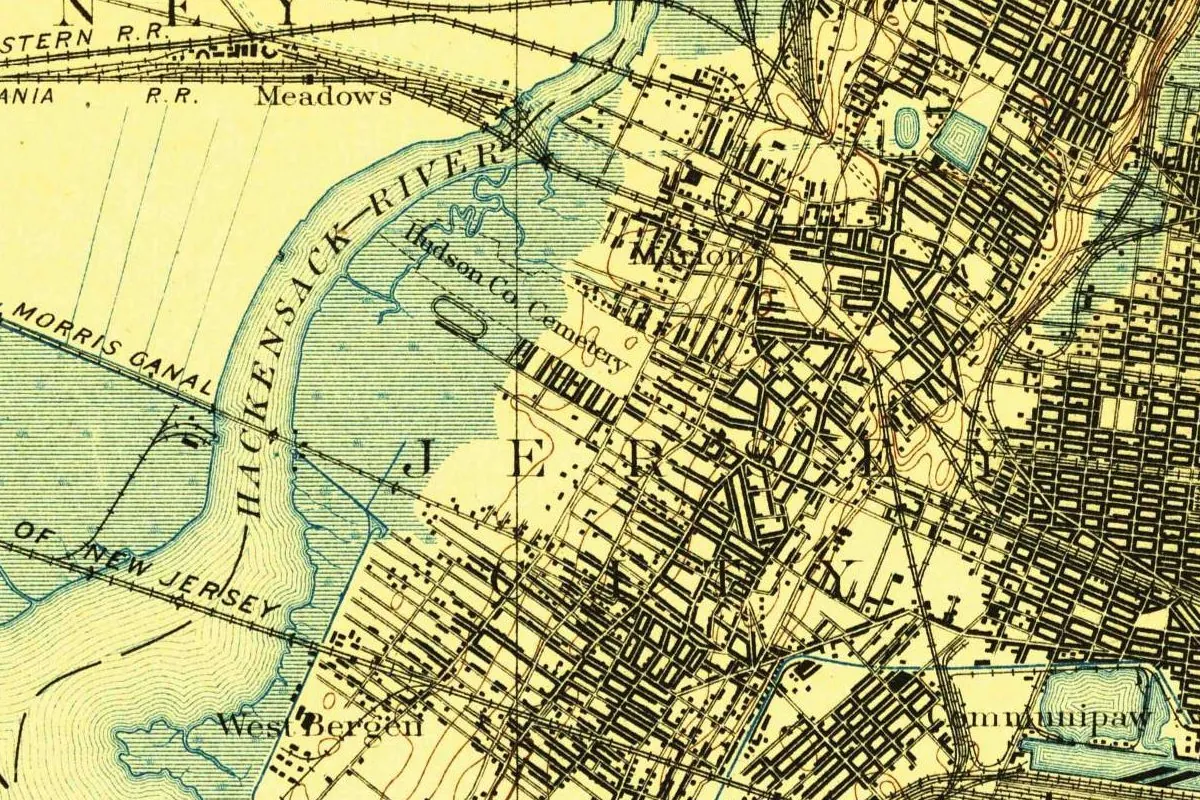
One law, two names
Jersey City, New Jersey, got its name from an 1820 law whose title said the City of Jersey and whose first section said Jersey City instead. The second version is the one that stuck. As for the word Jersey, Henry Gannett’s 1905 federal guide to American place names traced it to “one of the channel islands of England,” the same island that gave the whole state its name.
The law was “An Act to Incorporate the City of Jersey, in the County of Bergen,” passed on January 28, 1820. Its first section covers the land “formerly called Powles’ Hook,” then owned by a land company called the Jersey Associates. As printed in an 1853 collection of the city’s charters, it says the people living there:
“shall be known as such by the name and description of “Jersey City,” and by that name the said freeholders and other inhabitants shall have perpetual succession…”
So the city was born with its name written two ways in the same document, and you can still read both on the same page.
Pigs, dogs and the Town of Jersey
The law didn’t come out of nowhere. In 1804 three New York lawyers, Richard Varick, Jacob Radcliff and Anthony Dey, bought Paulus Hook, a point of land facing Manhattan across the Hudson, and Harriet Phillips Eaton’s 1899 history calls them “the founders of Jersey City.” On November 10, 1804, the Legislature incorporated their company as the “Associates of the Jersey Company,” in a bill Eaton says was drawn up by Alexander Hamilton. For fifteen years the Associates ran the place themselves.
Then, on November 15, 1819, their trustees decided to ask the Legislature for “a corporation for the Town of Jersey, with power to forbid the running at large of swine, dogs, horses, or other animals.” That’s how Charles H. Winfield quoted the resolution in his 1891 history of the city’s founding, and he couldn’t resist a joke about it: he pictured “the contented pig dripping from a refreshing wallow, taking his siesta on the door step” of a solid citizen. The petition went in for the Town of Jersey. About two months later, it came out as a city.
The tautological abomination
Winfield didn’t like the result. He wrote that the act “was drawn to incorporate ‘The City of Jersey,’ and so the name remained in the title, but in the body of the act it was changed to ‘Jersey City.’” If those behind it had called it the City of New Jersey, the way the city across the river was called the City of New York, he thought the name would have fit. Instead, in his words, the place became “the indefinite ‘Jersey City,’ and sometimes the tautological abomination, ‘City of Jersey City.’”
The lawmakers kept tinkering with the government, not the name. Under the 1820 act, five landowners were elected each year as “The Board of Selectmen of Jersey City.” A new act on January 23, 1829, made the corporate name “The Board of Selectmen and Inhabitants of Jersey City.” On February 22, 1838, power passed to the “Mayor and Common Council of Jersey City,” and Eaton says that’s when the city stopped being part of Bergen Township. Hudson County was split off from Bergen County in 1840.
Paulus Hook and the island in the Channel
Before any of that, the point of land had a Dutch name. Eaton says that in May 1633 Michael Poulaz, or Paulusson, an officer of the Company, was living at Pavonia, and “probably occupied a hut on the Point which received from him the name of Paulus Hook.” The 1820 act spells it Powles’ Hook.
The Jersey part is harder to pin to one person. Gannett’s 1905 book says Jersey City was “originally called the ‘city of Jersey,’” named from the Channel Island. Later in the book, he says New Jersey was a grant to Sir George Carteret, “who named it for his home on the Isle of Jersey.” Neither the act nor Winfield explains why the Associates picked the word, so if you’re hoping for a founder who stood up and proposed it, you won’t find one in these records. What you can say is that the land company was the Jersey Company, its petition asked for the Town of Jersey, and the law turned that into Jersey City.
The name that swallowed the neighbors
The name Winfield called indefinite ended up growing. Eaton writes that in 1869 there was a push to merge the cities and townships of Hudson County east of the Hackensack River “into one under the name of Jersey City.” At the election of October 5, 1869, Jersey City, Bergen and Hudson City became one. A name the 1820 law wrote two different ways ended up covering all three places.
Quick answers
What was Jersey City called before it was Jersey City?
Paulus Hook, or Powles Hook in English spelling. The 1820 act describes the land as “formerly called Powles’ Hook,” and in 1819 the Associates’ trustees asked for a corporation for the “Town of Jersey.”
Is Jersey City named after the island of Jersey?
According to Henry Gannett, yes. His 1905 guide says the city was named from one of England’s Channel Islands, and that New Jersey’s name came from Sir George Carteret’s home on the Isle of Jersey.
Who founded Jersey City?
Harriet Phillips Eaton’s 1899 history names Richard Varick, Jacob Radcliff and Anthony Dey, the New York lawyers who bought Paulus Hook in 1804. Their company, the Associates of the Jersey Company, was incorporated that November.
When did Jersey City get its name?
On January 28, 1820. The act’s title incorporated the City of Jersey, but its first section named the corporation Jersey City.
Key dates
- 1804November 10: the Legislature incorporates the Associates of the Jersey Company, owners of Paulus Hook, in a bill drawn up by Alexander Hamilton.
- 1819November 15: the Associates' trustees decide to ask the Legislature for a corporation for the Town of Jersey.
- 1820January 28: an act incorporates the City of Jersey, in the County of Bergen, and calls the new corporation Jersey City.
- 1829January 23: a new act renames the corporation The Board of Selectmen and Inhabitants of Jersey City.
- 1838February 22: the Mayor and Common Council of Jersey City take over, and the city leaves Bergen Township.
- 1840Hudson County is set off from Bergen County.
- 1869October 5: voters merge Jersey City, Bergen and Hudson City into one city under the name Jersey City.

Getting there
Open Jersey City in Google Maps
Opens in a new tab. The pin is the center of Jersey City in the USGS place-name record.
The closest airports, Amtrak stations and intercity bus stops, measured in a straight line from the center of Jersey City.
Airports
- Newark Liberty International (EWR) 5 mi 9 km
- Laguardia (LGA) New York 11 mi 18 km
Amtrak trains
- New York station (NYP) 5 mi 7 km
- Newark station (NWK) 5 mi 7 km
Intercity buses
- OurBus Jersey City, NJ (Asian Food Market at 701 NJ-440, Jersey City, NJ 07304, United States) 1 mi 2 km
- Suburban Transit Greenwich St north of Morris St 4 mi 6 km
- ShortLine Hudson Trinity Pl & Exchange Alley 4 mi 6 km
Distances are as the crow flies, not by road. We don't list schedules or fares because they change; check with the airline, Amtrak or the bus company before you go. Official data (FAA commercial service airports (2025), FAA airport locations, Amtrak stations and Intercity Bus Atlas) from the FAA and the U.S. Bureau of Transportation Statistics, checked Nov 13, 2026.
Sponsored
Staying in Jersey City?
Compare hotels in Jersey City, New Jersey, on Expedia.
See hotels in Jersey CityWe may earn a commission if you buy through this link. It never changes what we write. Read our affiliate disclosure
Sponsored
Want the spooky side of Jersey City?
The name has its story above. For the ghost stories, US Ghost Adventures runs walking ghost tours in Jersey City.
See ghost tours in Jersey CityWe may earn a commission if you book through this link. It never changes what we write. Read our affiliate disclosure
Historical Sources & References
- Charters of, and Acts Relating to Jersey City (1853), p. 75. The text of the act of January 28, 1820: the land “formerly called Powles’ Hook,” the name “Jersey City” in its first section and “The Board of Selectmen of Jersey City.”
- Charles H. Winfield, A Monograph on the Founding of Jersey City (1891), pp. 72-73. The trustees’ resolution of November 15, 1819, for the “Town of Jersey” and its swine, the act drawn for “The City of Jersey” and changed to “Jersey City” in its body, and the “tautological abomination.”
- Harriet Phillips Eaton, Jersey City and Its Historic Sites (1899), pp. 18 and 75-77. Michael Paulusson and the name Paulus Hook, the 1804 purchase by Varick, Radcliff and Dey, the Associates of the Jersey Company and Hamilton’s bill, the acts of 1820, 1829 and 1838, Hudson County in 1840 and the 1869 merger.
- Henry Gannett, The Origin of Certain Place Names in the United States (USGS, 1905), pp. 169 and 223. Jersey City, “originally called the ‘city of Jersey,’” named from one of the Channel Islands; New Jersey, named by Sir George Carteret for the Isle of Jersey.
- Jersey City Free Public Library, “Associates of the Jersey Company”. The company’s 1819 request for a Town of Jersey, the act of January 28, 1820, the Board of Selectmen and the 1829 charter.
- J. Owen Grundy and Louis P. Caroselli, “History of Forms of Government” (City of Jersey City, 1970). The 1820 charter, whose body “reads ‘Jersey City,’” and the growth of the city out of Powles or Paulus Hook.
- GNIS feature 877450 (U.S. Geological Survey). Jersey City’s entry as a populated place in Hudson County, with its coordinates.
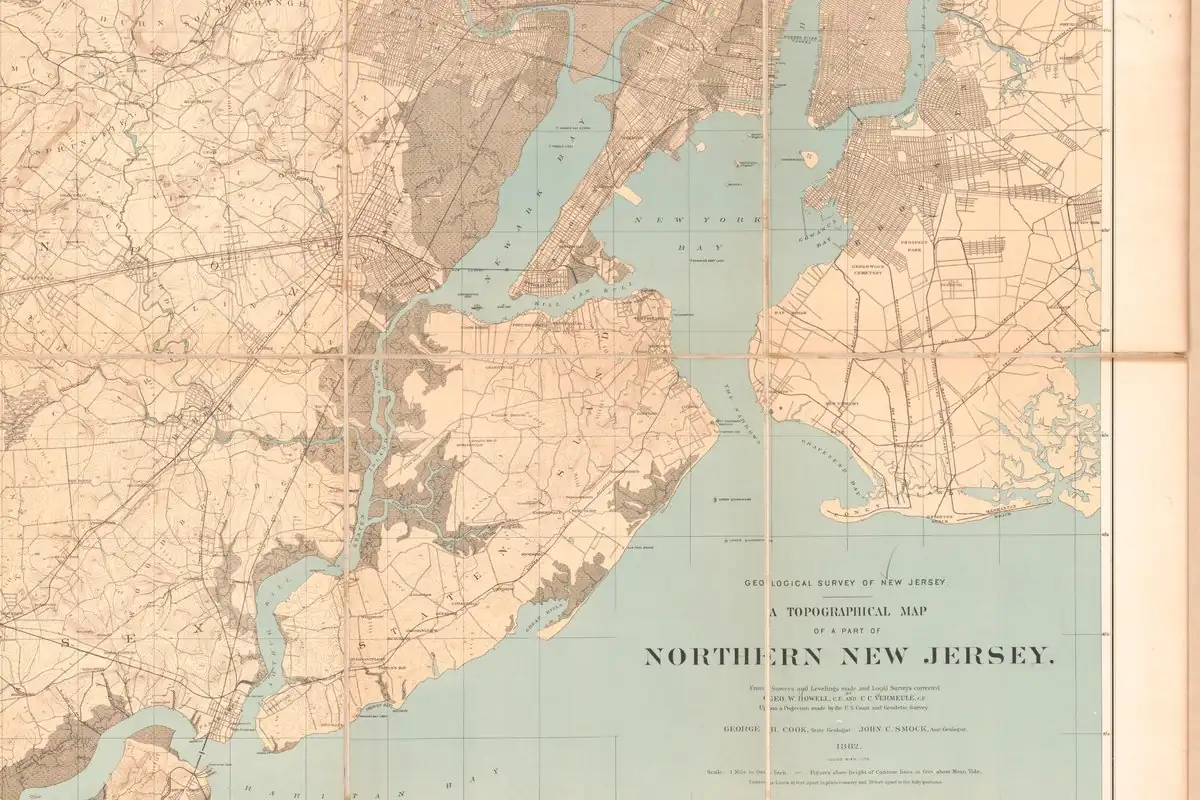
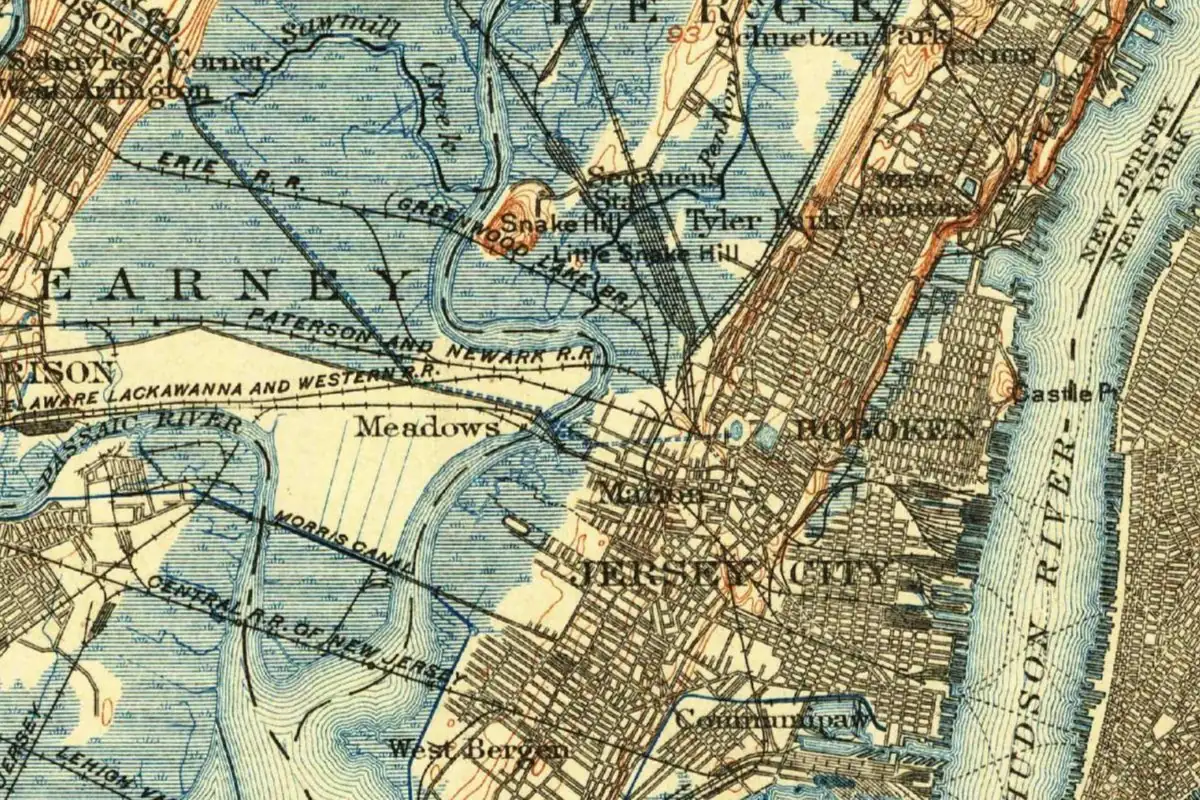
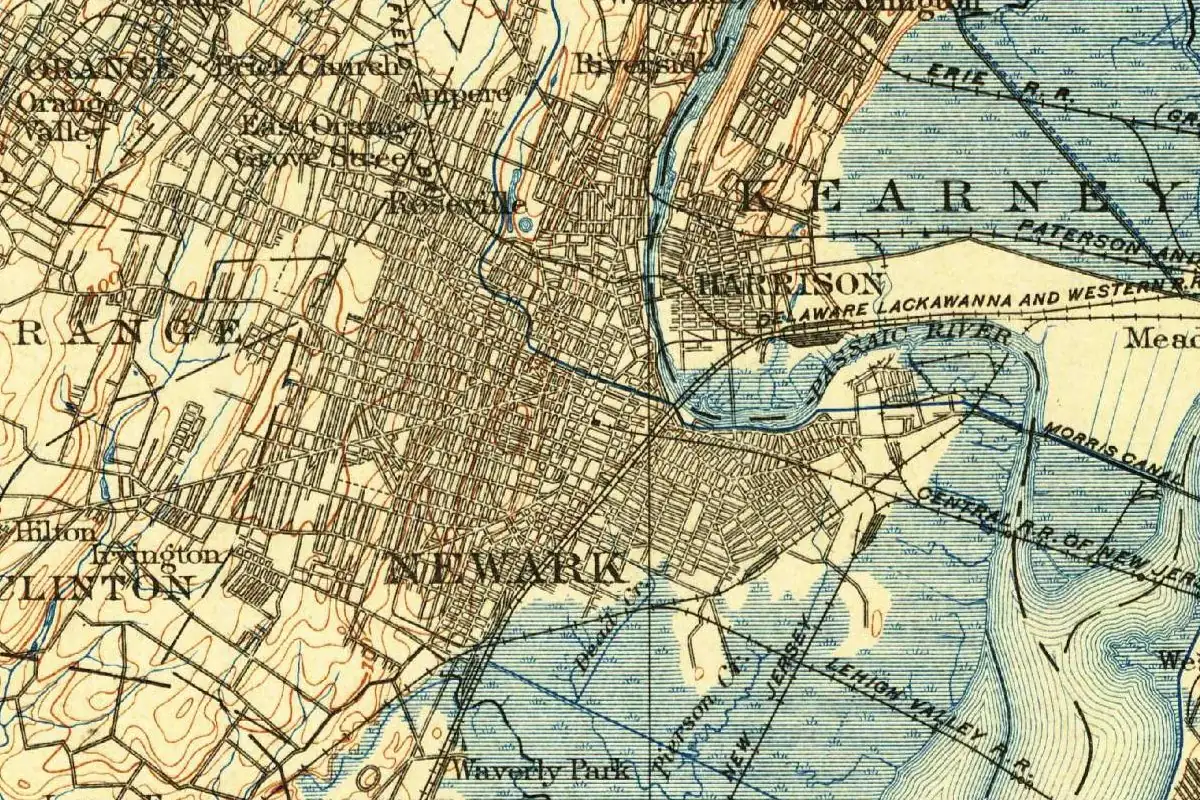
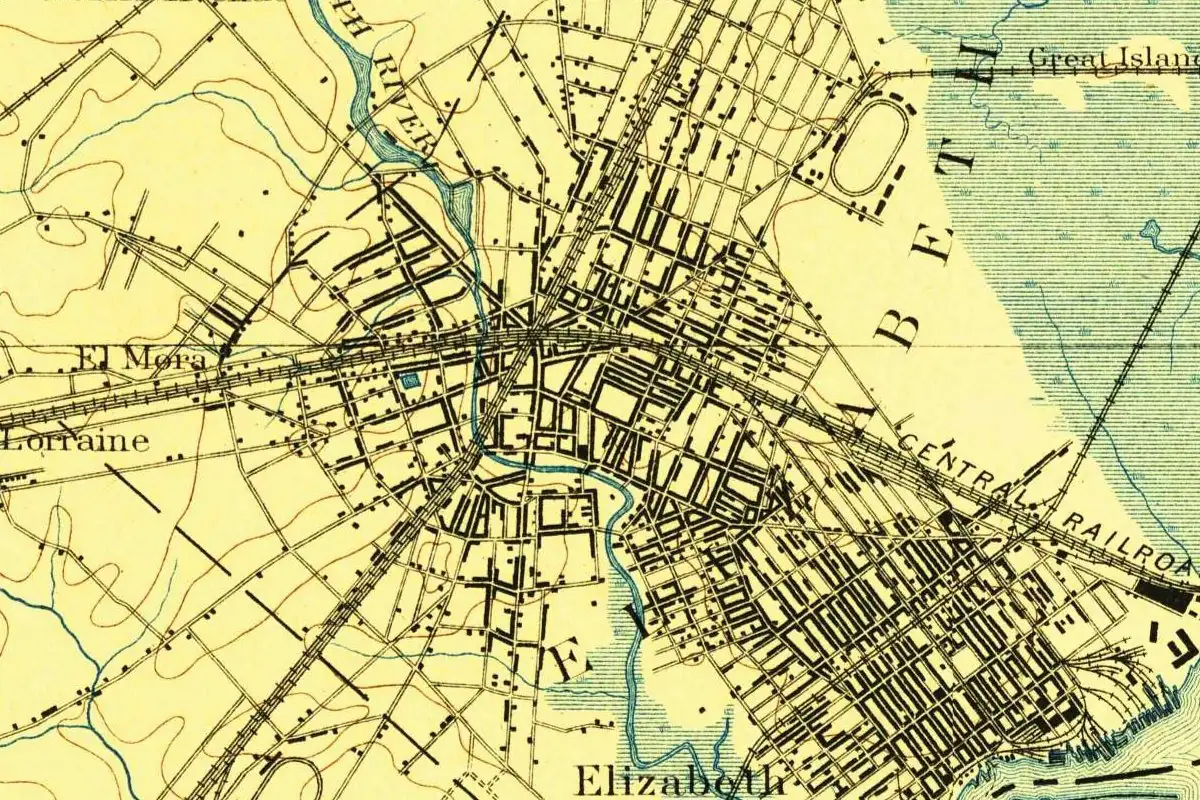
- U.S. Geological Survey, Staten Island sheet (1898). The source of the map at the top of this page.
Spot something wrong, or know more? Tell us here. You can also email us or use our contact page. Corrections are noted here with their date, never made silently.