Texas' Name: a Word for "Friends" Mistaken for a Kingdom
Texas comes from a word the Hasinai people of East Texas used for “friends” or “allies,” which Spanish explorers mistook for a tribe and even a kingdom. The people they met used it more like a greeting. The Spanish turned it into a name, and the name outlived the mistake.
“Friends,” not a tribe
The best account we found is the entry on “Texas” in the Smithsonian’s Handbook of American Indians (1910), which goes back to the Spanish reports themselves. It says the word, spelled texas, tejas, texias and a few other ways, was in wide use among the tribes of East Texas before the Spanish arrived. Its usual meaning “was ‘friends,’ or, more technically, ‘allies.’”
It wasn’t the name of one tribe. The Hasinai used it for a big group of tribes, Caddo-speaking and others, that were customarily allied against the Apache. They didn’t call themselves that. But they did use it, the handbook says, “as an everyday form of greeting, like ‘Hello, friend!’”
The kingdom that wasn’t there
So how does a greeting end up on a map? Here’s where it gets interesting.
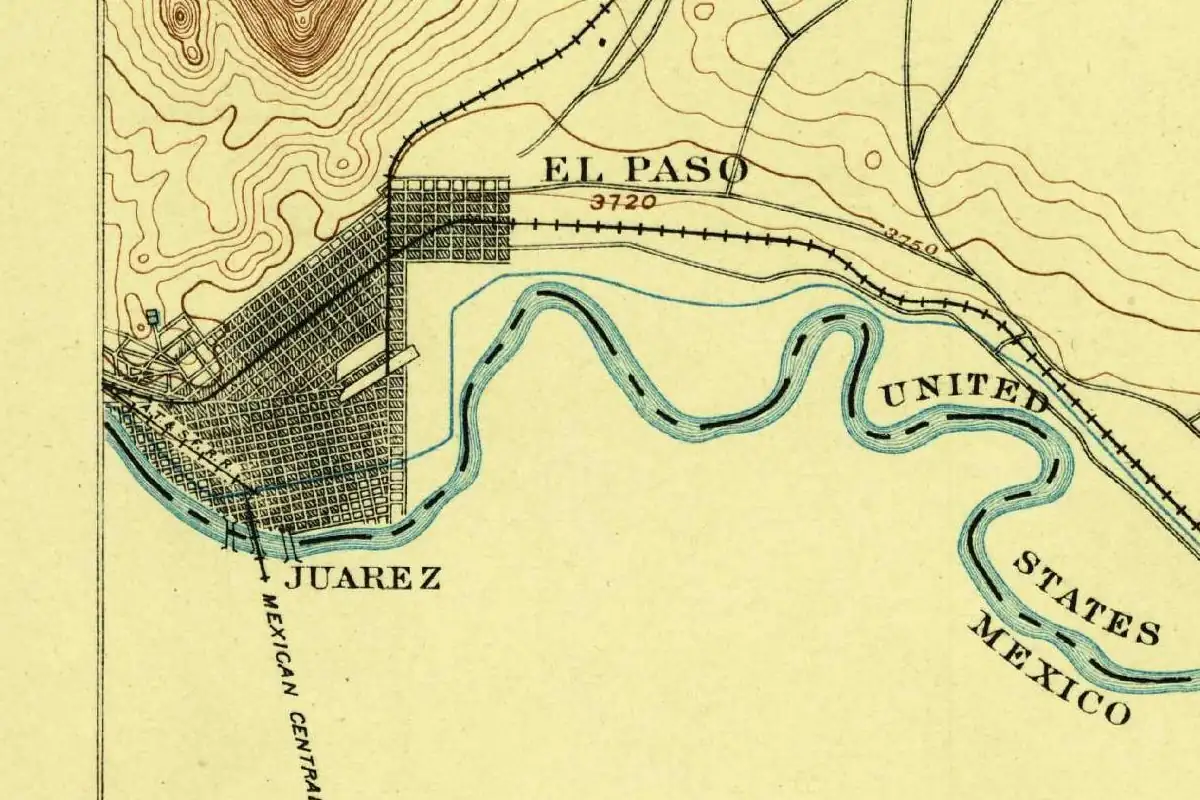
Sometime in the 1600s, Spanish officials in Mexico picked up a story about a “great kingdom of the Texas” somewhere to the east. In 1683, the governor of New Mexico wrote from El Paso that a Jumano man named Juan Sabeata had told him about the “Gran Reyno de los Texas,” a populous land ruled by a powerful king. The governor sent an expedition under Domingo de Mendoza to find it. It never did.
A few years later, in 1689, a Spanish expedition met the chief of the Nabedache, one of the Hasinai tribes, and in 1690 it founded a mission near his village, just west of the Neches River. Father Massanet, whom the handbook calls “the father of the Texas missions,” and De León, whose expedition he traveled with, had both heard the kingdom stories, and they seem to have decided they’d found it. They wrote about the local chief as its “governor.”
The missionary who tried to set the record straight
One man who actually lived there wasn’t buying it. Fray Francisco de Jesús María spent more than a year at a mission among the Nabedache, and in a report dated August 15, 1691, he spelled it out. There was no kingdom. The chief the Spanish called “governor” wasn’t even the head chief. And Texas wasn’t their name.
The word, he explained, meant “friends,” and it covered some 50 tribes that had been allied for a long time. “The reason why the name is common to all is their long-continued friendship,” he wrote. The people around his mission called themselves the Hasinai, which he spelled “Aseney.”
Members of the next Spanish expedition backed him up under oath. The Hasinai, they said, “call one another, and even us, Texas, which means ‘friends.’”
It didn’t matter. As the handbook puts it, “through an erroneous preconception,” Texas became the official Spanish name for the Hasinai and their country. From there it spread, little by little, to all the land inside today’s Texas.
The stories that don’t hold up
You may have heard that Texas means “land of flowers” or “paradise.” The handbook takes those on directly: as far as anyone knows, none of them was ever suggested by people who were actually there, and they “seem to be fictions of recent date.” The U.S. Geological Survey’s 1905 place-name book lands in the same spot as the old Spanish reports, calling Texas “an Indian word used as a token of friendship.”
So the next time you say “Texas,” you’re saying something closer to “hey, friend.”
Sources & further reading
- Frederick Webb Hodge, ed., Handbook of American Indians North of Mexico, Part 2 (1910), entry “Texas,” pp. 738–741. The heart of this story. Summarizes the Spanish documents, including the 1683 report from El Paso, the Mendoza expedition, Massanet and De León, Fray Francisco de Jesús María’s report of August 15, 1691, and the sworn testimony from the Terán expedition. Also rejects “land of flowers” and “paradise.” We read a 1912 printing.
- Henry Gannett, The Origin of Certain Place Names in the United States (USGS, 1905), p. 299. Says the generally accepted version is that Texas “is an Indian word used as a token of friendship.”
- U.S. Census Bureau, state codes (2020). Lists the permanent federal place-name record number for Texas (GNIS 1779801).
Spot something wrong, or know more? Tell us here. You can also email us or use our contact page. Corrections are noted here with their date, never made silently.