San Antonio, Texas: The River Got the Saint's Name First
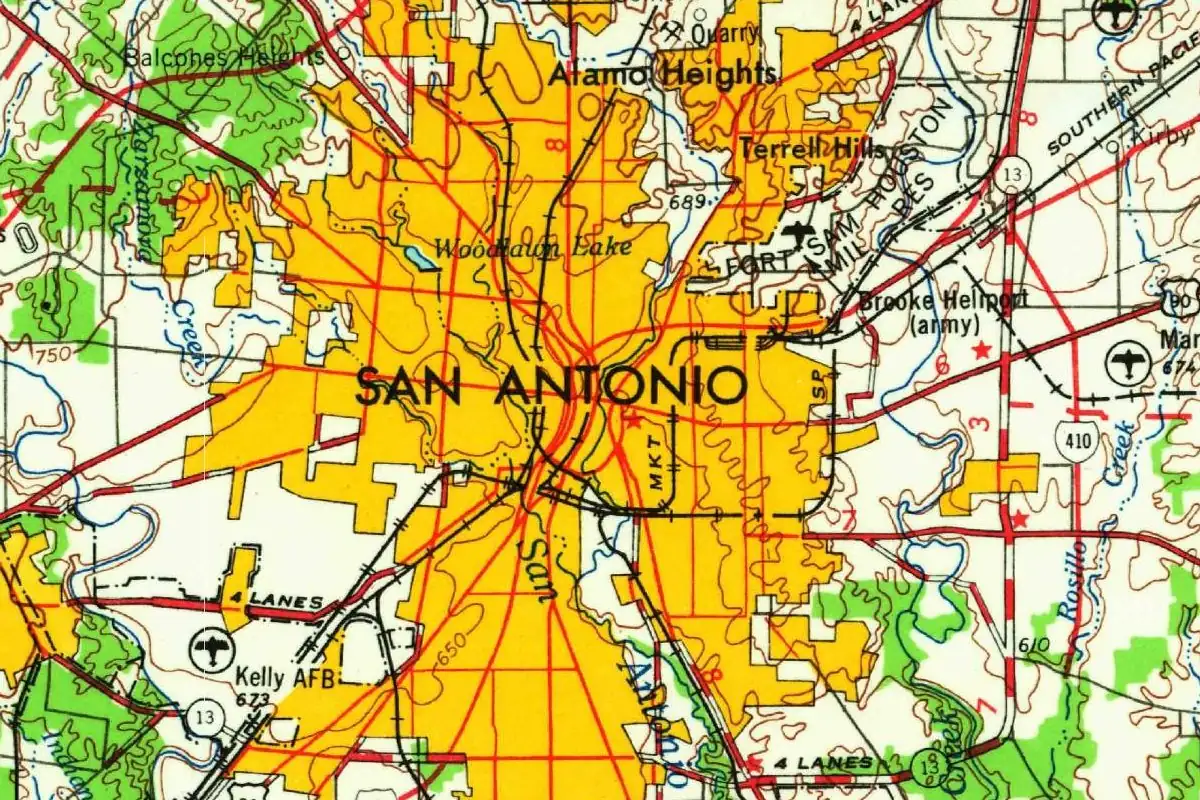
San Antonio, Texas, takes its name from a river that Spanish travelers named for St. Anthony of Padua in 1691, decades before the mission or the town. The river already had a name, too. The Smithsonian’s Handbook of American Indians says Father Damián Massanet set aside the native name of the stream, Yanaguana, and gave it “the Christian name San Antonio de Padua.”
A Spanish expedition renaming rivers
In 1691 Domingo Terán de los Ríos, the new governor of Coahuila and Texas, led soldiers and Franciscan friars across Texas toward the missions in the east. H. H. Bancroft, writing in 1884 from the expedition diaries, says “both the commander and the padres applied new names to most of the streams crossed.” His footnote reads like a roll call. The Nueces became San Norberto and San Diego. The Medina got two saints’ names. Then comes “San Antonio, so called by Teran and Masanet.”
Most of those names didn’t last. Bancroft himself has to list the rivers by their later names, Nueces, Medina, Guadalupe, so you can tell which was which. San Antonio is the one that stuck.
The Payaya village on the bank
The river wasn’t empty when the Spaniards got there. The Handbook entry on the Payaya, a Coahuiltecan people, says Massanet passed through their village in 1691, and that it stood “apparently near the site of the present city of San Antonio.” He put up an altar there and, through a Pacpul interpreter, explained Christian teaching to the Payaya. The Handbook doesn’t say what Yanaguana meant, and none of the other sources here do either, so you won’t find a translation in this article.
The fort, the mission and Bexar
The Spanish didn’t build on the river until 1718. Bancroft says that early that year Martín de Alarcón came in, and “on the river of St Anthony, far from the coast, he founded the presidio of San Antonio de Béjar, and near it the mission of San Antonio de Valero.” The Payaya were among the main groups the mission was founded for, according to the Handbook. Bancroft adds that a civil town, San Fernando, came about 1730, and that the fort and the town formed “one settlement” on the river at the site of the modern city. The mission across the river was “later called the Alamo.”
Each name in that mix carried an extra honor. Homer S. Thrall’s 1879 history says San Antonio de Valero was named “from Saint Anthony of Padua and the Duke of Valero, then Viceroy of Mexico.” Bexar County, which keeps the fort’s half of the old name, is named for the Duke of Bexar, “a Spanish nobleman,” in Henry Gannett’s words.
Gannett’s shortcut
Gannett’s 1905 entry for the city skips the river entirely. It says San Antonio was named for the mission, “otherwise the Alamo.” That’s not wrong so much as late. Alarcón named the mission for the river’s saint, and the river had carried that name since 1691. Thank the Alamo or thank the river; either way the city ends up with the same St. Anthony.
Sources & further reading
- Frederick Webb Hodge, ed., Handbook of American Indians North of Mexico, part 2 (1910), “Payaya,” p. 217. The Payaya village near the site of the city, Massanet’s altar and interpreter, the native name Yanaguana (printed there as “Yana guana”) replaced with San Antonio de Padua, and the Payaya at San Antonio de Valero mission.
- H. H. Bancroft, History of the North Mexican States and Texas, vol. 1 (1884). Terán’s 1691 expedition, the new river names and “San Antonio, so called by Teran and Masanet” (p. 402); Alarcón’s 1718 presidio and mission (p. 614); San Fernando, the single settlement and the Alamo (p. 632).
- Homer S. Thrall, A Pictorial History of Texas (1879), pp. 95-97. The mission named for St. Anthony of Padua and the Duke of Valero.
- Henry Gannett, The Origin of Certain Place Names in the United States (USGS, 1905). The city named for the mission, “otherwise the Alamo,” and Bexar named for the Duke of Bexar.
- GNIS feature 1380951 (U.S. Geological Survey). The federal record and coordinates for San Antonio.
Spot something wrong, or know more? Tell us here. You can also email us or use our contact page. Corrections are noted here with their date, never made silently.