Austin, Texas: A Capital Named Before It Had a Site
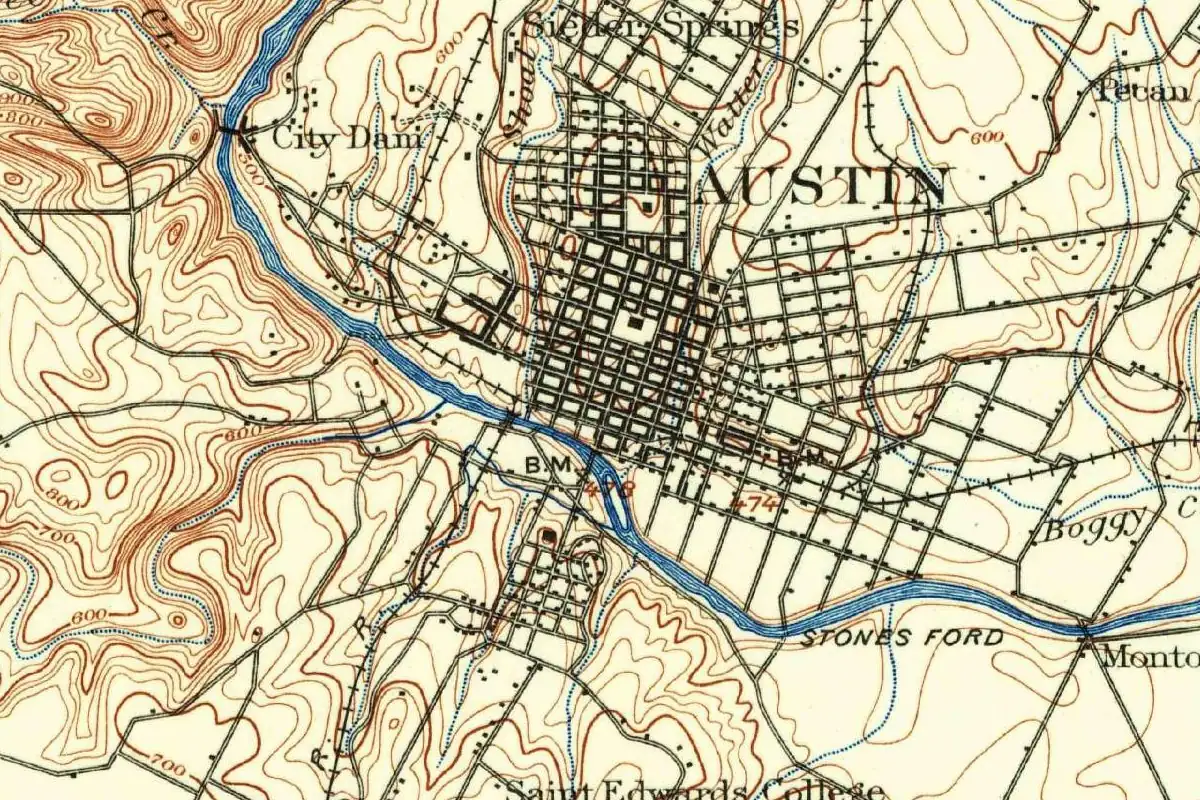
Austin, Texas, got its name by law in January 1839, before anyone had picked the spot where the new capital would stand. The name honors Stephen F. Austin, whom Henry Gannett’s 1905 federal place-names book calls “the first man to establish a permanent American colony in Texas.”
“The city of Austin,” on paper first
In the late 1830s the Republic of Texas was running its government out of Houston, and plenty of lawmakers wanted out. Ernest William Winkler, who tracked the whole fight for the Texas State Historical Association’s quarterly in 1907, reprints the act President Mirabeau B. Lamar approved on January 14, 1839. Section 1 created five commissioners to find a site somewhere “between the rivers Trinidad and Colorado, and above the old San Antonio Road.” Section 2 is a single line: “Be it further enacted, That the name of said site shall be the city of Austin.”
So the name was settled and the place wasn’t. Winkler adds a footnote you might not expect: the House of Representatives had voted for “City of Texas,” and the senate swapped in “City of Austin.”
The first Austin that never got built
Congress had tried this once already. In May 1838, Winkler writes, both houses voted for a tract called Eblin’s League, on the Colorado near La Grange, and the journals show that “the name of the site selected was to be Austin.” President Sam Houston vetoed the bill on May 22. His message said the choice should wait for the people to weigh in, and that the bill “would doubtless consume at least one eighth part of the revenue for the current year.” The House sustained the veto, and that first Austin stayed on paper.
Waterloo gets the job
The 1839 commissioners rode the country along both the Brazos and the Colorado. On April 13, 1839, they reported to Lamar that “they have selected the site of the Town of Waterloo on the East Bank of the Colorado River.” Waterloo was barely a town. A Houston paper quoted by Winkler said there were “but four families” in it. John Henry Brown’s History of Texas puts it at two families on the site itself, the Harrells and the Hornsbys, with “an unbroken wilderness” beyond them to the north and northwest.
Homer S. Thrall’s 1879 history tells the next step in one sentence: “The new site was appropriately named Austin.” Appropriately, maybe, but not by choice. The law had picked the name three months before the commissioners picked the river bank. Lamar sent Edwin Waller to lay out the streets, H. H. Bancroft says the town lots were sold that August, and by Brown’s account Congress met in the new capital on the first Monday in November 1839.
Austin against Houston, twice
There’s an irony in the timing, though none of these sources says anyone intended it. In the 1836 race for president of Texas, Henderson Yoakum’s history lists Stephen F. Austin as one of the two candidates first announced. Sam Houston entered late and won “by a large majority.” Three years later the government left the town named for the winner and moved to a new one named for the man who’d lost.
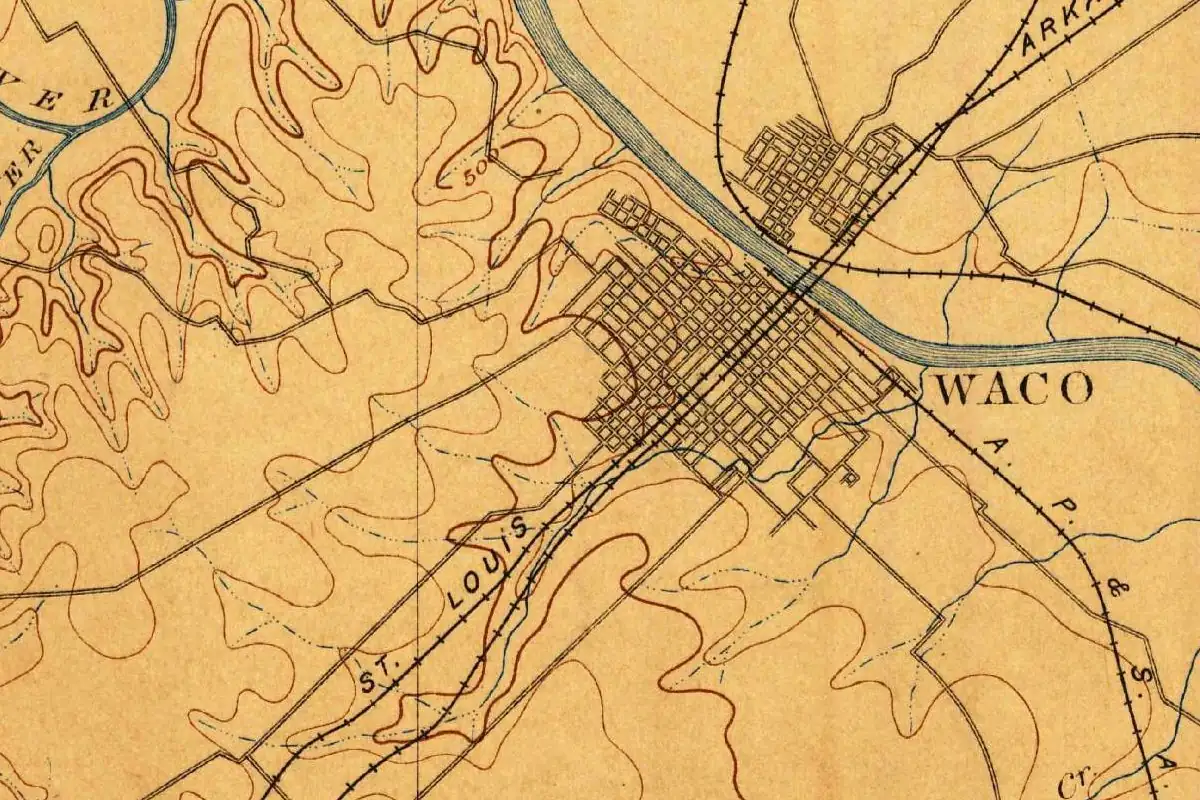
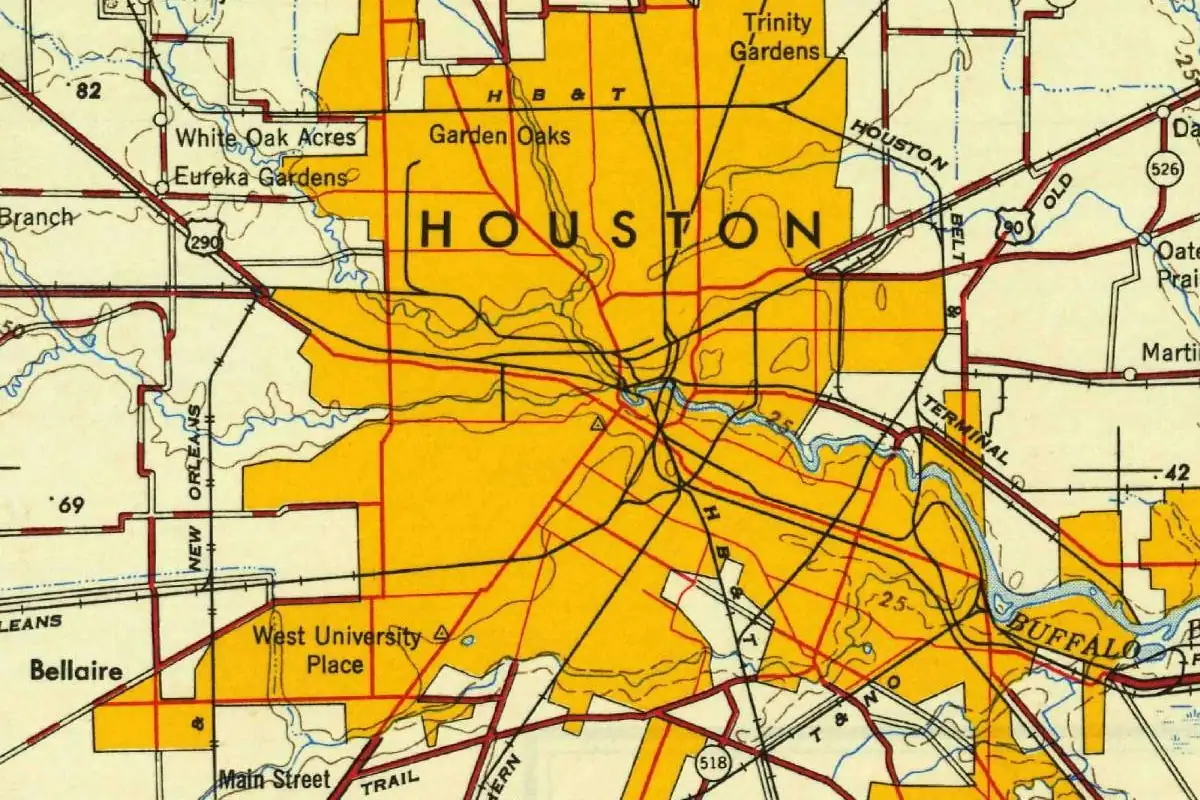
Houston didn’t take it quietly. Thrall says he “was bitterly opposed to the location” and in 1842 moved the executive departments back to Houston. The government settled in Austin again in 1845. If you want the final score, Thrall has it too: in the 1872 vote that made the capital permanent, Austin got 63,297 votes, Houston 35,188 and Waco 12,776.
Sources & further reading
- Ernest William Winkler, “The Seat of Government of Texas,” Quarterly of the Texas State Historical Association, vol. 10 (1907). The 1838 Eblin’s League vote, the site that “was to be Austin” and Houston’s veto (pp. 204-206); the act of January 14, 1839, with “the name of said site shall be the city of Austin” and the House’s “City of Texas” (pp. 211-212); the commissioners’ report choosing Waterloo and the “four families” (pp. 216-221).
- John Henry Brown, History of Texas, vol. 2 (1893), pp. 165-166. The commissioners, the two families on the site, Edwin Waller and the first Congress at the new capital.
- Homer S. Thrall, A Pictorial History of Texas (1879). Waterloo “appropriately named Austin,” Houston’s opposition, the 1842 move and the 1872 vote (p. 306); Waterloo laid out about 1838 and Austin chosen in 1839 (p. 699).
- H. H. Bancroft, History of the North Mexican States and Texas, vol. 2 (1889), pp. 337-338. The 1839 act, the commissioners and the August lot sale.
- Henderson K. Yoakum, History of Texas, vol. 2 (1855), pp. 192-194. Austin as a candidate in 1836 and Houston’s win.
- Henry Gannett, The Origin of Certain Place Names in the United States (USGS, 1905). Austin “named for Stephen Fuller Austin.”
- GNIS feature 1384879 (U.S. Geological Survey). The federal record and coordinates for Austin.
Spot something wrong, or know more? Tell us here. You can also email us or use our contact page. Corrections are noted here with their date, never made silently.