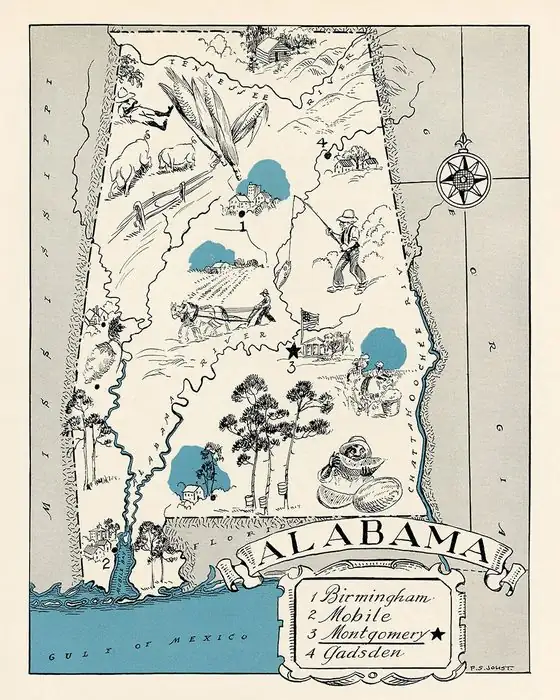
Fort Deposit, Alabama: A Town Named for a Supply Depot
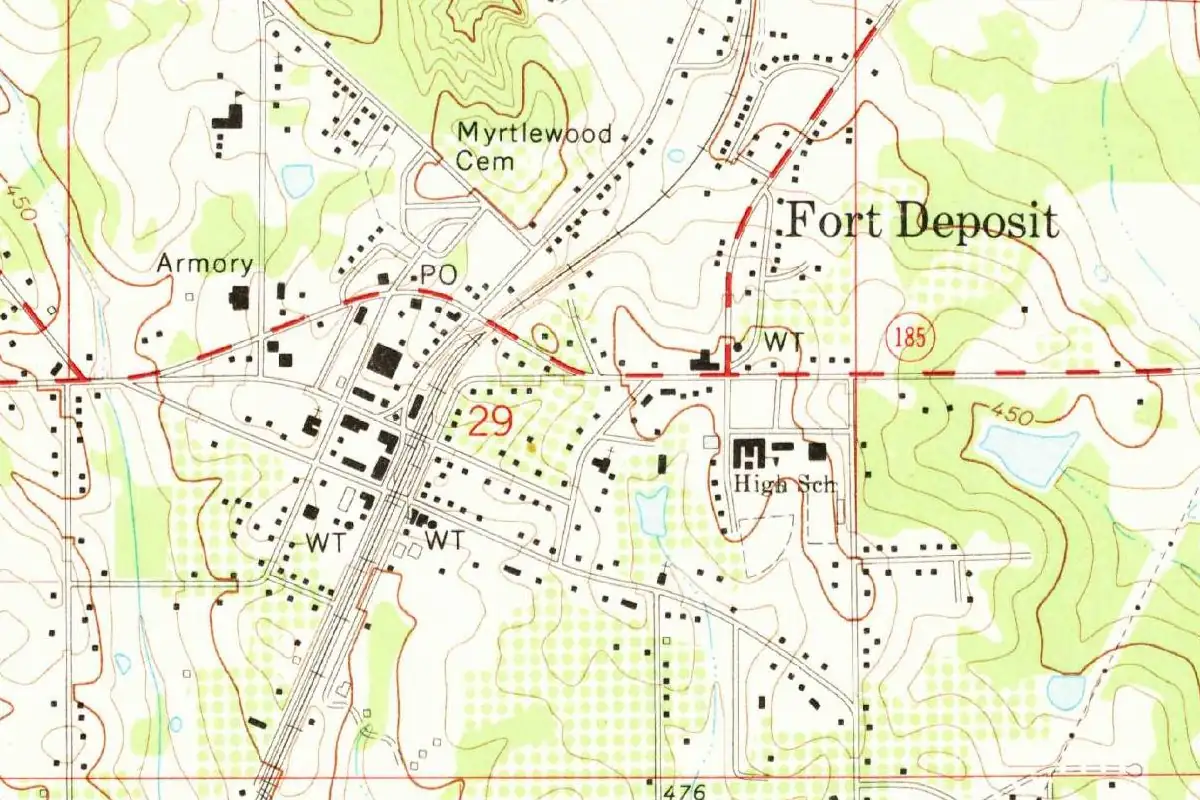
Fort Deposit, Alabama, takes its name from a place to leave supplies: an earthwork depot that soldiers built there in December 1813, during the Creek War. The army left its wagons and cannon there before marching off to fight, and a town later grew up around the spot.
A depot in the middle of nowhere
In December 1813, General Ferdinand L. Claiborne set out from Fort Claiborne with about 1,000 men, Willis Brewer wrote in his 1872 history of Alabama. Around 150 of them were Choctaws under Pushmataha. They were headed for Econachaca, the Holy Ground, a Muscogee (Creek) town on the Alabama River in what’s now northern Lowndes County.
There was no road. Albert James Pickett, whose History of Alabama came out in 1851, writes that officers who protested the march warned that the route was “entirely a pathless one,” and the army did reach the Holy Ground “without the aid of a single path.” About 80 miles (129 km) out, on high ground south of Double Swamp, Claiborne “built a depot, called Fort Deposite.” He left the wagons, the cannon, the baggage and the sick there, with 100 men to guard them, and pushed on toward the Holy Ground. By Pickett’s count, the troops had only three days’ worth of flour when they marched out of the depot.
Brewer tells the same story in plainer words. Claiborne “built an earthwork at the highlands south of the Litohatchee, (Double Creek), and called it Fort Deposit.” After the fight at the Holy Ground, the army came back to Fort Claiborne “by way of Fort Deposit.” So the name means just what it sounds like. It was the spot where the army deposited its gear.
Claiborne or Jackson?
Here’s a wrinkle you’ll run into if you read further. Thomas McAdory Owen’s History of Alabama and Dictionary of Alabama Biography (1921) says the town stands on the site of a supply post “established by Gen. Andrew Jackson in 1813.” But a few pages later, in his own list of Alabama’s forts, Owen gives two forts named Deposit. One was Jackson’s, on the Tennessee River at the mouth of Honey Creek, in Marshall County, far to the north. The other, “in southern part of Lowndes County, near Letohatchee Creek,” was “erected by Gen. Claiborne as a base of supplies during Creek War.”
The older books both say Claiborne, and so does Owen’s fort list. The Jackson line in the town entry looks like the two Fort Deposits got crossed, though that’s our reading, not something Owen says. Either way, the name comes from the same thing, a supply depot from the Creek War.
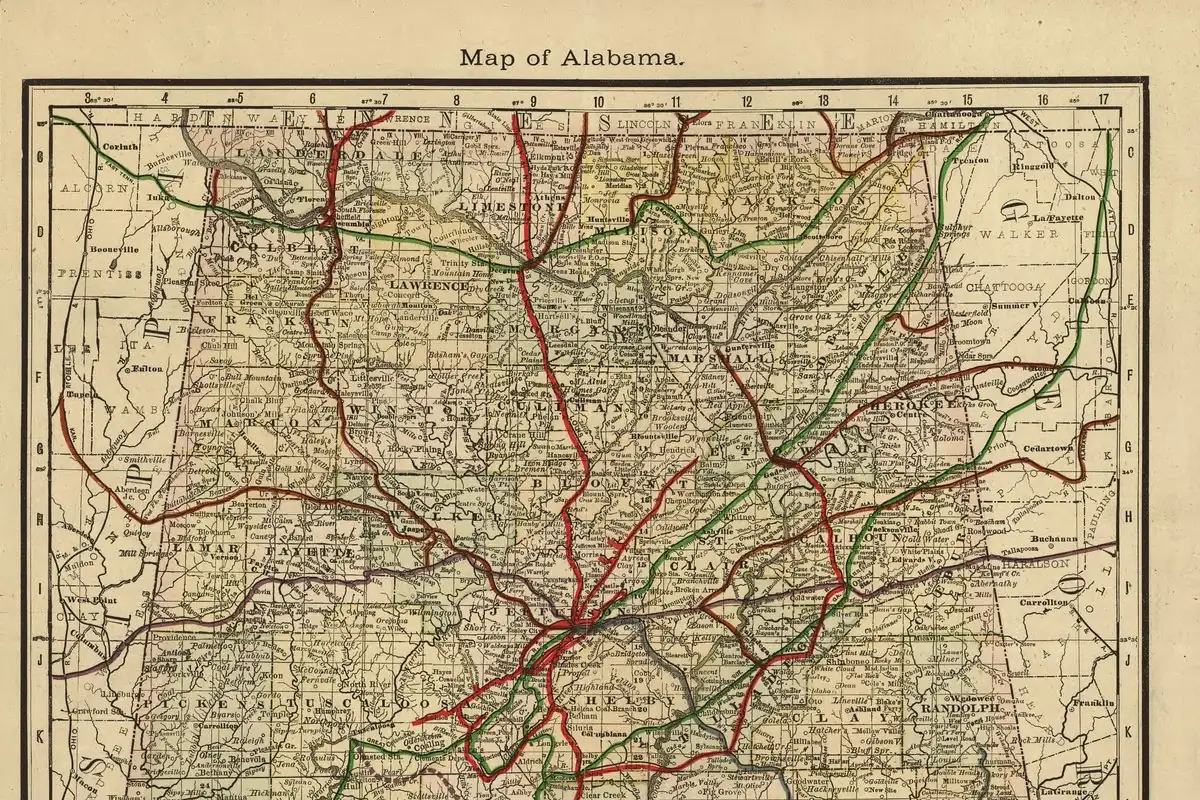
Pickett also put the depot in “the present county of Butler.” Fort Deposit sits in Lowndes today, and Brewer, writing in 1872, placed it there too.
From a fort to a town
The fort didn’t vanish right away. In a footnote, Brewer says “the remains of this rude fort are yet visible at the town of Fort Deposit.” By his count the town had about 400 people then.
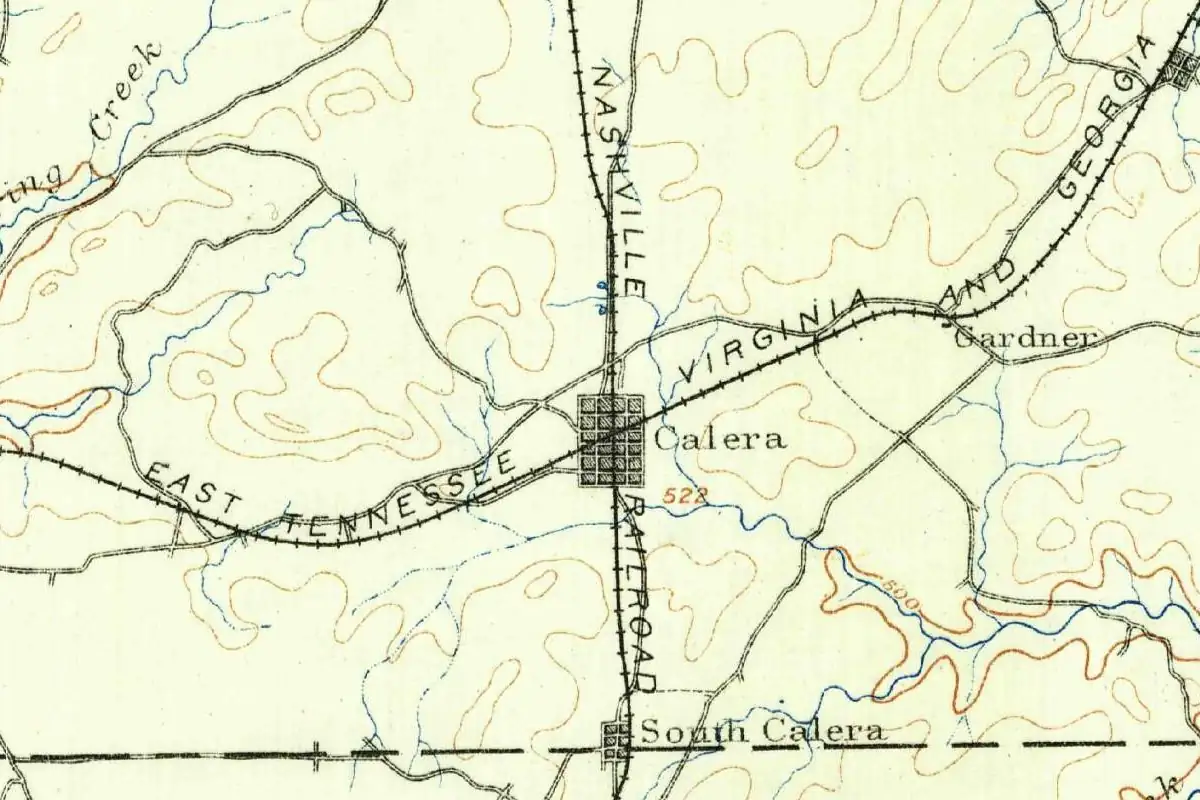
Owen says the Jackson Military Road passed through the post, and that settlers from the surrounding country gathered there for protection, “and thus the post grew into the town.” The legislature incorporated Fort Deposit on February 13, 1891. By 1910 it had 893 people, and Owen lists three cotton gins and a lumber mill among its businesses. It’s one of several Alabama towns whose early story runs through the same war, like Calera, whose first settler Owen calls “one of Jackson’s soldiers,” and Tuscaloosa.
If you drive through today, you’re on the ground where an army once left its cannon and its sick and marched off with no path to follow.
Quick answers
Why is it called Fort Deposit?
Because a fort there was used as a supply depot. In December 1813, General Claiborne’s army built an earthwork, left its wagons, cannon, baggage and sick there, and called it Fort Deposit.
Who built Fort Deposit, Alabama?
General Claiborne, according to Pickett (1851), Brewer (1872) and the list of forts in Owen (1921). Owen’s entry for the town says Andrew Jackson, but Jackson’s Fort Deposit, by Owen’s own list, was on the Tennessee River in Marshall County.
Is there anything left of the old fort?
There was in 1872. Brewer wrote that the remains of the “rude fort” were still visible in the town. None of our sources says what’s left today.
Key dates
- 1813December: General Claiborne's army builds an earthwork depot south of Letohatchee Creek and calls it Fort Deposit.
- 1872Willis Brewer writes that the remains of the old fort are still visible in the town of Fort Deposit.
- 1891February 13: the legislature incorporates the town of Fort Deposit.
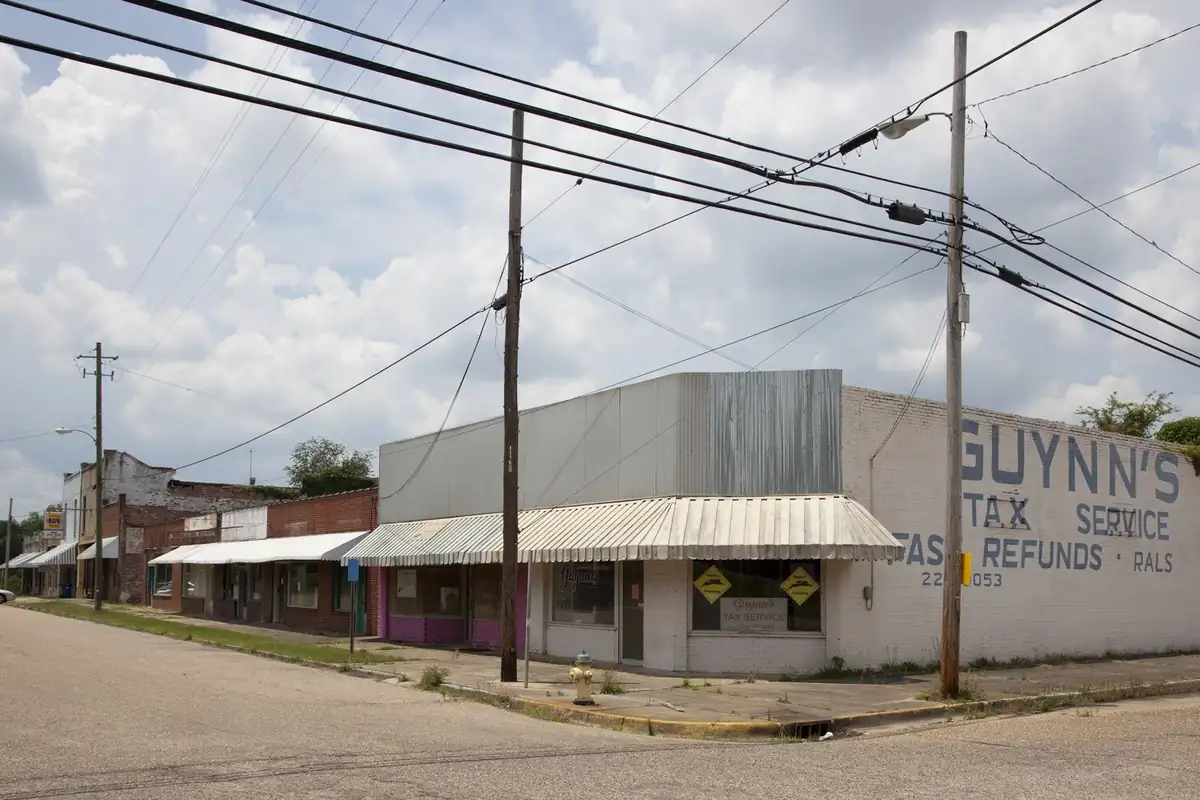
Getting there
Open Fort Deposit in Google Maps
Opens in a new tab. The pin is the center of Fort Deposit in the USGS place-name record.
The closest airports, Amtrak stations and intercity bus stops, measured in a straight line from the center of Fort Deposit.
Airports
- Montgomery Regional (Dannelly Field) (MGM) 24 mi 39 km
- Dothan Regional (DHN) 81 mi 130 km
Intercity buses
- Greyhound Montgomery AL (MGM) 31 mi 50 km
Distances are as the crow flies, not by road. We don't list schedules or fares because they change; check with the airline, Amtrak or the bus company before you go. Official data (FAA commercial service airports (2025), FAA airport locations, Amtrak stations and Intercity Bus Atlas) from the FAA and the U.S. Bureau of Transportation Statistics, checked Nov 8, 2026.
Sponsored
Staying in Fort Deposit?
Compare hotels in Fort Deposit, Alabama, on Expedia.
See hotels in Fort DepositWe may earn a commission if you buy through this link. It never changes what we write. Read our affiliate disclosure
Historical Sources & References
- Albert James Pickett, History of Alabama, and Incidentally of Georgia and Mississippi (1851; 1896 reprint), pp. 525 and 574. General Ferdinand Leigh Claiborne (p. 525), his march toward the Holy Ground, the officers’ warning about a “pathless” route, and the depot “called Fort Deposite” where he left the wagons, cannon, baggage and sick under a guard of 100 men.
- Willis Brewer, Alabama: Her History, Resources, War Record, and Public Men (1872), pp. 328-329. The Lowndes County chapter: Claiborne’s army of about 1,000, the earthwork south of the Litohatchee (his spelling) that Claiborne called Fort Deposit, the return by way of the fort, and the footnote saying its remains were still visible in the town.
- Thomas McAdory Owen, History of Alabama and Dictionary of Alabama Biography, vol. 1 (1921), pp. 611 and 615. The “Fort Deposit” entry (Jackson Military Road, the settlers who gathered there, the 1891 incorporation and 1910 population) and the “Forts and Defenses” list with both Fort Deposits, Jackson’s and Claiborne’s.
- GNIS feature 118518 (U.S. Geological Survey). The Geological Survey’s entry for Fort Deposit, a populated place in Lowndes County, with its official coordinates.
Spot something wrong, or know more? Tell us here. You can also email us or use our contact page. Corrections are noted here with their date, never made silently.