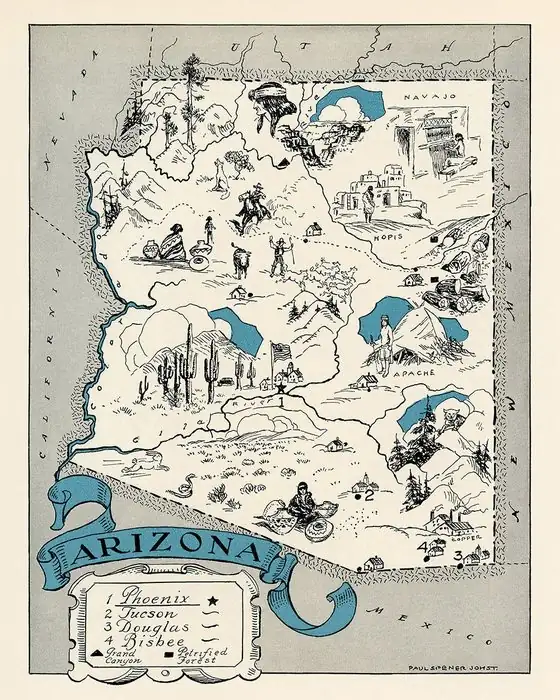
Bisbee, Arizona: A Copper Camp Named for a Judge
Bisbee, Arizona, is named for Judge DeWitt Bisbee, a member of the San Francisco mining firm of Bisbee, Williams & Company and father-in-law of John Williams, whose brothers Lewis and Ben ran the early Copper Queen. The camp in Mule Gulch took the name in 1880, the year its post office opened.
A judge who lent his name to a gulch
The copper camp in Arizona’s Mule Mountains that became Bisbee took its name in 1880 from Judge DeWitt Bisbee of a San Francisco mining firm. His link to the place ran through his family. James McClintock spelled it out in his 1916 history of Arizona:
“The camp had been named after Judge DeWitt Bisbee, father-in-law of John Williams, one of the three Williams brothers, and a member of the San Francisco mining firm of Bisbee, Williams & Company.”
The Williams brothers are the key. Two of them, Lewis and Ben, ran the Copper Queen in its first years, and the camp took the name of their brother’s father-in-law, a member of the San Francisco firm.
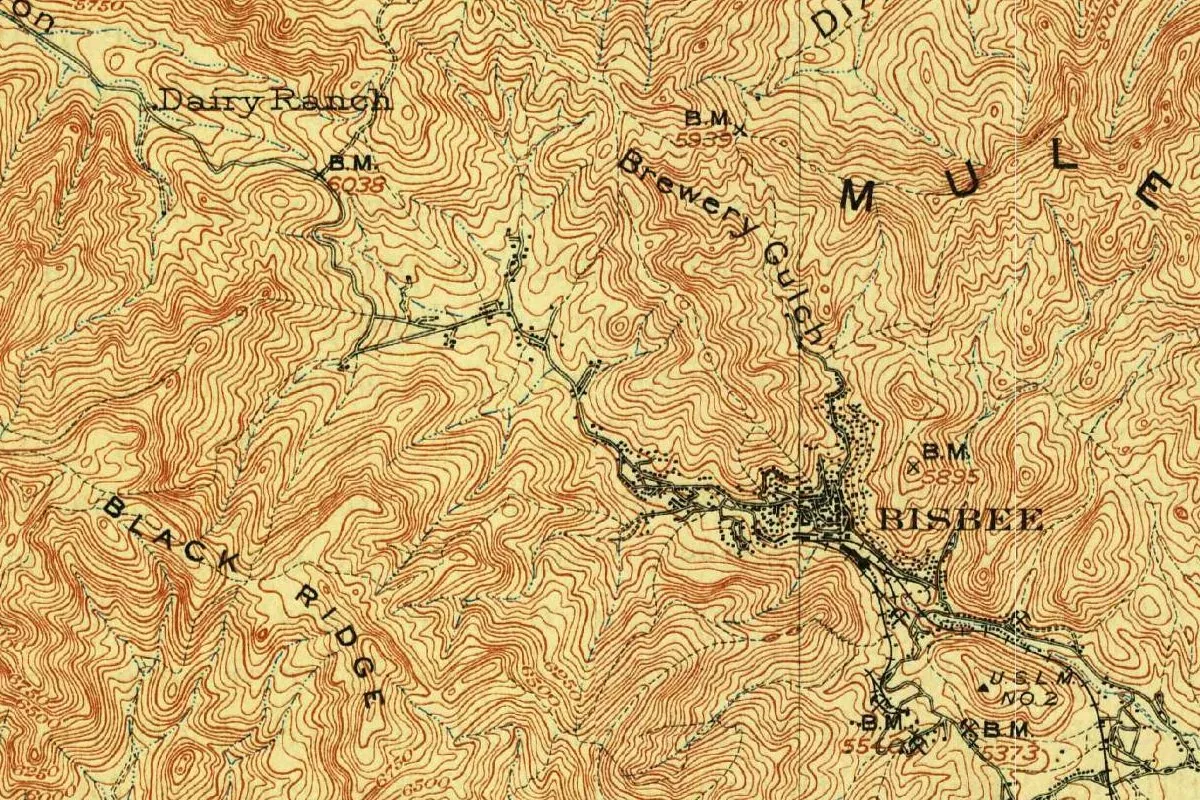
Before it was Bisbee, it was Mule Gulch
The ore came first. McClintock says John Dunn, a government scout, found it on August 2, 1877, inside what are now Bisbee’s city limits, while riding with a military party through the Mule Pass Mountains. Prospectors followed. McClintock counts only three claims recorded “in Mule Gulch” in 1879. On December 15, 1879, George H. Eddleman and M. A. Herring located the Copper Queen.
The Copper Queen Library, which the City of Bisbee runs today, gives the change in one line: “Shortly after Mule Gulch was renamed Bisbee in 1880,” the company’s leading men arrived in town. A 2021 study of the library building, done for the city, adds that the camp was “informally christened” Bisbee that year. You won’t find a vote or a petition behind it, at least not in these sources. The name just took hold.
The Williams brothers and the Copper Queen
Here’s how the families connect. According to McClintock, a San Francisco engineering firm, Martin & Ballard, took over the bond on the Copper Queen claim for $20,000 and hired Lewis Williams as superintendent. Lewis arrived on June 14, 1880, and had a smelter running in about 60 days. His brother Ben came soon after and later managed the mine, and a third brother, John, came too, “only to pass upon some property.” John was the one married into the Bisbee family.
That same year the camp got its first official trappings. McClintock says Bisbee “as a town started in the summer of 1880,” when Pima County appointed a justice of the peace and a constable, and a post office opened on September 7, 1880, with Horace C. Stillman as postmaster. The 2021 study calls the judge’s firm “Williams and Bisbee”; McClintock calls it Bisbee, Williams & Company. Either way, it’s the same partnership.
Three years later, a boom camp
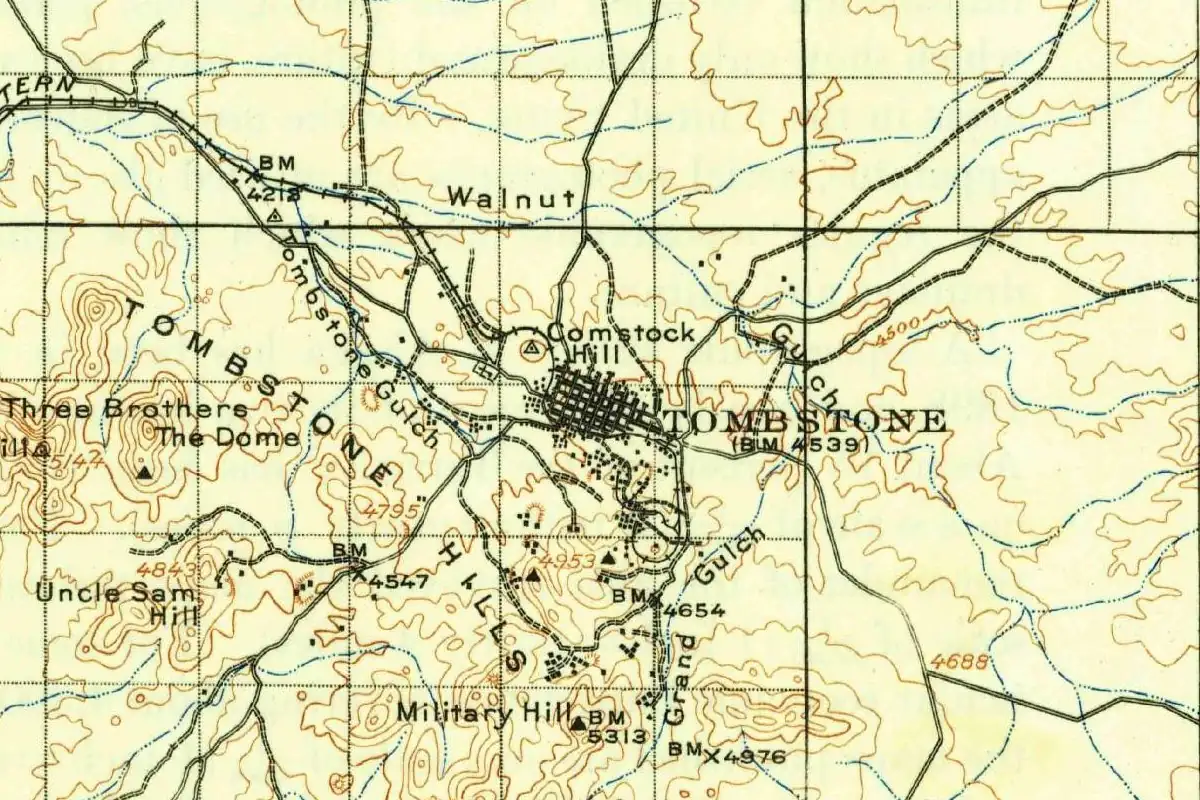
By 1883, Patrick Hamilton’s guide to the territory described Bisbee as “a live, bustling mining camp” in a narrow gorge of the Mule Mountains, made up of one narrow street, with three stores, several restaurants and saloons, and about 500 people. The Copper Queen’s reduction works were right in town, and the company had opened a road over the mountains to Tombstone, 30 miles (48 km) away.
If you walk Bisbee’s steep streets today, you’re walking through a town named by marriage as much as by mining. The man on the sign was a judge who belonged to a San Francisco mining firm, and the mountains around his namesake still go by Mule.
Quick answers
Who was Bisbee, Arizona, named after?
Judge DeWitt Bisbee, a member of the San Francisco mining firm of Bisbee, Williams & Company and father-in-law of John Williams, one of the three Williams brothers tied to the early Copper Queen.
What was Bisbee called before it was Bisbee?
Mule Gulch. The city’s Copper Queen Library says Mule Gulch was renamed Bisbee in 1880.
When was Bisbee founded?
McClintock says the town started in the summer of 1880, when the county appointed its first justice of the peace and constable. Its post office opened on September 7, 1880. Ore had been found there in 1877.
Key dates
- 1877August 2: John Dunn, a government scout, finds ore inside what are now Bisbee's city limits.
- 1879December 15: George H. Eddleman and M. A. Herring locate the Copper Queen claim.
- 1880June 14: Lewis Williams arrives to run the Copper Queen's new furnace.
- 1880Mule Gulch is renamed Bisbee, after Judge DeWitt Bisbee of a San Francisco mining firm.
- 1880September 7: a post office opens at Bisbee, with Horace C. Stillman as postmaster.
- 1883A territorial guide calls Bisbee a live, bustling mining camp of about 500 people.
Getting there
Open Bisbee in Google Maps
Opens in a new tab. The pin is the center of Bisbee in the USGS place-name record.
The closest airports, Amtrak stations and intercity bus stops, measured in a straight line from the center of Bisbee.
Airports
- Tucson International (TUS) Tucson International Airport 75 mi 121 km
Amtrak trains
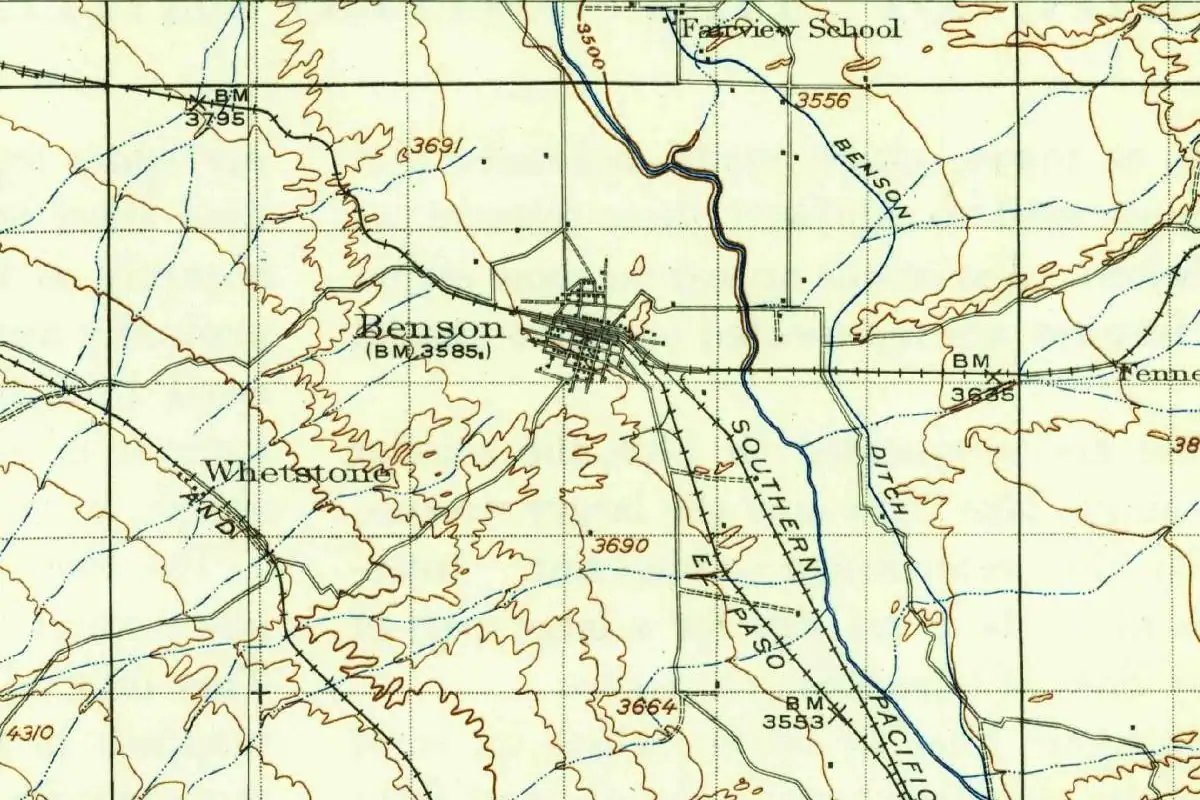
- Benson station (BEN) 42 mi 68 km
- Tucson station (TUS) 81 mi 131 km
Intercity buses
- Greyhound Benson Visitors Center 42 mi 67 km
- Limousine Express Willcox 57 mi 92 km
Distances are as the crow flies, not by road. We don't list schedules or fares because they change; check with the airline, Amtrak or the bus company before you go. Official data (FAA commercial service airports (2025), FAA airport locations, Amtrak stations and Intercity Bus Atlas) from the FAA and the U.S. Bureau of Transportation Statistics, checked Nov 13, 2026.
Sponsored
Staying in Bisbee?
Compare hotels in Bisbee, Arizona, on Expedia.
See hotels in BisbeeWe may earn a commission if you buy through this link. It never changes what we write. Read our affiliate disclosure
Sponsored
Want the spooky side of Bisbee?
The name has its story above. For the ghost stories, US Ghost Adventures runs walking ghost tours in Bisbee.
See ghost tours in BisbeeWe may earn a commission if you book through this link. It never changes what we write. Read our affiliate disclosure
Historical Sources & References
- James H. McClintock, Arizona, Prehistoric, Aboriginal, Pioneer, Modern, vol. 2 (1916), pp. 424-426, 583. John Dunn’s find of August 2, 1877, claims “in Mule Gulch” and the Copper Queen location of December 15, 1879 (pp. 424-425); Martin & Ballard, the $20,000 bond and the three Williams brothers, with Lewis’s arrival on June 14, 1880 (p. 426); the town’s start in the summer of 1880, the post office of September 7, 1880, and the naming “after Judge DeWitt Bisbee, father-in-law of John Williams” (p. 583).
- Patrick Hamilton, The Resources of Arizona, 2nd ed. (1883), pp. 52-53. Bisbee in 1883: “a live, bustling mining camp” in a narrow gorge of the Mule mountains, one street, about 500 people, and the Copper Queen’s road to Tombstone, thirty miles distant.
- City of Bisbee, Copper Queen Library, “Library History”. “Shortly after Mule Gulch was renamed Bisbee in 1880.”
- Copper Queen Library Building Condition Assessment (City of Bisbee, 2021), p. 33. The camp “informally christened Bisbee in honor of Judge DeWitt Bisbee, of the mining firm of Williams and Bisbee of San Francisco,” citing Cox (1938) and Graeme (1999).
- GNIS feature 1436 (U.S. Geological Survey). Bisbee as it appears in the national place-name database: a populated place in Cochise County.
- U.S. Geological Survey, Bisbee sheet (1902). The source of the map at the top of this page.
Spot something wrong, or know more? Tell us here. You can also email us or use our contact page. Corrections are noted here with their date, never made silently.