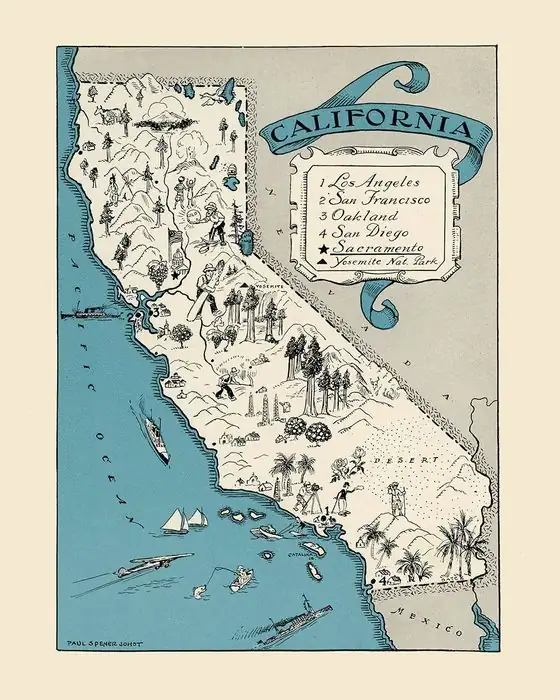
Colton, California: Named for a Railroad Vice President
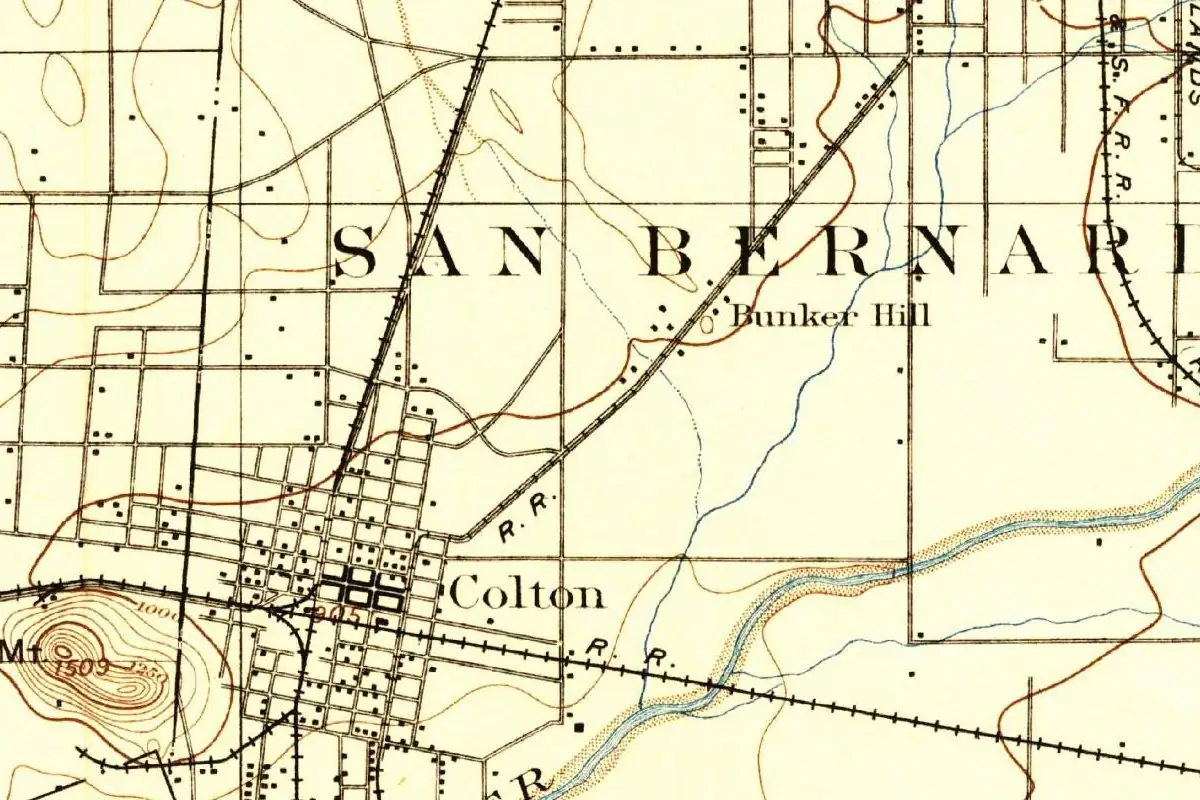
Colton, California, took its name in 1875 from a Southern Pacific vice president, and by 1879 a railroad guide was already calling him “the late” Colton. The man was David D. Colton, and he didn’t live to see his town grow up.
A colony, a railroad and a deal
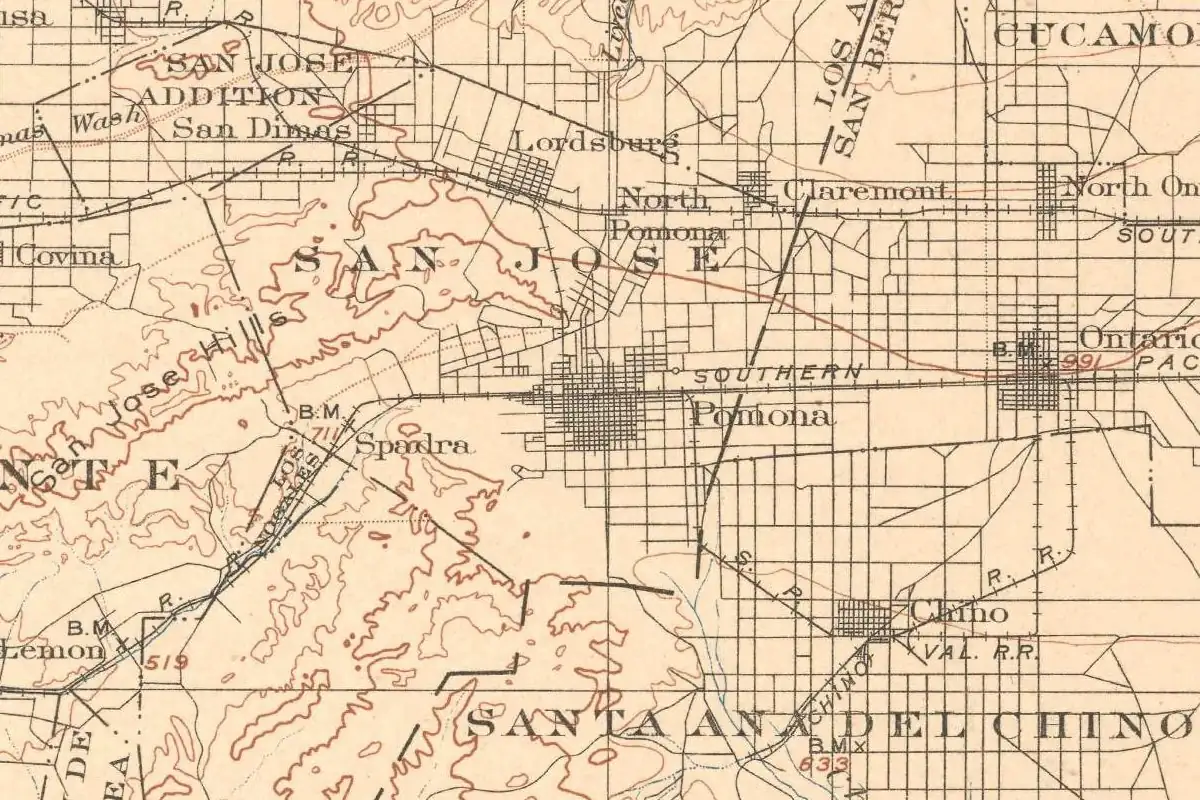
The town started as a land deal. In 1873 a group called the Slover Mountain Colony Association bought 2,000 acres of sandy ground south of San Bernardino, land people “considered worthless for farming,” according to the 1922 History of San Bernardino and Riverside Counties, edited by John Brown and James Boyd. Then the Southern Pacific started building east from Spadra, and the colony’s tract sat right on the line to San Gorgonio Pass.
So the colony made the railroad an offer. Under a contract signed April 17, 1875, it deeded the company a square mile (2.6 km²) of land, and the railroad agreed to make the place its headquarters for the San Bernardino Valley, lay out a town and share in the lot sales. Tanks and a station went up at once. “This station had been named in honor of one of the officials of the railroad,” Brown and Boyd write, and for a year or more it was the end of the line.
You’ll find different dates for the first train, even inside that one book. Brown and Boyd say the railroad “reached Colton July 30, 1875” in one chapter and that the first train arrived on August 11 in another. An 1881 business directory says the road was finished to Colton on July 16. All three put it in the summer of 1875.
Who was David Colton?
The same 1881 directory, William C. Disturnell’s Arizona Business Directory and Gazetteer, tells the railroad’s story from the inside. When the Southern Pacific’s officers were chosen on December 18, 1874, Charles Crocker became president and “Gen. David D. Colton, Vice-President.” In October 1878, Colton was named president of the new Southern Pacific Railroad of Arizona. Then the directory adds, almost in passing, that Charles F. Crocker took that job “on the death of Gen. Colton.”
That’s why George A. Crofutt’s travel guide of 1879 put it this way when it reached the station:
“Colton—This place was named for the late vice-President of the Southern Pacific, and is a regular eating station for trains from the East and West.”
Crofutt counted about 200 people in town. So the railroad man was gone within a few years of getting the name, and his station was still mostly a meal stop. If you’re wondering how famous he was, notice that the guide didn’t even bother to print his first name.
Colonel, general, D. or R.?
The old books agree on the man but not on the details. Disturnell calls him “Gen.” David D. Colton. Henry Gannett, the government geographer, wrote in his 1905 book of place-name origins that the town was “named for Col. David Colton, an early and prominent citizen.” Brown and Boyd print his initials as “D. R. Colton.” Today San Bernardino County gives his full name as David Douty Colton, “vice president of the Southern Pacific Railroad Company.”
Gannett’s “citizen” is the odd one out. Every other source here describes Colton as a railroad official, and none of them says he lived in the town. Don’t mix him up with Monterey’s Colton Hall, either. That building, the Federal Writers’ Project’s 1939 state guidebook says, was designed by the Rev. Walter Colton, the town’s American alcalde (mayor) from 1846 to 1849.
Eating station to crossroads
The railroad kept Colton busy. The Southern Pacific built a big hotel there, and for a while, Brown and Boyd write, San Bernardino’s business “was practically at a standstill, while Colton grew rapidly and flourished amazingly.” In 1882 a second railroad, the California Southern, entered Colton on August 21, and the town became a junction. Brown and Boyd also count the later “branch line between Colton and the Southern Pacific at Barstow” as the Santa Fe’s way into Southern California, and you can follow that story in Barstow. Colton incorporated in 1887, the U.S. names database notes.
The old guidebook’s “eating station” turned into a crossroads, and the name of a railroad officer who died within a few years of the naming stuck to it for good.
Quick answers
Who is Colton, California, named after?
David D. Colton, vice president of the Southern Pacific Railroad. The railroad named its new station for him in 1875, according to Brown and Boyd’s 1922 county history.
Is Colton named for the Colton of Colton Hall in Monterey?
No. Colton Hall was designed by the Rev. Walter Colton, Monterey’s alcalde in the 1840s, according to that 1939 guidebook. The San Bernardino County town honors the railroad’s David D. Colton.
Did David Colton live in Colton?
The sources don’t say so. Gannett (1905) called him “an early and prominent citizen,” but the railroad-era sources describe him as a Southern Pacific officer, and by 1879 Crofutt’s guide called him “the late vice-President.”
Key dates
- 1873The Slover Mountain Colony Association buys 2,000 acres south of San Bernardino.
- 1874December 18: David D. Colton is elected vice president of the Southern Pacific.
- 1875April 17: the colony signs its deal with the railroad. That summer the first train reaches the station named for Colton.
- 1882August 21: the California Southern enters Colton, which becomes a junction.
- 1887Colton incorporates.
Getting there
Open Colton in Google Maps
Opens in a new tab. The pin is the center of Colton in the USGS place-name record.
The closest airports, Amtrak stations and intercity bus stops, measured in a straight line from the center of Colton.
Airports
- San Bernardino International (SBD) 5 mi 8 km
- Ontario International (ONT) 17 mi 27 km
Amtrak trains
- San Bernardino station (SNB) 2 mi 3 km
- Riverside station (RIV) 8 mi 12 km
Intercity buses
- International Bus Lines San Bernardino (Limo Express) 2 mi 3 km
- Limousine Express San Bernardino (Limo Express) 2 mi 3 km
- Mexicoach San Bernardino (Limo Express) 2 mi 3 km
Distances are as the crow flies, not by road. We don't list schedules or fares because they change; check with the airline, Amtrak or the bus company before you go. Official data (FAA commercial service airports (2025), FAA airport locations, Amtrak stations and Intercity Bus Atlas) from the FAA and the U.S. Bureau of Transportation Statistics, checked Nov 6, 2026.
Sponsored
Staying in Colton?
Compare hotels in Colton, California, on Expedia.
See hotels in ColtonWe may earn a commission if you buy through this link. It never changes what we write. Read our affiliate disclosure
Historical Sources & References
- George A. Crofutt, Crofutt’s New Overland Tourist and Pacific Coast Guide (1879), p. 244. The station “named for the late vice-President of the Southern Pacific,” an eating station of about 200 people.
- William C. Disturnell, Arizona Business Directory and Gazetteer (1881), pp. 104-105. “Gen. David D. Colton, Vice-President” from December 18, 1874; the road finished to Colton on July 16, 1875; Colton as president of the Southern Pacific Railroad of Arizona in October 1878 and his death soon after.
- John Brown and James Boyd, eds., History of San Bernardino and Riverside Counties, vol. 1 (1922), pp. 95, 100, 223-224. The Slover Mountain Colony Association, the contract of April 17, 1875, the station “named in honor of one of the officials of the railroad, D. R. Colton,” the two dates for the first train, the California Southern’s arrival on August 21, 1882, and the branch line to Barstow (p. 100).
- Henry Gannett, The Origin of Certain Place Names in the United States (1905), p. 88. “Named for Col. David Colton, an early and prominent citizen.”
- San Bernardino County, “San Bernardino County history: Colton” (2025). The county’s own account: named after David Douty Colton, vice president of the Southern Pacific.
- Federal Writers’ Project, California: A Guide to the Golden State (1939), pp. 234, 456. Colton as a Southern Pacific terminus in 1875 (p. 456) and Monterey’s Colton Hall, designed by the Rev. Walter Colton (p. 234).
- GNIS feature 1652688 (U.S. Geological Survey). The Interior Department’s place-name record for Colton, with its location and the note “Incorporated in 1887.”
Spot something wrong, or know more? Tell us here. You can also email us or use our contact page. Corrections are noted here with their date, never made silently.