Durango, Colorado: The Railroad's Town and a Borrowed Name
Durango, Colorado, was a railroad’s own creation from the start, and the old books don’t agree on where the Denver & Rio Grande found its name. The town is easy to date. The name is the hard part.
The railroad skips Animas City
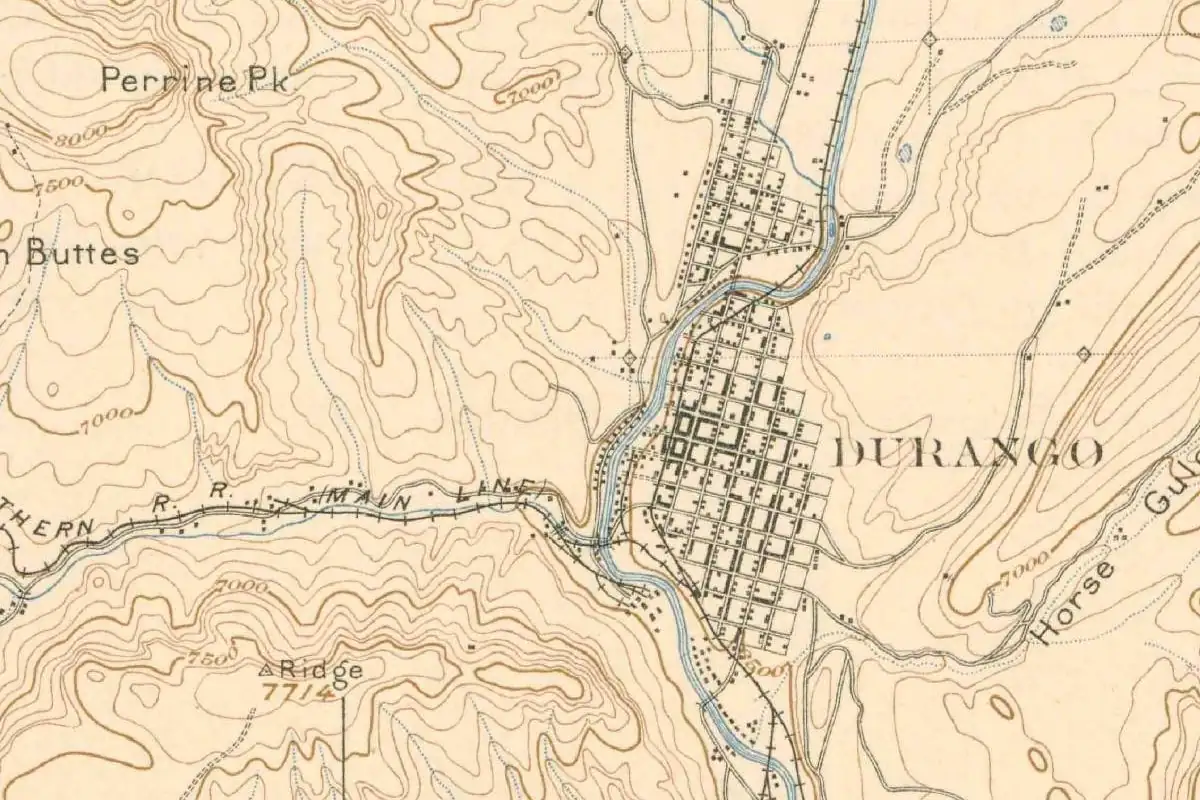
If you’d come up the Animas in 1880, you’d have found a town already there. Animas City sat on the Animas River, and the Denver & Rio Grande, building toward the San Juan silver country, decided not to use it. The City of Durango’s history says the company “formed Durango along the banks of the Animas River in September 1880,” buying up land under different names to keep the price down. When the first train went north through Animas City in 1881, the city adds, “it didn’t even stop there!”
The 1941 WPA guide to Colorado says the railroad “avoided Animas City” so it could “profit from the business created by the building of the road.” It also quotes the Animas City Daily Southwest, which grumbled that “where the new town of Durango is to be, or not to be, God and the Denver & Rio Grande Railroad only knows.”
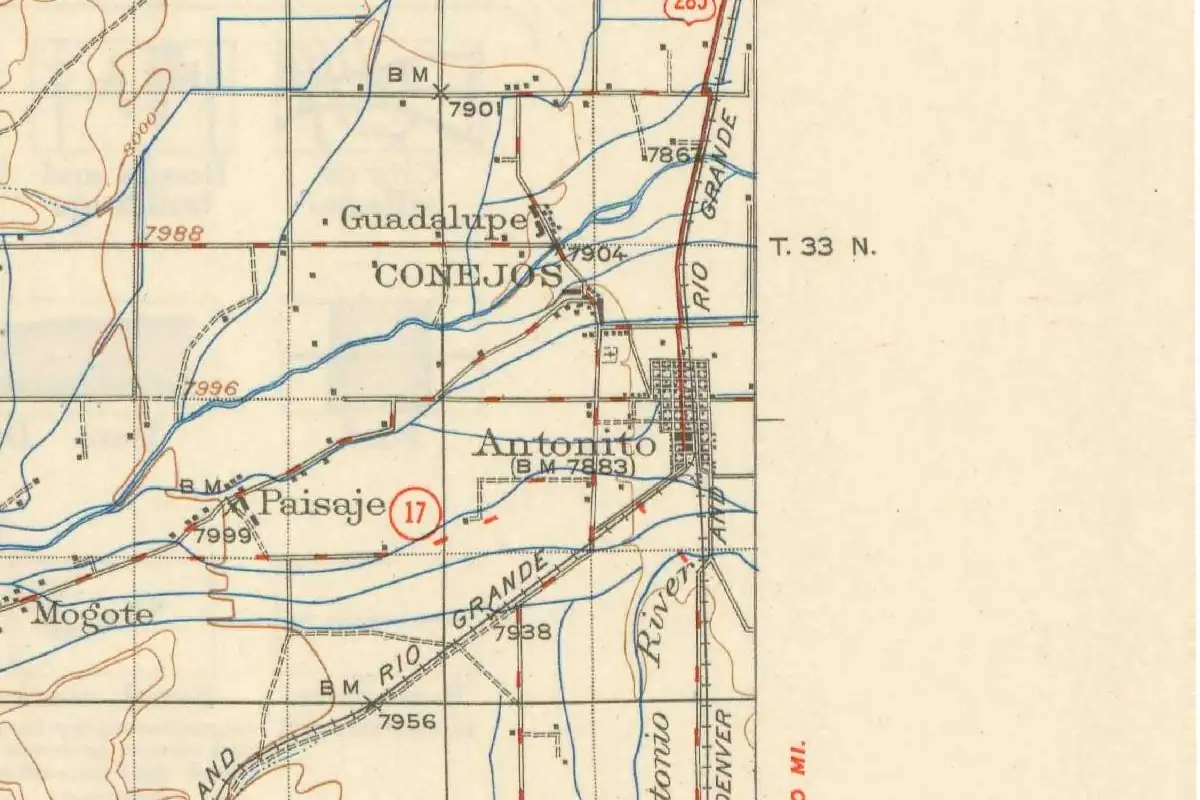
George Crofutt visited on October 15, 1880. His Grip-Sack Guide of Colorado (1881) called Durango “the pet child of the Denver & Rio Grande Railway Company, by whom it was laid out and fostered,” on a plateau “two miles south from Animas City” (3.2 km). In its first sixty days of lot sales, he wrote, the company took in $96,000. He measured it at “182 miles west from San Antonio” (293 km), the junction town now called Antonito.
A Mexican city or a Spanish family?
Crofutt didn’t explain the name. The explanations you’ll run into came later, and they don’t match.
- Durango, Mexico. The city’s history says “Durango, Colorado, was named after Durango, Mexico.” The story it tells is that A. C. Hunt, a former territorial governor, “was traveling through Durango, Mexico at the time when the name for the new town was being decided, and thought the two regions looked similar.” The city labels this “as the story goes.” A 1954 dictionary of Colorado names by J. Frank Dawson also says the town “was named for Durango, Mexico, and before that the name came from Durango, Spain.”
- A Spanish family. Henry Gannett, the Geological Survey’s geographer, wrote in 1905 that Durango was “named for a resident Spanish family.” He gave no family name and no source.
Both the city and Dawson add a Basque root: Dawson says the original form was “Urango,” with “Ur” meaning water and “Ango” meaning town. Neither shows where that comes from, and none of the sources here quote Hunt himself or a railroad record of the choice. So the Mexico story is the one the city tells, and Gannett’s family is left without a name.
The pet child grows up
The railroad’s bet paid off. Within a year of its founding, the city says, Durango had 2,400 people. By 1941 the WPA called it the seat of La Plata County and “center of the San Juan Basin.” Silverton, which Crofutt put “forty-eight miles north” (77 km), is still tied to Durango by the narrow-gauge Durango & Silverton, which the city says “continues to run.” The national names inventory adds nothing on the name; its Durango entry has a location and an empty history field.
The railroad picked the spot. For the name, all you have is the city’s story about Hunt, Dawson’s Mexican city and Gannett’s unnamed family.
Quick answers
Is Durango, Colorado, named after Durango, Mexico?
That’s the city’s version. It says former territorial governor A. C. Hunt was in Durango, Mexico, when the name was being chosen and thought the places looked alike. Dawson (1954) also says it was named for Durango, Mexico, but doesn’t mention Hunt. Gannett (1905) instead credited “a resident Spanish family.”
Who founded Durango, Colorado?
The Denver & Rio Grande Railway, in September 1880, according to the city. Crofutt’s 1881 guide said the company laid out the town and sold $96,000 worth of lots in sixty days.
Why didn’t the railroad use Animas City?
The Federal Writers’ Project’s Colorado guide (1941) says the railroad avoided Animas City and built its own town to profit from the business the new line would bring.
Key dates
- 1880September: the Denver & Rio Grande lays out Durango south of Animas City. Crofutt visits on October 15.
- 1881The first train passes through Animas City without stopping, the city says. Crofutt's guide calls Durango "the pet child" of the railroad.
- 1905Henry Gannett says the town was named "for a resident Spanish family."
- 1954J. Frank Dawson ties the name to Durango, Mexico, and a Basque word for a watering place.
Getting there
Open Durango in Google Maps
Opens in a new tab. The pin is the center of Durango in the USGS place-name record.
The closest airports, Amtrak stations and intercity bus stops, measured in a straight line from the center of Durango.
Airports
- Durango-La Plata County (DRO) 11 mi 18 km
- Telluride Regional (TEX) 47 mi 75 km
Intercity buses
- Greyhound Durango W 8th St under 1 mi 0.4 km
- Bustang Outrider Bustang · Durango under 1 mi 0.4 km
Distances are as the crow flies, not by road. We don't list schedules or fares because they change; check with the airline, Amtrak or the bus company before you go. Official data (FAA commercial service airports (2025), FAA airport locations, Amtrak stations and Intercity Bus Atlas) from the FAA and the U.S. Bureau of Transportation Statistics, checked Nov 6, 2026.
Sponsored
Staying in Durango?
Compare hotels in Durango, Colorado, on Expedia.
See hotels in DurangoWe may earn a commission if you buy through this link. It never changes what we write. Read our affiliate disclosure
Historical Sources & References
- George A. Crofutt, Crofutt’s Grip-Sack Guide of Colorado (1881), p. 93. “The pet child of the Denver & Rio Grande Railway Company,” two miles south of Animas City, 182 miles from San Antonio, $96,000 in lot sales and Silverton forty-eight miles north.
- Henry Gannett, The Origin of Certain Place Names in the United States (1905), p. 111. “Named for a resident Spanish family.”
- Federal Writers’ Project, Colorado: A Guide to the Highest State (1941), p. 342. Founded in 1880 by the railroad, which “avoided Animas City,” and the Animas City Daily Southwest’s complaint.
- J. Frank Dawson, Place Names in Colorado (1954). Named for Durango, Mexico, and earlier Durango, Spain, from a Basque word meaning “watering town or place.”
- City of Durango, “History of the City of Durango”. September 1880, the train that “didn’t even stop” at Animas City, A. C. Hunt’s trip to Durango, Mexico, and the population of 2,400.
- GNIS feature 202983 (U.S. Geological Survey). The national names inventory’s entry for Durango, in La Plata County, with no history note.
Spot something wrong, or know more? Tell us here. You can also email us or use our contact page. Corrections are noted here with their date, never made silently.