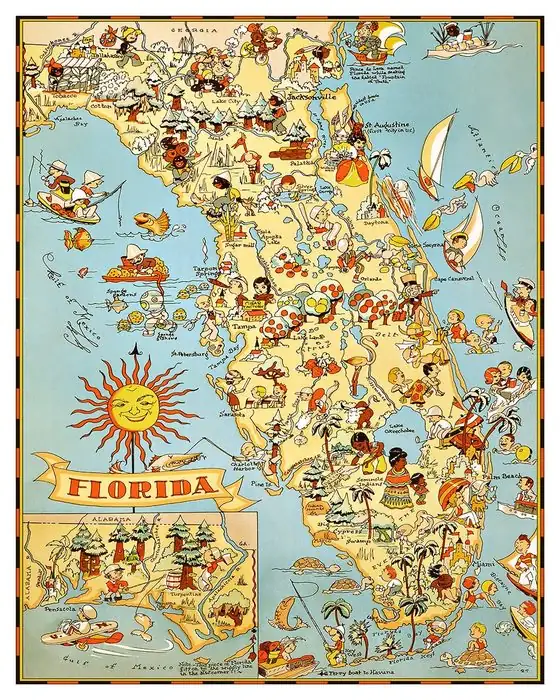
Fort Myers, Florida: Named for an Army Quartermaster
Fort Myers is named for Abraham C. Myers, an Army quartermaster officer. Soldiers began building the fort on the Caloosahatchee River in February 1850 and named it for him; WGCU says he was General David E. Twiggs's soon-to-be son-in-law. An earlier fort on the site, from 1841-1842, was Fort Harvie.
The man behind the name, on paper
Fort Myers, Florida, is named for an Army quartermaster, Abraham C. Myers, who approved the fort’s plans and budget but apparently never visited it. The city kept the “Fort” long after the soldiers left. And Myers, it seems, never saw the place that carries his name.
That’s the short version. The longer one starts with an older fort, a general’s family and a war the post was built to fight.
Before Myers: Fort Harvie
The state’s historical marker for Fort Myers starts much earlier. In ancient times, it says, there were “Caloosa” villages in this area, the people usually written today as Calusa. Then, during the Seminole War of 1841-1842, the Army put up a fort around this site and named it for Lieutenant John Harvie.
Fort Harvie didn’t last. The marker says the fort “was reestablished in 1850 and named Fort Myers.” So the spot had already had one soldier’s name before it got the one that stuck.
February 20, 1850
Tom Hall, writing for WGCU in Fort Myers, calls February 20 the most important date in the city’s history, and 1850 is the first reason. That day, two companies of artillery landed on the banks of the Caloosahatchee River, near where the Florida Repertory Theatre stands now, and started building a frontier post. A brevet major named I. C. Ridgely was in charge, Hall says, with orders to build “a fort to be named Myers.”
So the name came first, in the orders, before there was anything to put it on.
Whose idea was Myers?
Hall gives the family angle. The fort was named, he writes, “in honor of General David Emmanuel Twigg’s soon-to-be son-in-law, Lt. Colonel Abraham C. Myers, who was chief quartermaster for all of Florida.”
You’ll notice the rank changes depending on who you ask. The state marker calls Myers a lieutenant. Henry Gannett, the Geological Survey’s place-name man, wrote in 1905 that the town, “first a military post,” was “named for Capt. Abraham C. Myers.” Hall calls him a lieutenant colonel. All three agree on the man and on the Army. We couldn’t check which rank he actually held in 1850, so we’re leaving all three on the table.
The quartermaster who paid for his own namesake
Here’s the odd part. It doesn’t appear that Myers or his wife, Marion, ever visited the fort, Hall writes. But as quartermaster, Myers had to approve every building plan, and he controlled the money for materials. He spent so much on the fort named for him that in 1856 the War Department ordered an investigation.
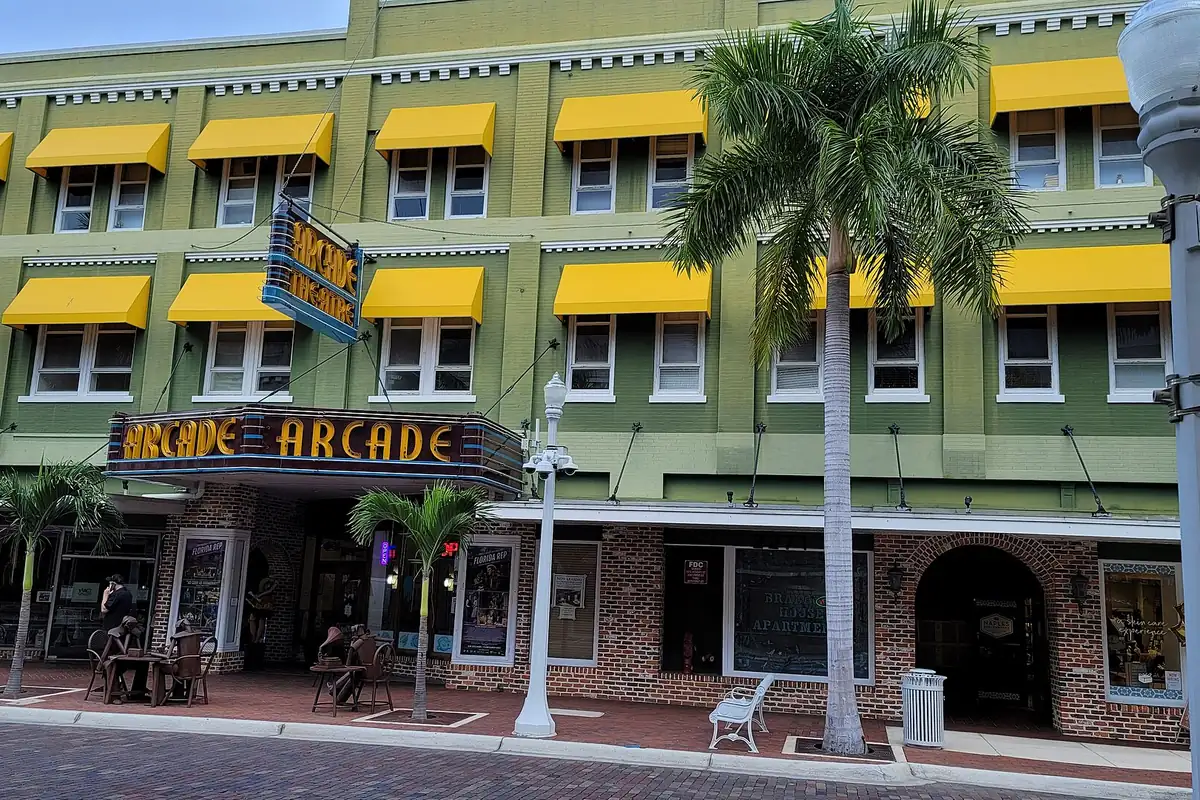
The money shows. By Hall’s account, the stockade ran from just east of today’s Broadway to just east of Royal Palm, and from Main Street to the riverbank, which then ran along what’s now Bay Street. Inside were officers’ quarters, barracks, a two-and-a-half-story hospital, warehouses, shops, a bakery, stables and even a bowling alley. A pier ran out nearly 750 feet (229 m) into the river. The pine buildings were sided and roofed with cedar shingles shipped in from Pensacola and Apalachicola, and the garrison’s two big vegetable gardens lay outside the south wall, where City Hall stands today. The officers’ quarters stood in the block now taken up by the Arcade Theater, the building in the photo at the bottom of this page.
Francis Asbury Hendry, later called the Father of Fort Myers, first saw the place in 1854 as a dispatch agent. Hall quotes his memory of it: “The fort presented a beautiful appearance,” with shell walks, palms, a carefully tended lawn and “the finest vegetable garden I ever saw.” Whatever the War Department thought of the bills, Hendry wrote that he had never seen a more comfortable and happy set of men.
What the fort was for
None of that was built for show. The fort went up in two stages, Hall says. Makeshift buildings came first, between 1850 and 1852, while the Army tried to get the Seminoles to leave for Indian Territory on their own. When it was clear that would take force, the stockade and buildings were reinforced and expanded.
Hall is blunt that the fort went up in the middle of land promised to the Seminoles, as a staging point for forcing them out, and that soldiers from the fort provoked fighting in 1856 when they destroyed the gardens of the Seminole leader known to whites as Billy Bowlegs. His Seminole name, Hall notes, was Hollatter Micco, which means Alligator Chief. The marker says this Seminole War ended in 1858.
The Army came back in the Civil War. The marker says Fort Myers was reactivated as a base for rounding up wild cattle to feed the federal gunboats patrolling off Sanibel. On February 20, 1865, exactly 15 years after the first soldiers landed, Union troops led by two companies of the U.S. Colored Troops’ 2nd Regiment held off a Confederate attack meant to burn the fort down, Hall writes. One of the attackers was Hendry himself, by then a Confederate captain leading a company of 131 men, the same man who’d admired the fort’s garden 11 years earlier. He adds that if the fort had burned, Manuel Gonzalez, who arrived on February 21, 1866, might have settled somewhere else.
A fort name that outlived the fort
Fort Myers has company in Florida. Fort Lauderdale began as an Army post named for its commander, and Fort Pierce honors the officer who built its post. Fort Myers is a little different: its namesake didn’t build it, didn’t command it and apparently never even showed up. He just signed off on the bills.
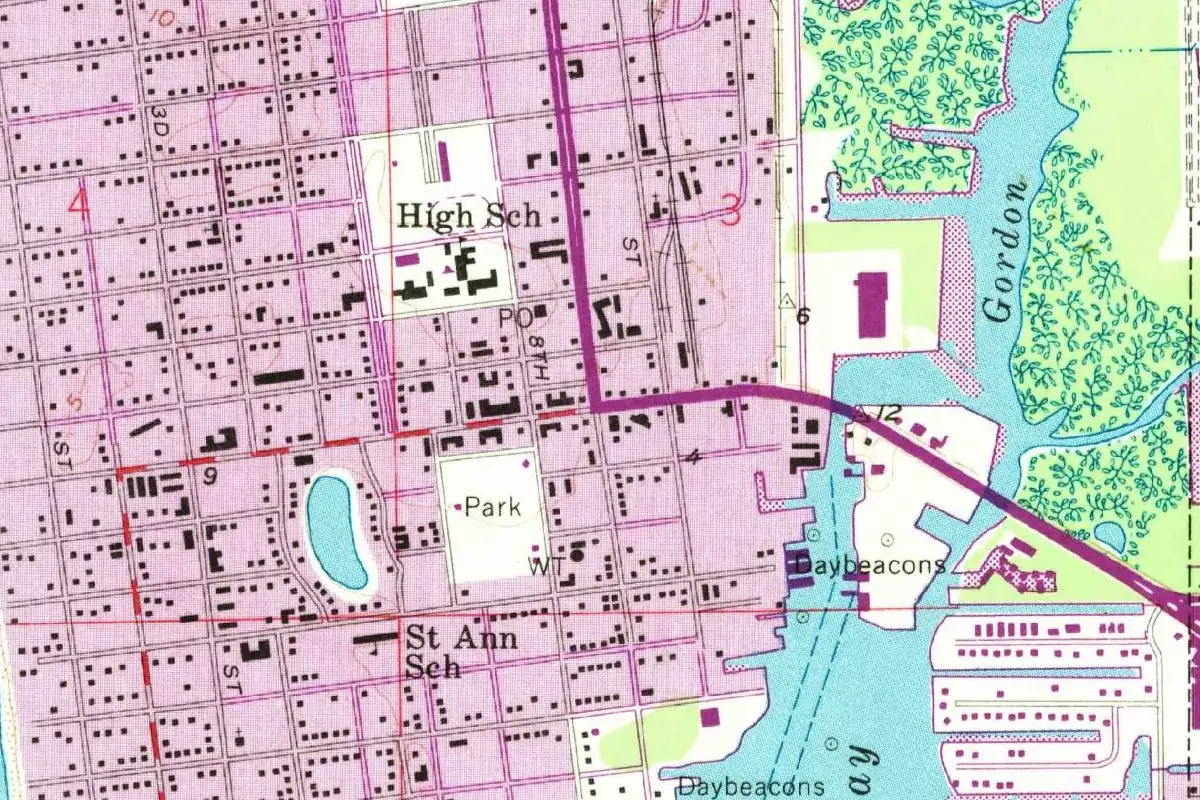
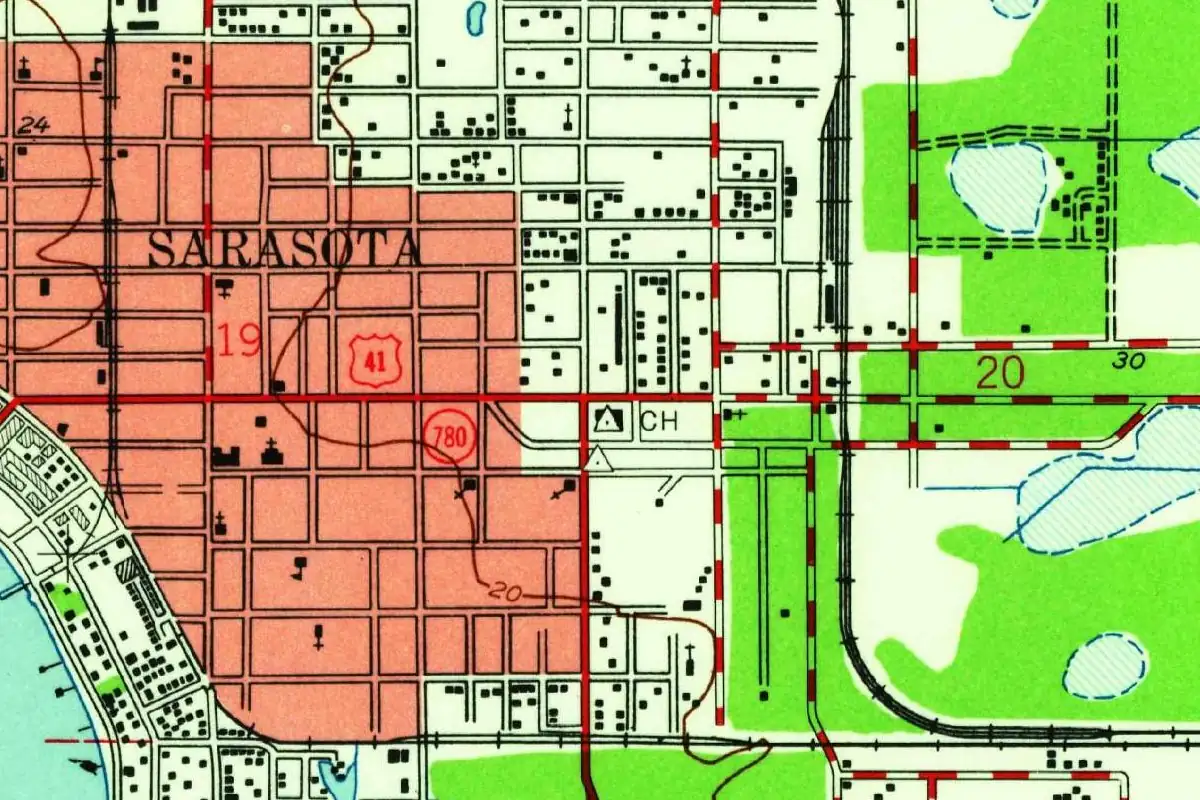
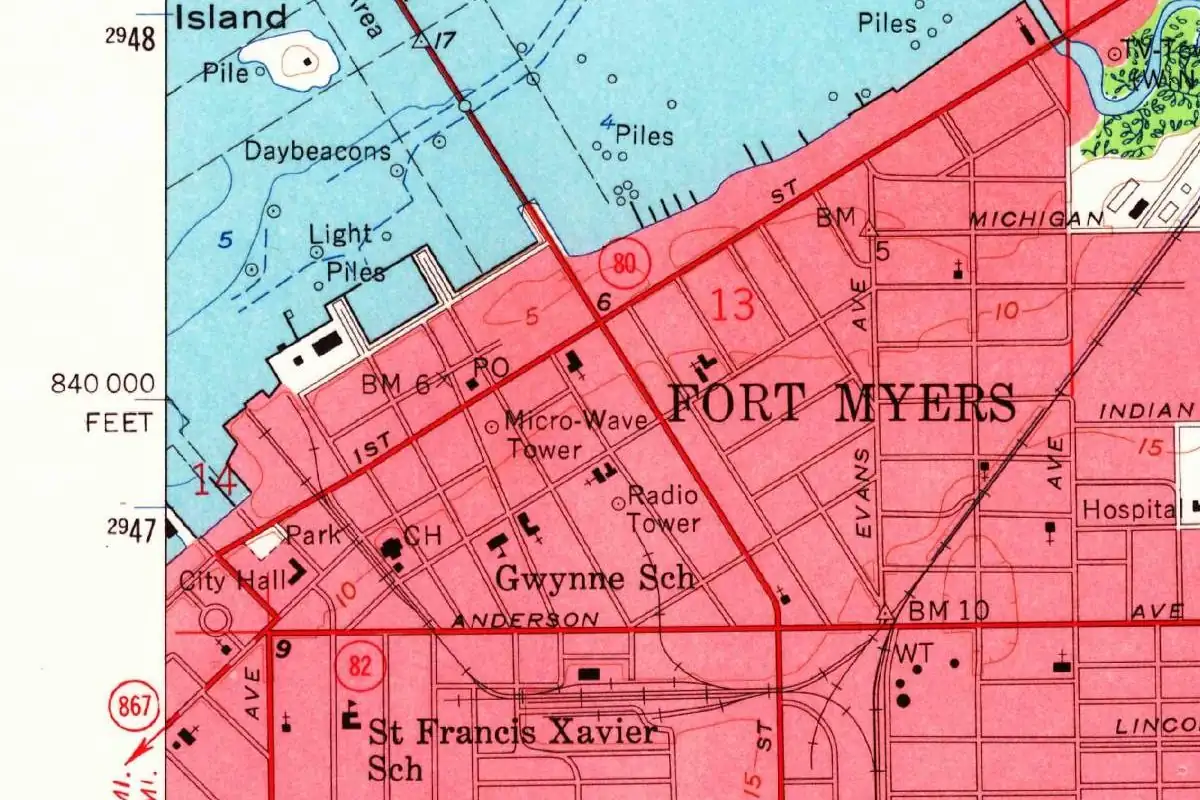
By 1958, the Geological Survey’s map above shows a downtown where the stockade once stood, laid out along the riverfront with the post office and courthouse a few blocks inland. Elsewhere in Lee County, Cape Coral has a much newer name story. For the rest of the state, try our Florida page.
Quick answers
Who is Fort Myers, Florida, named after?
Abraham C. Myers, an Army quartermaster officer. The state marker, Henry Gannett’s 1905 place-name roundup for the Geological Survey and WGCU’s Tom Hall all name him, though they give his rank as lieutenant, captain and lieutenant colonel.
Did Abraham Myers ever visit Fort Myers?
Apparently not. Hall writes that it doesn’t appear Myers or his wife, Marion, ever visited, even though he approved the fort’s plans and funds.
What was Fort Myers called before?
The site had an earlier fort, named for Lieutenant John Harvie, during the Seminole War of 1841-1842. It was reestablished as Fort Myers in 1850, the state marker says.
When was Fort Myers founded?
As a fort, on February 20, 1850, when two companies of artillery landed on the Caloosahatchee and started building it.
Key dates
- 1841During the Seminole War of 1841-1842, a fort named for Lieutenant John Harvie is set up on the site.
- 1850On February 20, two companies of artillery land on the Caloosahatchee and start building Fort Myers.
- 1856The War Department orders an investigation of how much money went into the fort.
- 1858The Seminole War that the fort was built for comes to an end.
- 1865Union troops, led by two companies of U.S. Colored Troops, beat back a Confederate attack on the fort on February 20.
Things to do in Fort Myers, Florida
Edison and Ford Winter Estates
Thomas Edison's and Henry Ford's winter estates on the river, with twenty acres of historic gardens, a 15,000-square-foot museum and the restored botanical laboratory where Edison, Ford and Harvey Firestone worked side by side.
Burroughs Home & Gardens
A Georgian Revival mansion from 1901 on the Caloosahatchee in downtown Fort Myers, once home to businessman Nelson Burroughs and his family, with live oaks, gardens, a river-view verandah and guided tours of every room.
Calusa Nature Center & Planetarium
A not-for-profit nature center devoted to environmental education, home to rescued animals that can't be released back into the wild, with animal talks and planetarium shows.
The IMAG History & Science Center
A family science and history center with the USS Mohawk Aquarium, a Caloosahatchee fossil hunt and Science on a Sphere.
Getting there
Open Fort Myers in Google Maps
Opens in a new tab. The pin is the center of Fort Myers in the USGS place-name record.
The closest airports, Amtrak stations and intercity bus stops, measured in a straight line from the center of Fort Myers.
Airports
- Southwest Florida International (RSW) Fort Myers 10 mi 16 km
- Punta Gorda (PGD) 21 mi 33 km
Amtrak trains
- Sebring station (SBG) 65 mi 105 km
- Okeechobee station (OKE) 77 mi 124 km
Intercity buses
- FlixBus Fort Myers Bus Stop under 1 mi 0.5 km
- Amtrak Chartered Vehicle Amtrak Connecting Service · Fort Myers Amtrak Bus Stop 4 mi 7 km
- Greyhound Arcadia The Tree of Knowledge 40 mi 64 km
Distances are as the crow flies, not by road. We don't list schedules or fares because they change; check with the airline, Amtrak or the bus company before you go. Official data (FAA commercial service airports (2025), FAA airport locations, Amtrak stations and Intercity Bus Atlas) from the FAA and the U.S. Bureau of Transportation Statistics, checked Nov 14, 2026.
Sponsored
Staying in Fort Myers?
Compare hotels in Fort Myers, Florida, on Expedia.
See hotels in Fort MyersWe may earn a commission if you buy through this link. It never changes what we write. Read our affiliate disclosure
Historical Sources & References
- Florida Division of Historical Resources, marker “Fort Myers”. The “Caloosa” villages; the 1841-1842 fort “named for Lieutenant John Harvie”; “reestablished in 1850 and named Fort Myers, honoring Lieutenant Abraham C. Myers”; the war’s end in 1858; the Civil War cattle base for gunboats off Sanibel.
- Tom Hall, “February 20 is the most significant day in Fort Myers’ history,” WGCU (2026). The landing of February 20, 1850, near the Florida Repertory Theatre; Ridgely’s orders for “a fort to be named Myers”; Myers as Twiggs’s soon-to-be son-in-law and chief quartermaster for Florida; no sign that Myers or Marion visited; the 1856 investigation; the stockade, the officers’ quarters by the Arcade Theater, the 750-foot pier, the cedar shingles and the gardens where City Hall stands; the two building stages of 1850-1852 and after; Billy Bowlegs (Hollatter Micco); Hendry’s 1854 visit; the battle of February 20, 1865, and Hendry’s company of 131 men among the attackers; Manuel Gonzalez in 1866.
- Henry Gannett, The Origin of Certain Place Names in the United States (1905), p. 129. “Fort Myers; town in Lee County, Florida, first a military post, named for Capt. Abraham C. Myers.”
- GNIS feature 282700 (U.S. Geological Survey). The national gazetteer lists Fort Myers as a populated place in Lee County.
- U.S. Geological Survey, Fort Myers sheet (1958). The 1:24,000 sheet behind the riverfront map above; downtown sits near its western edge.
Spot something wrong, or know more? Tell us here. You can also email us or use our contact page. Corrections are noted here with their date, never made silently.