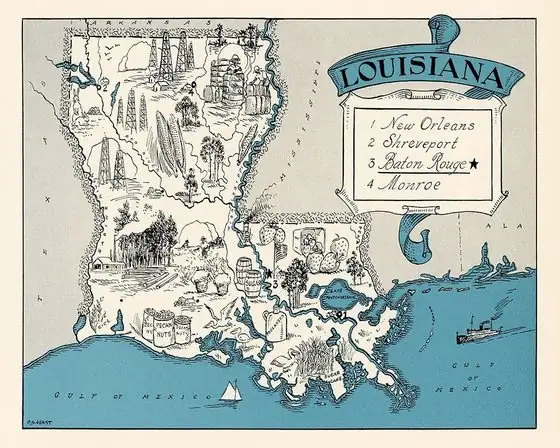
Lake Charles, Louisiana: Named Twice for the Same Pioneer
The city and its lake carry the first name of Charles Sallier, one of the first settlers on the Calcasieu River. An 1891 history says the town was incorporated about 1857 as Charleston, for Sallier, and in 1867 as Lake Charles. Since the lake was older, it adds, perhaps the town was named for the lake.
Charles Sallier, a pioneer on the Calcasieu River, lent his first name to a lake and then twice to the town beside it: first Charleston, then Lake Charles. So the city carries one man’s name by way of a body of water, and it took two names to get there.
The settler who came from Italy
The best early account is in Southwest Louisiana, Biographical and Historical, a big 1891 volume edited by William Henry Perrin. Among the earliest settlers on the east side of the Calcasieu, it lists the LeBlues, Charles Sallier, Reese Perkins and Jacob Ryan. Then it gives Sallier one short, useful entry: he “came from Italy and settled near the mouth of the Calcasieu River. The town of Lake Charles was named for him.”
The Calcasieu Parish Police Jury tells it nearly the same way today, calling Sallier “an Italian who took up land in this area at the beginning of the 19th century.” Not everyone agrees on where he came from, though. A 2012 history prepared for the Louisiana Division of Historic Preservation calls him a French immigrant who built his home on the lake in 1800. It also says people called him “Mr. Charles,” so the water near his place became “Charles’ Lake.” That’s a tidy explanation, but it isn’t in Perrin or Fortier, so take it as the 2012 study’s.
Charleston comes first
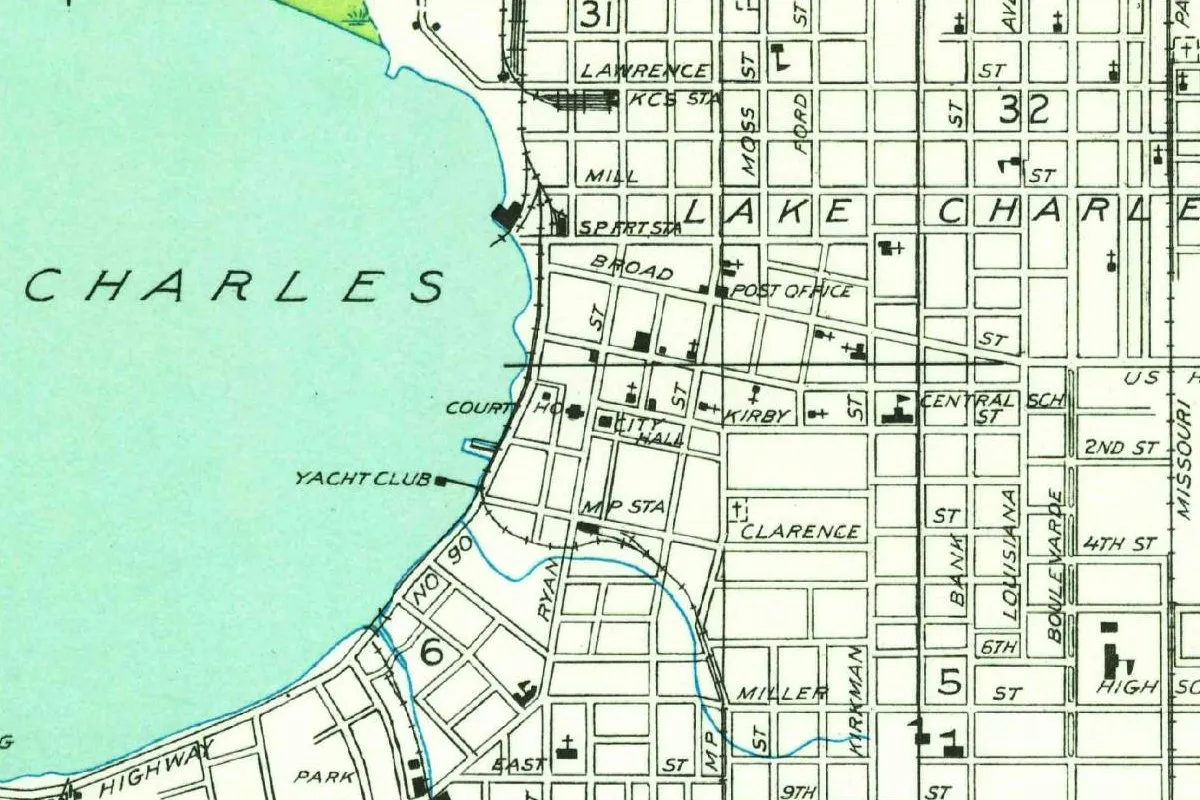
Perrin’s history says the town was settled about 1852 and “was never regularly surveyed and laid out as a town.” It goes on: “It was incorporated about 1857, under the name of Charleston, for one of the first settlers of the place named Charles Sallier.” The parish seat moved there around the same time. Alcée Fortier, writing in 1914, gives the credit to Jacob Ryan, an early settler and the first merchant, who secured the court house and laid out a town with Ryan Street as its base. You can still see Ryan Street near the lakefront on a U.S. Geological Survey sheet from 1932.
Then came the second name. Perrin says that in 1867 the town was incorporated as Lake Charles, “still retaining the name of the old pioneer,” and he printed the act. It made “the inhabitants of the town of Lake Charles in the parish of Calcasieu” a body corporate called the Town Council of Lake Charles, and it was approved on March 16, 1867.
Which came first, the lake or the town?
Perrin’s book raises the question itself, a few pages later, while describing the parish’s lakes:
“As the lake is the older of the two places, perhaps the town was named for the lake, and both were named for old Charles Sallier, the pioneer.”
That “perhaps” is honest. Nobody in these sources pins down when the lake first got Sallier’s name. What Perrin and the 2012 study both point to is a chain: a settler’s first name went to the water, and the water’s name went to the town. Perrin describes the lake as about three miles (5 km) long and two miles (3 km) wide, with the Calcasieu River running through it.
The dates don’t line up
If you go looking for the year of the change, you’ll find three versions. Perrin, with the act in front of him, has Charleston about 1857 and Lake Charles in 1867. Fortier and the parish today both have 1857 and 1868. The 2012 study says Charleston was incorporated in 1861 and renamed in 1867, “after dissatisfaction grew over the city’s name.” The man behind the name is the same in every source that names him. Only the paperwork moves.
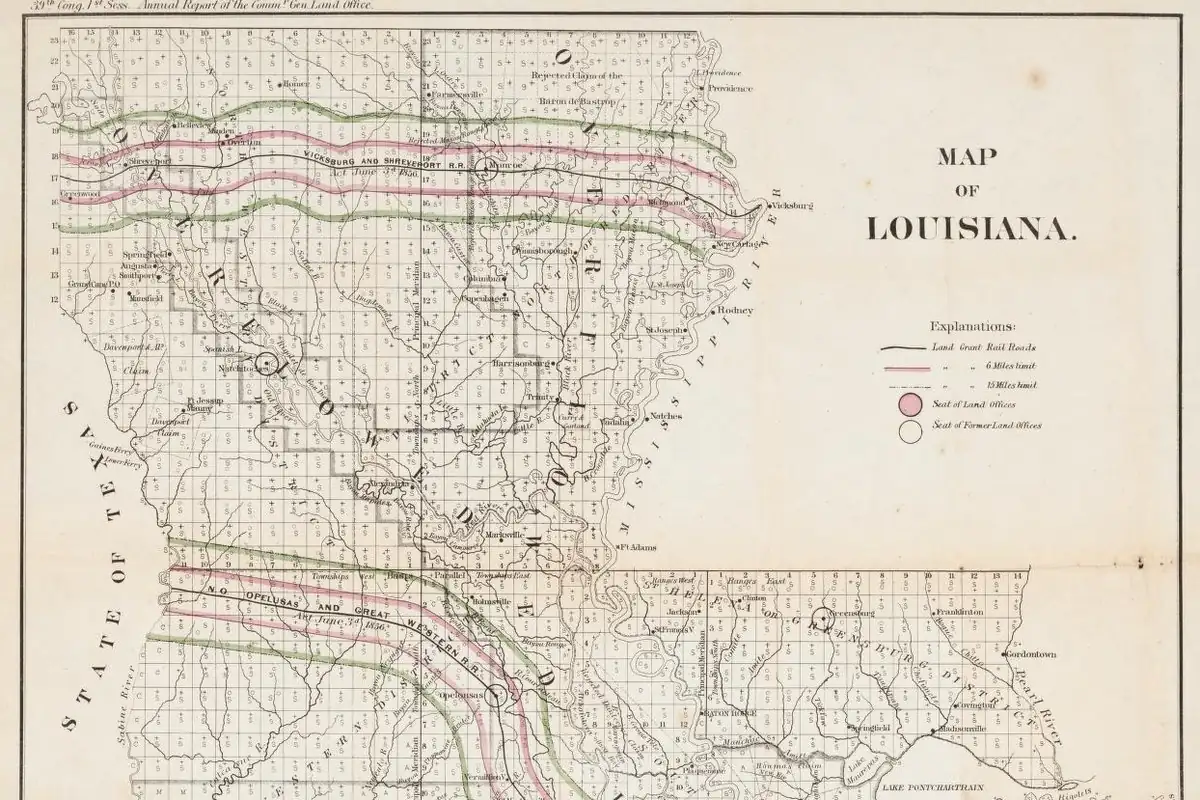
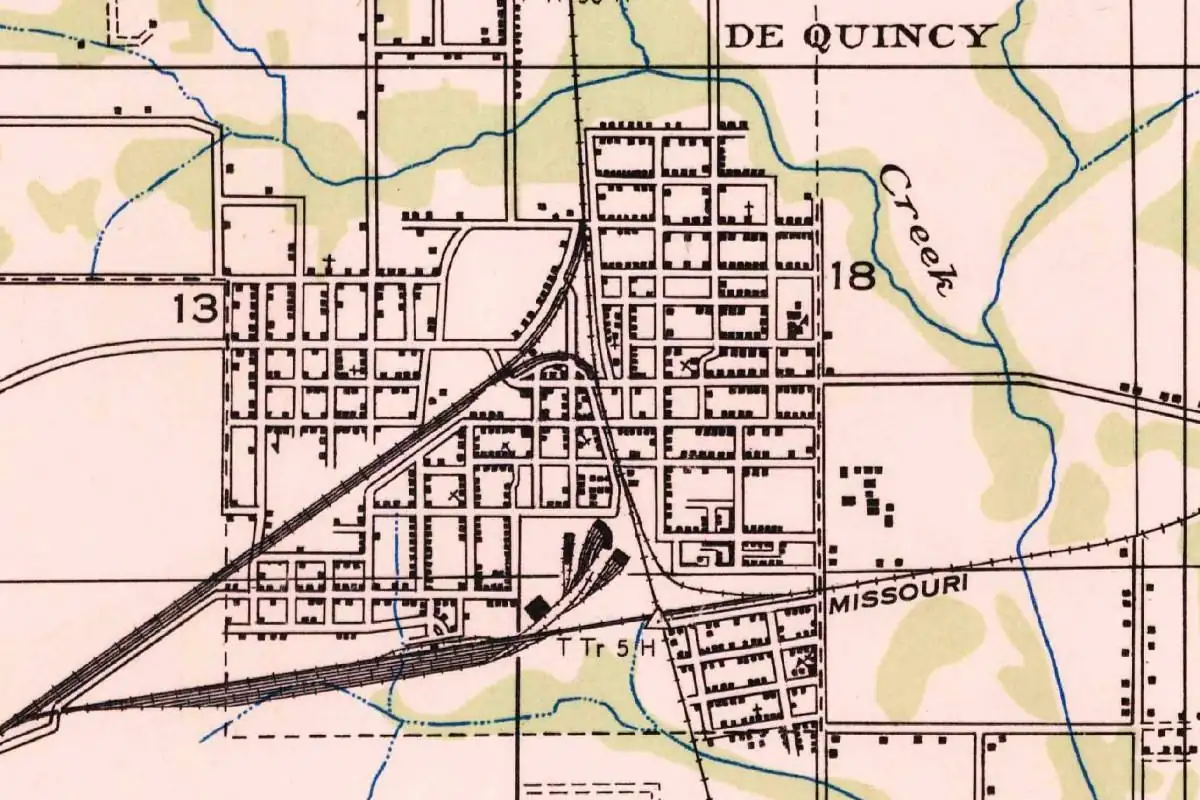
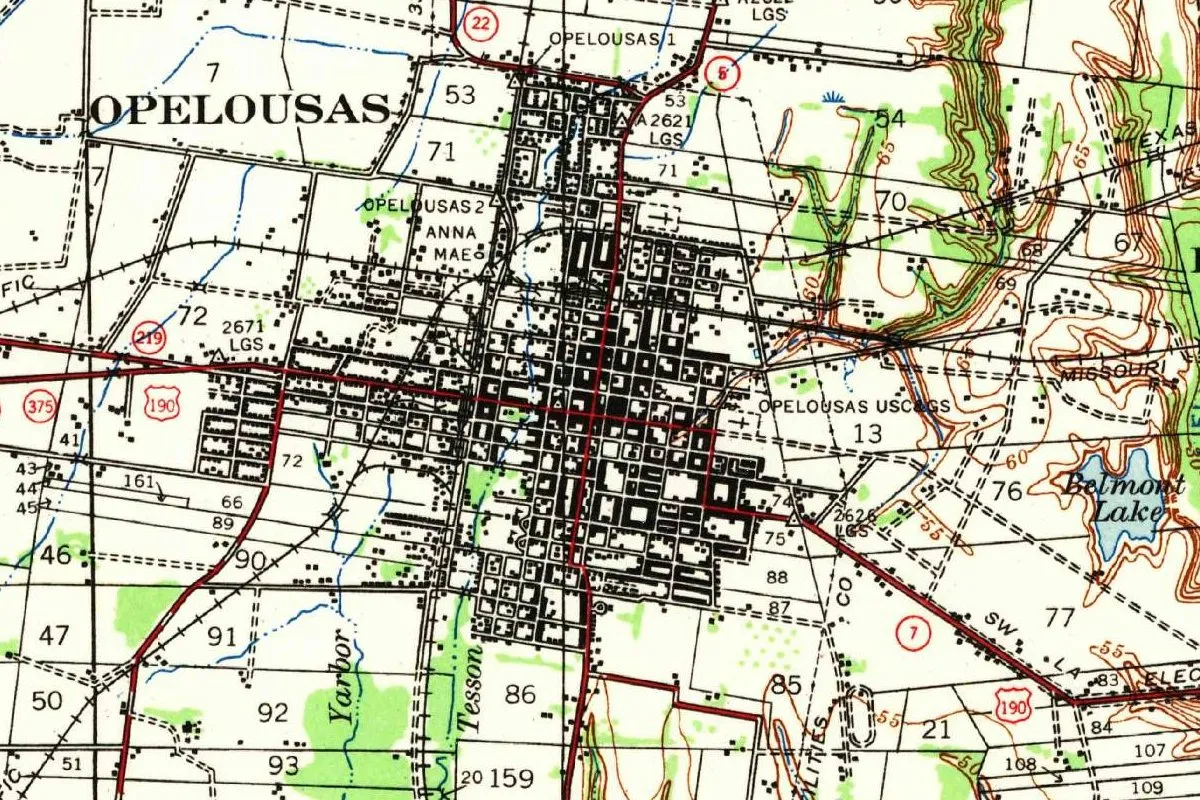
Calcasieu Parish takes in more than the parish seat. Its other railroad towns have their own name stories, like DeQuincy, up the line to the north. You’ll find the rest of Louisiana on the state page.
Quick answers
Who was Lake Charles named after?
Charles Sallier, one of the area’s first settlers. An 1891 history says the town was named for him and adds that the lake, which is older, perhaps gave the town its name.
Was Lake Charles ever called Charleston?
Yes. Perrin’s 1891 history says the town was incorporated about 1857 under the name Charleston, for Charles Sallier.
When did Charleston become Lake Charles?
The sources disagree. Perrin prints an act approved March 16, 1867; Fortier and the parish give 1868.
Was Charles Sallier French or Italian?
Perrin’s 1891 history and the parish say he came from Italy. A 2012 historic-district study calls him a French immigrant.
Key dates
- 1852Lake Charles is settled about this year, Perrin's 1891 history says; the parish seat moves there from Marion that year, per the parish.
- 1857The town is incorporated as Charleston, for Charles Sallier (Perrin says about 1857; a 2012 study says 1861).
- 1867March 16: an act incorporating the town of Lake Charles is approved, as printed in Perrin's 1891 history.
- 1868Fortier (1914) and the parish give this year for the reincorporation under the name Lake Charles.
Getting there
Open Lake Charles in Google Maps
Opens in a new tab. The pin is the center of Lake Charles in the USGS place-name record.
The closest airports, Amtrak stations and intercity bus stops, measured in a straight line from the center of Lake Charles.
Airports
- Lake Charles Regional (LCH) 7 mi 11 km
- Jack Brooks Regional (BPT) Beaumont 52 mi 83 km
- George Bush Intcntl/Houston (IAH) 128 mi 206 km
Amtrak trains
- Lake Charles station (LCH) under 1 mi 1 km
- Beaumont station (BMT) 55 mi 89 km
Intercity buses
- FlixBus Lake Charles (City Point) under 1 mi 1 km
- Greyhound Orange Exxon 37 mi 59 km
Distances are as the crow flies, not by road. We don't list schedules or fares because they change; check with the airline, Amtrak or the bus company before you go. Official data (FAA commercial service airports (2025), FAA airport locations, Amtrak stations and Intercity Bus Atlas) from the FAA and the U.S. Bureau of Transportation Statistics, checked Nov 13, 2026.
Sponsored
Staying in Lake Charles?
Compare hotels in Lake Charles, Louisiana, on Expedia.
See hotels in Lake CharlesWe may earn a commission if you buy through this link. It never changes what we write. Read our affiliate disclosure
Historical Sources & References
- William Henry Perrin, ed., Southwest Louisiana, Biographical and Historical (1891), pp. 123-125, 150-151, 164. Sallier “came from Italy” and “The town of Lake Charles was named for him” (pp. 123-125); settlement about 1852, Charleston about 1857, Lake Charles in 1867 and the act approved March 16, 1867 (pp. 150-151); “perhaps the town was named for the lake” and the size of the lake (p. 164). Also online: page 125 and page 164.
- Alcée Fortier, ed., Louisiana, vol. 2 (1914), p. 30. Jacob Ryan and the move of the court house, Ryan Street, incorporation as Charleston in 1857 and reincorporation under the present name in 1868.
- Calcasieu Parish Police Jury, “Parish History”. Sallier as “an Italian who took up land in this area at the beginning of the 19th century,” the 1852 move from Marion, and the dates 1857 and 1868.
- Charlestown Cultural District Design Guidelines (2012), p. 5. Sallier as a French immigrant on the lake in 1800, “Mr. Charles” and “Charles’ Lake,” Charleston incorporated in 1861 and renamed in 1867.
- GNIS feature 1629966 (U.S. Geological Survey). The city’s place-name ID, in Calcasieu Parish.
- U.S. Geological Survey, Lake Charles NW sheet (1932). Ryan Street, the court house and the lake labeled CHARLES in 1932.
Spot something wrong, or know more? Tell us here. You can also email us or use our contact page. Corrections are noted here with their date, never made silently.