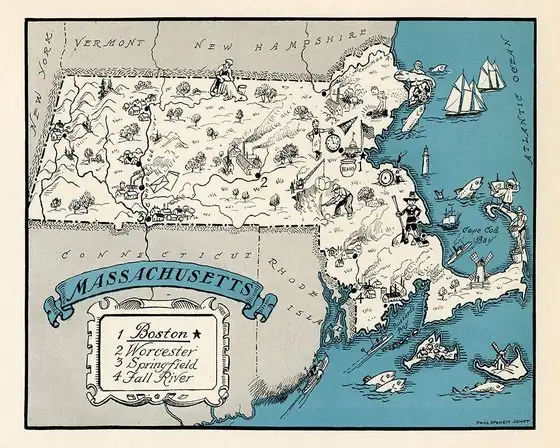
Cambridge, Massachusetts: How Newtowne Became a College Town
Cambridge is named for Cambridge, England. The settlement was founded in 1630 as Newtowne. After the colony picked it as the site of its college, the General Court ordered on May 2, 1638, that Newtowne be called Cambridge, generally thought to honor the English university many of its members had attended.
A capital that never was
Cambridge, Massachusetts, was called Newtowne until 1638, when the colony renamed it after England’s university town to suit its brand-new college. The name was picked for a school that had barely gotten started. And the school wasn’t even the first plan for the place.
The Cambridge Historical Commission tells the story with a bit of a smile. In 1630 the leaders of the Massachusetts Bay settlements couldn’t agree on which one should be the capital. Meeting in Watertown at the end of the year, they spotted a hill near the Charles River, just downstream, and named it Newtowne. The commission dates the choice of the site to December 21, 1630, and the name to December 28.
Newtowne was laid out properly, too. It was the first village in New England built on a grid, with straight streets meeting at right angles, and the commission places that old village at today’s Harvard Square. Boston was “eight long miles away,” about 13 km, reached by a ferry across the river and a long path around through Brookline and Roxbury.
Then, in 1634, the governor and his assistants moved the capital to Boston. That, as the commission puts it, eliminated “the entire rationale for Newtowne’s existence.”
Harvard as a consolation prize
The colony gave the half-empty village something else. Two years later, the commission says, the leaders chose Newtowne instead of the port town of Salem as the site of a college to train ministers. Harvard College dates its founding to 1636, which makes the town six years older than the school. The commission calls Harvard “our consolation prize.”
A college town needed a college-town name. The colony’s own record book for the General Court that met at Newtowne on May 2, 1638, includes, between an order about lawmakers’ expenses and one about fines, this single line:
“It is ordered, that Newetowne shall henceforward be called Cambrige.”
That’s the whole thing. One sentence, spelled the way a clerk spelled it in 1638, and a town got a new name. Less than a year later, on March 13, 1639, the same court ordered that “the colledge agreed vpon formerly to bee built at Cambridg shalbee called Harvard Colledge.” Both names landed within a year of each other.
Why Cambridge?
The order doesn’t say why, and that’s normal for the colony’s terse records. The historical commission fills in the reason, carefully. The General Court and the town agreed to the change, it says, and “it is generally agreed that this decision was made because many of the men who comprised the court had attended Cambridge University in England and thought that it would be an appropriate name for a college town in New England.”
Henry Gannett, writing for the U.S. Geological Survey in 1905, put it more briefly: the city was “named from the English university town, after the general court decided to establish a college there.” He added that twenty-two other places in the country bear the name of the English town.
So was it named for the town or the university? In a way, both. The name belongs to the English town, but the reason given is its university: the court wanted a fitting name for a college town.
A bridge with no Cam
The original name has its own story. The commission notes that the English Cambridge was named for “the bridge over the River Cam.” The Massachusetts version has a bridge problem: there’s no Cam here. The river had already been named the Charles, after King Charles I, and the commission says the colonists “apparently made no effort to rename the river too.”
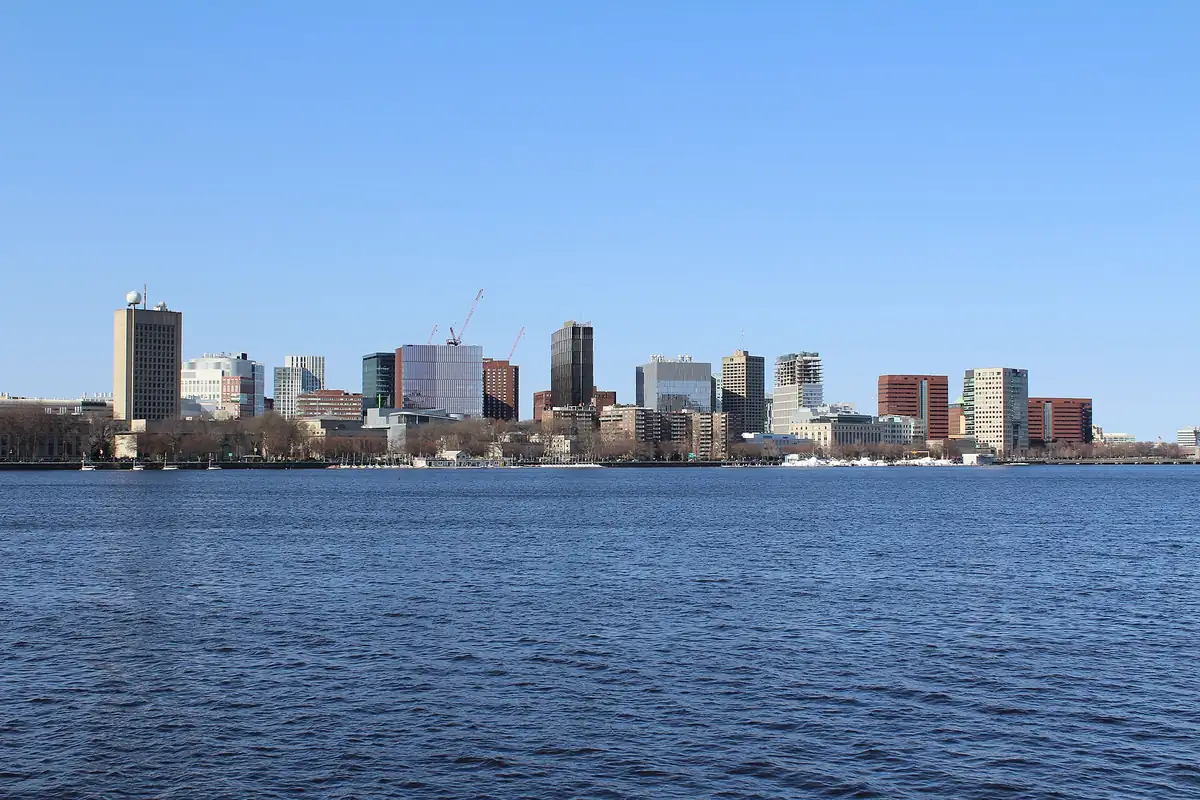
That’s why you’ll find a Cambridge on the Charles instead of the Cam. The photo at the bottom of this page shows the river the colonists kept.
Older names, and newer ones
Newtowne wasn’t the first name for this ground, of course. The commission notes that the female leader of the Massachusett tribe, a survivor of wars and European diseases that had already killed many of her people, negotiated with the colonists here. In 1639 she deeded land that included Cambridge to them while keeping her rights to live, hunt and fish on it.
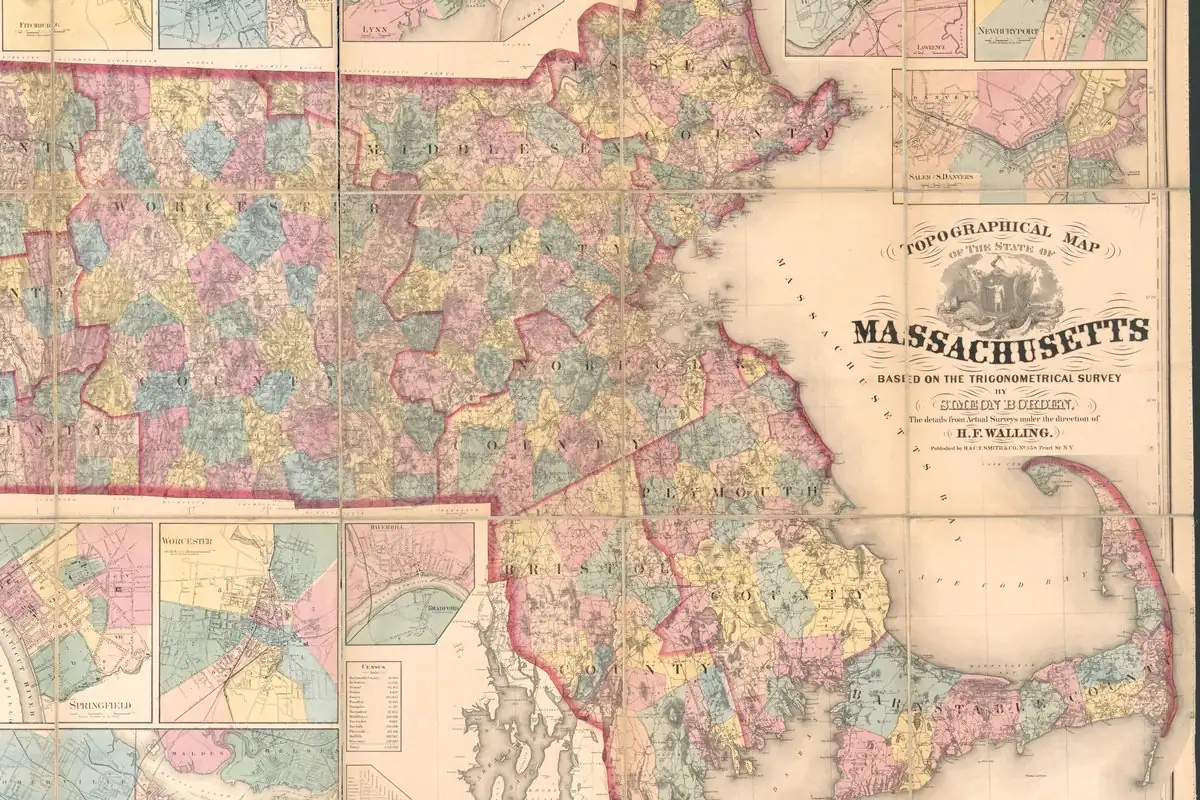
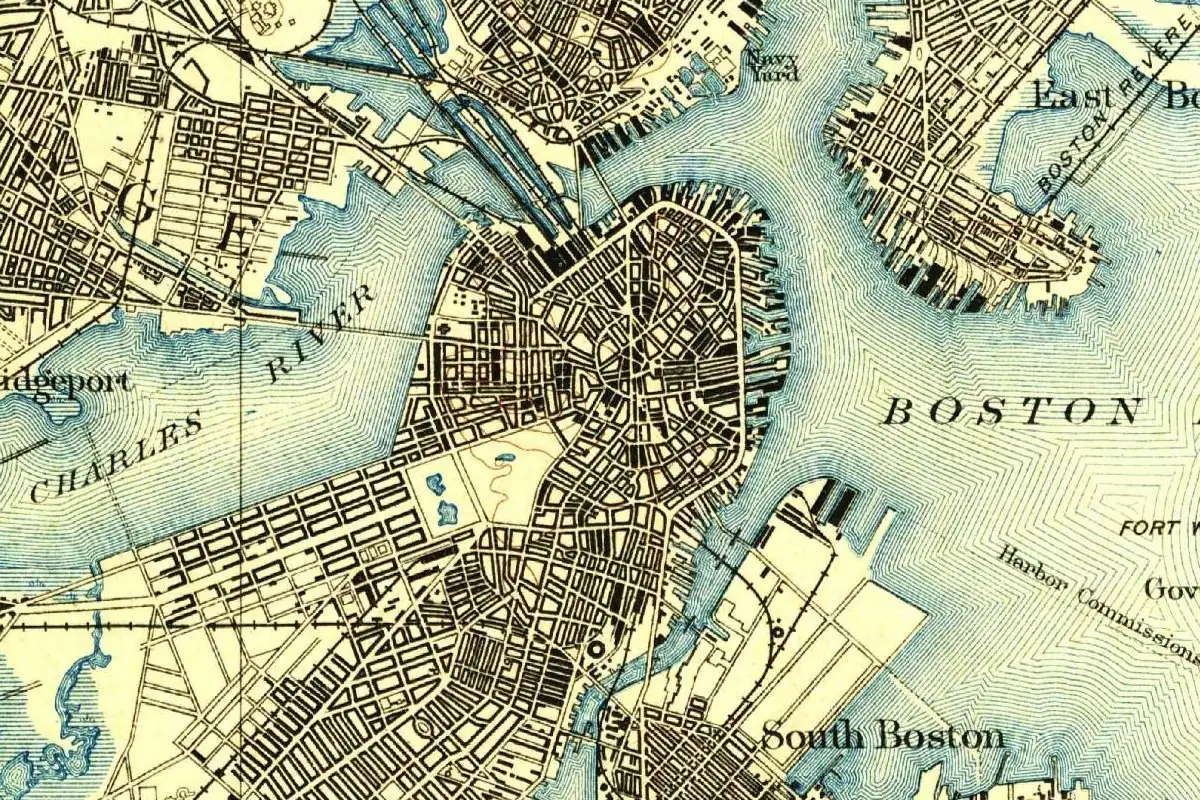
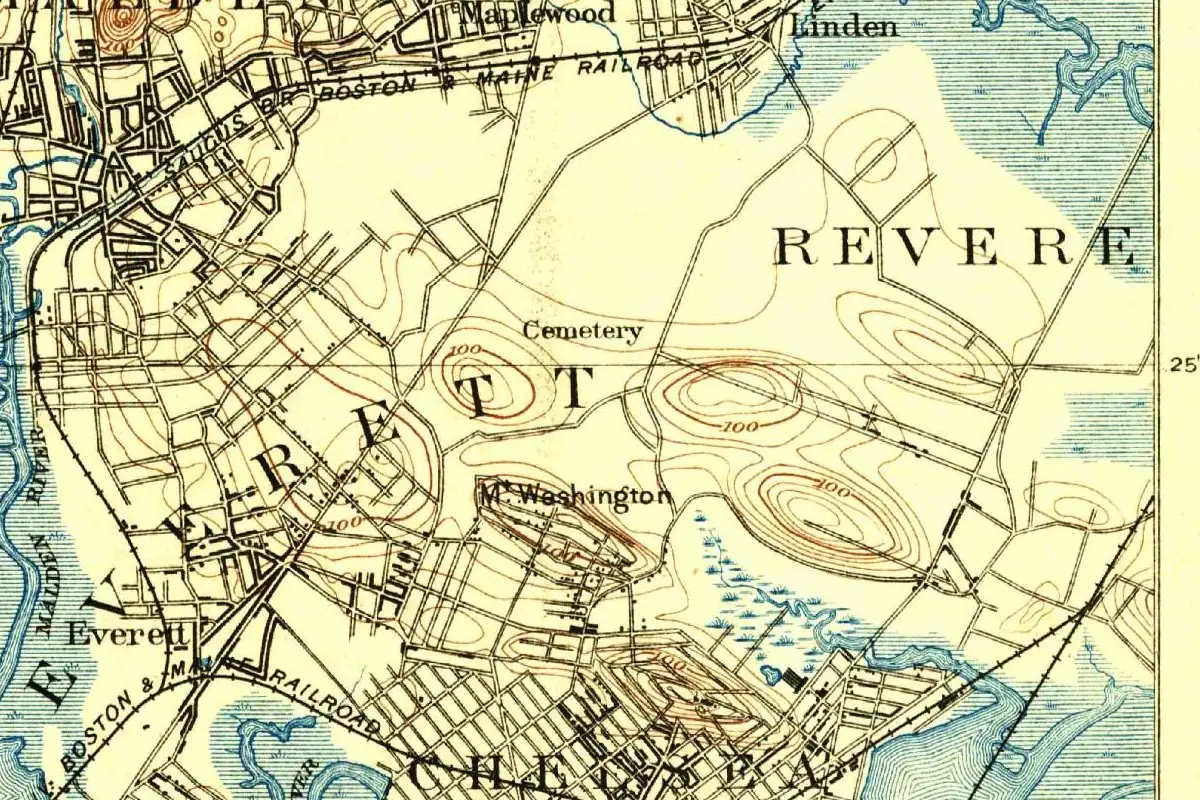
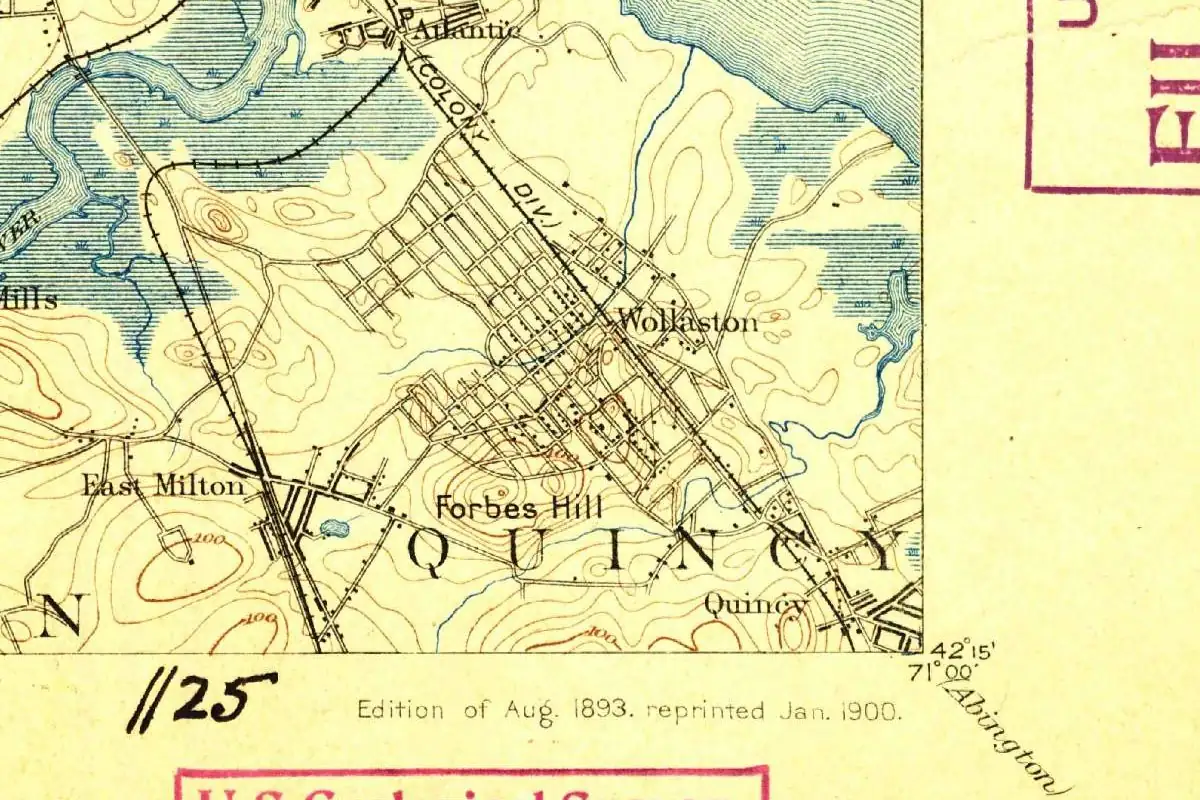
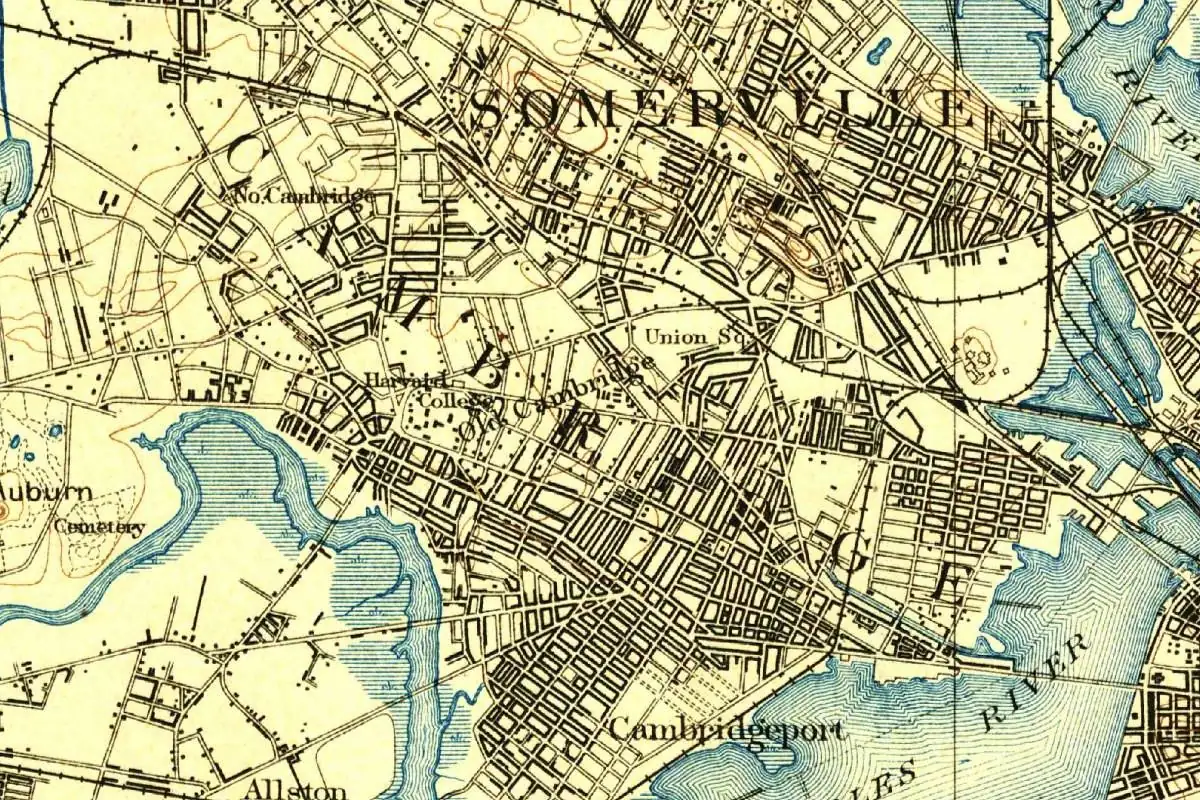
Later, the city grew into several villages that each borrowed the name. Cambridgeport grew up along the road to Boston, East Cambridge became an industrial village after a bridge opened in 1809, and North Cambridge took off when the railroad arrived in 1842. The original village around Harvard Square, the commission says, then became known as Old Cambridge. You can see all of those labels on the 1893 map at the top of this page.
The college-town idea stuck when Cambridge became a city. Its seal, first adopted in 1846, was designed by Edward Everett, then president of Harvard, and it shows Gore Hall, the college’s old library, along with the Washington Elm. Everett also wrote the Latin motto, which the commission translates as “Distinguished for Classical Learning and New Institutions.” Two centuries after the court’s one-line order, the city was still describing itself by its school.
One more Cambridge connection runs north. Col. William Brattle Jr., the Cambridge man whose name ended up on Brattleboro, Vermont, never moved to the town named for him; the Brattleboro Historical Society says he kept his home here. Other Massachusetts towns and their names are on the Massachusetts page.
The capital that never was got a college instead, and the college gave the town its name. Not a bad trade for a village that lost its reason to exist after four years.
Quick answers
What was Cambridge, Massachusetts, called before?
Newtowne. The colony’s leaders chose that name in December 1630, and it lasted until the General Court changed it on May 2, 1638.
Why is it called Cambridge?
Because of Harvard. Once the colony had picked the village for its college, the name was changed to match England’s university town. The city’s historical commission says it’s “generally agreed” that many court members had studied at Cambridge University.
Which is older, Cambridge or Harvard?
Cambridge, by six years. The town was founded in 1630 and the college in 1636, according to the Cambridge Historical Commission.
Is Cambridge named for a bridge?
Indirectly. The English Cambridge was named for a bridge over the River Cam. The Massachusetts city borrowed the English name, even though it sits on the Charles River.
Key dates
- 1630On December 28, the colony's leaders choose the name Newtowne for a settlement on the Charles River.
- 1634The capital moves to Boston.
- 1636Harvard College is founded.
- 1638On May 2, the General Court orders that Newtowne be called Cambridge.
- 1639On March 13, the court orders that the college at Cambridge be called Harvard College.
Things to do in Cambridge, Massachusetts
Longfellow House-Washington's Headquarters National Historic Site
A Georgian house that was George Washington's first long-term headquarters of the American Revolution and the place where Henry Wadsworth Longfellow wrote his canon of 19th-century American literature. Guided tours also cover its history of slavery and freedom.
Old Burying Ground
The town's old graveyard, just outside Harvard Square at Massachusetts Avenue and Garden Street, between First Parish in Cambridge and Christ Church.
Cooper-Frost-Austin House
Historic New England calls it the oldest dwelling standing in the city of Cambridge. Built by Samuel Cooper, it stayed in the same family for more than 250 years, and visitors see it on a guided tour.
Mount Auburn Cemetery
A cemetery founded in 1831 whose mission has always been to inspire visitors, comfort the bereaved and commemorate the dead in a landscape of exceptional beauty. An online burial search helps you find a grave.
Getting there
Open Cambridge in Google Maps
Opens in a new tab. The pin is the center of Cambridge in the USGS place-name record.
The closest airports, Amtrak stations and intercity bus stops, measured in a straight line from the center of Cambridge.
Airports
- General Edward Lawrence Logan International (BOS) Boston 5 mi 8 km
- Worcester Regional (ORH) 40 mi 64 km
Amtrak trains
- Boston station (BON) 2 mi 4 km
- Boston station (BBY) 2 mi 4 km
Intercity buses
- OurBus Boston, MA (Allston Brighton - Bus stop on Harvard Ave, next to 7 Eleven at 1227 Commonwealth Ave) 2 mi 3 km
- FlixBus Cambridge 2 mi 4 km
- CandJ Bus Lines South Station (Boston) 3 mi 5 km
Distances are as the crow flies, not by road. We don't list schedules or fares because they change; check with the airline, Amtrak or the bus company before you go. Official data (FAA commercial service airports (2025), FAA airport locations, Amtrak stations and Intercity Bus Atlas) from the FAA and the U.S. Bureau of Transportation Statistics, checked Nov 14, 2026.
Sponsored
Staying in Cambridge?
Compare hotels in Cambridge, Massachusetts, on Expedia.
See hotels in CambridgeWe may earn a commission if you buy through this link. It never changes what we write. Read our affiliate disclosure
Historical Sources & References
- Cambridge Historical Commission, “Frequently Asked Questions”. The dates of December 21 and 28, 1630, and May 2, 1638; why the name was changed, in the “generally agreed” wording; the bridge over the Cam and the Charles named for Charles I; the town in 1630 and the college in 1636; the city seal of 1846, designed by Edward Everett, and its motto; the Old Burying Ground.
- Cambridge Historical Commission, “Eleven Little-Known Facts of Cambridge History”. The dispute over a capital, the naming of Newtowne at Watertown, the first grid plan in New England, the capital’s move to Boston in 1634, the choice of Newtowne over Salem for the college, Harvard as “our consolation prize,” the Massachusett leader’s 1639 deed, and the villages that became Cambridgeport, East Cambridge, North Cambridge and Old Cambridge.
- Cambridge Historical Commission, “Brief History of Cambridge”. Newtowne’s grid, Boston “eight long miles away,” and Harvard’s founding in 1636.
- Records of the Governor and Company of the Massachusetts Bay, vol. 1 (1853), p. 228. The General Court of May 2, 1638, held at Newtowne, and its order “that Newetowne shall henceforward be called Cambrige.” Edited by Nathaniel B. Shurtleff.
- Records of the Governor and Company of the Massachusetts Bay, vol. 1 (1853), p. 253. The court of March 13, 1638-39, ordering that the college “at Cambridg shalbee called Harvard Colledge.”
- Brattleboro Historical Society, “Brattleboro’s Beginnings”. William Brattle Jr., who never lived in the Vermont town named for him; his home was in Cambridge.
- Henry Gannett, The Origin of Certain Place Names in the United States (USGS, 1905), p. 65. Cambridge, Middlesex County, “named from the English university town, after the general court decided to establish a college there,” and the 22 other places with the name.
- GNIS feature 617365 (U.S. Geological Survey). Cambridge’s listing in the national gazetteer, a populated place in Middlesex County.
- U.S. Geological Survey, Boston sheet (1893). The 1:62,500 quadrangle the map at the top of this page was cut from.
Spot something wrong, or know more? Tell us here. You can also email us or use our contact page. Corrections are noted here with their date, never made silently.