Ann Arbor, Michigan: Two Wives Named Ann and an Arbor
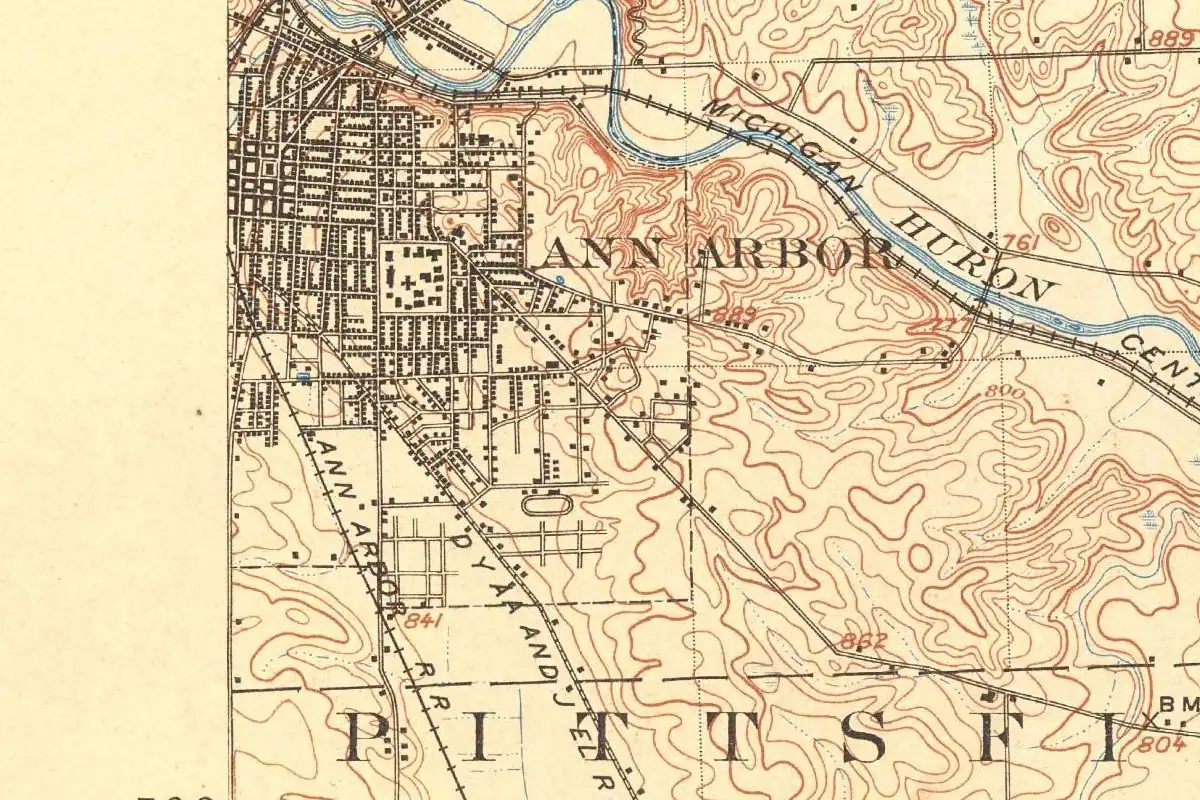
Two founders’ wives, Ann Allen and Mary Ann Rumsey, gave Ann Arbor, Michigan, the first half of its name in 1824. The arbor is a bit less certain, and the old books don’t quite agree on it.
Two men who met by accident
The 1881 History of Washtenaw County tells how it started. In February 1824, John Allen of Virginia and Elisha Walker Rumsey and his wife, from Genesee County, New York, “met by accident in Cleveland.” Both were looking for a new home in the Michigan woods, so they went on together. They picked land on the Huron River, “a beautiful burr-oak forest,” and put up a tent near a small stream that came to be called Allen’s Creek.
The Ann in Ann Arbor
Here’s the thing: only one of the two Anns was there that first spring. Lorrin Mills, who knew both couples, said in his recollections that Mrs. Rumsey “was the first white woman here.” The county history agrees that before another family arrived in May 1824, no white woman except Mrs. Rumsey had set foot in the settlement.
Mills is also the one who explains the name, and he heard it from the founders themselves. “As Mrs. Allen’s name was Ann and Mrs. Rumsey’s name was Mary Ann, they agreed to take the Ann from their wife’s name and put the Arbor to it and make the very pretty name of Ann Arbor.” He added: “I have often heard them tell how the name was born.” Allen’s own biography in the same book lists his second wife as Ann, a widow named Ann J. McCue.
So what was the arbor?
This is where the sources split, though not by much. The county history says the men “pitched a tent and built an arbor,” and that this first home “was called ‘Ann’s Arbor,’ in honor of these two women.” Mills doesn’t mention a built arbor at all. He describes the town site as “a beautiful burr-oak plain” and then says they “put the Arbor to it.” The federal bulletin Henry Gannett put together in 1905 goes with the trees: the second part of the name “refers to the grovelike appearance of the site.” So if you picture the arbor as a leafy shelter, a grove of oaks, or both, you’ve got backing for it.
A neighbor who went west
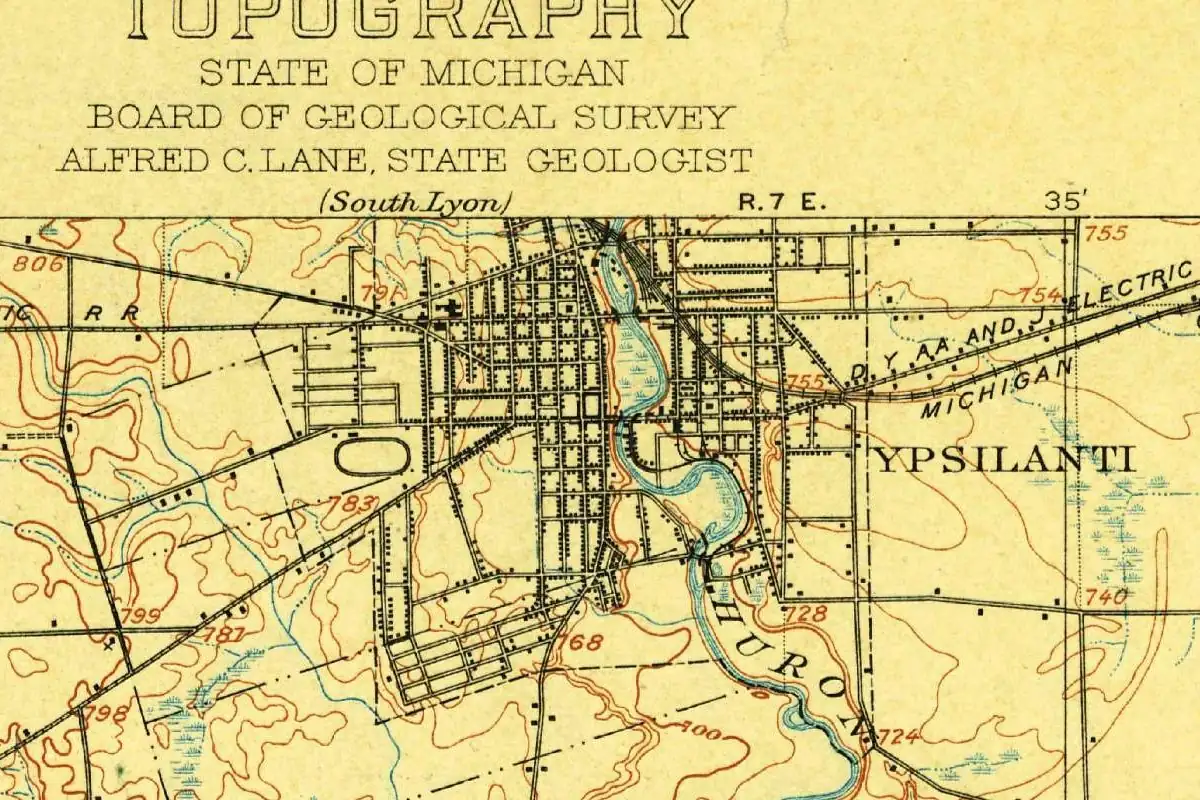
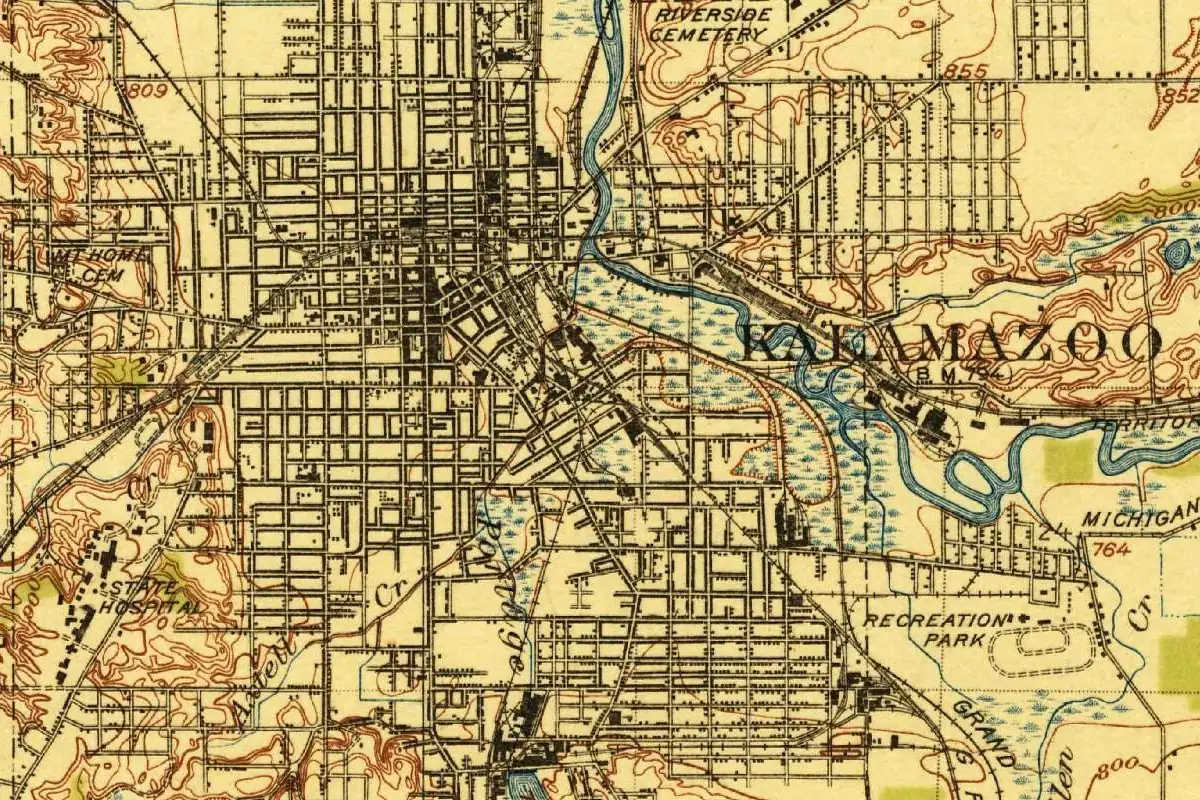
Not everybody stayed. Samuel Durant, who wrote Kalamazoo County’s history in 1880, says Titus Bronson bought land right next to the new village in May 1824 and swapped it with John Allen within a year. He got some “boot” money in the deal, “but, as he afterwards thought, not enough.” Bronson moved on and founded a town of his own farther west, which was named after him until the legislature changed it. That story is in our article on Kalamazoo. Back in Washtenaw County, Ypsilanti had its own naming fight in those same years.
Sources & further reading
- History of Washtenaw County, Michigan (Chas. C. Chapman & Co., 1881). Allen and Rumsey arriving in February 1824 (p. 118); John Allen’s two marriages, the second to Mrs. Ann J. McCue (pp. 262–263); the meeting in Cleveland, the burr-oak forest, the tent and the arbor called “Ann’s Arbor” (pp. 883–884); Lorrin Mills’s recollections of how the name was chosen (p. 892); Mrs. Rumsey as the only white woman before May 1824 (p. 894).
- Henry Gannett, The Origin of Certain Place Names in the United States (USGS, 1905), p. 25. The wives of Allen and Rumsey, and “the grovelike appearance of the site.”
- Samuel W. Durant, History of Kalamazoo County, Michigan (1880), p. 210. Titus Bronson’s land next to Ann Arbor, traded to John Allen.
- GNIS feature 620133 (U.S. Geological Survey). The federal record and map location for Ann Arbor.
Spot something wrong, or know more? Tell us here. You can also email us or use our contact page. Corrections are noted here with their date, never made silently.