Ypsilanti, Michigan: The Greek Name That Beat Waterville
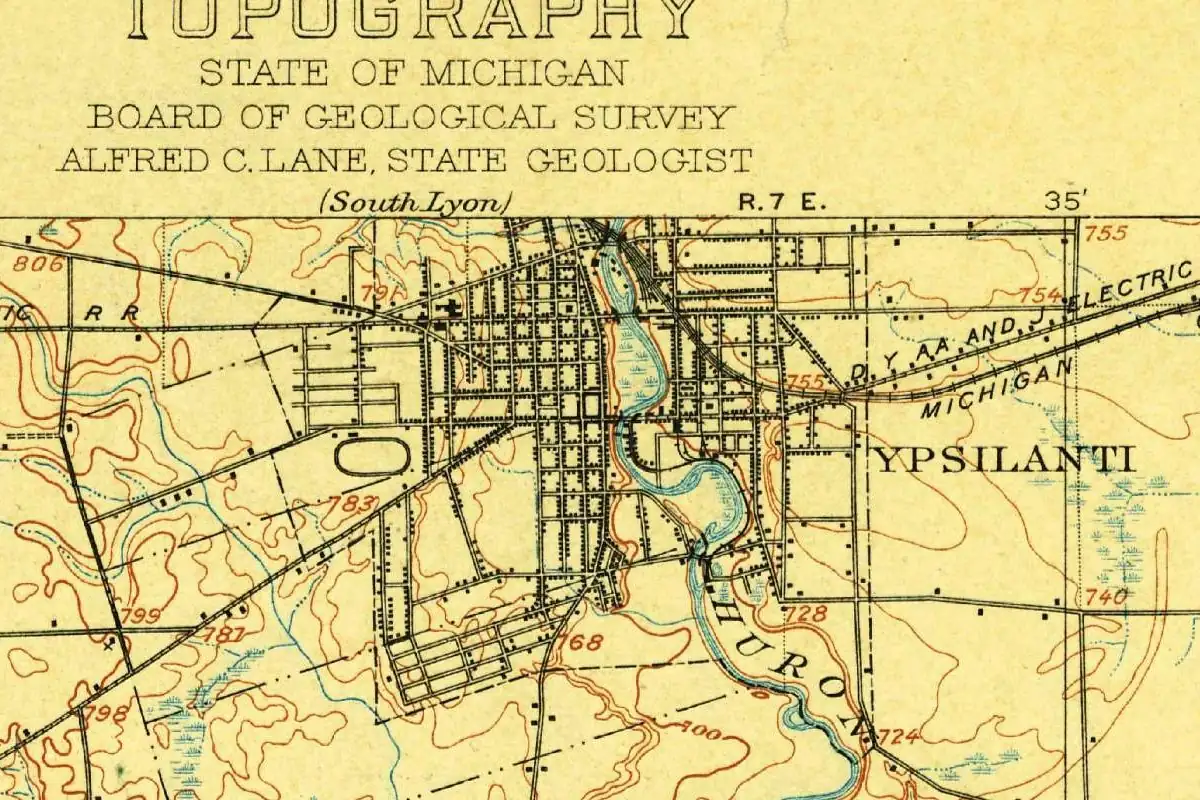
Ypsilanti, Michigan, came close to being called Waterville. A territorial judge wanted to honor a Greek general instead, and in 1825 his choice won.
Three owners, three names
The village had three proprietors. According to the 1881 county history from Chas. C. Chapman & Co., John Stewart, Augustus Brevoort Woodward and William W. Harwood platted it together in 1825, soon after the federal road from Detroit to Chicago was surveyed through the spot. “Each of the proprietors had a name for the village. Judge Woodward’s choice prevailed, and so the place was called Ypsilanti, after the Greek general.”
Woodward wasn’t even a local. He lived in Detroit and had been one of the first judges of Michigan Territory. He also had a taste for Greek. The same book credits him with Detroit’s “cobweb” street plan and with the plan for a state university called the “Catholepistemiad,” full of names “from the Greek.”
Who was Ypsilanti?
Henry Gannett’s 1905 government list puts it simply: the township and city are “named for Dimitrius Ypsilanti, a Greek patriot.” A paper printed in the county history explains why that name was in the air. The story of the Greek revolution “had reached our shores as early as 1823,” it says, along with “the most harrowing accounts” of Greek suffering.
The same paper describes Demetrius Ypsilanti’s best-known moment. In July 1822, he held the citadel of Argos “with 300 men and three days’ provisions” against an army of 30,000, then slipped out at night with his men. Its writer was glad the town got “the honored name of ‘Ypsilanti,’ instead of the unmeaning ‘Waterville.’”
The Woodruff story
If you’d asked around in the early years, you might have heard the name credited to someone else. John Geddes, an early settler, thought “Major” Woodruff had named the town. Woodruff’s home was a short way downriver at Woodruff’s Grove. But Mrs. John Bryan, whose family were among the earliest settlers at the grove, wrote that this was a mistake. Woodruff, she said, wanted the town to be called Waterville, along with many others, while her husband sided with Judge Woodward. The county history’s own account of the plat agrees with her.
The writer of that paper also made a prediction you can test for yourself: the name’s “five consonants will always hinder it from being a popular title.”
Sources & further reading
- History of Washtenaw County, Michigan (Chas. C. Chapman & Co., 1881). Woodward as a territorial judge and the “Catholepistemiad” (pp. 63–64); his “cobweb” plan for Detroit (p. 70); the paper on the origin of the name, with Mrs. Bryan’s letter, Geddes’s mistake about Woodruff, Waterville, the Greek revolution and Demetrius Ypsilanti at Argos (pp. 1102–1103); the 1825 plat by Stewart, Woodward and Harwood, and Woodward’s choice prevailing (p. 1109).
- Henry Gannett, The Origin of Certain Place Names in the United States (USGS, 1905), p. 333. “Named for Dimitrius Ypsilanti, a Greek patriot.”
- GNIS feature 1616910 (U.S. Geological Survey). The federal record and map location for Ypsilanti.
Spot something wrong, or know more? Tell us here. You can also email us or use our contact page. Corrections are noted here with their date, never made silently.