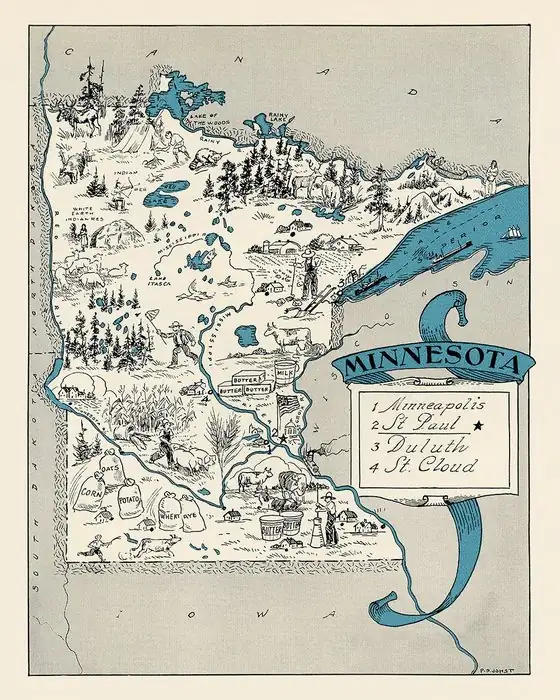
Breckenridge, Minnesota: The Vice President's Town
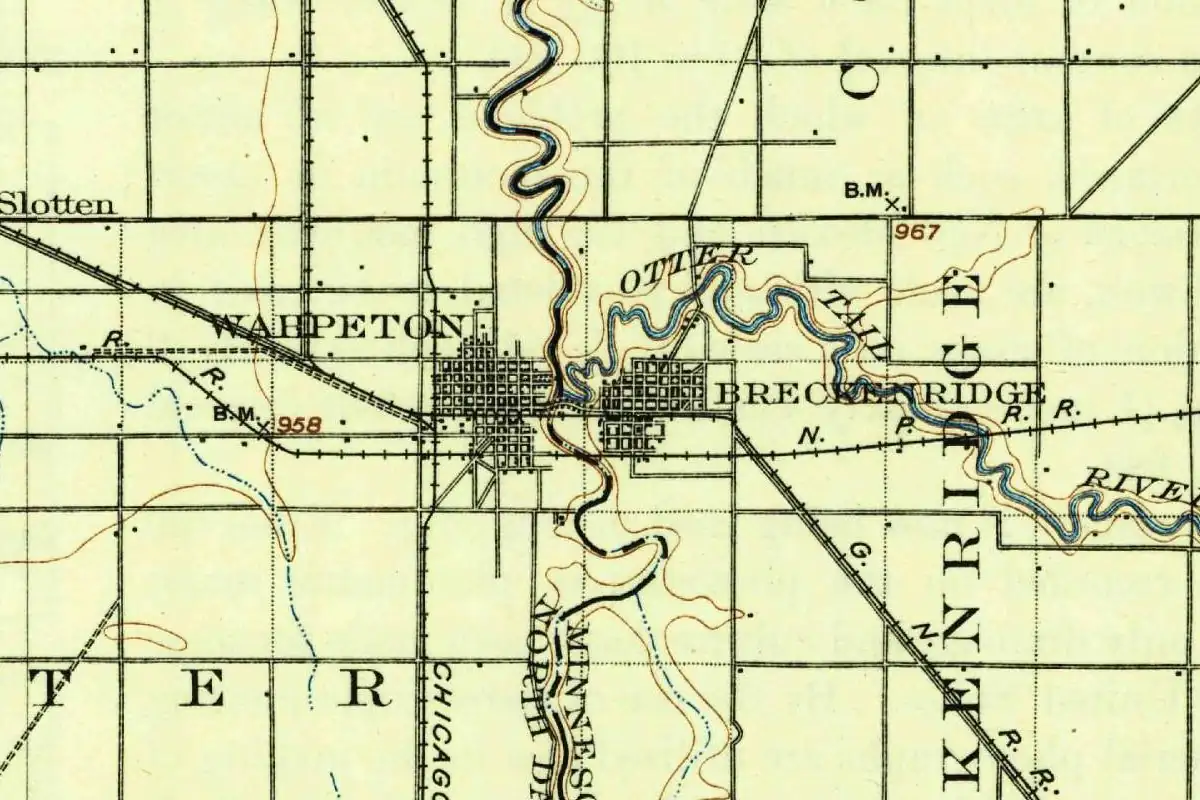
Breckenridge, Minnesota, kept the name of John C. Breckinridge, a vice president turned Confederate general, though its county dropped two names. The town got that name in 1857, the year Breckinridge took office, and it still has it.
A vice president’s name in 1857
Warren Upham’s Minnesota Geographic Names, published by the state historical society in 1920, says the township was organized on May 23, 1857, and the village was platted that spring. Both, he writes, “are in honor of John Cabell Breckenridge,” born near Lexington, Kentucky, in 1821, who was “vice-president of the United States, 1857-61,” and then a “general in the Confederate army, 1861-4.” The 1938 WPA guide to Minnesota says the same thing more briefly: the town “was established in 1857 and named for Vice President John C. Breckinridge.”
You’ll notice the spelling wobbles. The vice president spelled it Breckinridge, with an i, the way the WPA guide and Henry Gannett’s 1905 bulletin print it. The town has an e, and so does Upham’s entry for the man. Neither source explains the switch. Breckenridge, Colorado, has the same extra e and, at least in Gannett’s telling, the same namesake.
There’s a second date, too. The 1909 History of the Red River Valley says the townsite “was laid out by Henry T. Welles in 1858.” Upham, who used that book, still gives 1857.
Toombs, then Andy Johnson, then Wilkin
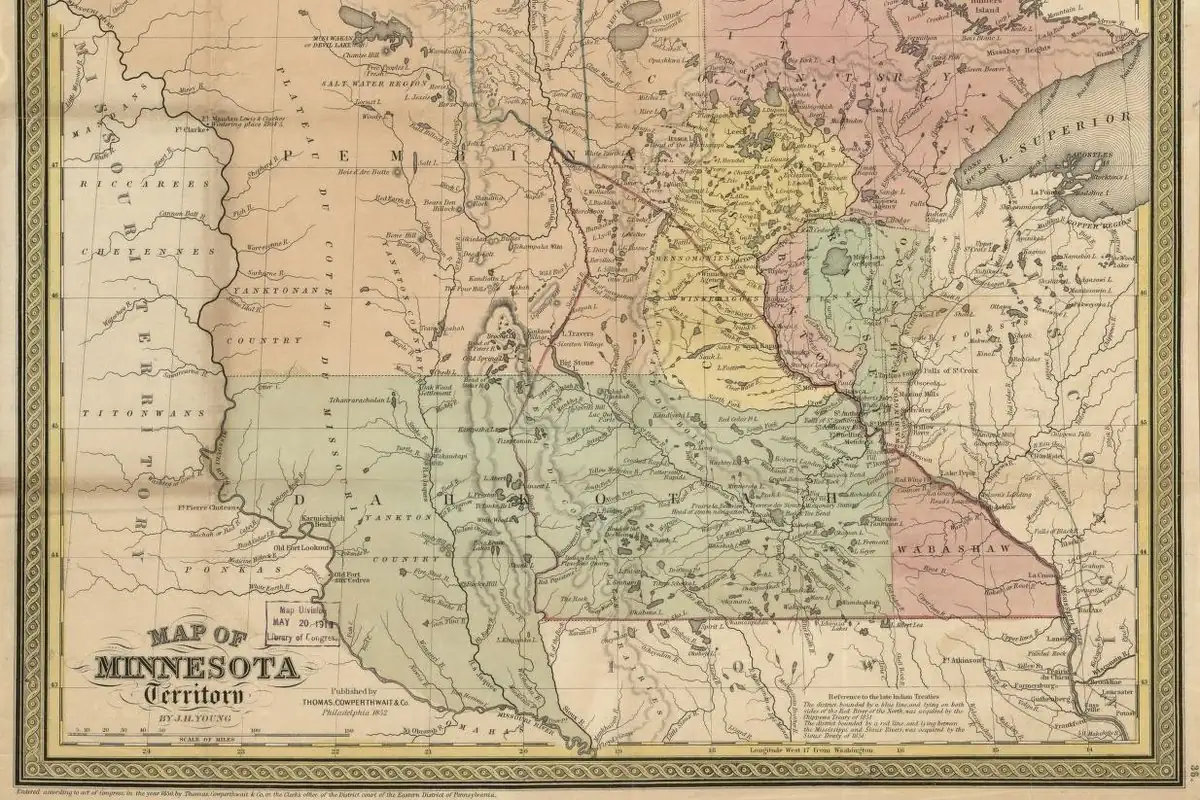
The county around the town had a rougher time with names. It was organized in 1858 as Toombs County, with Breckenridge as its seat, and the law said so in plain words:
“The county seat of said county is hereby located at Breckenridge.”
Toombs was Senator Robert Toombs of Georgia, who went over to the Confederacy. The Red River Valley history says that “so displeased the people” that in 1862 they petitioned to rename the county Andy Johnson, which became law in 1863. Then Andrew Johnson’s politics as president were “no less displeasing,” and in 1868 the name changed again, to Wilkin, for Colonel Alexander Wilkin, killed in the Civil War. The book even guesses why: a dead soldier’s later “behavior” couldn’t “bring disgrace upon the county.”
So if you’re keeping score, the county threw out a Confederate senator and then a president. The county seat kept a vice president who’d become a Confederate general, and no source here says anyone tried to change it.
Destroyed in 1862, revived by the railroad
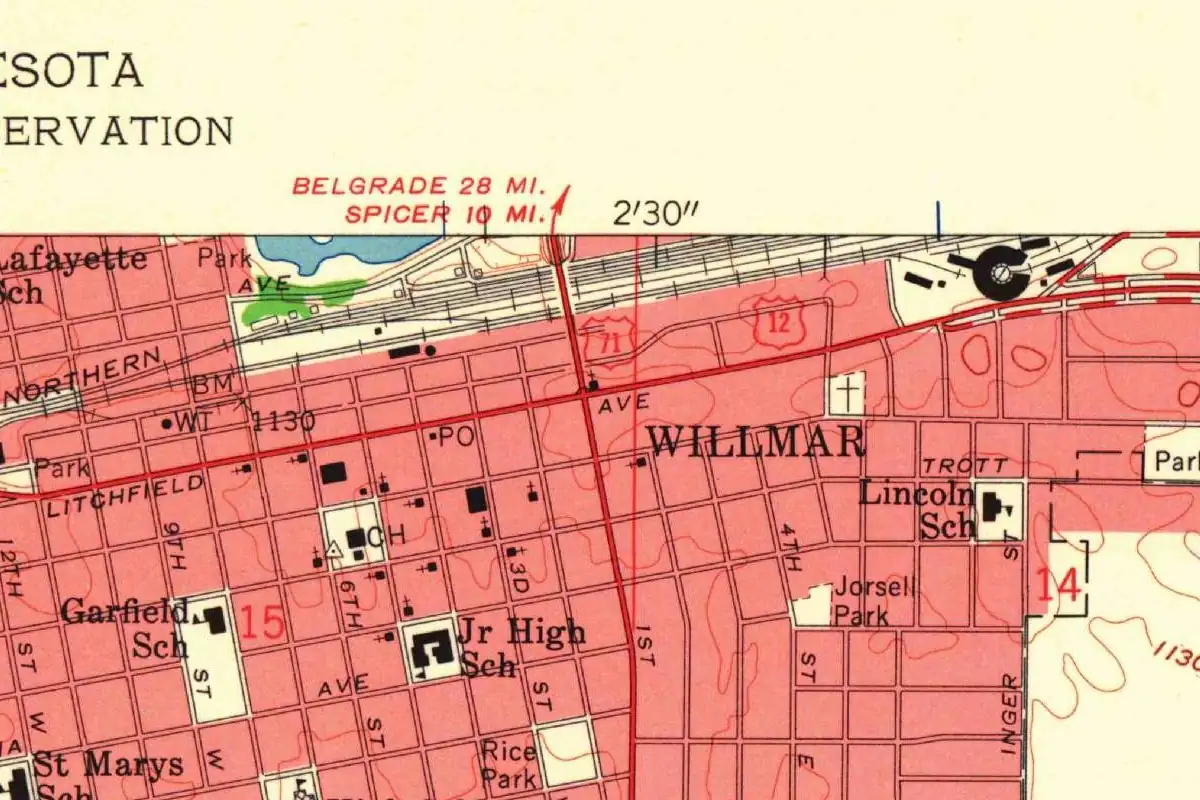
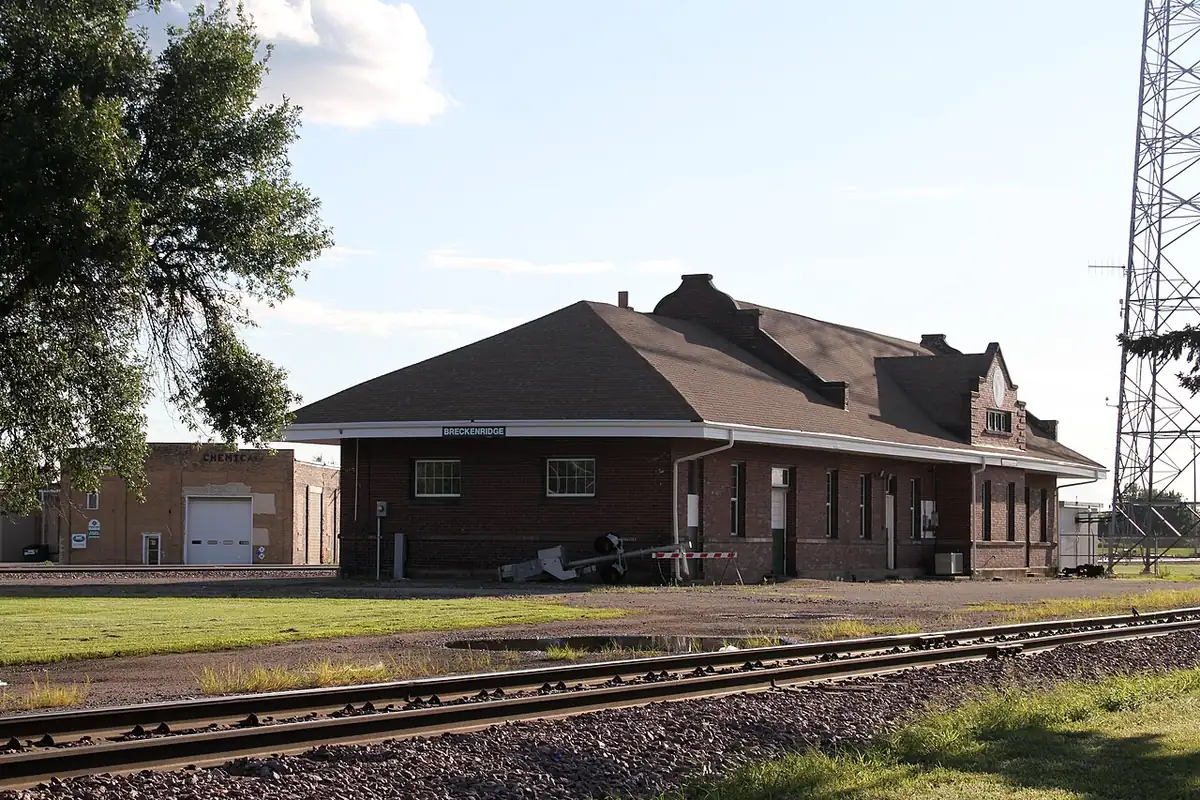
The town itself nearly disappeared. During the U.S.-Dakota War, most settlers fled to Fort Abercrombie, 15 miles (24 km) north on the Dakota side. The WPA guide says “only three men remained behind in the hotel,” and they were killed on August 23, 1862. After that, the Red River Valley history says, there was “practically no immigration” until the railroad came. The St. Paul and Pacific was completed to Breckenridge in the fall of 1871, the same railroad whose president had picked and named the townsite of Willmar in 1869, and the village grew from there.
Quick answers
Who is Breckenridge, Minnesota, named after?
John C. Breckinridge, vice president of the United States from 1857 to 1861. Upham (1920) and the 1938 WPA guide both say so.
Why is it spelled Breckenridge and not Breckinridge?
The sources don’t say. The vice president’s name is spelled with an i in Gannett and the WPA guide, while the town and Upham’s entry use an e.
Why didn’t Breckenridge change its name in the Civil War?
No source found here explains it. The county did change its name twice, from Toombs to Andy Johnson in 1863 and to Wilkin in 1868, but the town kept the name it got in 1857.
Key dates
- 1857Breckenridge township is organized on May 23, and the village is platted that spring (Upham).
- 1858Toombs County is organized with Breckenridge as its county seat.
- 1862August 23: the three men who stayed behind at Breckenridge are killed in the U.S.-Dakota War.
- 1868The county's name changes from Andy Johnson to Wilkin.
- 1871Fall: the St. Paul and Pacific railroad is completed to Breckenridge.
Getting there
Open Breckenridge in Google Maps
Opens in a new tab. The pin is the center of Breckenridge in the USGS place-name record.
The closest airports, Amtrak stations and intercity bus stops, measured in a straight line from the center of Breckenridge.
Airports
- Hector International (FAR) Fargo 47 mi 75 km
- Watertown Regional (ATY) 97 mi 156 km
Amtrak trains
- Fargo station (FAR) 44 mi 70 km
- Detroit Lakes station (DLK) 52 mi 84 km
Intercity buses
- Jefferson Lines Fergus Falls 23 mi 37 km
Distances are as the crow flies, not by road. We don't list schedules or fares because they change; check with the airline, Amtrak or the bus company before you go. Official data (FAA commercial service airports (2025), FAA airport locations, Amtrak stations and Intercity Bus Atlas) from the FAA and the U.S. Bureau of Transportation Statistics, checked Nov 6, 2026.
Sponsored
Staying in Breckenridge?
Compare hotels in Breckenridge, Minnesota, on Expedia.
See hotels in BreckenridgeWe may earn a commission if you buy through this link. It never changes what we write. Read our affiliate disclosure
Historical Sources & References
- Warren Upham, Minnesota Geographic Names (1920), pp. 577-578. Breckenridge township organized May 23, 1857, the village platted that spring, both “in honor of John Cabell Breckenridge,” vice president and then Confederate general; Toombs County and its renamings.
- History of the Red River Valley, vol. 2 (1909), pp. 908-912. The 1858 act that made Breckenridge the county seat; Toombs, Andy Johnson and Wilkin; the townsite “laid out by Henry T. Welles in 1858”; August 23, 1862; and the St. Paul and Pacific of 1871.
- Federal Writers’ Project, Minnesota: A State Guide (1938), pp. 339-340. “Established in 1857 and named for Vice President John C. Breckinridge.”
- Henry Gannett, The Origin of Certain Place Names in the United States (1905), p. 56. The spelling Breckinridge for the vice president, and the Colorado and Missouri towns named for him.
- GNIS feature 640448 (U.S. Geological Survey). The Geological Survey’s record for Breckenridge, in Wilkin County.
Spot something wrong, or know more? Tell us here. You can also email us or use our contact page. Corrections are noted here with their date, never made silently.