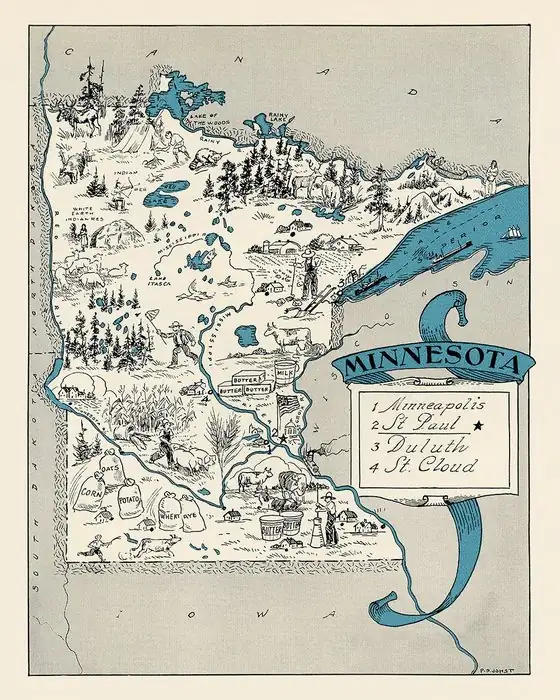
Willmar, Minnesota: Named for the Bondholders' Man
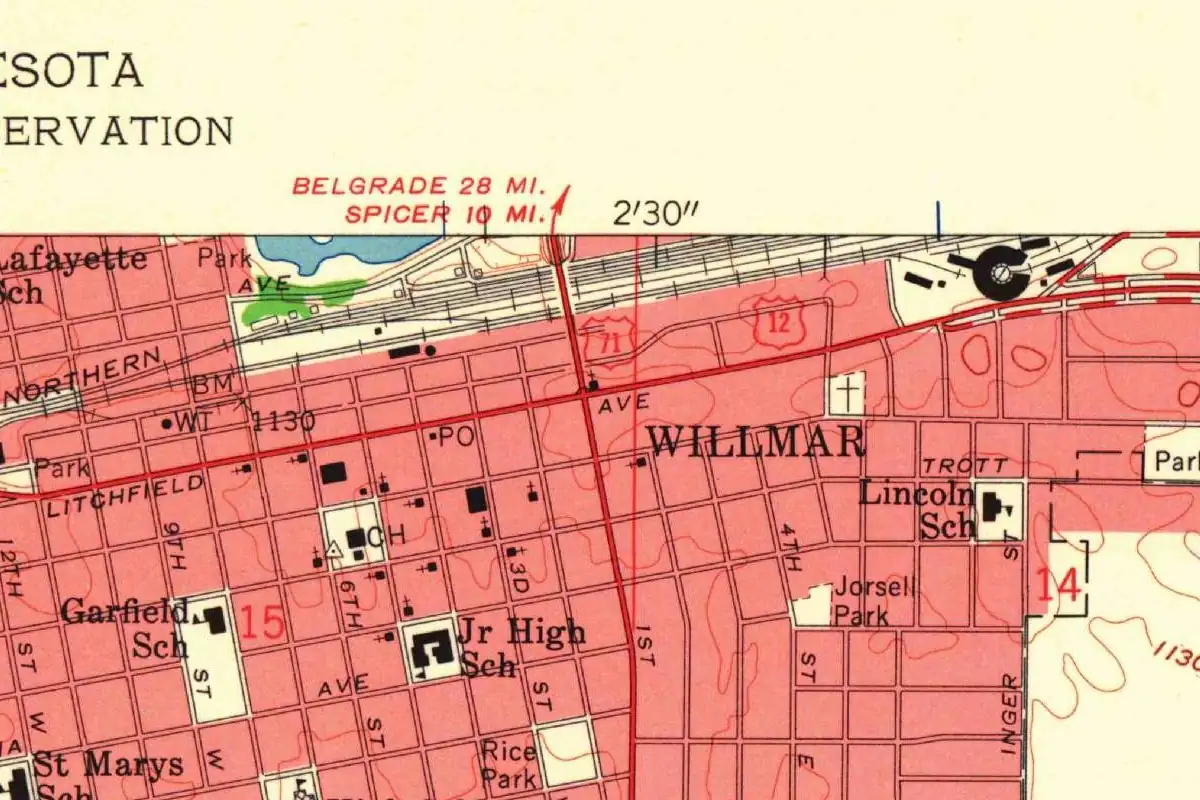
Willmar, Minnesota, was named in 1869 for Leon Willmar, a Belgian in London who spoke for the European bondholders of the railroad that laid out the town. It was a company town in the plainest sense: in the early days, the village council met in the depot.
Picked and named by the railroad’s president
Warren Upham, in the state historical society’s 1920 book of place names, says the village was “platted in 1869 when the railroad here was built,” and that the townsite “was selected and named” by George Becker, “president of the railroad.” Upham then quotes an older account: “Leon Willmar, a native of Belgium, at that time residing in London, was the agent for the European bondholders of the St. Paul and Pacific railroad company, and it was in his honor that the town was named.”
Gannett, the Geological Survey’s place-name man, had already given the short version in 1905, a village “named for a railroad official.” Upham’s is the one that tells you whose money he stood for.
A town on company land
Minnesota’s Depression-era state guide (1938) fills in what that looked like on the ground. Willmar “was platted on company land by a railroad engineer employed by the newly arrived St. Paul & Pacific R.R. Company.” The guide goes on: “In the early days of the town the company owned the land and the only grain elevator; even the village council meetings were held in the railroad depot.”
If you’re wondering when it became a real village, Upham gives January 16, 1874, and by the WPA’s day Willmar was a division point of the Great Northern, which had taken over the old St. Paul and Pacific line. The same railroad reached Breckenridge, on the Red River, in 1871.
Paul Willmar’s farm on Foot Lake
The Willmar family didn’t just lend a name. Upham’s quoted account says Leon Willmar later bought several hundred acres along the northeast shore of Foot Lake and gave them to his son Paul, “who a few years before had served as a soldier of fortune under Maximilian, the adventurous invader of Mexico.” Expensive buildings went up on the farm in 1871, and Paul ran it on a large scale for about ten years. In 1881 he sold it and went back to Belgium.
Paul left, but the family name stayed on a lake beside his old farm. Upham lists a Willmar Lake “which adjoins the former Willmar farm.”
Quick answers
Who was Willmar, Minnesota, named after?
Leon Willmar, a native of Belgium living in London who was the agent for the European bondholders of the St. Paul and Pacific Railroad, according to Upham (1920).
Who named Willmar?
George Becker, the railroad’s president, selected and named the townsite in 1869, Upham says.
Did the Willmar family ever live there?
Leon Willmar’s son Paul did. He ran a large farm on Foot Lake from 1871 and sold it in 1881 before returning to Belgium, according to Upham.
Why did the Willmar council meet in a depot?
Because the railroad owned the land at first. The 1938 state guide says the company owned the land and the only grain elevator, and the village council met in the depot.
Key dates
- 1869The village is platted as the St. Paul and Pacific is built through, and named for Leon Willmar.
- 1871Expensive buildings go up on the Willmar farm on Foot Lake.
- 1874January 16: Willmar village is incorporated.
- 1881Paul Willmar sells the farm and goes back to Belgium.
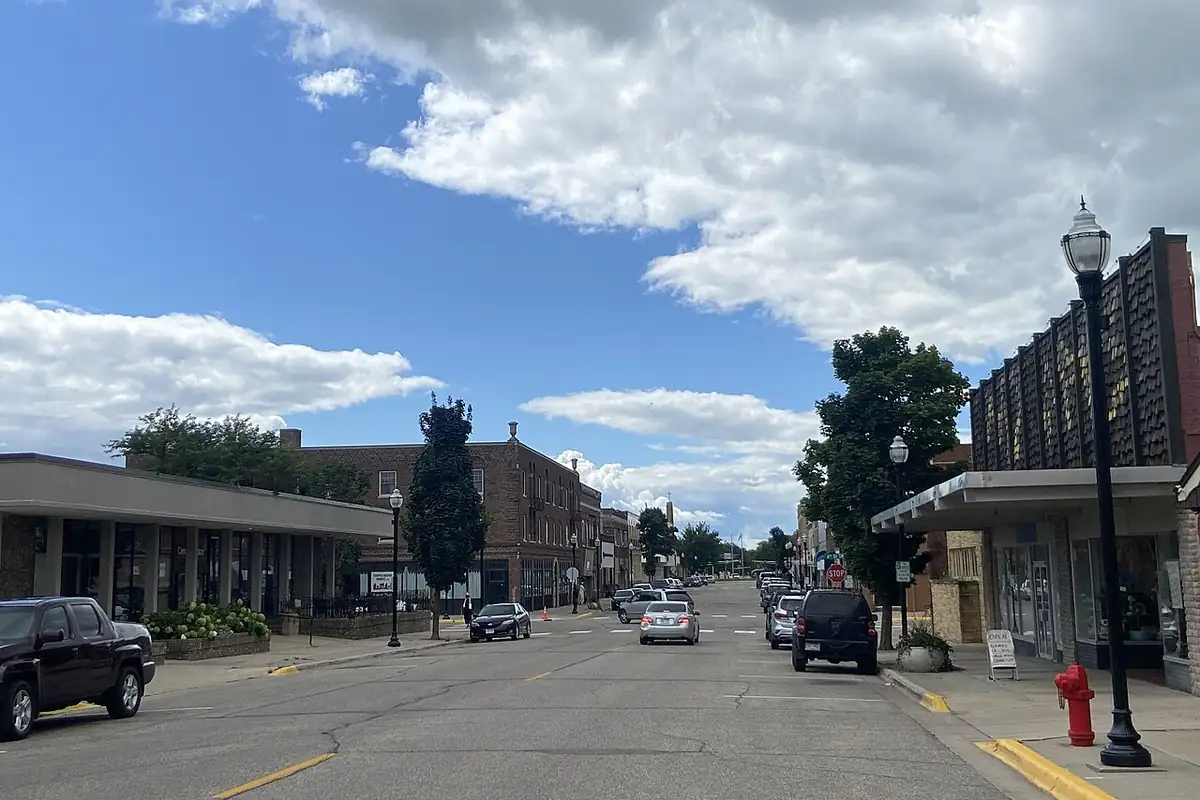
Getting there
Open Willmar in Google Maps
Opens in a new tab. The pin is the center of Willmar in the USGS place-name record.
The closest airports, Amtrak stations and intercity bus stops, measured in a straight line from the center of Willmar.
Airports
- St Cloud Sky Central (STC) St. Cloud 56 mi 90 km
- Minneapolis-St Paul International/Wold-Chamberlain (MSP) 91 mi 146 km
Amtrak trains
- St. Cloud station (SCD) 53 mi 86 km
- Staples station (SPL) 86 mi 138 km
Intercity buses
- Jefferson Lines Willmar under 1 mi 0.4 km
- FlixBus Saint Cloud Metro Bus 53 mi 85 km
Distances are as the crow flies, not by road. We don't list schedules or fares because they change; check with the airline, Amtrak or the bus company before you go. Official data (FAA commercial service airports (2025), FAA airport locations, Amtrak stations and Intercity Bus Atlas) from the FAA and the U.S. Bureau of Transportation Statistics, checked Nov 6, 2026.
Sponsored
Staying in Willmar?
Compare hotels in Willmar, Minnesota, on Expedia.
See hotels in WillmarWe may earn a commission if you buy through this link. It never changes what we write. Read our affiliate disclosure
Historical Sources & References
- Warren Upham, Minnesota Geographic Names (1920), pp. 272-273, 578. The village platted in 1869 and named by the railroad’s president; the quoted account of “Leon Willmar, a native of Belgium, at that time residing in London”; Paul Willmar’s farm on Foot Lake, 1871-1881; incorporation on January 16, 1874; Willmar Lake; the St. Paul and Pacific as “now the Great Northern” (p. 578).
- Federal Writers’ Project, Minnesota: A State Guide (1938), pp. 385-386. Willmar “platted on company land” by the St. Paul & Pacific’s engineer, the company’s land and grain elevator, and council meetings “held in the railroad depot.”
- Henry Gannett, The Origin of Certain Place Names in the United States (1905). Willmar “named for a railroad official.”
- GNIS feature 654177 (U.S. Geological Survey). The USGS place-name page for Willmar, in Kandiyohi County.
Spot something wrong, or know more? Tell us here. You can also email us or use our contact page. Corrections are noted here with their date, never made silently.