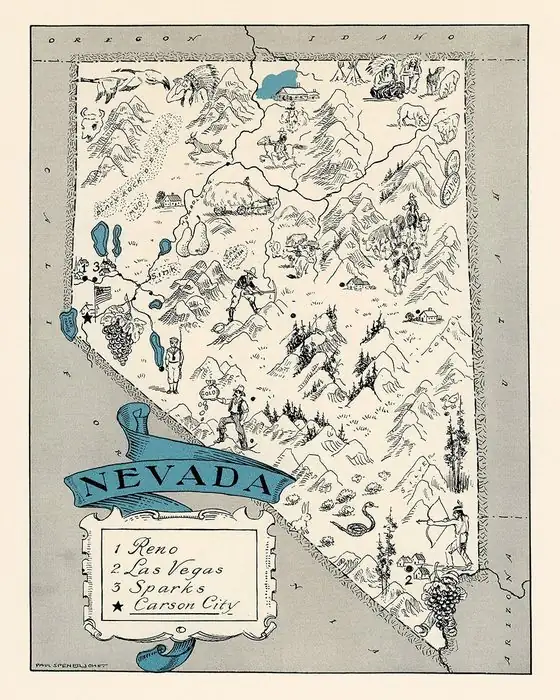
Elko, Nevada: Did Someone Just Add an O to Elk?
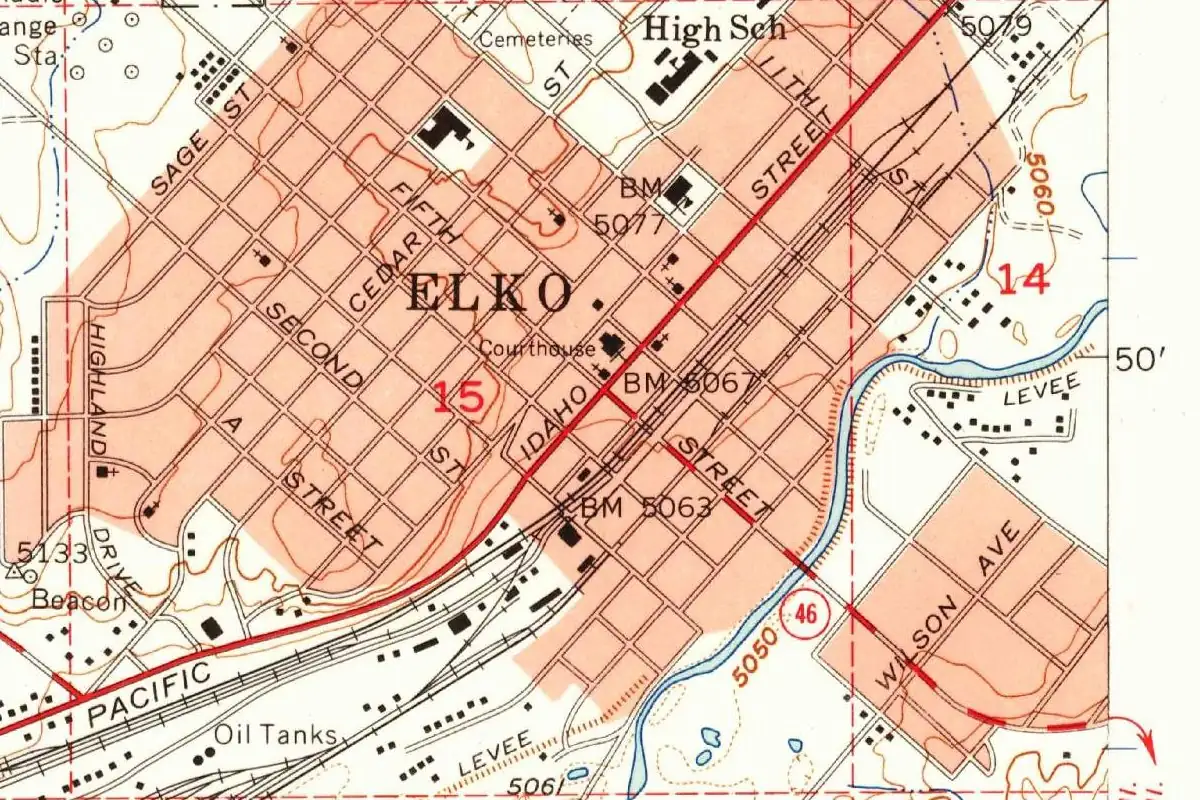
Elko, Nevada, may be nothing more than elk with an o tacked on, but a 1905 government book on place names already called its origin uncertain. If you’re hoping for a final answer, that’s still where things stand: one story with a name attached to it, and an older doubt that nobody has cleared up.
Charles Crocker’s extra letter
The neat version comes from Sam P. Davis’s History of Nevada, published in 1913. Notice how carefully he starts it:
“It has been stated that the name ‘Elko’ was given to the county seat by Mr. Charles Crocker, one of the directors of the Central Pacific Railroad. Mr. Crocker simply added an ‘o’ to ‘elk,’ because of the large numbers of elk in the surrounding hills at the time.”
“It has been stated” is doing a lot of work there. Davis doesn’t say who stated it or when, and he doesn’t claim to have seen it in any railroad paper. He’s passing along a report, eight years after Henry Gannett had already printed his doubts.
Gannett’s two guesses
Gannett, writing for the Geological Survey, dealt with Elko County rather than the town, but the name is the same. “The origin of this name is not certain,” his 1905 entry begins, “for according to some it is an Indian word, and according to others was so named on account of the abundance of elk.”
So by 1905 there were two camps. One said the word was Native, without saying which language or what it meant. The other said elk, which is the camp Davis’s Crocker story joins eight years later. Neither Gannett nor Davis gives a source you could go and check, and no meaning of a Native word turned up in the sources for this article. That’s why Elko counts as disputed here.
The town the railroad laid out
The rest of Elko’s beginning is on firmer ground. Nevada’s state historical marker says that “on December 29, 1868, representatives of the Central Pacific Railroad started laying out lots for the future town of Elko,” and that by 1870 the thriving town had 5,000 people. Freight and passengers went out by stage roads from “the Railhead at Elko” to the mines north and south. Davis adds that for some time the site was the eastern end of the line, which is how it ended up where it is.
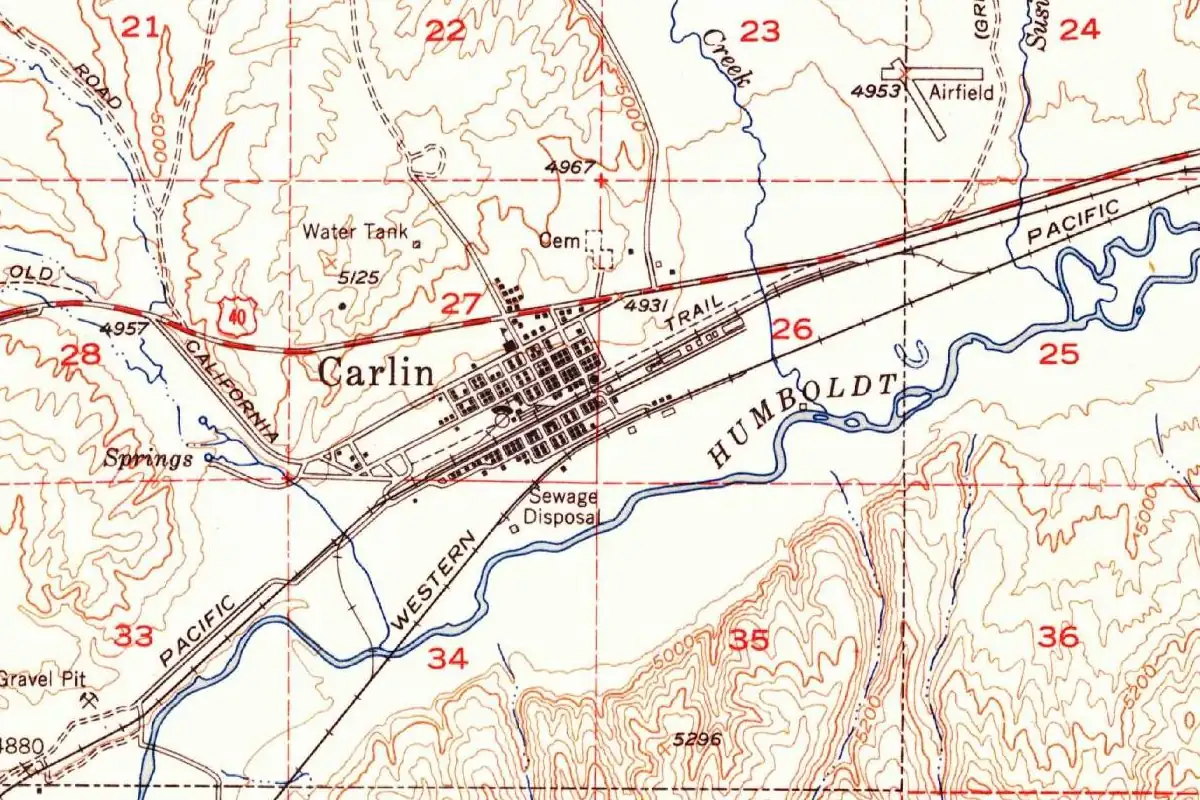
Myron Angel’s 1881 History of Nevada gives the prices. The railroad sold lots through its agent at $300 to $500 each, and by the following June the same lots went for $1,500 to $2,000, when the town had 2,000 people and 500 houses “including shanties and tents.” The marker adds one more twist: the University of Nevada opened in Elko in 1874 and stayed until 1885, when it moved to Reno. And Carlin, the Central Pacific’s division point down the Humboldt, was laid out the same December.
Quick answers
Is Elko just elk with an o?
Maybe. Davis (1913) reports that “it has been stated” Charles Crocker of the Central Pacific added an “o” to “elk” because of the elk in the hills, but he doesn’t give a source.
Is Elko a Native American word?
Possibly. Gannett (1905) says that “according to some it is an Indian word,” but he names no language or meaning, and none was found for this article.
When was Elko, Nevada, founded?
The Central Pacific started laying out lots on December 29, 1868, according to the state historical marker. The federal gazetteer gives 1869 as the founding year.
Key dates
- 1868Central Pacific representatives start laying out lots for the town on December 29 (state marker).
- 1870Elko has about 5,000 people (state marker).
- 1874The University of Nevada opens in Elko; it moves to Reno in 1885 (state marker).
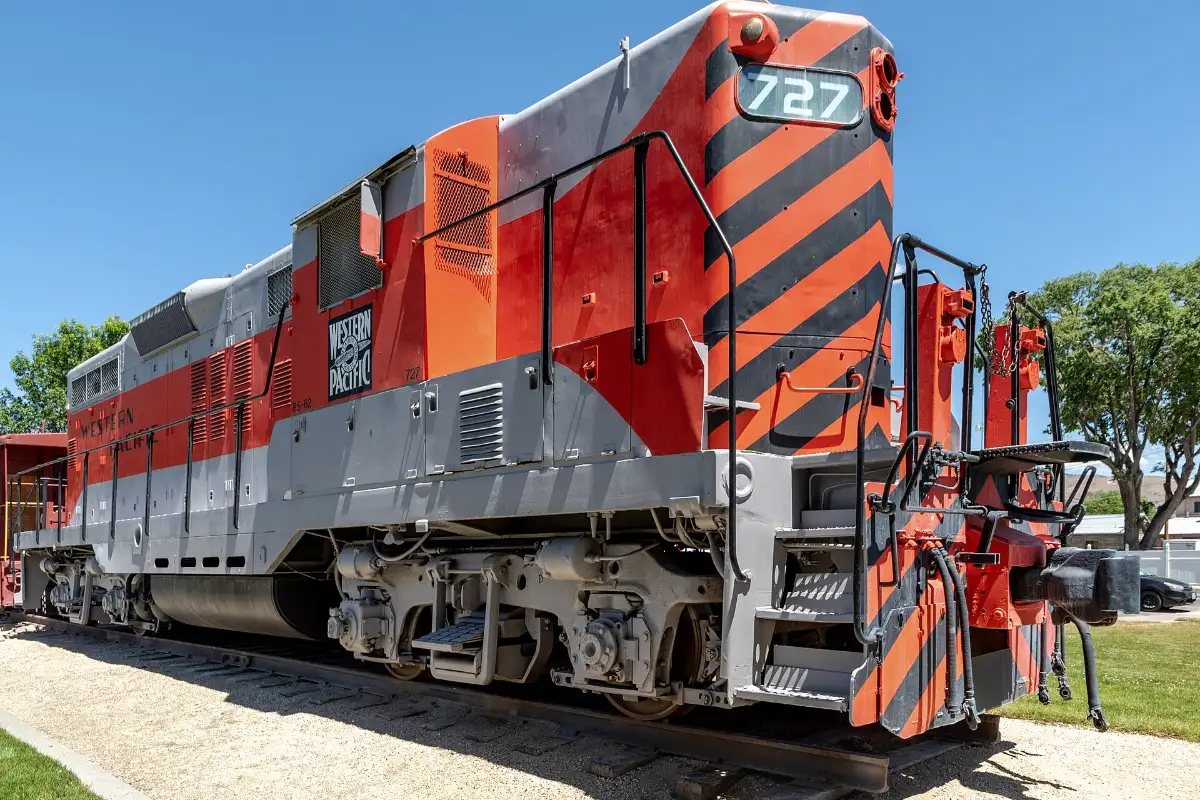
Getting there
Open Elko in Google Maps
Opens in a new tab. The pin is the center of Elko in the USGS place-name record.
The closest airports, Amtrak stations and intercity bus stops, measured in a straight line from the center of Elko.
Airports
- Elko Regional (EKO) 2 mi 3 km
- Joslin Field/Magic Valley Regional (TWF) Twin Falls 132 mi 212 km
Amtrak trains
- Elko station (ELK) under 1 mi 1 km
Intercity buses
- Greyhound Elko Elko Sinclair 3 mi 5 km
Distances are as the crow flies, not by road. We don't list schedules or fares because they change; check with the airline, Amtrak or the bus company before you go. Official data (FAA commercial service airports (2025), FAA airport locations, Amtrak stations and Intercity Bus Atlas) from the FAA and the U.S. Bureau of Transportation Statistics, checked Nov 6, 2026.
Sponsored
Staying in Elko?
Compare hotels in Elko, Nevada, on Expedia.
See hotels in ElkoWe may earn a commission if you buy through this link. It never changes what we write. Read our affiliate disclosure
Historical Sources & References
- Henry Gannett, The Origin of Certain Place Names in the United States (1905), p. 117. Elko County: “The origin of this name is not certain,” an Indian word for some, the abundance of elk for others.
- Sam P. Davis, ed., The History of Nevada, vol. 2 (1913), pp. 826-827. “It has been stated” that Charles Crocker added an “o” to “elk”; the site as the line’s eastern end for some time.
- Myron Angel, ed., History of Nevada (1881), pp. 396-397. Town lots sold by the railroad’s agent and their prices, and 500 houses “including shanties and tents.”
- Nevada State Historic Preservation Office, State Historical Marker No. 106. The lots laid out on December 29, 1868, 5,000 people by 1870, the railhead and the University of Nevada from 1874 to 1885.
- GNIS feature 845452 (U.S. Geological Survey). The USGS names database entry for Elko, in Elko County, which gives 1869 as the founding year.
Spot something wrong, or know more? Tell us here. You can also email us or use our contact page. Corrections are noted here with their date, never made silently.