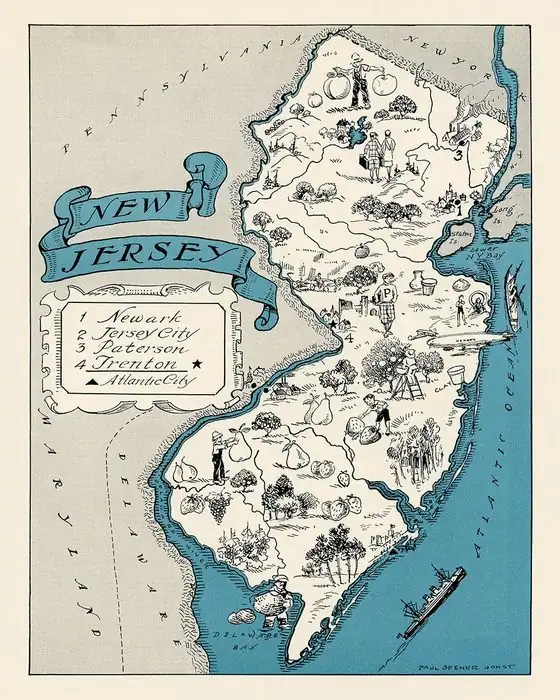
Princeton, NJ: Named for a Prince, or for Kingston?
No record explains why Princeton got its name. It first appears in 1724, when a house built by James Leonard was raised there. John Hageman's 1879 history rejects a link to a landowner named Henry Prince, notes a local belief in William, Prince of Orange, and calls a sequence of names along the road from Kingston more probable.
A name nobody explained
Nobody wrote down why Princeton, New Jersey, got its name, and the town’s 1879 historian weighed a prince, a landowner and a road from Kingston. John Frelinghuysen Hageman opened his discussion with an admission: “The Name of Princeton receives no clearly reliable history, as to its origin, either from tradition or record.”
Before the name, there was a creek. Hageman says the neighborhood was called Stony-Brook, and the Municipality of Princeton says Quaker families settled along the Stony Brook in the 1690s, with Benjamin Clarke buying 1,200 acres. The new name shows up in the 1720s, and you’ll find it spelled several ways in old papers: Princetown, Prince’s Town and Princeton, Hageman notes.
The house-raising of 1724
The one firm date comes from a journal. Nathaniel Fitz Randolph, writing on December 28, 1758, left this entry, which Hageman prints on page 12:
“Princeton first named at the raising of the first house built there by James Leonard, A. D. 1724.” (Hageman, History of Princeton, vol. 1, p. 12)
The same entry adds that Whitehead Leonard, born in 1725, was the first child born at Princeton. The municipality agrees on the year: the name “appeared in 1724 and became common about ten years later.” Edwin Mark Norris, in his 1917 Story of Princeton, calls the journal entry probably an authentic record of the first use of the name, “but why the place was named Princeton, Fitz Randolph does not explain.”
A landowner, a prince and a road
So historians have had to guess, and Hageman sorted the guesses.
Henry Prince
One idea tied the name to Henry Prince of Piscataway, who bought 200 acres in the area in 1711 and whose will was proved in 1714. Hageman calls that theory “simply preposterous.”
William, Prince of Orange
The favorite among townspeople, Hageman wrote, was the prince: there was “a very general belief among our citizens” that the name honored William, Prince of Orange. Norris repeats the tradition and ties it to William III, Prince of Orange and Nassau, “for whom Nassau Hall was named.” Keep in mind that Nassau Hall came later. The College of New Jersey moved from Newark and built it in 1756, more than 30 years after the name first appears.
A royal family on the road
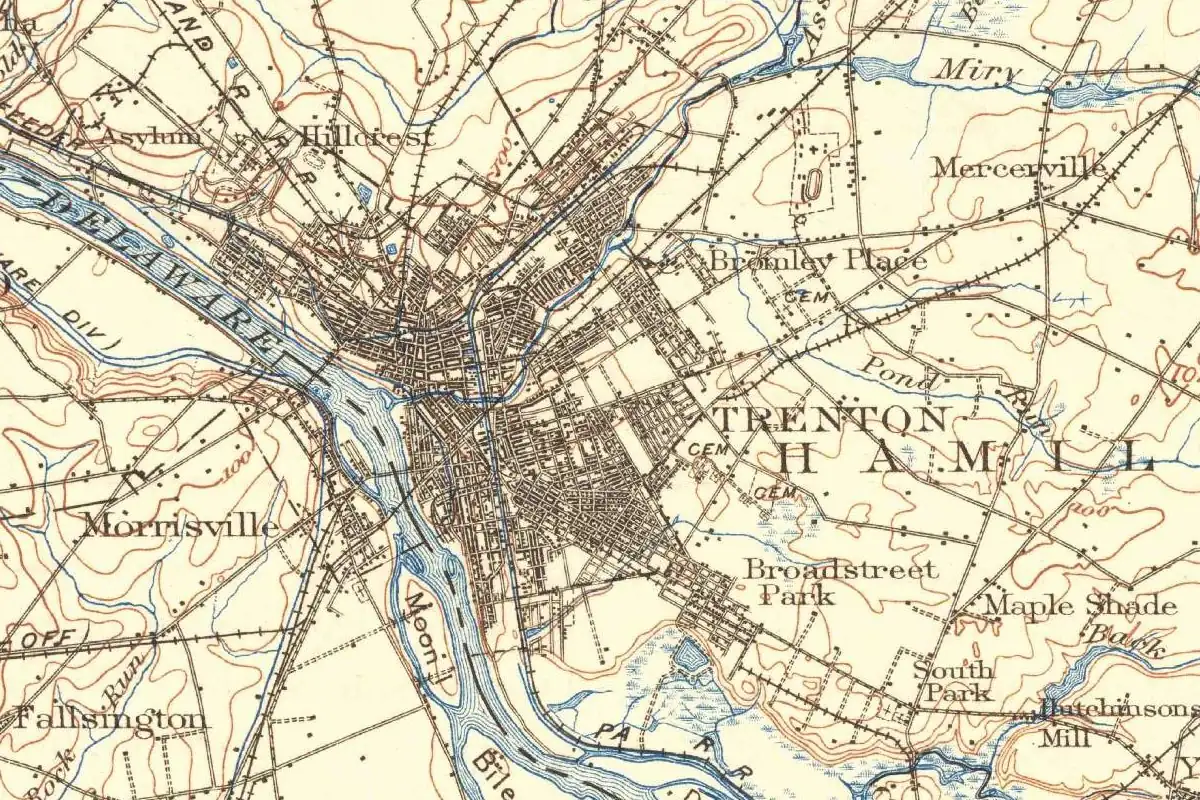
Hageman’s own pick was less grand. He thought it “more probable” that the name traces to Kingston, a village on the same road, and to a run of names that he lists as Kingston, then Queenston, then Princeton and finally Princessville, “succeeding each other on the road from Kingston to Trenton.” Kingston itself, he guessed, was named for the King’s Highway or for the King of England. Norris, who drew on Hageman, also calls this the more probable explanation and adds that Queenston was later nicknamed Jugtown. The far end of that road is Trenton, which sits in Mercer County too. The municipality says Mercer County and Princeton Township were created in 1838, 25 years after the Borough of Princeton, in 1813.
The town came before the university
If you assumed the town was named for the university, it’s the other way around. Norris quotes the Swedish traveler Peter Kalm, who passed through in 1748 and wrote “we came to Princetown.” A newspaper advertisement of October 18, 1756, cited by the Princeton University Archives, already spoke of “Prince-town college.” The school stayed the College of New Jersey for another 140 years. In 1896, the archives say, it was officially renamed Princeton University “in honor of its host community of Princeton.”
Quick answers
Is Princeton named after a prince?
Possibly, but no record says so. Local tradition pointed to William, Prince of Orange; John Hageman thought a sequence of names along the road from Kingston more likely.
When did Princeton get its name?
Probably in 1724. A 1758 journal entry by Nathaniel Fitz Randolph says Princeton was “first named” at the raising of James Leonard’s house that year, and no earlier use has turned up.
Is the town named after Princeton University?
No. The town had its name by 1724, and the College of New Jersey only became Princeton University in 1896, in honor of the town.
Key dates
- 1711Henry Prince of Piscataway buys 200 acres; Hageman later calls the idea that the town is named for him simply preposterous.
- 1724The name Princeton is first used, at the raising of the first house built there by James Leonard.
- 1748The Swedish traveler Peter Kalm passes through and writes that he came to Princetown.
- 1756The College of New Jersey moves from Newark to Princeton and builds Nassau Hall.
- 1758December 28: Nathaniel Fitz Randolph records in his journal when Princeton was first named.
- 1813The Borough of Princeton is created.
- 1838Mercer County and Princeton Township are created.
- 1879John Hageman's History of Princeton says the name has no clearly reliable history.
- 1896The College of New Jersey becomes Princeton University, in honor of the town.
Getting there
Open Princeton in Google Maps
Opens in a new tab. The pin is the center of Princeton in the USGS place-name record.
The closest airports, Amtrak stations and intercity bus stops, measured in a straight line from the center of Princeton.
Airports
- Trenton Mercer (TTN) 10 mi 15 km
- Newark Liberty International (EWR) 35 mi 56 km
Amtrak trains
- Princeton Junction station (PJC) 3 mi 5 km
- Trenton station (TRE) 10 mi 17 km
Intercity buses
- Suburban Transit Nassau St & Witherspoon St - Palmer Square under 1 mi 0.1 km
- OurBus Princeton, NJ (Nassau Street and Palmer Square, bus stop in front of PNC Bank) under 1 mi 0.1 km
- FlixBus New Brunswick French Street 15 mi 24 km
Distances are as the crow flies, not by road. We don't list schedules or fares because they change; check with the airline, Amtrak or the bus company before you go. Official data (FAA commercial service airports (2025), FAA airport locations, Amtrak stations and Intercity Bus Atlas) from the FAA and the U.S. Bureau of Transportation Statistics, checked Nov 13, 2026.
Sponsored
Staying in Princeton?
Compare hotels in Princeton, New Jersey, on Expedia.
See hotels in PrincetonWe may earn a commission if you buy through this link. It never changes what we write. Read our affiliate disclosure
Sponsored
Want the spooky side of Princeton?
The name has its story above. For the ghost stories, US Ghost Adventures runs walking ghost tours in Princeton.
See ghost tours in PrincetonWe may earn a commission if you book through this link. It never changes what we write. Read our affiliate disclosure
Historical Sources & References
- John F. Hageman, History of Princeton and Its Institutions, vol. 1 (1879). “The Name of Princeton receives no clearly reliable history,” Stony-Brook and the old spellings (p. 10), the Henry Prince theory (pp. 10-11), the belief in William, Prince of Orange (p. 11), and the Kingston sequence and Fitz Randolph’s journal entry (p. 12).
- Edwin Mark Norris, The Story of Princeton (1917). Peter Kalm in 1748 (pp. 2-3), the comment on Fitz Randolph’s entry (p. 5), and William III, Nassau Hall, the Kingston sequence and Jugtown (p. 6).
- Municipality of Princeton, “Historic Princeton”. Quaker settlers on the Stony Brook in the 1690s, Benjamin Clarke’s 1,200 acres, the name in 1724, Nassau Hall in 1756, the borough in 1813 and Mercer County in 1838.
- Dan Linke, “When did people start referring to the College of New Jersey as Princeton?,” Princeton University Archives (2014). “Prince-town college” in a newspaper of October 18, 1756, and the 1896 renaming “in honor of its host community.”
- GNIS feature 879490 (U.S. Geological Survey). Princeton’s place-name record: a populated place in Mercer County, with the coordinates used here.
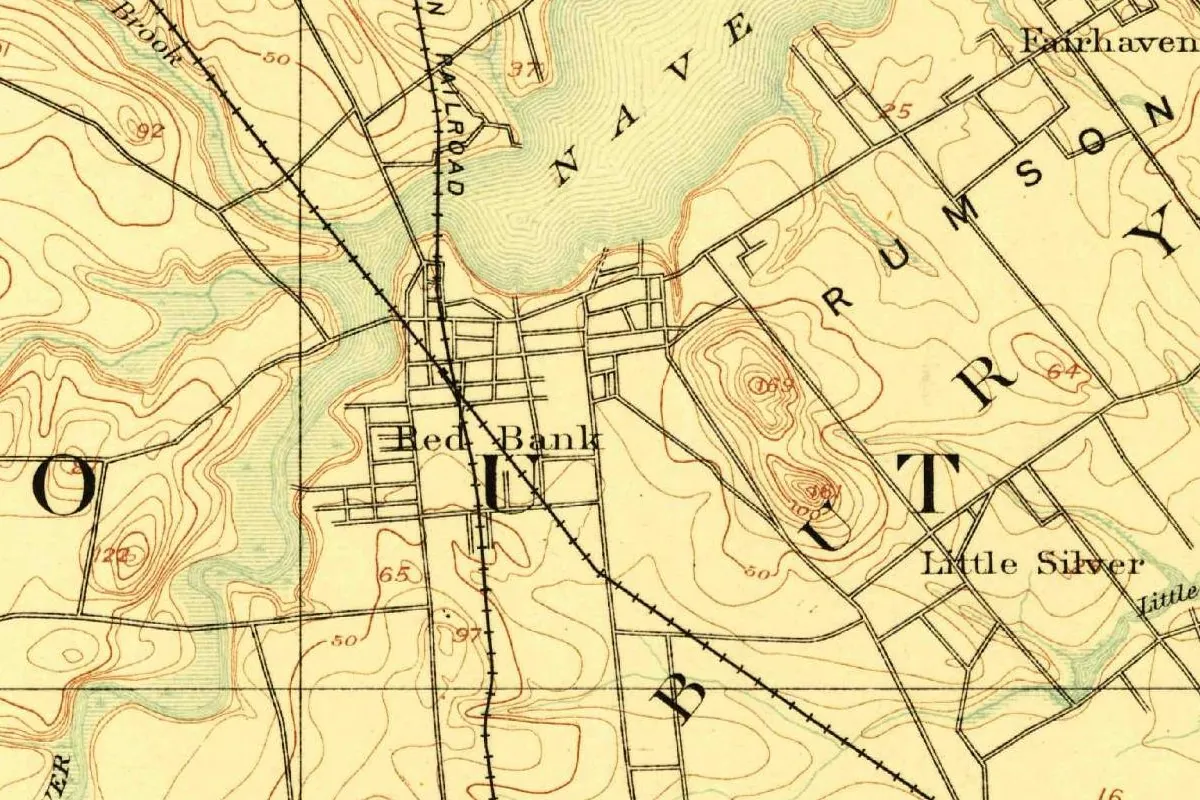
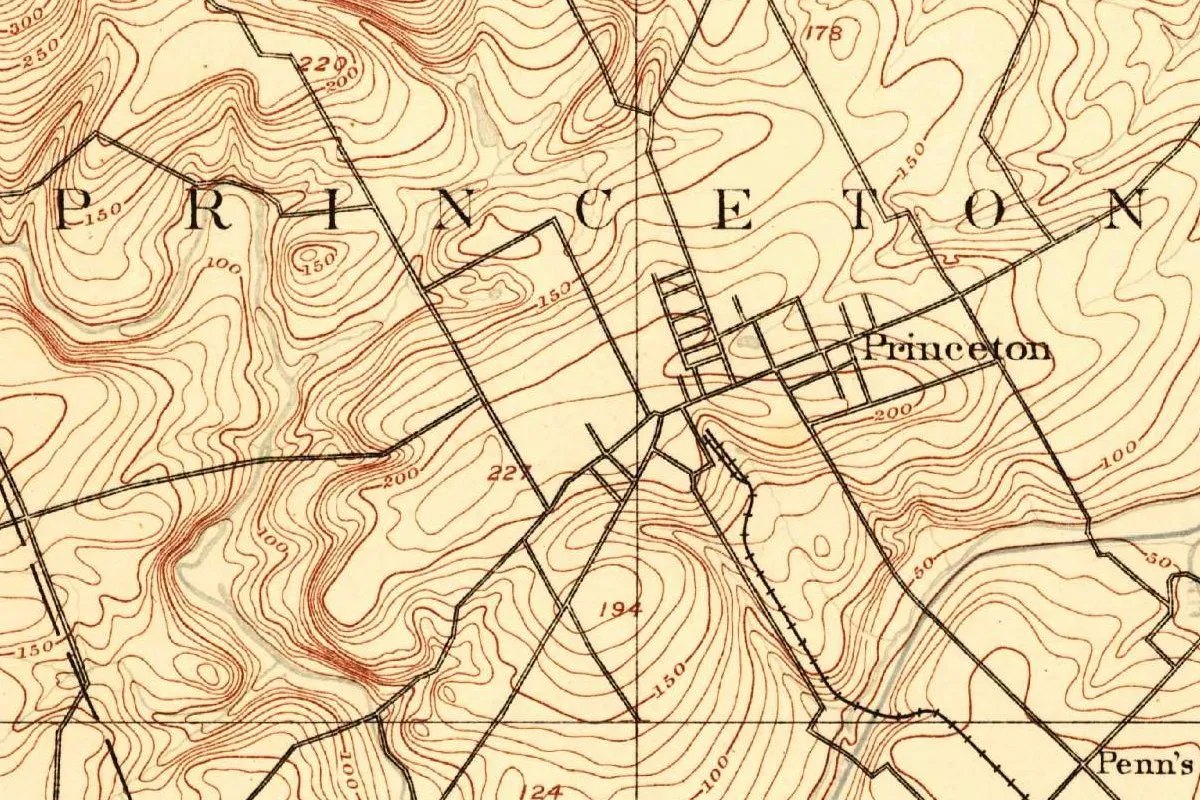
- U.S. Geological Survey, Princeton sheet (1888). The source of the map at the top of this page.
Spot something wrong, or know more? Tell us here. You can also email us or use our contact page. Corrections are noted here with their date, never made silently.