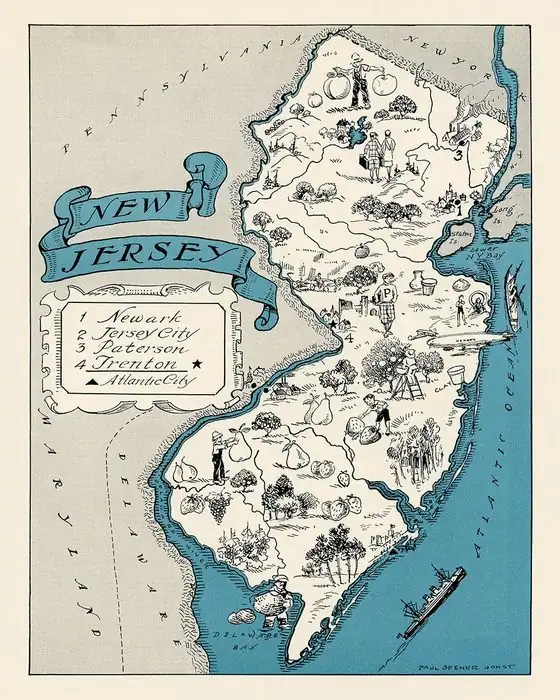
How Red Bank, New Jersey Got Its Name From a Riverbank
Red Bank takes its name from the red soil of the riverbank where it grew, on the south shore of the Navesink River. Franklin Ellis's 1885 county history says so in one line, and the borough says the name was in use by 1736. An 1879 law renaming the town Shrewsbury City didn't change what people called it.
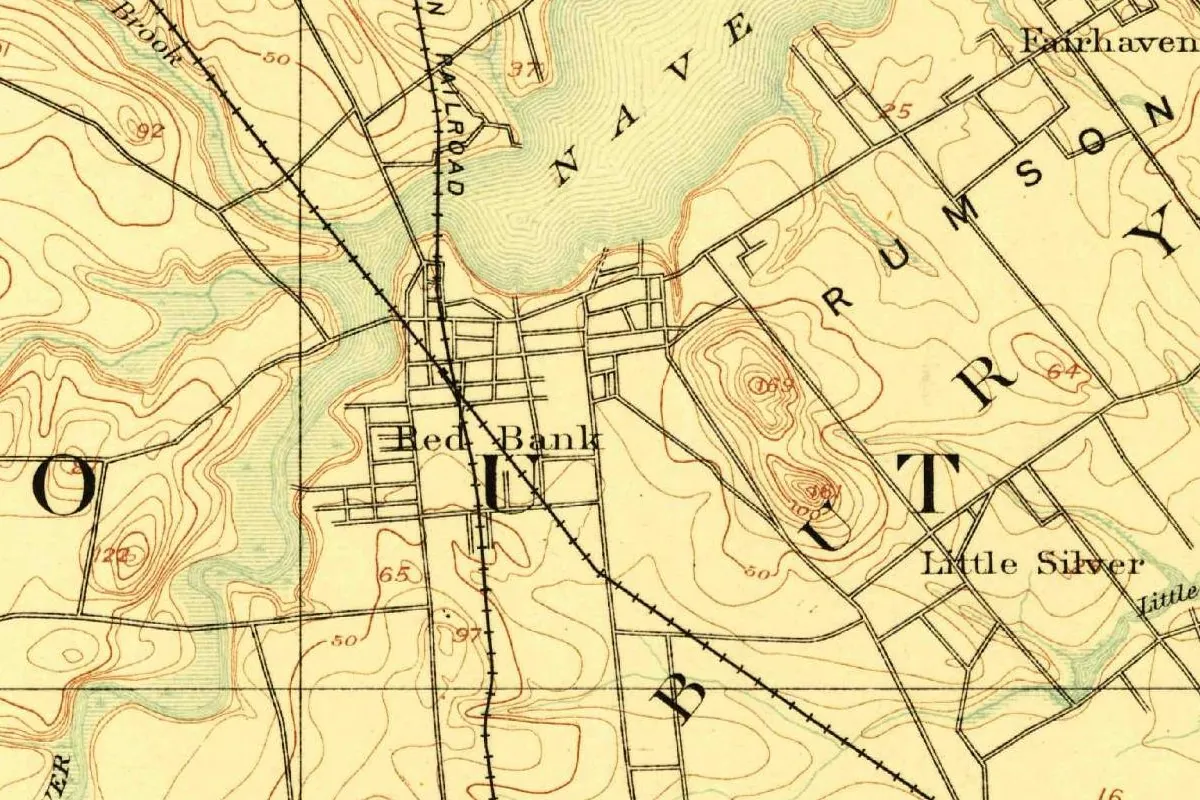
Red soil in a riverbank gave Red Bank, New Jersey, its name, and in 1879 the state approved a new one, Shrewsbury City, that didn’t stick. The town just went on calling itself Red Bank.
A bank the color of the soil
Franklin Ellis, who wrote the big History of Monmouth County in 1885, didn’t make a mystery of it. Red Bank, he wrote, sits at the head of navigation of the Navesink, “otherwise known as Shrewsbury” River, on the south shore, and “the name of the town was given to it because of the red color of the soil of the river banks at that place.”
That’s the whole explanation. No early record names the person who first called the spot Red Bank. The borough’s own history says that by 1736 the area was already “referred to as ‘Red Bank,’” named for “the distinctive red soil along the riverbanks.”
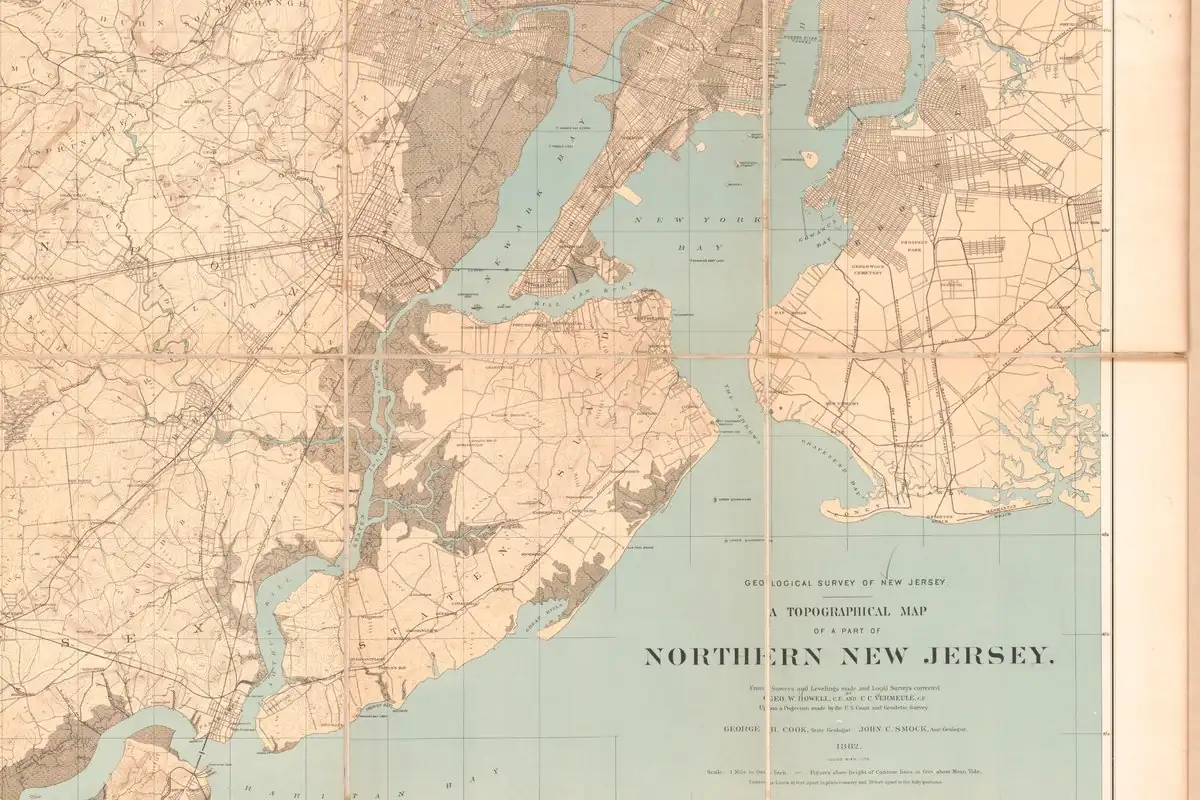
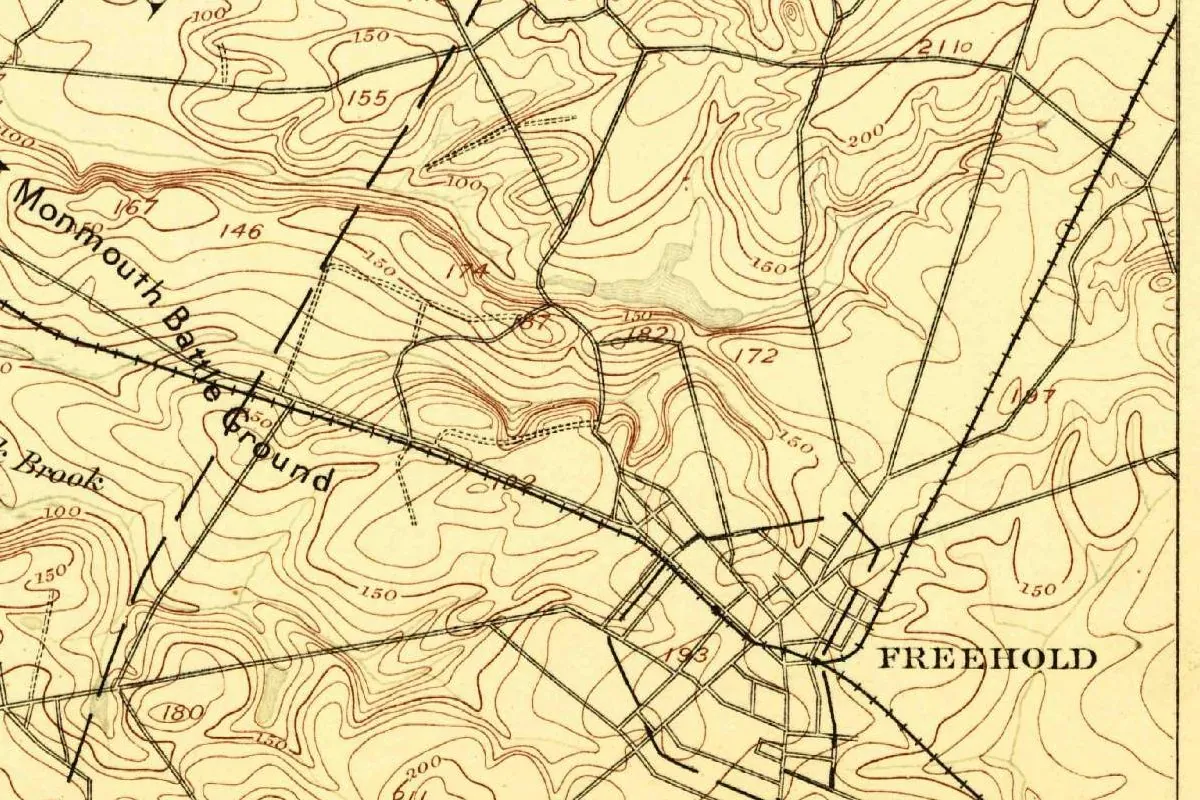
The river also explains why it was a place at all. Back in 1693, when Monmouth County was first split into three townships, Ellis says the Navesink served as part of the line between Middletown and Shrewsbury. Red Bank grew on the Shrewsbury side, in the same original set of townships as Freehold.
A tavern, a dock and a river landing
For a long time it wasn’t much of a town. Ellis says that in 1808 the land under it was the farm of Barnes Smock, who kept a tavern on the point. A dock was built before 1809, and the sloop Fair Trader ran from it to New York with market produce.
Then came the steamboats. Once steamer lines started running, town lots “were sold rapidly,” and by 1870 Red Bank was big enough for its own act of the New Jersey Legislature. “An Act for the Improvement of the Town of Red Bank,” approved on March 17, 1870, made it an incorporated town.
Exit Red Bank
Not everyone in town liked the plain old name. Ellis says that in the winter of 1878-79 an application went to the Legislature to change “the name of Red Bank to ‘Shrewsbury City.’” A supplementary act granting it was approved on February 14, 1879.
The New York World ran the news under the headline “Exit Red Bank,” and Ellis reprinted the piece. It described a town nearly 40 years old, with close to 4,000 people, 25 miles (40 km) from New York. Then it gave the reason:
“The town was named after the red banks of the Shrewsbury River, but its people were never satisfied with the name,—hence the change to Shrewsbury City.”
The World wrote the town’s obituary too early. Ellis, six years later, finished the story in one clause: the act was passed, “notwithstanding which, the name remains as before.” The borough today says the place “briefly became Shrewsbury City in 1879” before it was incorporated as a borough on March 10, 1908, as Red Bank.
The other Red Bank
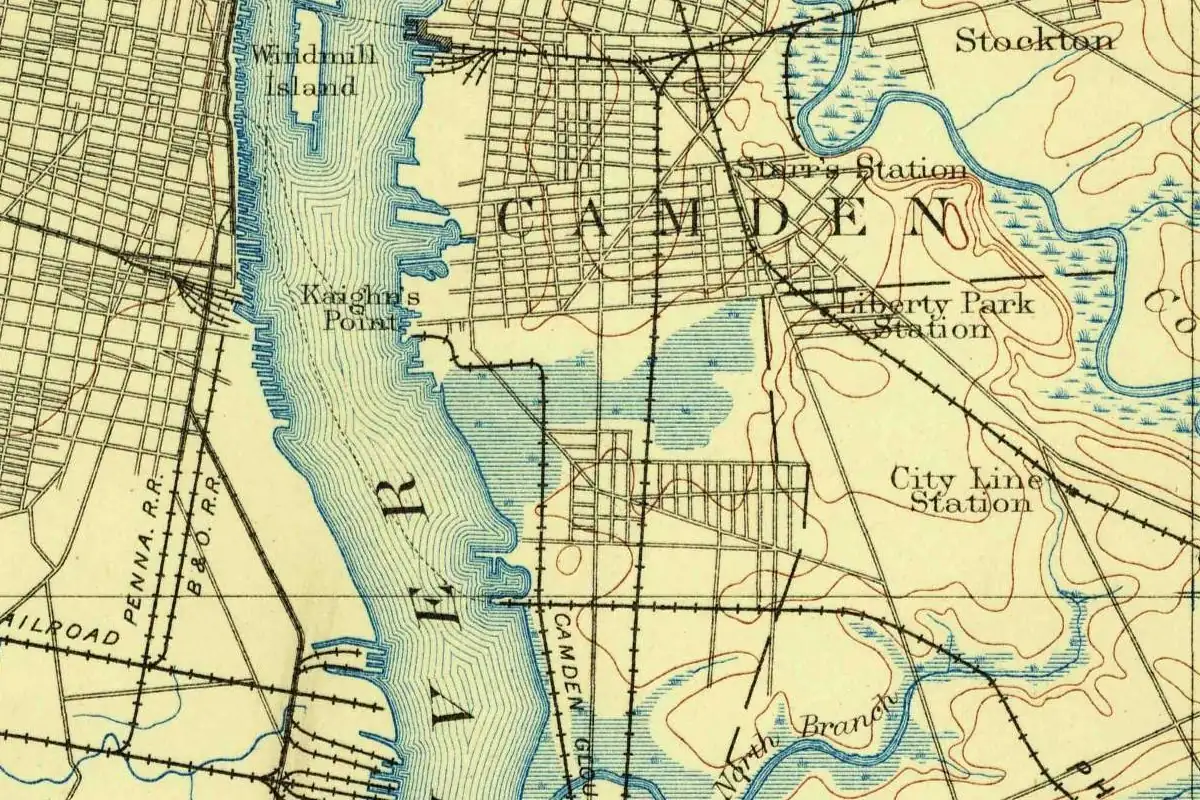
If you search old books for Red Bank, New Jersey, you may run into a Revolutionary War fort. That’s a different place. In 1900, Alfred Heston read a paper titled Red Bank to the Monmouth County Historical Association, and it was about the defense of Fort Mercer on October 22, 1777, at “the old fort at Red Bank” on the eastern shore of the Delaware. Heston noted that the Delaware River Red Bank had once been made “the capital of the county of Gloucester.”
So New Jersey has had two Red Banks on two rivers. The one on the Navesink got its name from the dirt and kept it through a law meant to replace it.
Quick answers
Why is Red Bank, NJ, called Red Bank?
Because of the soil. Ellis’s 1885 county history says the name was given “because of the red color of the soil of the river banks at that place,” on the Navesink River.
Was Red Bank ever called Shrewsbury City?
On paper, briefly. An act approved on February 14, 1879, granted the change, but Ellis wrote in 1885 that “the name remains as before.”
Is this the Red Bank of the Revolutionary War battle?
No. The fort at Red Bank defended in October 1777 was Fort Mercer, on the Delaware River in Gloucester County, according to Heston’s 1900 paper.
Key dates
- 1693October 31: Monmouth County is split into three townships, with the Navesink River as part of the line between Middletown and Shrewsbury.
- 1736The borough says the area was being called Red Bank by this year.
- 1808The land where the town grew is Barnes Smock's farm, and he keeps a tavern on the point.
- 1870March 17: an act "for the Improvement of the Town of Red Bank" makes it an incorporated town.
- 1879February 14: a supplementary act changing the name to Shrewsbury City is approved. Ellis says the name stayed Red Bank anyway.
- 1908March 10: Red Bank is incorporated as a borough, according to the borough.
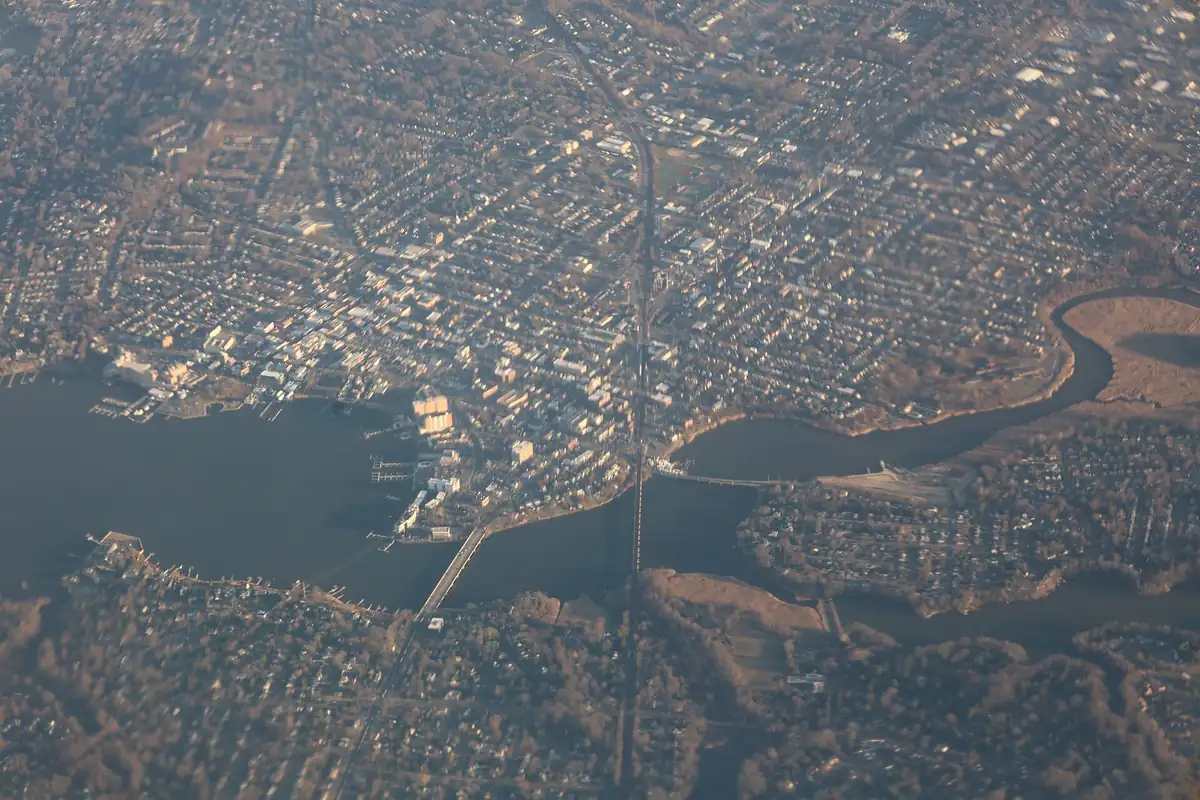
Getting there
Open Red Bank in Google Maps
Opens in a new tab. The pin is the center of Red Bank in the USGS place-name record.
The closest airports, Amtrak stations and intercity bus stops, measured in a straight line from the center of Red Bank.
Airports
- Newark Liberty International (EWR) 24 mi 39 km
- John F Kennedy International (JFK) New York 25 mi 41 km
Amtrak trains
- Metropark station (MET) 21 mi 33 km
- New Brunswick station (NBK) 23 mi 36 km
Intercity buses
- OurBus South Amboy - Cheesequake, NJ (Southbound side bus parking area across from service area building) 14 mi 23 km
- Monsey Trails Squankum & Kennedy 18 mi 29 km
- Suburban Transit East Brunswick Transportation Center 19 mi 31 km
Distances are as the crow flies, not by road. We don't list schedules or fares because they change; check with the airline, Amtrak or the bus company before you go. Official data (FAA commercial service airports (2025), FAA airport locations, Amtrak stations and Intercity Bus Atlas) from the FAA and the U.S. Bureau of Transportation Statistics, checked Nov 13, 2026.
Sponsored
Staying in Red Bank?
Compare hotels in Red Bank, New Jersey, on Expedia.
See hotels in Red BankWe may earn a commission if you buy through this link. It never changes what we write. Read our affiliate disclosure
Sponsored
Want the spooky side of Red Bank?
The name has its story above. For the ghost stories, US Ghost Adventures runs walking ghost tours in Red Bank.
See ghost tours in Red BankWe may earn a commission if you book through this link. It never changes what we write. Read our affiliate disclosure
Historical Sources & References
- Franklin Ellis, History of Monmouth County, New Jersey (1885), pp. 103, 596, 598-599. The 1693 act creating three townships with the Navesink as part of the Middletown-Shrewsbury line (p. 103); the name given “because of the red color of the soil of the river banks,” Barnes Smock’s farm and tavern in 1808, the dock before 1809 and lot sales after the steamboats (p. 596); the act of March 17, 1870 (p. 598); the 1879 Shrewsbury City act and the New York World item “Exit Red Bank” (pp. 598-599).
- Alfred M. Heston, Red Bank (1900), pp. 3-4. The paper read to the Monmouth County Historical Association about Fort Mercer, “the old fort at Red Bank” on the Delaware, defended on October 22, 1777, and that Red Bank’s time as Gloucester County’s capital.
- Borough of Red Bank, Residents. The name in use by 1736 for “the distinctive red soil along the riverbanks,” Shrewsbury City in 1879 and the borough of March 10, 1908.
- GNIS feature 882548 (U.S. Geological Survey). Entry 882548, the Red Bank in Monmouth County.
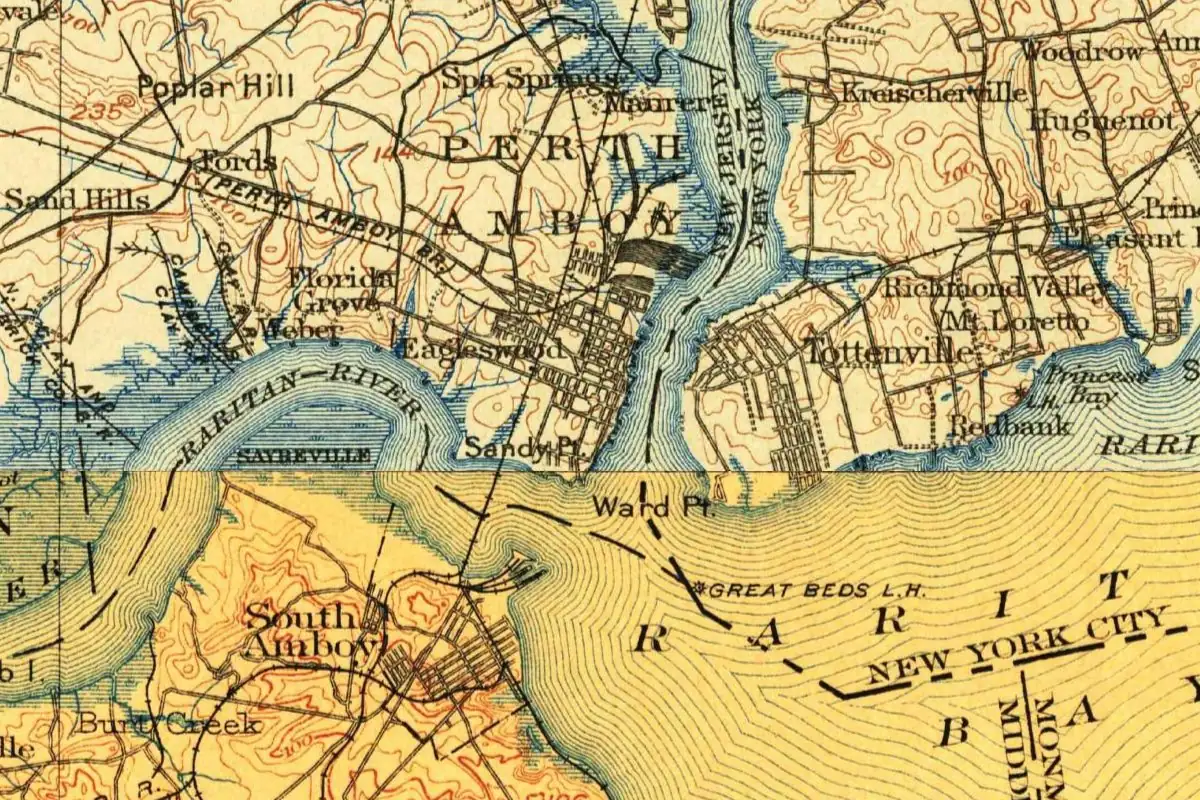
- U.S. Geological Survey, Sandy Hook sheet (1:62,500), 1888. The 1888 sheet that prints Red Bank on the Navesink shore.
Spot something wrong, or know more? Tell us here. You can also email us or use our contact page. Corrections are noted here with their date, never made silently.