Why Is It Called Cold Spring, NY? The Spring and the Legend
Cold Spring is named for a spring of unusually cold water, William J. Blake wrote in his 1849 history of Putnam County. William S. Pelletreau placed it in 1886 at the foot of Main Street, and said it had since been destroyed. The story that George Washington drank there and named it is, in the village's own word, a myth.
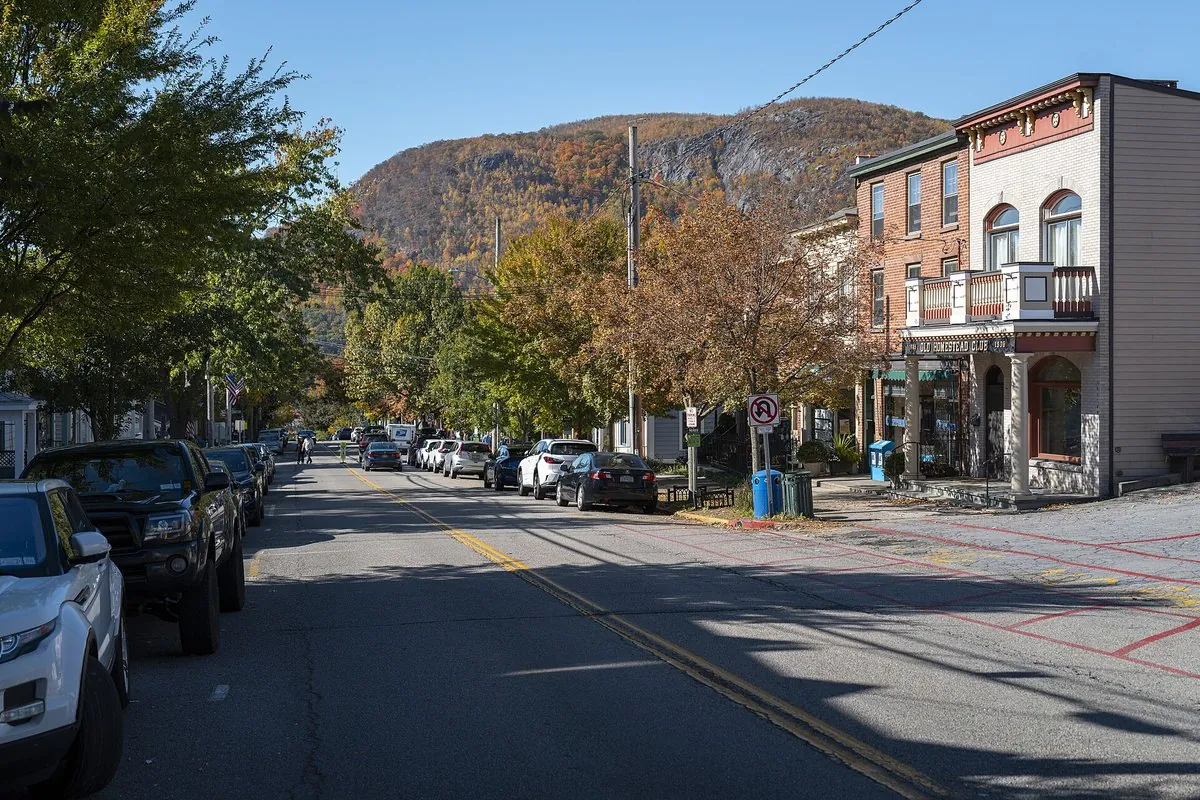
Cold Spring, New York, is called after a spring of unusually cold water near the Hudson; the story that George Washington named it is a legend. The spring itself is long gone.
Why is it called Cold Spring, New York?
The earliest explanation is also the plainest. William J. Blake’s History of Putnam County, published in 1849, three years after the village was incorporated, says Cold Spring “takes its name from a spring of water which is unusually cold.” Blake puts it on the line between the village’s low and high ground, at the northwest corner of the dooryard of Henry Haldane.
William S. Pelletreau’s county history of 1886 tells it a little differently. At the foot of Main Street there was once a small bay with marshy shores, he writes, and where the Hudson River Railroad crossed the street’s north edge, a spring flowed out of the bank, “cool, clear and sparkling.” Because the water was so fresh, people called it “the Cold Spring.” By Pelletreau’s time it no longer flowed: modern improvements had destroyed it. But the name stayed.
So the two histories agree on the spring and differ on the spot. Neither one names a person who picked the name.
A marker tells a different tale. The Historical Marker Database records one put up in 1893 by the Sons of the Revolution, at Railroad Avenue and Main Street. It says that General George Washington, on frequent visits to the American troops camped nearby during the Revolution, “drank at this spring and gave it its name Cold Spring.”
The village doesn’t stand behind it. Its own history page says: “Myth has it that George Washington drank from a local spring and declared it to be refreshingly cold.” Neither Blake in 1849 nor Pelletreau in 1886 mentions Washington in his account of the name. The marker came seven years after Pelletreau’s book.
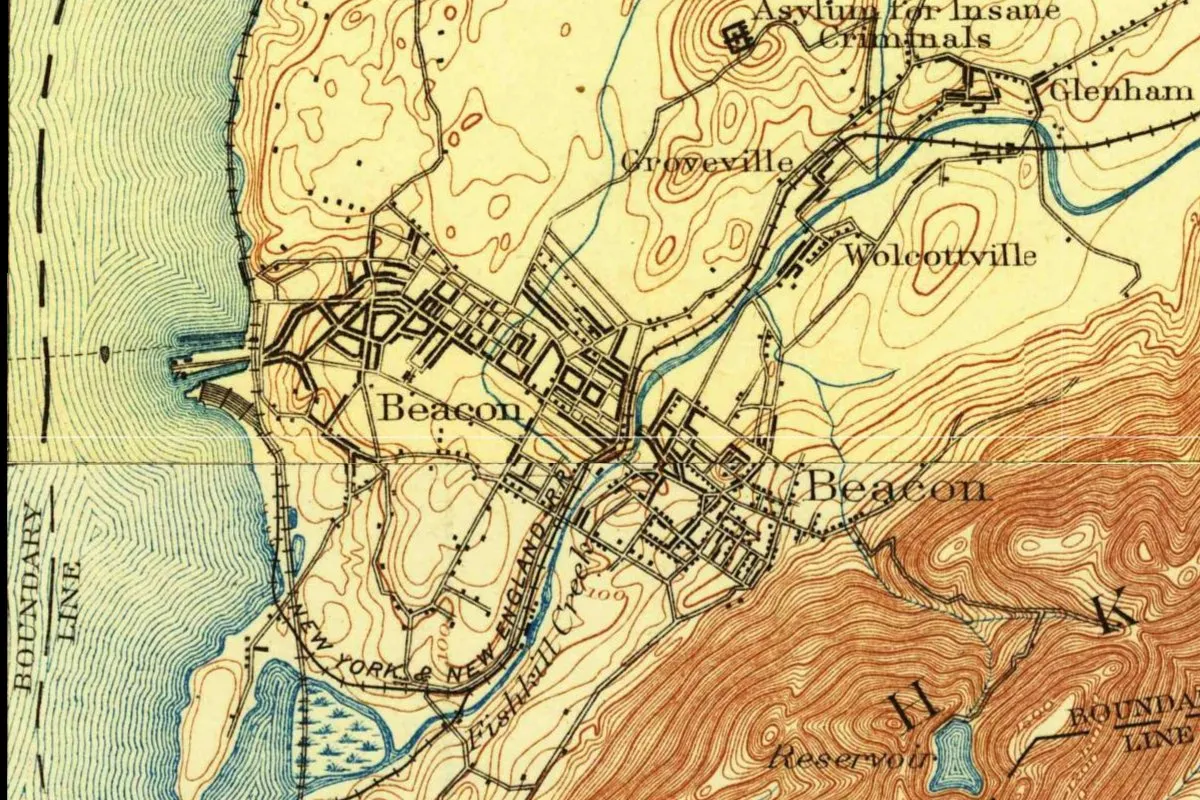
Just up the river, Beacon has a Washington connection with better footing: its name recalls Revolutionary signal fires on Mount Beacon, which, according to a city report, warned Washington at Newburgh that the British were coming. And spring names have their own stories elsewhere. In Arkansas, a group camped by a healing spring picked the name Eureka on July 4, 1879, Greek for “I have found it,” and the town became Eureka Springs. In Colorado, Manitou Springs borrowed an Algonquian word for spirit from Longfellow’s Hiawatha.
Cold Spring, NY history: the Davenports and the West Point Foundry
The land came first, and the village a good while later. J. H. French’s Gazetteer of the State of New York (1860) dates the first house at Cold Spring, Thomas Davenport’s, to 1715, in the town of Philipstown, which was named for Adolph Philipse, holder of the Philipse Patent. Pelletreau adds that the whole village stands on Lot 4 of the first Philipse survey, which William Davenport held as a tenant in 1769.
Pelletreau is blunt about what made the village: it “had no existence” before the West Point Foundry. French says the foundry was organized in 1817 and incorporated on April 15, 1818. The village’s history page credits Gouverneur Kemble and partners with founding it in 1818, and says the works armed the Union during the Civil War, famously with the Parrott gun. The foundry closed in 1911.
The village itself was incorporated on April 22, 1846, by chapter 102 of that year’s session laws, Blake says. French adds that it took in the small neighboring villages of Nelsonville and Marysville.
Cold Spring on the 1892 map
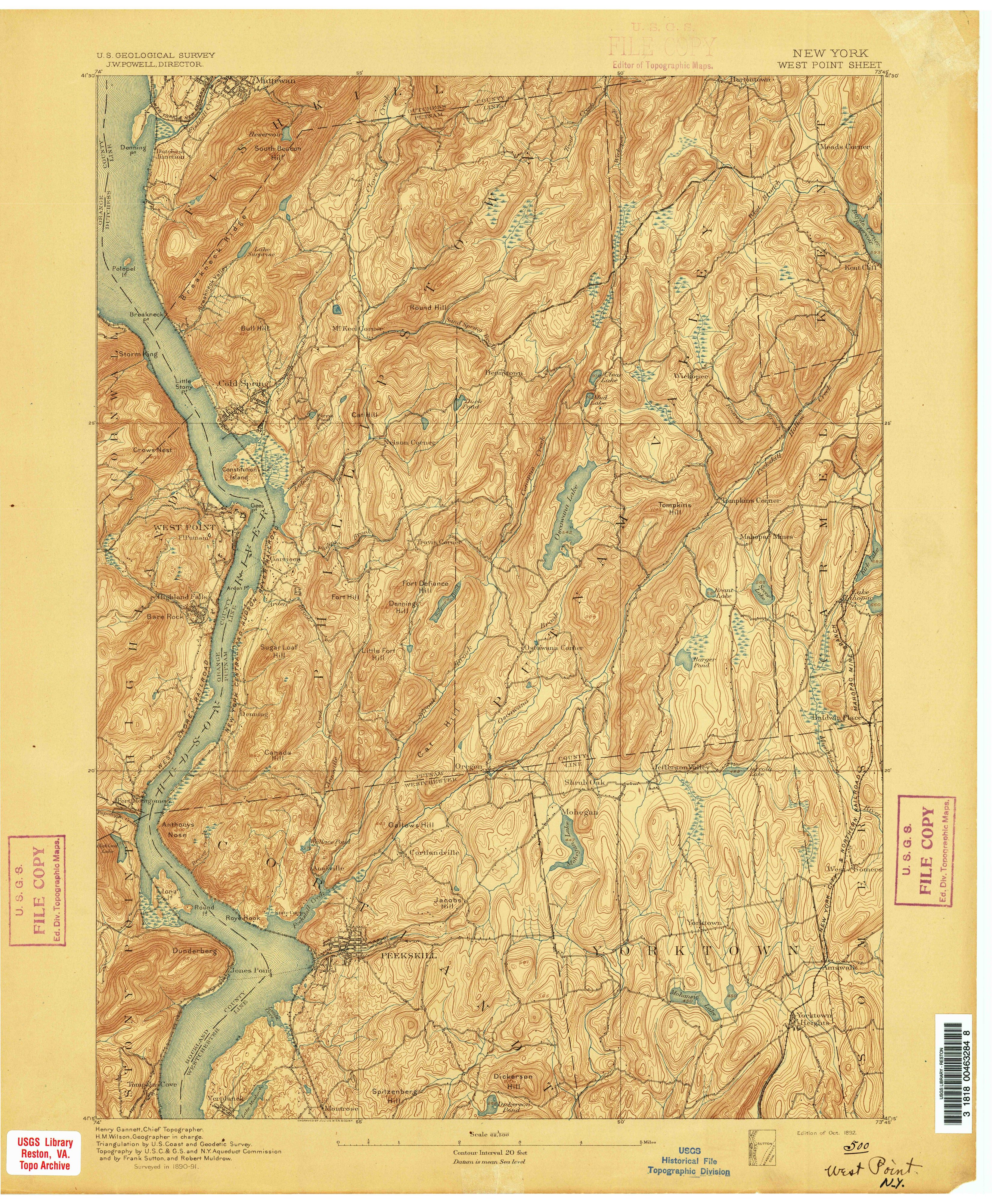
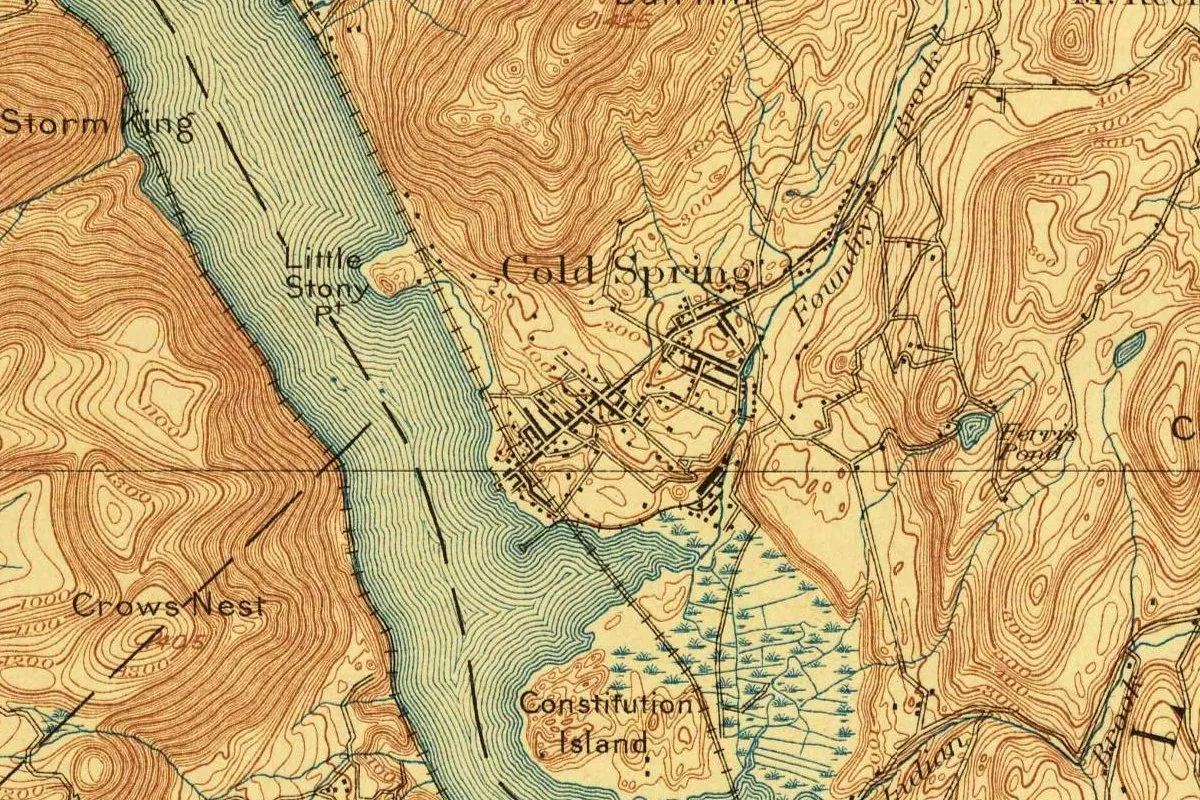
Above is a crop of the West Point sheet, a 1:62,500 Geological Survey map from the years when Henry Gannett served as chief topographer, with H. M. Wilson the geographer in charge. The Coast and Geodetic Survey, the New York Aqueduct Commission, Frank Sutton and Robert Muldrow shared the topography, and the margin reads “Surveyed 1890-91.” It was engraved by Julius Bien & Co. of New York, in an “Edition of Oct. 1892.”
Cold Spring’s streets climb from the east bank, and the railroad hugs the shore below them. If you look to the right of the name, you’ll see Foundry Brook running down from the northeast toward the town. Constitution Island and its marshes lie to the south, and Storm King and Crows Nest rise across the river.
Quick answers
Why is Cold Spring, New York, called Cold Spring?
For a spring of unusually cold water in the village, according to Blake’s 1849 county history and Pelletreau’s of 1886. The spring has since been destroyed.
Did George Washington name Cold Spring, New York?
The village calls that story a myth. A marker put up in 1893 says he did, but the county histories of 1849 and 1886 don’t mention him.
When was Cold Spring, New York, incorporated?
On April 22, 1846, as a village in the town of Philipstown, according to Blake and French.
Key dates
- 1715Thomas Davenport builds the first house at Cold Spring, according to French's 1860 gazetteer.
- 1769William Davenport holds Lot 4 of the Philipse survey, the land the village later grew on, as a tenant.
- 1818April 15: the West Point Foundry, founded by Gouverneur Kemble and partners, is incorporated.
- 1846April 22: the legislature incorporates the village of Cold Spring.
- 1892The Geological Survey's West Point sheet, surveyed in 1890-91, is issued in an edition of October 1892.
- 1893The Sons of the Revolution put up a marker saying George Washington drank at the spring and named it Cold Spring.
- 1911The West Point Foundry closes.
Things to do in Cold Spring, New York
West Point Foundry Preserve
A 90-acre (36 ha) Scenic Hudson preserve along Foundry Brook, where trails pass the remains of the ironworks that made early steam engines, locomotives, water pipes for New York City and Civil War cannons. The site has been a National Historic Landmark since 2021.
Putnam History Museum
Near the foundry preserve, at 63 Chestnut Street, the museum, once the Putnam County Historical Society & Foundry School Museum, keeps a permanent installation on the ironworks with artifacts, documents and art.
Hudson Highlands State Park Preserve
More than 8,000 acres (3,200 ha) with over 70 miles (113 km) of trail, in separate parcels from Annsville Creek in Peekskill to Dennings Point in Beacon, running from the river's edge up to rocky ridges and summits.
Boscobel House and Gardens
In nearby Garrison, a Loyalist family's house built between 1804 and 1808, torn down by the 1950s and rebuilt from saved pieces 15 miles (24 km) north. It opened as a museum in 1961 and looks out over Constitution Marsh toward West Point.
Getting there
Open Cold Spring in Google Maps
Opens in a new tab. The pin is the center of Cold Spring in the USGS place-name record.
The closest airports, Amtrak stations and intercity bus stops, measured in a straight line from the center of Cold Spring.
Airports
- New York Stewart International (SWF) Newburgh 10 mi 16 km
- Westchester County (HPN) White Plains 28 mi 44 km
- Laguardia (LGA) New York 45 mi 72 km
Amtrak trains
- Croton-Harmon station (CRT) 16 mi 26 km
- Poughkeepsie station (POU) 20 mi 32 km
Intercity buses
- ShortLine Hudson West Point Washington Gate 2 mi 3 km
- Adirondack Trailways Trailways · Newburgh 8 mi 13 km
- OurBus Fishkill 8 mi 13 km
Distances are as the crow flies, not by road. We don't list schedules or fares because they change; check with the airline, Amtrak or the bus company before you go. Official data (FAA commercial service airports (2025), FAA airport locations, Amtrak stations and Intercity Bus Atlas) from the FAA and the U.S. Bureau of Transportation Statistics, checked Nov 22, 2026.
Sponsored
Staying in Cold Spring?
Compare hotels in Cold Spring, New York, on Expedia.
See hotels in Cold SpringWe may earn a commission if you buy through this link. It never changes what we write. Read our affiliate disclosure
Historical Sources & References
- William J. Blake, The History of Putnam County (1849), p. 158. The incorporation of 1846 and the cold spring at Henry Haldane’s dooryard.
- William S. Pelletreau, History of Putnam County (1886), pp. 557-558. The village and the foundry, Lot 4 and William Davenport, and the spring at the foot of Main Street.
- J. H. French, Gazetteer of the State of New York (1860), pp. 541-542. Philipstown and Adolph Philipse, Thomas Davenport’s house of 1715, the foundry of 1817-1818 and the village of 1846.
- Village of Cold Spring, About. The Washington “myth,” Kemble’s foundry, the Parrott gun and the closing in 1911.
- Historical Marker Database, “General George Washington”. The marker of 1893.
- Scenic Hudson, West Point Foundry Preserve; the Putnam History Museum; Hudson Highlands State Park Preserve; Boscobel. The details in the things-to-do list.
- U.S. Geological Survey, GNIS feature 970022. Cold Spring’s federal record.
- West Point sheet, edition of October 1892. The sheet the map at the top was cropped from.
Sponsored
Put this 1892 map on your wall
The Geological Survey's West Point sheet, surveyed in 1890-91 and issued in October 1892: Cold Spring, Foundry Brook and Constitution Island in the Hudson Highlands, while the foundry was still running. It is in the public domain: download the full-size scan for free, then have it printed on canvas with CanvasOnTheCheap.
Print a map on canvasDownload the full-size mapWe may earn a commission if you buy through this link. It never changes what we write. Read our affiliate disclosure
Spot something wrong, or know more? Tell us here. You can also email us or use our contact page. Corrections are noted here with their date, never made silently.