Pittsburgh, Pennsylvania: William Pitt's Town and Its Missing H
For years, the federal government spelled Pittsburgh without the h. The name itself goes back to 1758 and honors William Pitt, Britain’s wartime leader, and what may be the earliest record of the name doesn’t use either spelling.
A general’s letter from a captured fort
In 1754 the French captured an unfinished British stockade where the Allegheny and the Monongahela meet and finished it as Fort Duquesne. In 1758 an army of more than 7,000 colonial soldiers under General John Forbes took it, with Henry Bouquet and George Washington among his officers. That’s how A. Howry Espenshade tells it in Pennsylvania Place Names, his 1925 survey of the state’s names.
On November 26, 1758, Forbes wrote to Pennsylvania’s lieutenant governor, William Denny, about the victory. He dated the letter from Fort Duquesne, then added: “or now Pitts-Bourg.” Espenshade says that “seems to be the first mention of Pittsburgh on record.” The name Fort Pitt came a little later, for the bigger fort General John Stanwix started building in 1759, but even then, Espenshade says, people used Pittsburgh more.
Why William Pitt
Pitt was the man running Britain’s war with France. On paper the Duke of Newcastle was prime minister, but Espenshade writes that Pitt “was everywhere recognized as the actual head of the government.” The federal place-name record puts it more simply: he was a “member of the English cabinet and a great government leader.” Henry Gannett’s 1902 place-names book for the U.S. Geological Survey adds his later title, Earl of Chatham. Espenshade thought the choice fit: Pitt’s war policy is what cost France its American possessions, so his name went on one of the places the two empires had been fighting over.
The h that went missing
Here’s the thing: if you open that same 1902 Gannett book, you’ll find the city listed as “Pittsburg.” That wasn’t a typo. In 1890 a presidential order set up the U.S. Board on Geographic Names to make place names uniform, and one of its rules was to drop the final h from names ending in “burgh.” Its first report explained that “in more than three-fourths of the places having this termination the final ‘h’ is not in local use,” and it used Pittsburg as the example.
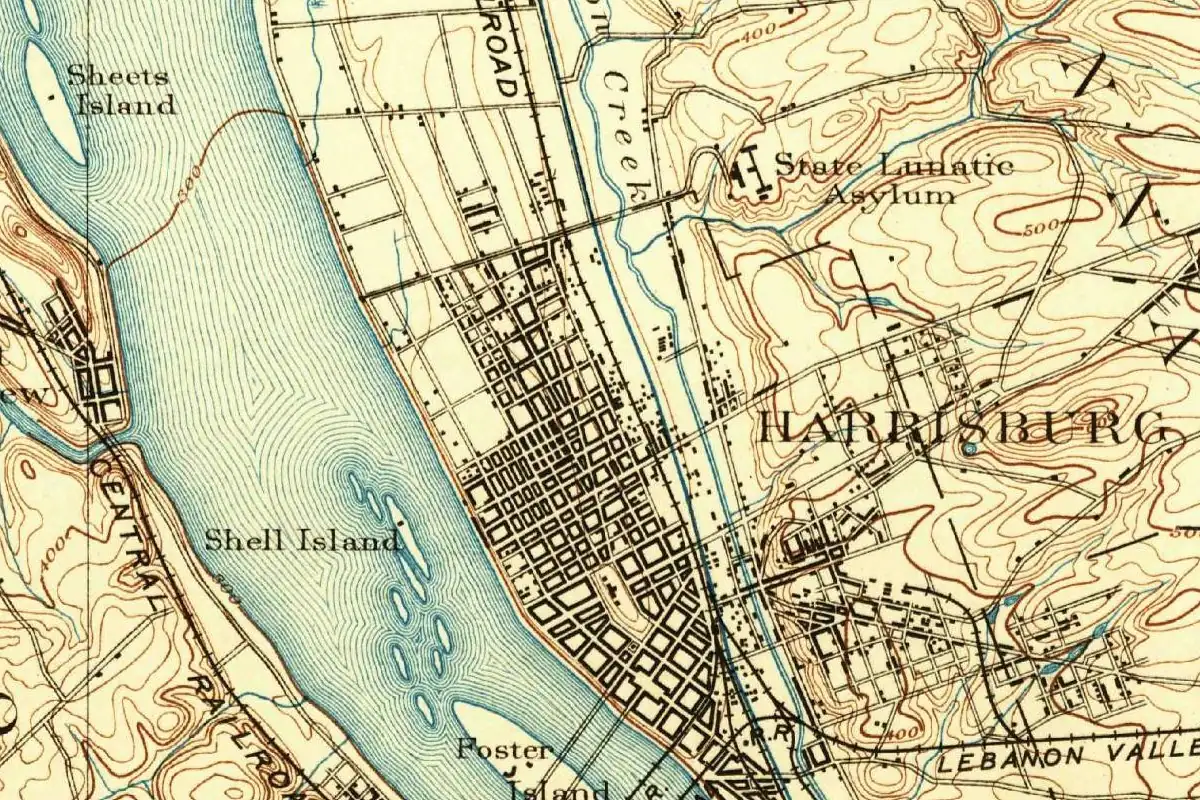
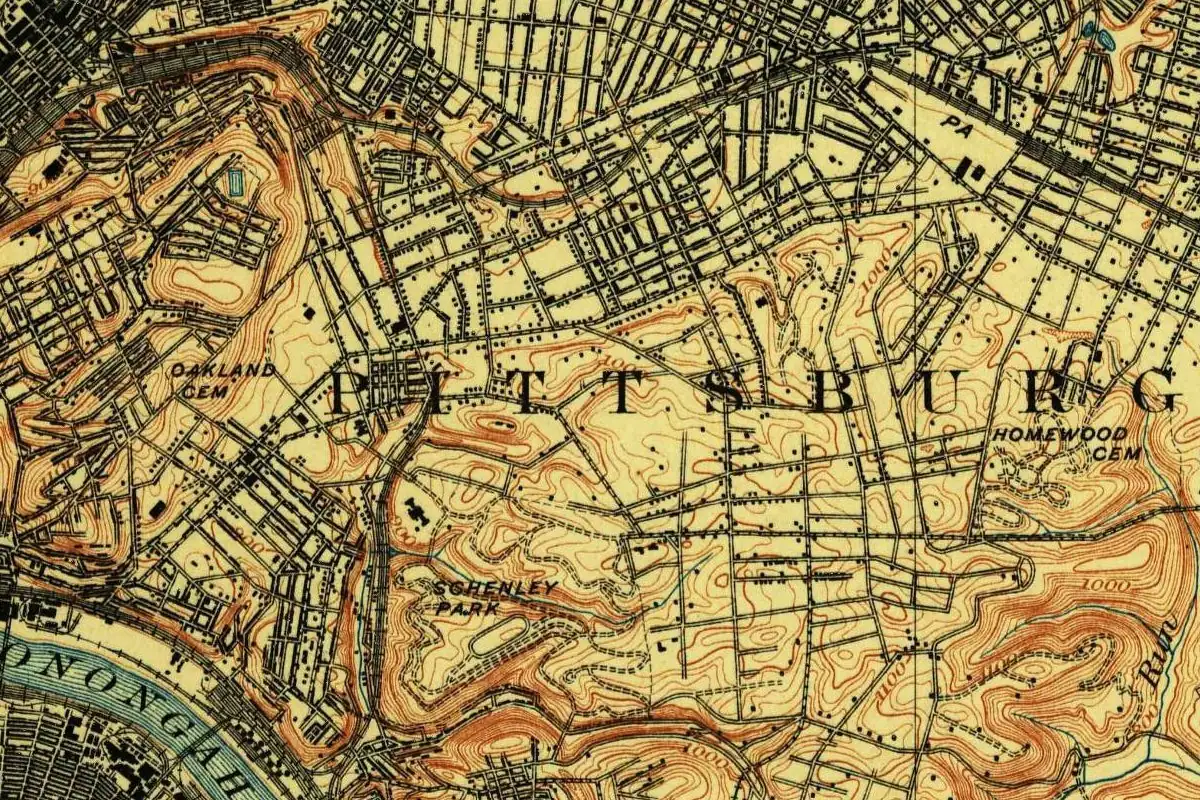
The board had a case for the city in particular. Its decision says Pittsburgh “was chartered in 1816, its name being spelled without the h.” It blamed the h on the Post Office Department and admitted that local usage was split: most local newspapers printed it without the h, “certain others use the final h.” The government’s own maps used the short spelling too. You can see it on the 1907 sheet above, with PITTSBURG printed across the city’s east side.
Getting it back
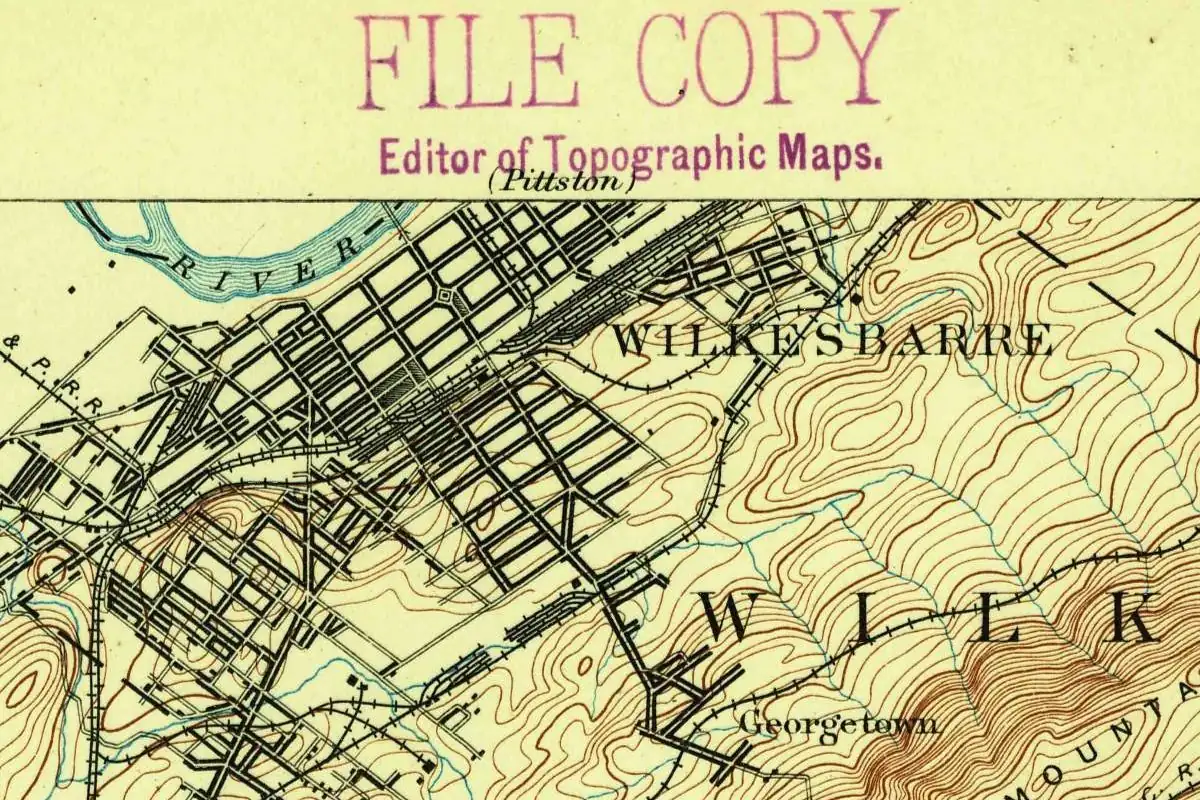
The h didn’t stay gone. By the board’s 1921 report, the entry had flipped to “Pittsburgh; City in Pennsylvania. (Not Pittsburg.)” with an asterisk, the report’s mark for a decision it had revised. Wilkes-Barre went through its own spelling fight with the same board, over a hyphen.
So the h came back for good. The spelling Forbes used, Pitts-Bourg, never did.
Sources & further reading
- A. Howry Espenshade, Pennsylvania Place Names (1925), pp. 121-123. The capture of Fort Duquesne, Forbes’s letter of November 26, 1758, “or now Pitts-Bourg,” Fort Pitt and Stanwix, and why Pitt.
- U.S. Board on Geographic Names, First Report, 1890-1891 (1892). The rule against the final h, the “three-fourths” finding, and the “Pittsburg” decision with its note on the 1816 charter (pp. 34-35 of the scan).
- U.S. Board on Geographic Names, Third Report, 1890-1906 (1906). Repeats the decision: “Pittsburg; city in Pennsylvania. (Not Pittsburgh.)” (p. 124).
- U.S. Geographic Board, Fifth Report, 1890 to 1920 (1921). The reversal: “Pittsburgh … (Not Pittsburg.)”, marked with the asterisk that flags a revised decision.
- Henry Gannett, The Origin of Certain Place Names in the United States (USGS Bulletin 197, 1902). Lists “Pittsburg,” named for “Sir William Pitt, Earl of Chatham.”
- GNIS feature 1213644 (U.S. Geological Survey). The federal record: named for Pitt, “a great government leader.”
Spot something wrong, or know more? Tell us here. You can also email us or use our contact page. Corrections are noted here with their date, never made silently.