Wilkes-Barre, Pennsylvania: Two Friends of America in Parliament
Wilkes-Barre, Pennsylvania, is named for John Wilkes and Isaac Barré, two members of Parliament who took the colonists’ side before the Revolution. The man who named it in 1769 wasn’t a Pennsylvanian at all. He was a major from Connecticut, leading Connecticut settlers.
A Connecticut major and his fort
In May 1769, Major John Durkee of Norwich, Connecticut, led about a hundred settlers from his home colony into the Wyoming Valley. Pennsylvanians and these Connecticut “Yankees” would fight a bitter contest over the valley, known as the “Pennamite war.” Within a month the newcomers had put up a palisade fort and called it Fort Durkee, after him.
Then, as Oscar Jewell Harvey put it in his 1909 History of Wilkes-Barré, “say the last of June or early in July, 1769,” Durkee “compounded and originated the almost unique name ‘Wilkesbarre,’” and gave it to the settlement around the fort. The earliest written use Harvey could find, “after long and diligent search,” is a receipt in the Susquehanna Company’s records dated “Wilkesbarre 31st July, 1769.”
Why Wilkes and Barré
In 1769, both men were popular with colonists who were at odds with London. John Wilkes was sitting in the King’s Bench Prison, in what his admirers saw as an unjust imprisonment. Isaac Barré was one of the loudest voices in the House of Commons against the government’s American policy. A. Howry Espenshade’s Pennsylvania Place Names (1925) credits Barré with coining “the Sons of Liberty,” the phrase the colonists used against the Stamp Act.
Durkee had a personal link, too. He and Barré had both served in the 1758 and 1759 campaigns in America, and Harvey says Barré was “personally known to Major Durkee.” Henry Gannett’s 1902 federal guide to place names gives the short version: “two members of the British Parliament, American sympathizers.”
Or was it the babies?
As it turns out, there’s a family wrinkle. Harvey’s genealogy shows that Durkee named his own son Barre Durkee, born October 21, 1767. His cousin Andrew Durkee, who was also in the valley in 1769, had a son born July 25, 1768, named Wilkes Durkee. Espenshade notes that “some persons contend” the town was named for those two little boys, not straight for the two politicians.
Even if you buy that version, you end up in the same place. The boys were named for Wilkes and Barré in the first place, so either way the name goes back to the two men in London.
A hyphen the government didn’t want
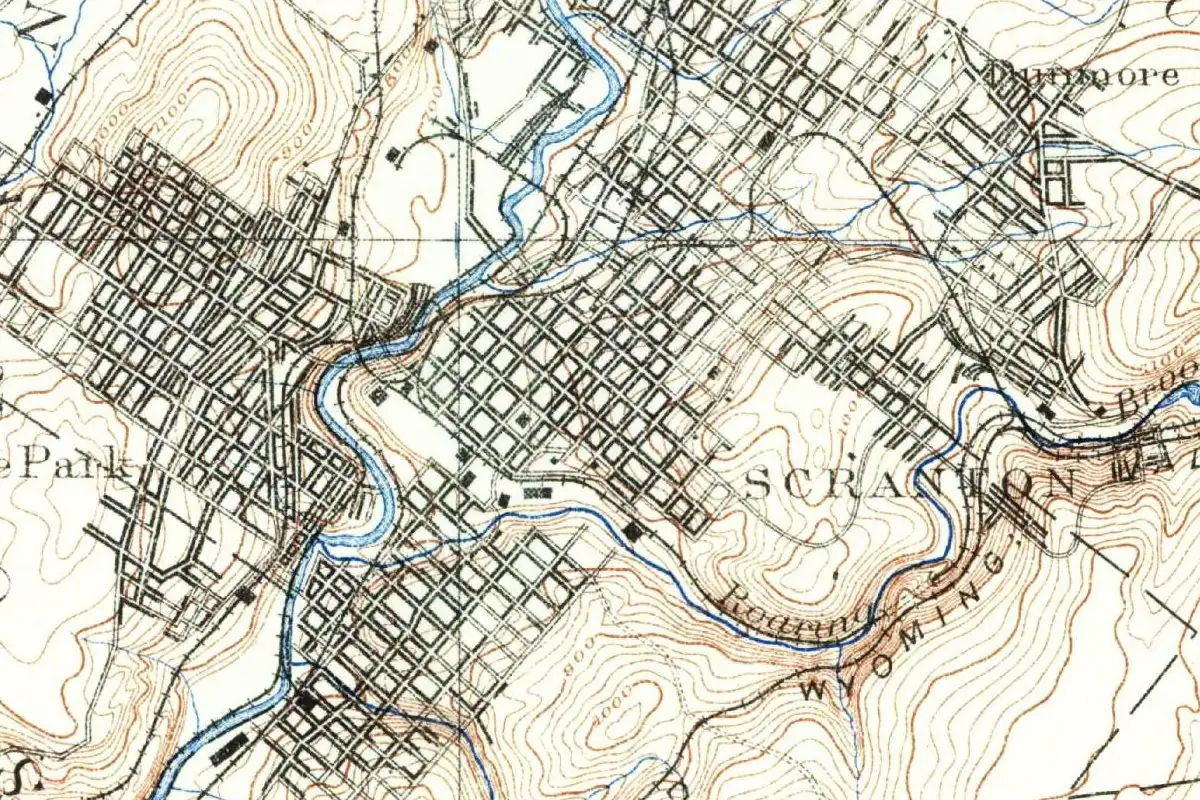
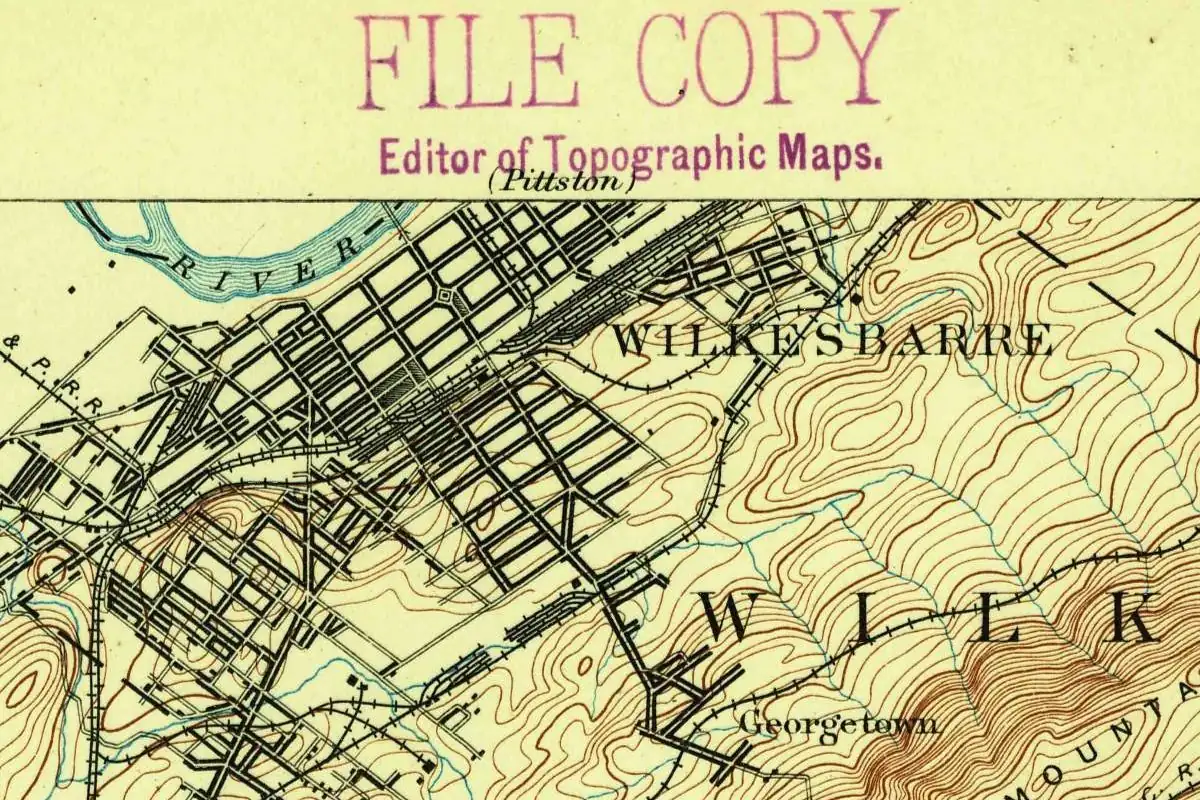
The name never had an easy spelling. Espenshade says it was spelled seventeen different ways in its first half-century. Then the federal government weighed in. The U.S. Board on Geographic Names, set up in 1890, decided hyphens in place names “appear to be useless,” and its first report listed the city as “Wilkesbarre.” Gannett’s 1902 book and the 1891 government map above use the same one-word form. The board’s 1906 report spelled it out: “Wilkesbarre; city, Luzerne county, Pa. (Not Wilkes-Barre.)”
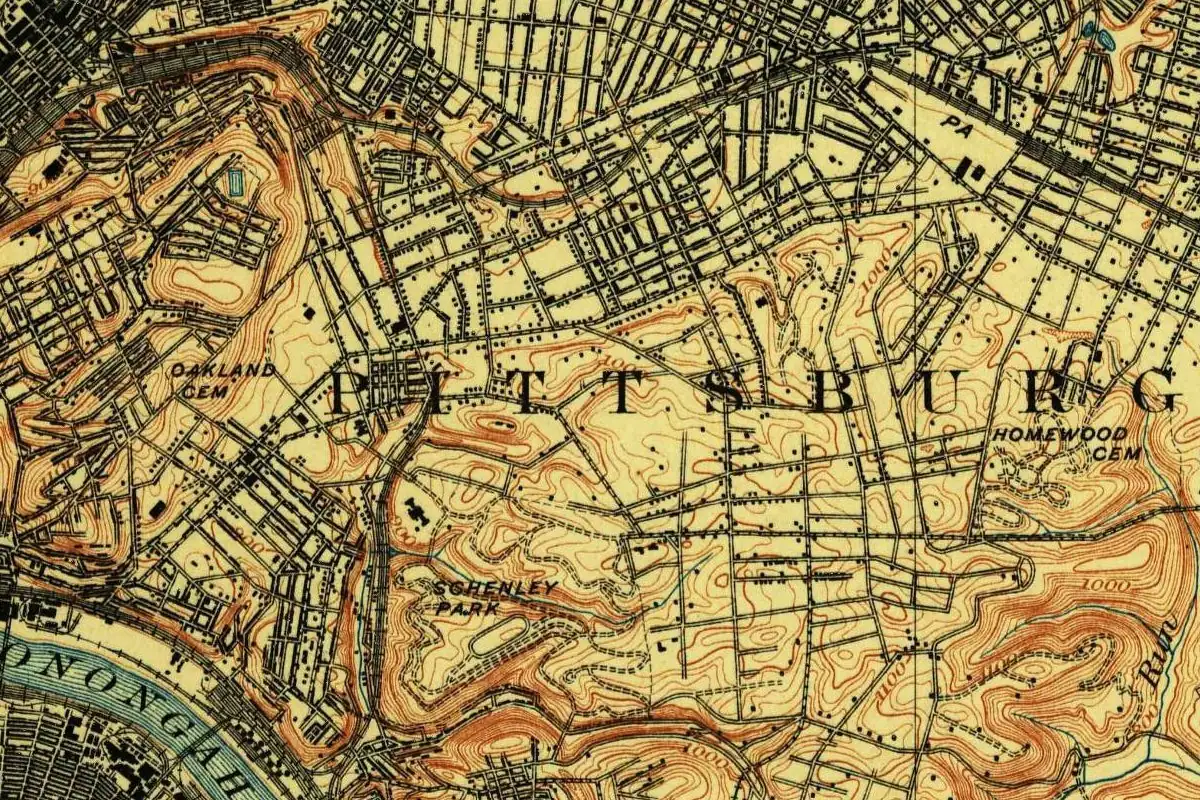
The city got its hyphen back. In the board’s 1921 report, the entry reads “Wilkes-Barre,” with an asterisk marking a revised decision. GNIS, the government’s official database of place names, gives April 7, 1909, as the date of the board decision behind today’s spelling. Pittsburgh went through the same back-and-forth with the same board over its final h.
Sources & further reading
- Oscar Jewell Harvey, A History of Wilkes-Barré, vol. 1 (1909), pp. 481, 486, 503-504. Durkee’s naming of the town in the summer of 1769, his link to Barré, the Durkee boys’ birth dates and the July 31, 1769, receipt.
- A. Howry Espenshade, Pennsylvania Place Names (1925), pp. 67-70. Durkee’s settlers and Fort Durkee, the “some persons contend” theory, Barré and “the Sons of Liberty,” and the seventeen spellings.
- Henry Gannett, The Origin of Certain Place Names in the United States (USGS Bulletin 197, 1902). “Wilkesbarre,” named for two members of Parliament who sympathized with America.
- U.S. Board on Geographic Names, First Report (1892) and Third Report (1906). The rule against hyphens and the “Wilkesbarre” decision.
- U.S. Geographic Board, Fifth Report (1921). The revised decision for “Wilkes-Barre.”
- GNIS feature 1213654 (U.S. Geological Survey). The board decision date, April 7, 1909, and the borough’s incorporation in 1806.
Spot something wrong, or know more? Tell us here. You can also email us or use our contact page. Corrections are noted here with their date, never made silently.