Richmond, Virginia: A City Named for a View Near London
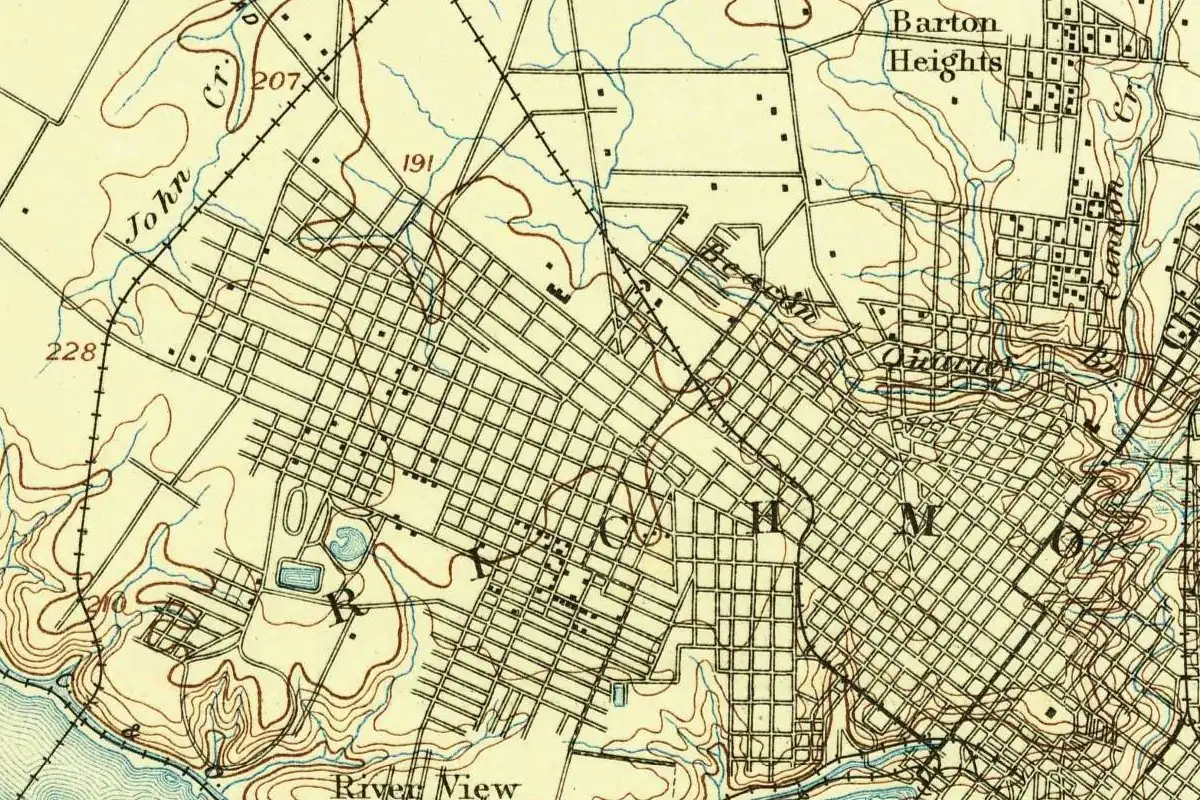
In September 1733, William Byrd wrote that he and his friends had laid the foundation of two cities in a single day, and one was to be called Richmond. He got the name from England. A note in the 1901 edition of his writings says Richmond took its name “from a fancied resemblance to the site of the town by the same name near London.”
Two cities in one day
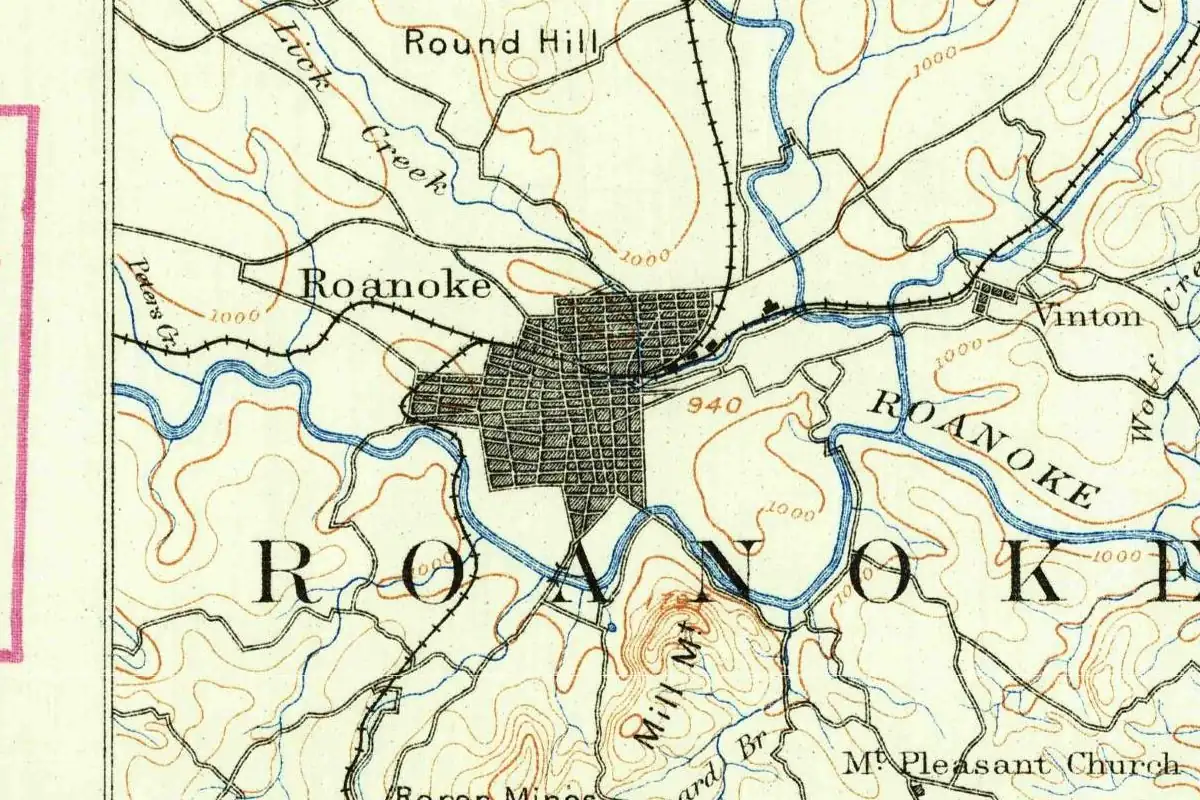
Byrd, whose home was Westover on the James River, kept a journal of a 1733 trip to the Roanoke River country, later published as A Journey to the Land of Eden. His entry for September 19, written after a morning out on the Roanoke, reads: “we laid the foundation of two large Citys. One at Shacco’s, to be called Richmond, and the other at the Point of Appamattuck River, to be nam’d Petersburgh.”
He had a practical reason. Both spots, he wrote, were “the uppermost Landing of James and Appamattux Rivers,” the last place boats could reach, so trade from farther inland would have to pass through them. Then he poked a little fun at himself: “Thus we did not build Castles only, but also Citys in the Air.”
If you’ve ever wondered why Richmond sits where it does, that’s the answer in Byrd’s own words. It’s at the falls of the James, as far upriver as the boats could go.
A view borrowed from the Thames
Byrd’s journal names the city but doesn’t say why. The explanation comes from John Spencer Bassett, who edited Byrd’s writings in 1901. His footnote says the name came from “a fancied resemblance” to Richmond near London, and that lots in the new town were advertised for sale in the Virginia Gazette in April 1737. Henry Gannett’s 1905 federal place-name book says the same thing in plainer words: the city was “so named on account of the resemblance to Richmond, Surry County, England.” (That’s Surrey, spelled the old way.)
“Fancied” is the editor’s word, and it’s a fair one. It was a resemblance someone saw, not something anyone measured.
The law catches up in 1742
The town existed before it was legal. When the colony’s General Assembly met in May 1742, it passed an act noting that “the honourable William Byrd, Esquire, hath lately laid out a parcel of his lands, at the falls of James river,” in lots and streets “for a town, by the name of Richmond,” and had already sold most of them. People had settled and built houses there. The act made it official and allowed two fairs a year, in May and November.
Byrd also agreed to leave some land between the town, “Shoccoe’s creek” and the river as a common “for the use of the inhabitants of the said town, for ever.” Henry Howe’s 1845 history of Virginia adds that the spot was “anciently called Byrd’s Warehouse,” after a warehouse Byrd kept there, and that Byrd died in 1744.
Petersburg’s twin
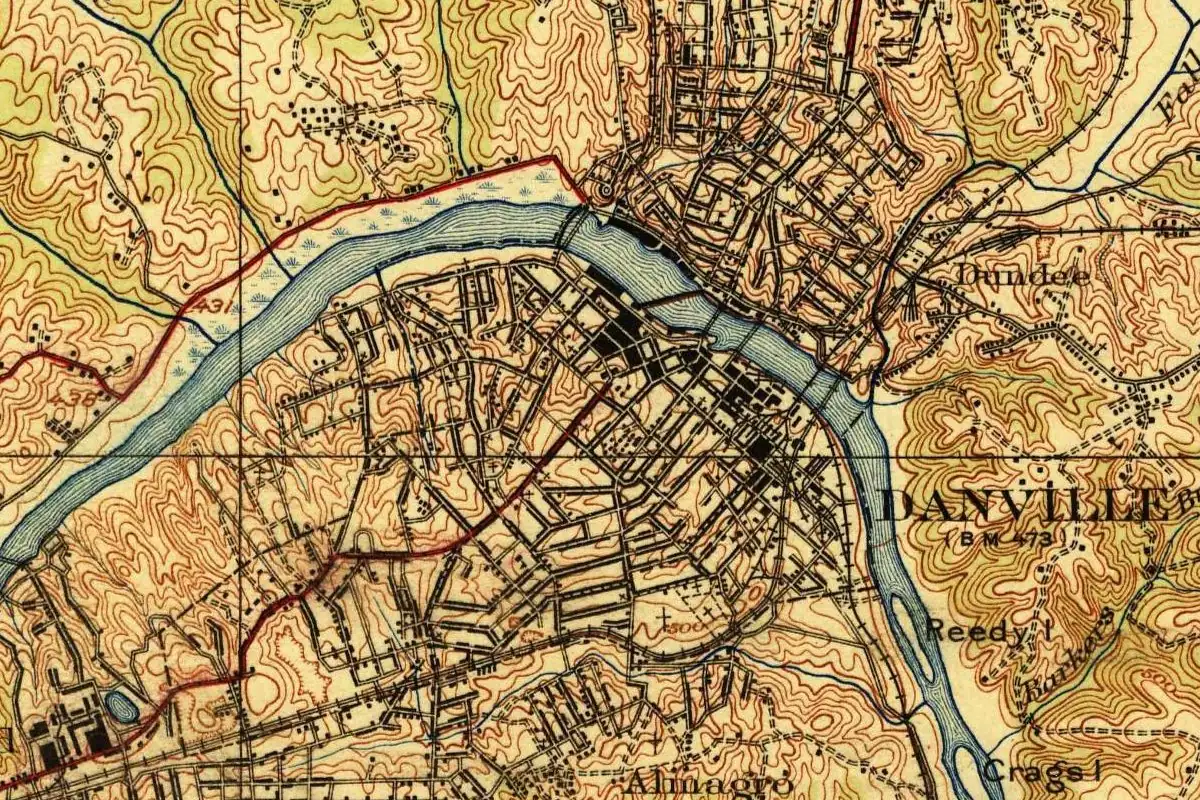
The other city from that same evening is Petersburg, at the falls of the Appomattox. Bassett’s note says it “took its name from a local inhabitant,” and Gannett names him: Peter Jones. Howe adds that Jones was “an old friend and fellow-traveller” of Byrd’s and went along on that 1733 trip. So you could say Richmond got a borrowed English view and Petersburg got a friend’s first name, both on the same day. Byrd left his mark on another Virginia city’s name, too: on his 1728 surveying trip, his party named the river that Danville sits on.
Sources & further reading
- John Spencer Bassett, ed., The Writings of “Colonel William Byrd, of Westover in Virginia, Esqr.” (1901), p. 292. Byrd’s entry for September 19, 1733, with “to be called Richmond” and “Citys in the Air,” and Bassett’s footnote on the resemblance to Richmond near London and the 1737 lot sale.
- William Waller Hening, The Statutes at Large, vol. 5, pp. 191–192. The May 1742 act establishing the town of Richmond on Byrd’s land at the falls of the James.
- Henry Gannett, The Origin of Certain Place Names in the United States (USGS, 1905), p. 262. Named for its resemblance to Richmond in Surrey, England. Also gives Peter Jones as the namesake of Petersburg.
- Henry Howe, Historical Collections of Virginia (1845), pp. 243 and 304. Peter Jones as Byrd’s friend and fellow traveler in 1733 (p. 243); the May 1742 act, the old name Byrd’s Warehouse, and Byrd’s death in 1744 (p. 304).
- GNIS feature 1499957 (U.S. Geological Survey). The federal record for Richmond, capital of the Commonwealth of Virginia.
Spot something wrong, or know more? Tell us here. You can also email us or use our contact page. Corrections are noted here with their date, never made silently.