Orem, Utah: How Provo Bench Got a Railroad Man's Name
Walter C. Orem, president of the Salt Lake and Utah Railroad, is the man behind the name. His electric line, known locally as the "Orem Line," was built to reach the fruit farms of Provo Bench, and an Orem Townsite Co. was at work there by 1914. The town was incorporated in 1919.
A railroad built for the fruit on the bench
Orem, Utah, grew up on the fruit land called Provo Bench and took its name from Walter C. Orem, president of the electric railroad built to reach it. He wasn’t a pioneer farmer or a church leader. He was a Salt Lake City mining man who put his money into an interurban line, and the people on the bench ended up with his surname on their town.
Start with the trains. In January 1914 the Electric Railway Journal, a trade magazine, reported that service on the new Salt Lake & Utah Railroad between Salt Lake City and Provo was about to begin. “The new line is known locally as the ‘Orem Line,’” it said, because W. C. Orem and F. M. Orem were “its chief promoters.” The same short article explains why the tracks went where they did. The line’s steepest grade was built “to reach a very thickly populated, intensive fruit-growing tract on Provo Bench, near Provo.”
So before there was a Town of Orem, there was an Orem Line, and it was aimed squarely at the orchards on the bench above Provo.
Who Walter C. Orem was
A 1919 history of Utah, Utah Since Statehood, gives him a full biography. Walter Claude Orem was born May 23, 1873, in Ray County, Missouri. His parents moved the family to Salt Lake City when he was 17, and he worked seven years as a traveling dry goods salesman before going into mining. He managed the Red Wing mine at Bingham and the York properties, and he helped organize the Utah Apex Mining Company.
By 1919 he was president and general manager of the Salt Lake and Utah Electric Railroad, which the book says was “commonly known as the ‘Orem Line.’” The biography calls it the work he probably took the greatest pride in. The odd part is that the same biography, printed the year his namesake town was incorporated, doesn’t mention the town at all.
The name arrives before the town
It’s easy to assume the Orem name dates from 1919, but you can find it on the bench earlier than that. In December 1914 the Municipal Journal noted that “The Orem Townsite Co.” was looking into a water works company to serve residents “of Provo bench and Lindon” with spring water from Provo Canyon.
Water is what finally turned the place into a town. When Orem printed its revised ordinances in 1923, the book opened with a short history of the town, and its first lines put Orem right where the railroad journal had:
“The Town of Orem is located on what is commonly known as Provo Bench.”
The sketch goes on to say that a reliable supply of drinking water was “the principal reason that the town was incorporated.” In the spring of 1919, on a petition signed by 80 percent of the people, the Utah County commissioners created the town. A biography of its first mayor in Utah Since Statehood adds that the incorporation papers were received May 5, 1919, and that Lawrence Snow, a storekeeper on the Provo bench, chaired the first board of trustees. Right after that, voters approved a $110,000 bond for the water system.
Who says the name honors him
This is the part to read carefully. The 1914 to 1923 sources quoted here never spell out, in so many words, that the town was named for Walter C. Orem. They show his family’s name on the railroad, on a townsite company working the bench, and then on the town itself.
The plain statement comes later, from the state. In 2019 the Utah Legislature passed a concurrent resolution for Orem’s 100th anniversary, and it opens this way: Orem City “was incorporated on May 5, 1919, and named after Walter C. Orem, President of the Salt Lake and Utah Railroad.”
If you go looking for who suggested the name, or whether anyone voted on it, these sources don’t say. The version they do support is simple. A fruit district known by its location, a bench near Provo, took the surname of the man whose railroad was built to haul its fruit, and the older name stuck around as the way people described where the town sat.
Quick answers
Who was Orem, Utah, named after?
Walter C. Orem, president of the Salt Lake and Utah Railroad. That’s how the Utah Legislature’s 2019 centennial resolution puts it.
What was Orem called before it was a town?
The area was commonly known as Provo Bench. The town’s own 1923 ordinance book says Orem sits on it, and a 1914 trade journal calls it a fruit-growing tract.
What was the “Orem Line”?
The local nickname for the Salt Lake & Utah Railroad, an electric line between Salt Lake City and Provo. W. C. Orem and F. M. Orem were its chief promoters in 1914.
When did Orem become a town?
In the spring of 1919, when Utah County’s commissioners created it on a petition. The incorporation papers were received May 5, 1919.
Key dates
- 1873Walter C. Orem is born on May 23 in Ray County, Missouri.
- 1914A trade journal says the new Salt Lake & Utah Railroad is known locally as the "Orem Line" and was graded to reach a fruit tract on Provo Bench.
- 1914December: the Orem Townsite Co. looks into a water company for residents of Provo Bench and Lindon.
- 1919Spring: county commissioners create the Town of Orem on a petition; the incorporation papers arrive May 5.
- 1923The town prints its revised ordinances, opening with a short history that places Orem on Provo Bench.
- 2019The Utah Legislature marks Orem's 100th anniversary and says the city was named after Walter C. Orem.
Getting there
Open Orem in Google Maps
Opens in a new tab. The pin is the center of Orem in the USGS place-name record.
The closest airports, Amtrak stations and intercity bus stops, measured in a straight line from the center of Orem.
Airports
- Provo Municipal (PVU) 6 mi 9 km
- Salt Lake City International (SLC) 37 mi 60 km
Amtrak trains
- Provo station (PRO) 5 mi 8 km
- Salt Lake City station (SLC) 34 mi 55 km
Intercity buses
- Salt Lake Express Provo/Orem (Exit 263) 5 mi 9 km
- Greyhound Provo Intermodal Hub 5 mi 9 km
Distances are as the crow flies, not by road. We don't list schedules or fares because they change; check with the airline, Amtrak or the bus company before you go. Official data (FAA commercial service airports (2025), FAA airport locations, Amtrak stations and Intercity Bus Atlas) from the FAA and the U.S. Bureau of Transportation Statistics, checked Nov 13, 2026.
Sponsored
Staying in Orem?
Compare hotels in Orem, Utah, on Expedia.
See hotels in OremWe may earn a commission if you buy through this link. It never changes what we write. Read our affiliate disclosure
Historical Sources & References
- Electric Railway Journal, January 10, 1914, p. 87. The Salt Lake & Utah Railroad “known locally as the ‘Orem Line,’” W. C. Orem and F. M. Orem as “its chief promoters,” and the grade built “to reach a very thickly populated, intensive fruit-growing tract on Provo Bench, near Provo.”
- Municipal Journal, December 24, 1914, p. 946. “The Orem Townsite Co.” studying a water works company for residents of Provo bench and Lindon.
- Utah Since Statehood, vol. 2 (1919), pp. 708 and 711. The biography of Walter Claude Orem: born May 23, 1873, in Ray County, Missouri; move to Salt Lake City at 17; mining career; president and general manager of the Salt Lake and Utah Electric Railroad, “commonly known as the ‘Orem Line.’”
- Utah Since Statehood, vol. 3 (1919), p. 307. J. Lawrence Snow’s store on the Provo bench, his role in organizing the town, and the incorporation papers “received May 5, 1919.”
- The Revised Ordinances of the Town of Orem (1923), “Historical Sketch”. The quotation about Provo Bench, water as the main reason for incorporating, the spring 1919 petition of 80 percent of the people, the first officers and the $110,000 bond.
- Utah Legislature, S.C.R. 12 (2019). The statement that Orem City was “incorporated on May 5, 1919, and named after Walter C. Orem, President of the Salt Lake and Utah Railroad.”
- GNIS feature 1444110 (U.S. Geological Survey). Orem’s name record, filed under Utah County.
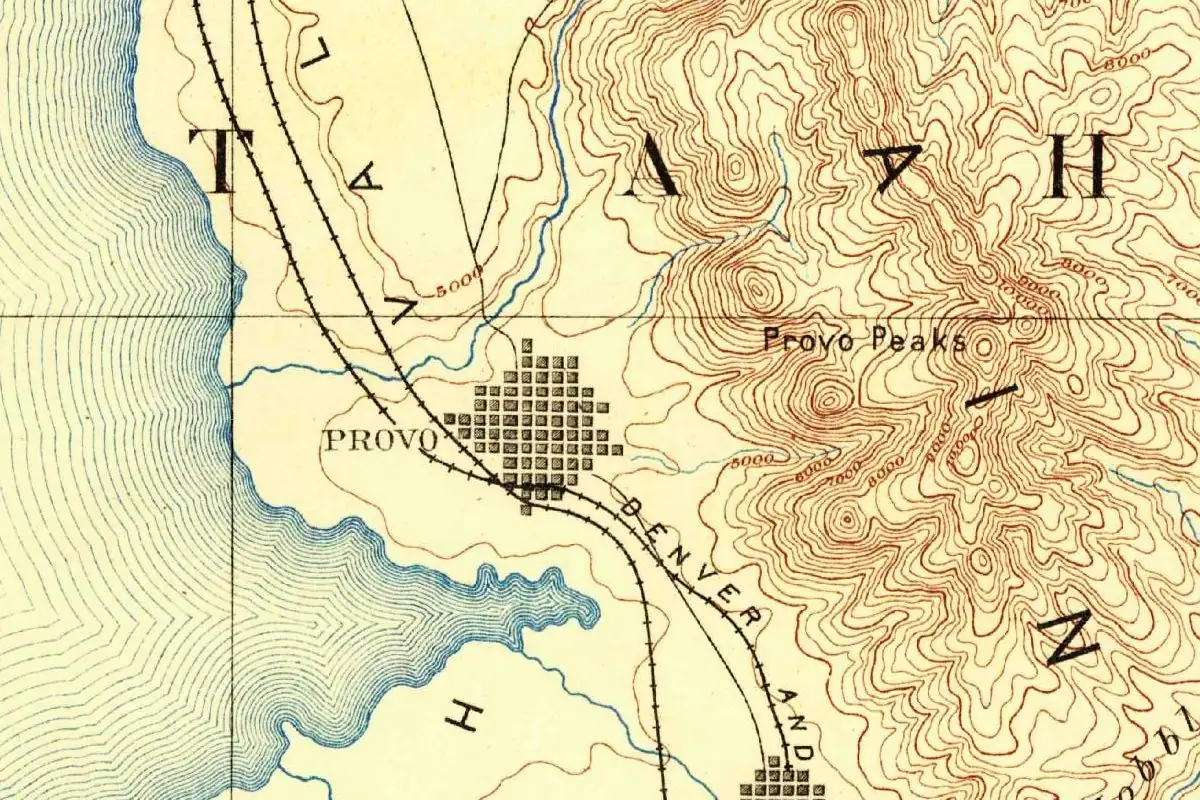
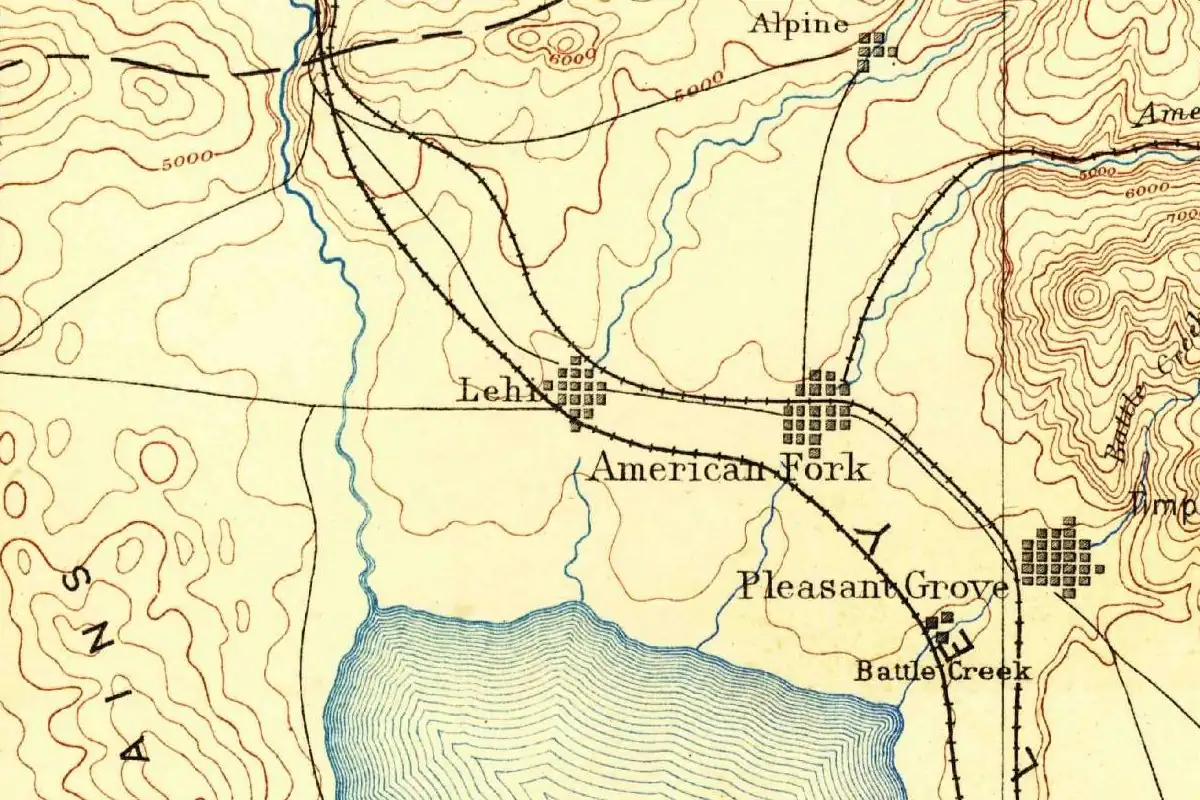
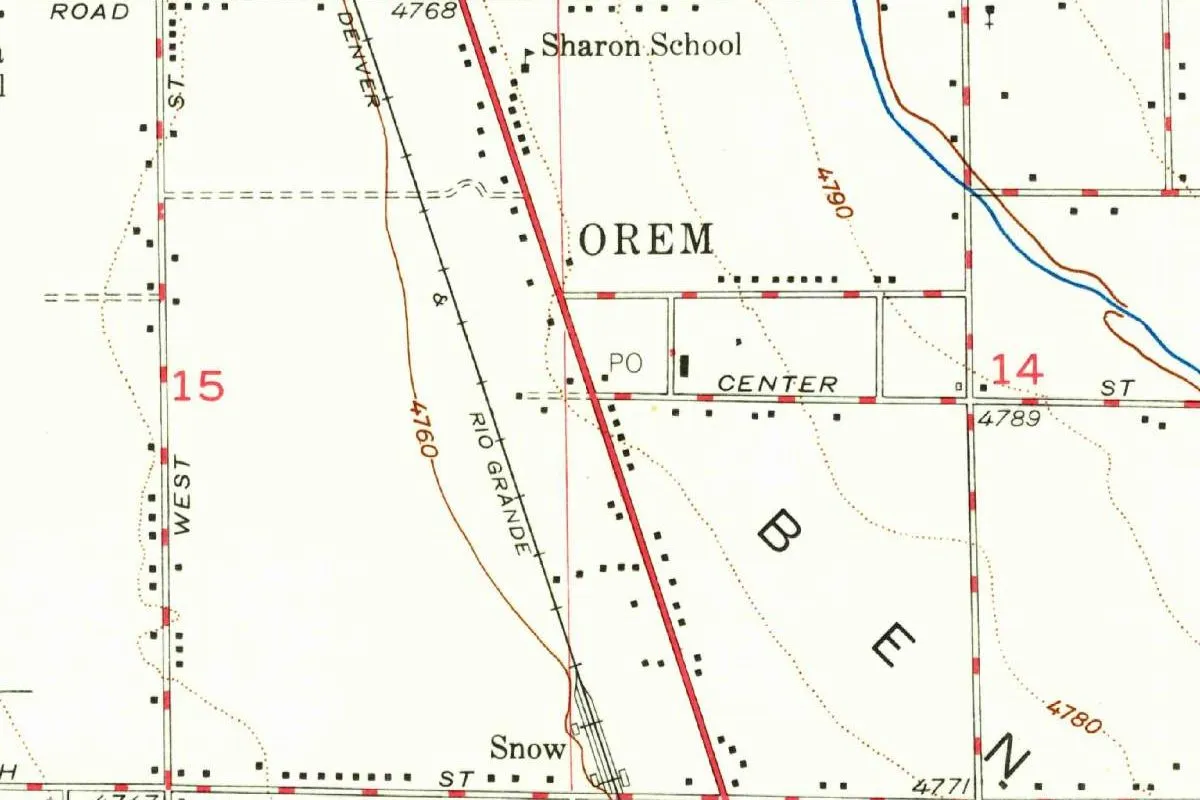
- U.S. Geological Survey, Orem sheet (1948). The 1948 sheet behind the map image.
Spot something wrong, or know more? Tell us here. You can also email us or use our contact page. Corrections are noted here with their date, never made silently.