Green River, Wyoming: The Town the Union Pacific Snubbed
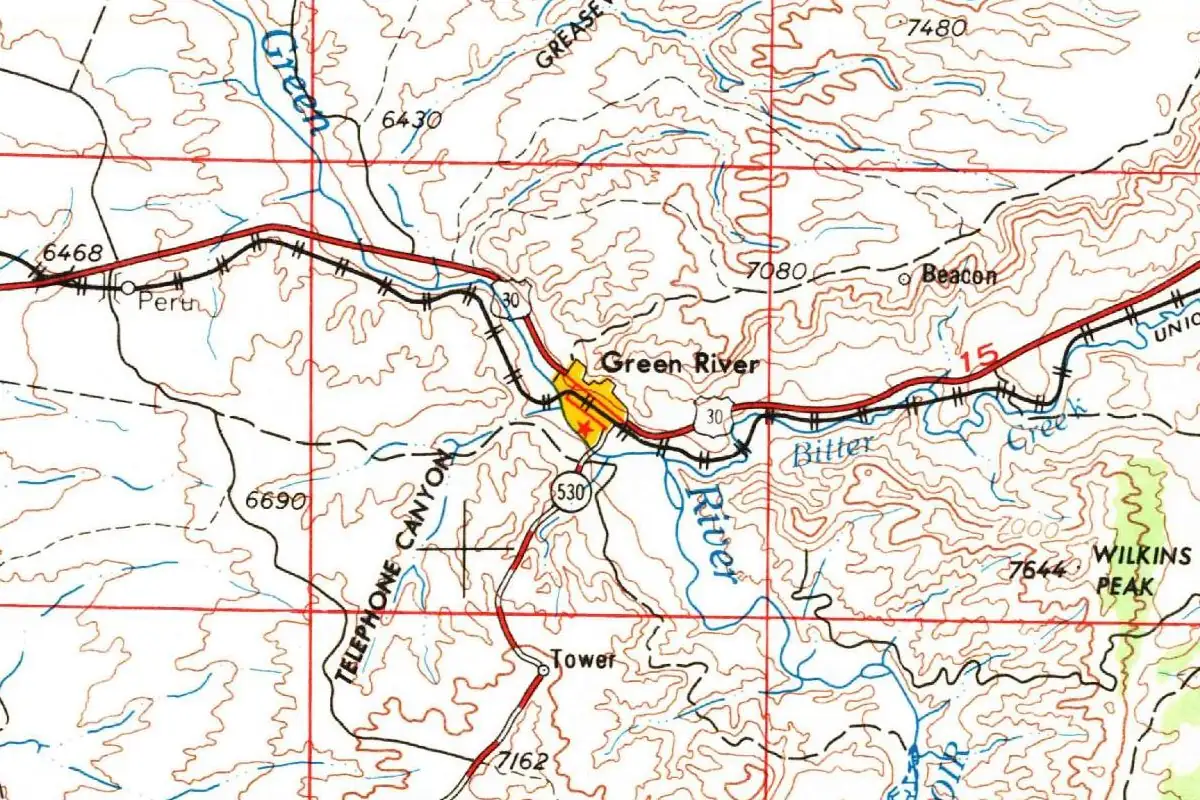
Green River, Wyoming, is named for the river it sits on, and it was already a town when the Union Pacific showed up in 1868, which annoyed the railroad. So the railroad went 12 miles (19 km) west and built a town of its own.
A town before the tracks
The city says it plainly: Green River was “named for the swift flowing greenish river that courses through town.” The townsite came first. According to the city’s history of the railroad, three businessmen, H. M. Hook, James Moore and S. I. Field, got land there from the Overland Mail Company, which held it under an 1862 grant from Congress, so it wasn’t part of the Union Pacific’s own huge grant. They knew the tracks were coming.
By the summer of 1868 the place had a newspaper, the Frontier Index, and on August 6 it held its first city election. The Index counted more than 2,000 people by September. I. S. Bartlett’s 1918 History of Wyoming says Green River was founded in April of that year and that its main street “was once the famous Oregon Trail.”
The railroad goes elsewhere
The Union Pacific’s tracks reached Green River on October 1, 1868. The railroad had meant to make it a division point, the city says, but “the Union Pacific found that a town had already been established, much to their displeasure.” So it laid out a new town, Bryan, on Black’s Fork 12 miles (19 km) west, and put the division there. Green River shrank to 101 people.
The town still had its river, though. On May 24, 1869, John Wesley Powell and his small party set out from Green River to explore the canyons of the Colorado, the 1915 guidebook says.
Then the water quit. In the summer of 1872 Black’s Fork dried up, and the railroad had to move its switching point back to Green River, with a roundhouse, depot and machine shops. A 1915 guidebook from the U.S. Geological Survey calls Green River “a division headquarters of the Union Pacific Railroad,” and says Bryan, once “the home of 3,000 people” during construction, was by then “little more than a name in the desert.”
Why is the river green?
Nobody has settled that one, and you’ll find at least four answers. Henry Gannett, writing for the Geological Survey in 1905, said the river was “so called from the green shale through which it flows.” John C. Frémont thought it was the look of the broad river with its green wooded islands, set against the dry plains. Elliott Coues wrote that the name translates the Spanish Río Verde, given by Spaniards who reached it around 1818 and “were struck by the color of its water.” And the historians H. H. Bancroft and C. G. Coutant said it was named for one of William Ashley’s fur trappers.
Dee Linford, who collected all of these for the Annals of Wyoming in 1943, quotes the historian Hiram Chittenden’s verdict: “Its origin is uncertain.” Chittenden pointed out that the name was already in use before Ashley reached the country. Before that, the river had other names, among them the Crow name Frémont wrote as “Seeds-ke-dee-agie,” said to mean Prairie Hen River.
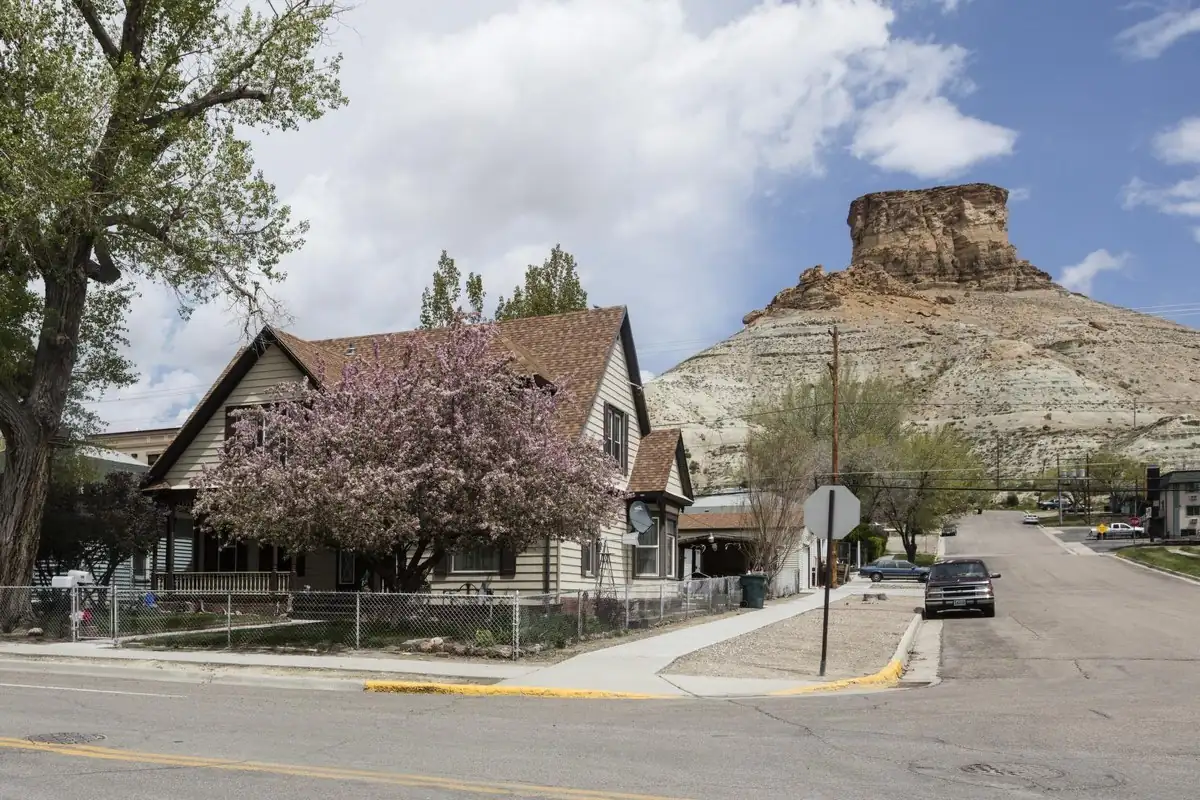
So the town’s name is easy. The river’s is anybody’s guess, and if you look at the pale green bluffs above town, you can see why the shale idea makes sense.
Quick answers
Why is Green River, Wyoming, called Green River?
It’s named for the river. The city says it took the name of “the swift flowing greenish river that courses through town.”
Did the Union Pacific found Green River?
No. The town was already there when the tracks arrived on October 1, 1868. The railroad built its division point at Bryan instead, then moved back to Green River in 1872 when Black’s Fork dried up.
Why is the Green River called green?
No one knows for sure. Henry Gannett of the Geological Survey pointed to green shale, Frémont to the green islands, Coues to the Spanish Río Verde and the color of the water, and Bancroft and Coutant to one of William Ashley’s men. Chittenden said its origin “is uncertain.”
Key dates
- 1868Green River holds its first city election on August 6, and the Union Pacific's tracks arrive on October 1.
- 1869John Wesley Powell starts down the river from Green River on May 24.
- 1872Black's Fork dries up, and the railroad moves its switching point back from Bryan to Green River.
Getting there
Open Green River in Google Maps
Opens in a new tab. The pin is the center of Green River in the USGS place-name record.
The closest airports, Amtrak stations and intercity bus stops, measured in a straight line from the center of Green River.
Airports
- Southwest Wyoming Regional (RKS) Rock Springs 21 mi 34 km
- Vernal Regional (VEL) 76 mi 122 km
- Salt Lake City International (SLC) 140 mi 226 km
Intercity buses
- Greyhound Rock Springs WY (RSY) 11 mi 18 km
Distances are as the crow flies, not by road. We don't list schedules or fares because they change; check with the airline, Amtrak or the bus company before you go. Official data (FAA commercial service airports (2025), FAA airport locations, Amtrak stations and Intercity Bus Atlas) from the FAA and the U.S. Bureau of Transportation Statistics, checked Nov 6, 2026.
Sponsored
Staying in Green River?
Compare hotels in Green River, Wyoming, on Expedia.
See hotels in Green RiverWe may earn a commission if you buy through this link. It never changes what we write. Read our affiliate disclosure
Historical Sources & References
- City of Green River, “The Railroad Comes to Green River”. Hook, Moore and Field and the Overland Mail land; the Frontier Index, the election of August 6, 1868, and the 2,000 people; the tracks on October 1, 1868; the railroad’s “displeasure,” Bryan 12 miles (19 km) west and the drop to 101 people; Black’s Fork drying up in 1872.
- City of Green River, “Our History”. “Named for the swift flowing greenish river that courses through town.”
- Willis T. Lee and others, Guidebook of the Western United States, Part B: The Overland Route (1915), pp. 73 and 76. Green River as “a division headquarters of the Union Pacific Railroad,” Powell’s start on May 24, 1869, the light green lower bluffs, and Bryan, “little more than a name in the desert.”
- I. S. Bartlett, ed., History of Wyoming, vol. 1 (1918), p. 579. Founded in April 1868; the main street “was once the famous Oregon Trail.”
- Dee Linford, “Wyoming Stream Names,” Annals of Wyoming 15 (1943), pp. 255-257. The river’s names and the theories, quoting Frémont, Coues and Chittenden (“Its origin is uncertain”), the Bancroft and Coutant version about one of Ashley’s men, and the Crow name “Seeds-ke-dee-agie.”
- Henry Gannett, The Origin of Certain Place Names in the United States (1905), p. 143. The river “so called from the green shale through which it flows.”
- GNIS feature 1589126 (U.S. Geological Survey). The official place-name record and map point for Green River, in Sweetwater County.
Spot something wrong, or know more? Tell us here. You can also email us or use our contact page. Corrections are noted here with their date, never made silently.