Why Is It Called the Empire State Building?
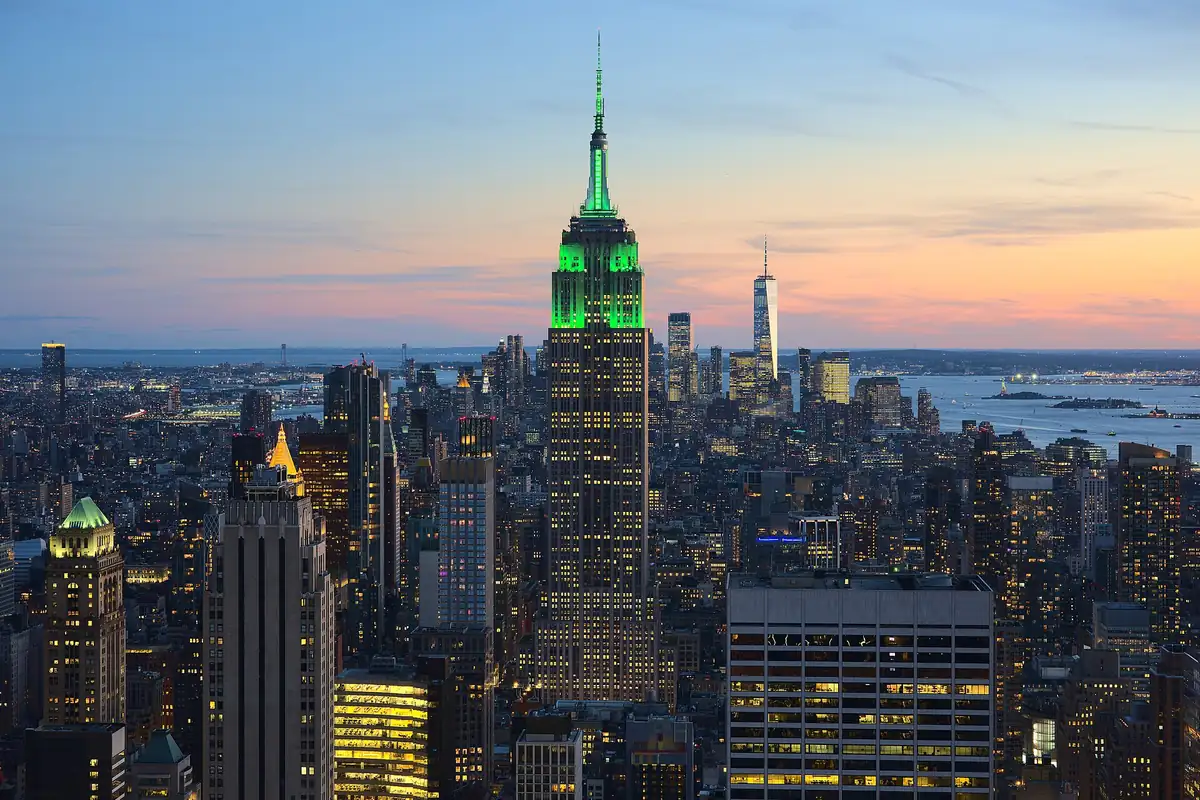
The Empire State Building in New York City takes its name from New York’s nickname, “the Empire State.” The nickname existed long before the skyscraper opened in 1931, but historians still haven’t proved who first gave it to New York.
New York was the Empire State before the building
Unlike the Chrysler Building, named for Walter Chrysler and his company according to New York City’s 1981 landmark report, the Empire State Building took its name from New York State.
New York City’s Landmarks Preservation Commission documented that part of the story in its 1981 historical report: the building was named for New York State, which Alfred E. Smith had governed four times. A U.S. State Department educational guide explains that the building’s name comes from the state’s nickname, “the Empire State.”
You might expect a skyscraper with such a grand name to have been named after an individual. Instead, it borrowed a nickname that New Yorkers had already used for generations.
Historian Milton M. Klein traced the old nickname in a study published in the Long Island Historical Journal. He identified an 1849 book called Empire State Book of Practical Forms, an 1888 state history titled The Empire State, and the Empire State Express train introduced in 1891. Those examples show that the words were in public use decades before the building took shape.
They don’t settle the harder question: where did the nickname originally come from?
Did George Washington give New York its nickname?
The best-known explanation leads to George Washington. In an address dated April 10, 1785, he thanked New York City’s leaders and expressed hopes that the state would prosper after the Revolutionary War.
He called New York the “Seat of the Empire.” A Library of Congress transcription of the April 10, 1785 address preserves the wording:
“And that, your State (at present the Seat of the Empire) may set such examples of wisdom and liberality…”
— George Washington, 1785 address to New York City’s municipal officials, Library of Congress Varick Transcripts. The editor supplied the date heading.
But “Seat of the Empire” isn’t the exact phrase “Empire State.” Washington didn’t use those two words together in his address.
Klein warned against treating that connection as an established naming act. He couldn’t find satisfactory proof of who first coined “Empire State,” and he questioned another unsupported claim that the nickname was already in use in 1819.
New York’s population, commerce and influence help explain why people embraced the image of an “empire.” They don’t tell us who said the nickname first.
A skyscraper named for a state, not its investors
The building’s story moves forward to the late 1920s. Financier John J. Raskob and his partners organized a company called Empire State, Inc., in 1929. They put former four-term New York governor Al Smith in charge.
Their planned tower was a commercial venture, not a monument to Raskob or Smith. The city’s landmark report specifically contrasts it with earlier buildings named for individual businessmen and corporations.
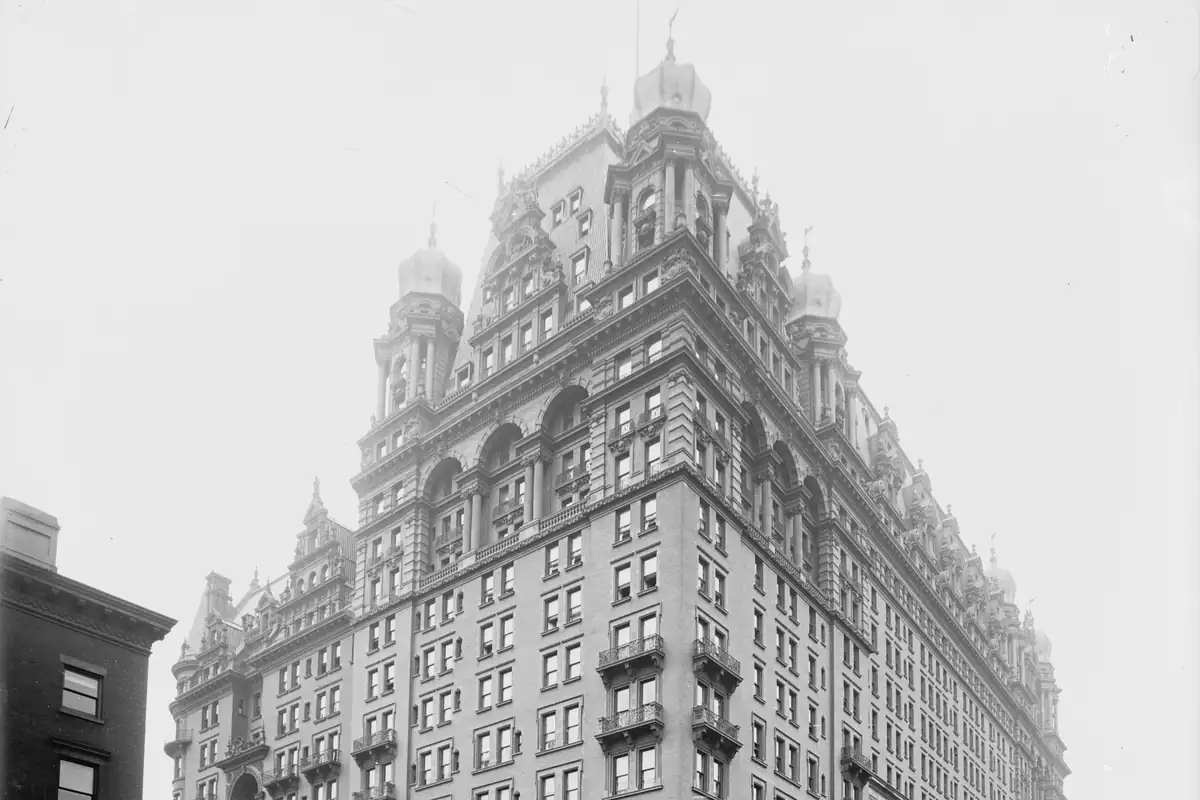
The developers chose a site at Fifth Avenue and 34th Street that had housed the original Waldorf-Astoria Hotel. The hotel’s name belonged to an earlier building on the property, not to an older version of the Empire State Building.
That’s the distinction worth remembering: the skyscraper got its name from New York State. The Waldorf-Astoria supplied the site, not the name.
From a former hotel to 102 stories
Construction began on March 17, 1930. The architectural firm Shreve, Lamb & Harmon designed the tower, with William F. Lamb identified by New York City’s landmarks commission as its chief designer. Starrett Bros. & Eken carried out the building work.
The skyscraper officially opened on May 1, 1931. President Herbert Hoover sent Al Smith a congratulatory message, and the opening celebration included the building’s lights being switched on from Washington, D.C.
The tower became famous for its height. Its top occupied level stands approximately 1,250 feet (380 meters) above the street, and the modern antenna takes the total to 1,454 feet (443 meters). The familiar count is 102 floors, with an additional non-public 103rd level.
The Great Depression made the early years difficult. Empty offices inspired a joke that turned its grand name into the “Empty State Building.” That was a nickname, never an earlier official name.
New York City’s Landmarks Preservation Commission designated the Empire State Building as a landmark in 1981.
Why the older nickname matters
If you’re looking up at the Empire State Building today, it’s easy to think the tower gave New York its nickname. History runs the other way.
New York was already the Empire State. The building borrowed that identity and carried it into the skyline. We know why the tower has its name; the person who invented the much older state nickname remains a historical mystery.
Quick answers
Why is it called the Empire State Building?
New York State. A 1981 report by New York City’s Landmarks Preservation Commission says the building was named for the state, of which Al Smith had been governor four times. The U.S. State Department explains the nickname connection: New York is “the Empire State.”
Why is New York called the Empire State?
New York’s “Empire State” nickname suggests the state’s economic and political importance, but historians haven’t established who first used those exact words. George Washington referred to New York as the “Seat of the Empire” in 1785, not “Empire State.” The familiar nickname was in public use long before the skyscraper opened.
When was the Empire State Building built?
Construction began on March 17, 1930, on the site previously occupied by the Waldorf-Astoria Hotel at Fifth Avenue and 34th Street. The Empire State Building opened on May 1, 1931, as the Great Depression was unfolding.
How tall is the Empire State Building, and how many floors does it have?
The Empire State Building is generally described as having 102 floors. Its occupied top level is about 1,250 feet (380 meters) above the street, while the antenna brings the overall height to approximately 1,454 feet (443 meters). An additional 103rd level exists but is not part of the public observation-deck experience.
Key dates
- 1785George Washington calls New York the “Seat of the Empire,” not the “Empire State.”
- 1849An Empire State Book of Practical Forms appears in a historian's bibliography.
- 1929Raskob and investors create Empire State, Inc.; former New York governor Al Smith becomes president.
- 1930Construction begins March 17.
- 1931The Empire State Building opens May 1.
- 1981New York City's Landmarks Preservation Commission designates the Empire State Building as a landmark.
Getting there
Open Empire State Building in Google Maps
Opens in a new tab. The pin is an approximate point for Empire State Building.
The closest airports, Amtrak stations and intercity bus stops, measured in a straight line from the center of Empire State Building.
Airports
- Laguardia (LGA) New York 6 mi 10 km
- Newark Liberty International (EWR) 10 mi 17 km
Amtrak trains
- New York station (NYP) under 1 mi 1 km
- Newark station (NWK) 9 mi 15 km
Intercity buses
- ShortLine Hudson 5th Ave & W 34th St under 1 mi 0.1 km
- OurBus New York, NY (Madison Avenue between East 33rd and 34th Street, in front of Shahs Halal Food.) under 1 mi 0.2 km
- Greyhound New York West 36 St under 1 mi 0.6 km
Distances are as the crow flies, not by road. We don't list schedules or fares because they change; check with the airline, Amtrak or the bus company before you go. Official data (FAA commercial service airports (2025), FAA airport locations, Amtrak stations and Intercity Bus Atlas) from the FAA and the U.S. Bureau of Transportation Statistics, checked Nov 12, 2026.
Sponsored
Planning a visit?
Compare hotels near Empire State Building on Expedia.
See hotels nearbyWe may earn a commission if you buy through this link. It never changes what we write. Read our affiliate disclosure
Sponsored
Want the spooky side of New York City?
The building's name has its story above. For ghost stories, US Ghost Adventures runs walking ghost tours in New York City.
See ghost tours in New York CityWe may earn a commission if you book through this link. It never changes what we write. Read our affiliate disclosure
Historical Sources & References
- Anthony W. Robins, New York City Landmarks Preservation Commission, Empire State Building Interior (1981), printed p. 5. Named for New York State; Al Smith’s role; Depression-era vacancies and the “Empty State Building” joke.
- Anthony W. Robins, New York City Landmarks Preservation Commission, Empire State Building Exterior (1981). Architecture and original Waldorf-Astoria site.
- Milton M. Klein, Long Island Historical Journal 13, no. 1 (Fall 2000), pp. 139–140. Uncertain origin of the older state nickname.
- George Washington, address to New York City’s mayor and aldermen, editorially dated April 10, 1785, Library of Congress, PDF p. 71. Contemporary phrase “Seat of the Empire,” not the exact nickname.
- Herbert Hoover, “Message on the Completion of the Empire State Building” (May 1, 1931). Primary opening-day historical statement.
- Empire State Building official history. Construction milestones, builders and 1931 opening.
- Empire State Building official facts. Current height and floor count.
- U.S. Department of State, American English, English on Tour, Week 3. States that the building’s name comes from New York State’s nickname.
- Library of Congress, Detroit Publishing Co., The Waldorf-Astoria, New York (c1900). Photograph of the original hotel that stood on the site before the skyscraper.
Spot something wrong, or know more? Tell us here. You can also email us or use our contact page. Corrections are noted here with their date, never made silently.