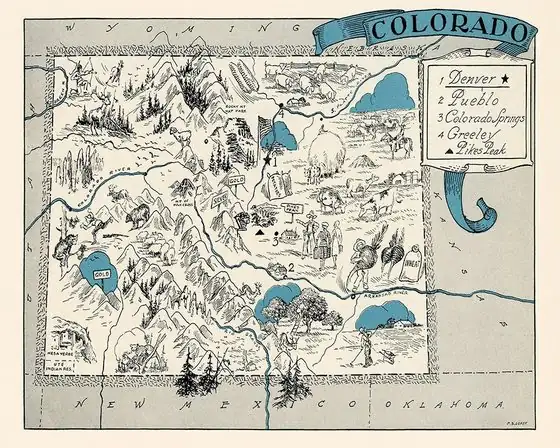
Boulder, Colorado: Named for Rocks, Founded as Boulder City
Boulder is named for boulders. Visit Boulder says the prospectors who formed the Boulder City Town Company on February 10, 1859, named it for the large number of boulders they found in nearby streams, and Henry Gannett's 1905 place-name guide credits the huge boulders of the county. It was first called Boulder City.
Rocks in the creek
Boulder, Colorado, is named for exactly what it sounds like: the big rocks that gold-rush prospectors found in the nearby streams in 1859. No hidden meaning, no forgotten founder. The name started out a word longer, too, as Boulder City.
Visit Boulder, the city’s visitors bureau, puts it in one sentence. On February 10, 1859, it says, a group of 60 prospectors “established the Boulder City Town Company, named for the large number of boulders they found in nearby streams.”
The town company of 1859
The prospectors had come the fall before. The Colorado Encyclopedia says Thomas Aikins and his party reached the mouth of Boulder Canyon in late 1858 and built log cabins just below it. On January 16, 1859, a group including Aikins’s son found gold along a fork of Boulder Creek, at the camp that became Gold Hill.
Less than a month later, the town company was in business. A Boulder County history published in Chicago in 1880 describes it in big, proud strokes. It says the organization “was effected” on the 10th of February, 1859, “within a month after the discovery of gold,” with 56 shareholders. You’ll see the number of founders counted differently depending on where you look: 56 shareholders in 1880, 60 prospectors for Visit Boulder, and Aikins, A. A. Brookfield and 53 other men in the Colorado Encyclopedia.
Their plan wasn’t small. The 1880 history says it covered 1,240 acres, divided into 337 blocks of 12 lots each, stretching two miles (3 km) along the creek from the mouth of the canyon. The surveyors hired to map the place that spring, G. W. Gregg and T. W. Fisher, were impressed. The book quotes their verdict, “Its location is extremely beautiful.” It was a fair description of a town site squeezed against the foothills. The money side went worse. The founders held their lots at $1,000 each, nobody bought them at that price, and the grand scheme collapsed to a single quarter-section, the book says.
Boulder City, as it was first called
That 1880 chapter opens with the detail that explains the title of this page:
“BOULDER CITY, as it was first called, now the town of Boulder, is the county seat, was the first settled, and is now the largest, town in the county.”
So by 1880, only 21 years in, the “City” was already history. The town company’s name had a word the town itself no longer used. The Colorado Encyclopedia says the town was incorporated in November 1871, and Visit Boulder says it was incorporated as the Town of Boulder, with just over 340 residents.
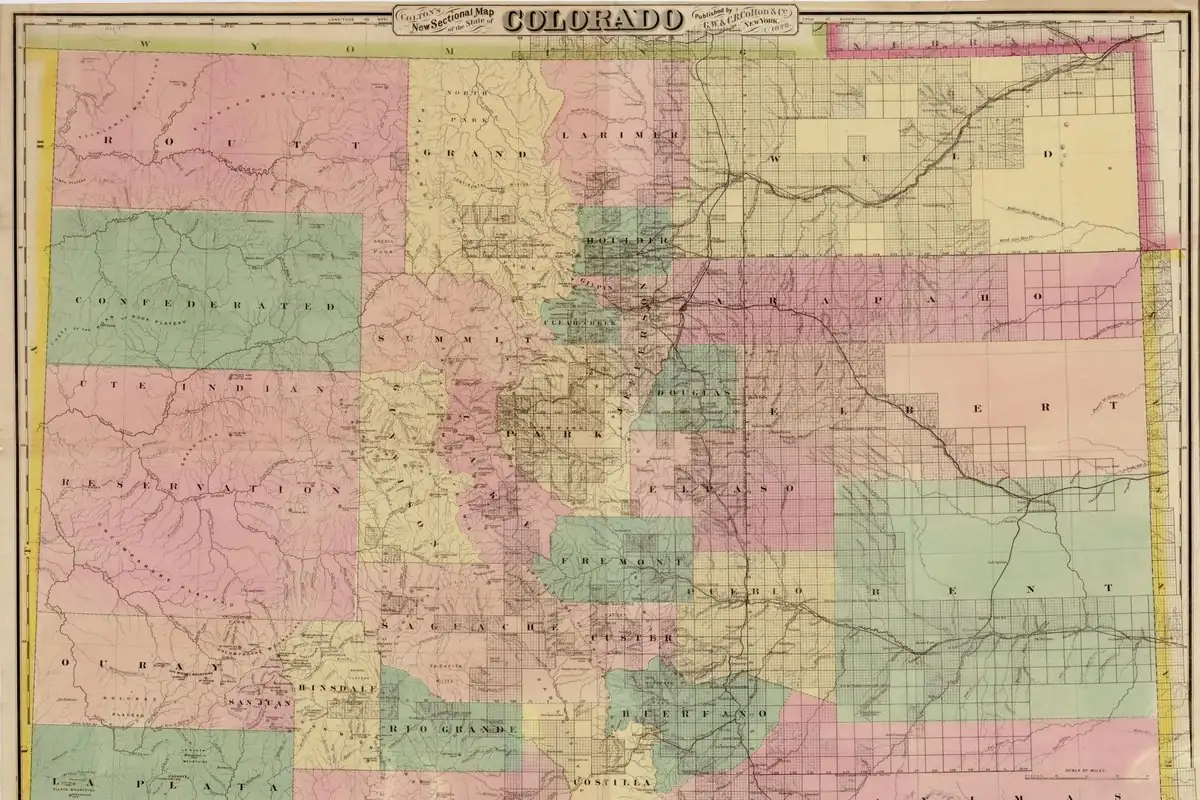
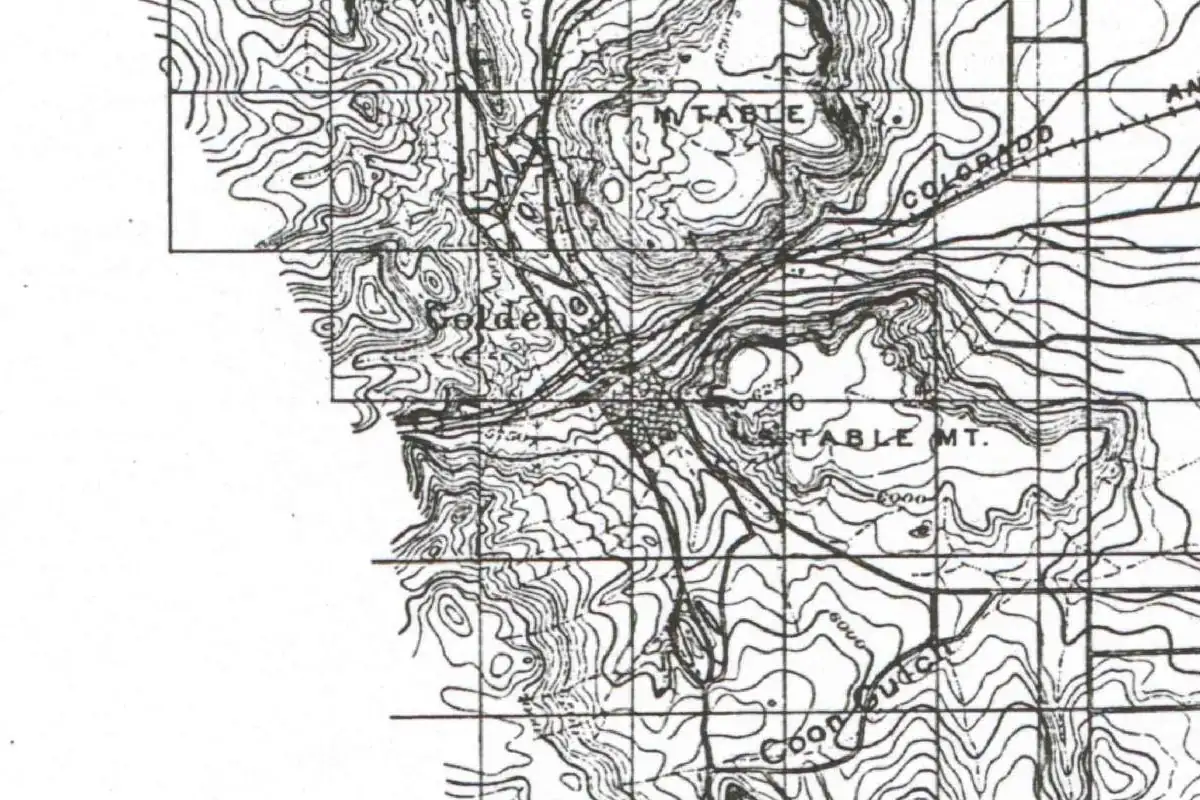
If you’re keeping score in Colorado, Boulder had company. Golden, another 1859 gold-rush town, was founded as Golden City, and a legislative act shortened its corporate name to Golden in 1872.
Whose boulders?
The two oldest explanations agree on the rocks, if not quite on where they sat. Visit Boulder says the boulders were in the nearby streams. Henry Gannett, compiling a national book of place-name origins for the government in 1905, took in more ground: the county, and the city in it, were “named from the huge boulders found in the county.”
There’s no rival story to weigh in the sources here: no person named Boulder, no word from another language. The only open question is whether the prospectors meant the rocks in Boulder Creek itself or the boulder-strewn country around it, and since the creek runs straight out of that country, it’s a small one.
The land wasn’t empty
The name is plain. The story underneath it is not. The Museum of Boulder’s timeline says the 1851 Treaty of Fort Laramie had set this area aside as Cheyenne and Arapaho territory. The Southern Arapaho, led by Niwot, often wintered in the Boulder Valley.
When Aikins’s party arrived in 1858, the Colorado Encyclopedia says, Niwot (“Left Hand”) let the prospectors stay for the winter as long as they promised to leave in the spring. Visit Boulder says plainly that the settlers broke that promise. The museum notes that Boulder’s 1871 incorporation came “in violation of the Treaty of Fort Laramie,” and that Niwot was among those killed at the Sand Creek Massacre in November 1864.
So the boulders got the name, and the people who’d been wintering among them got pushed out. Both things are part of how the town at the canyon’s mouth began.
Log houses on Pearl Street
The 1880 history paints the first year in a few lines. Until late in 1859 there wasn’t a foot of sawed lumber or a pane of glass in town. Seventy log houses went up “along Pearl street and around the public square,” with dirt floors. Christmas Eve brought the first dance, in Bill Barney’s hall, with 200 men and, the book counts, all 17 of the town’s ladies.
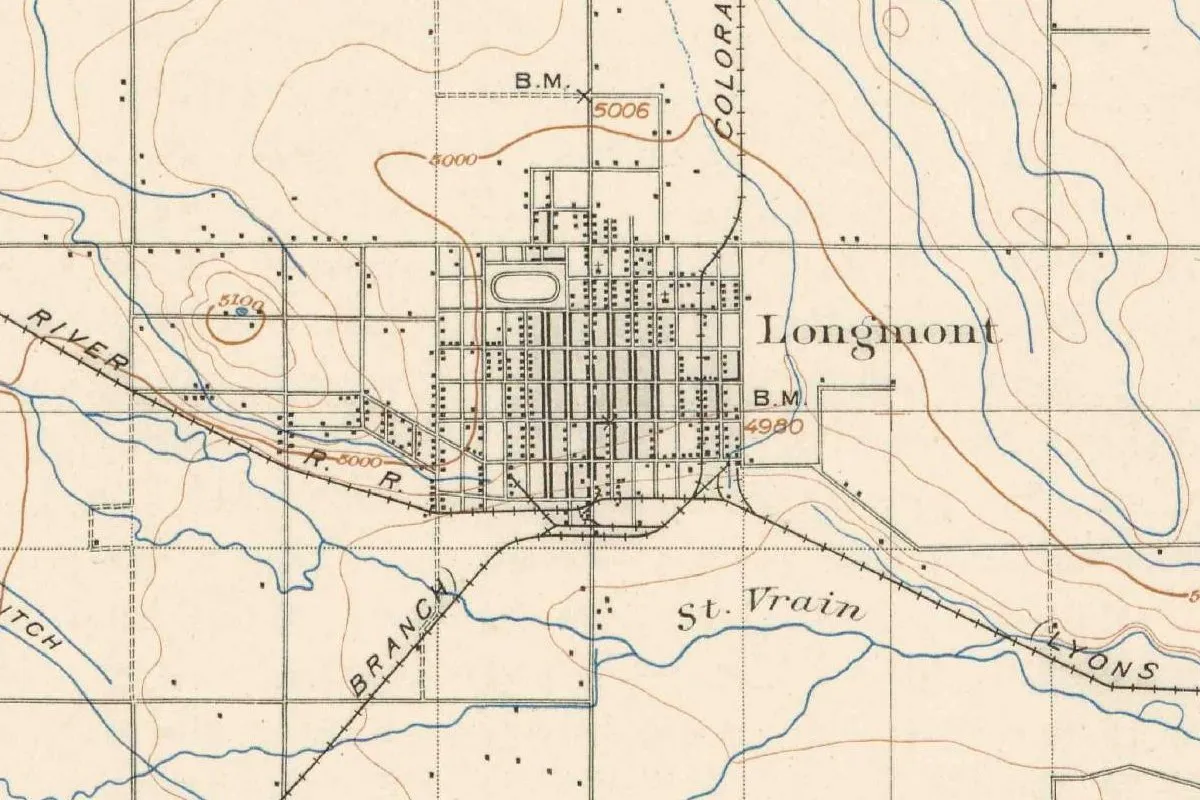
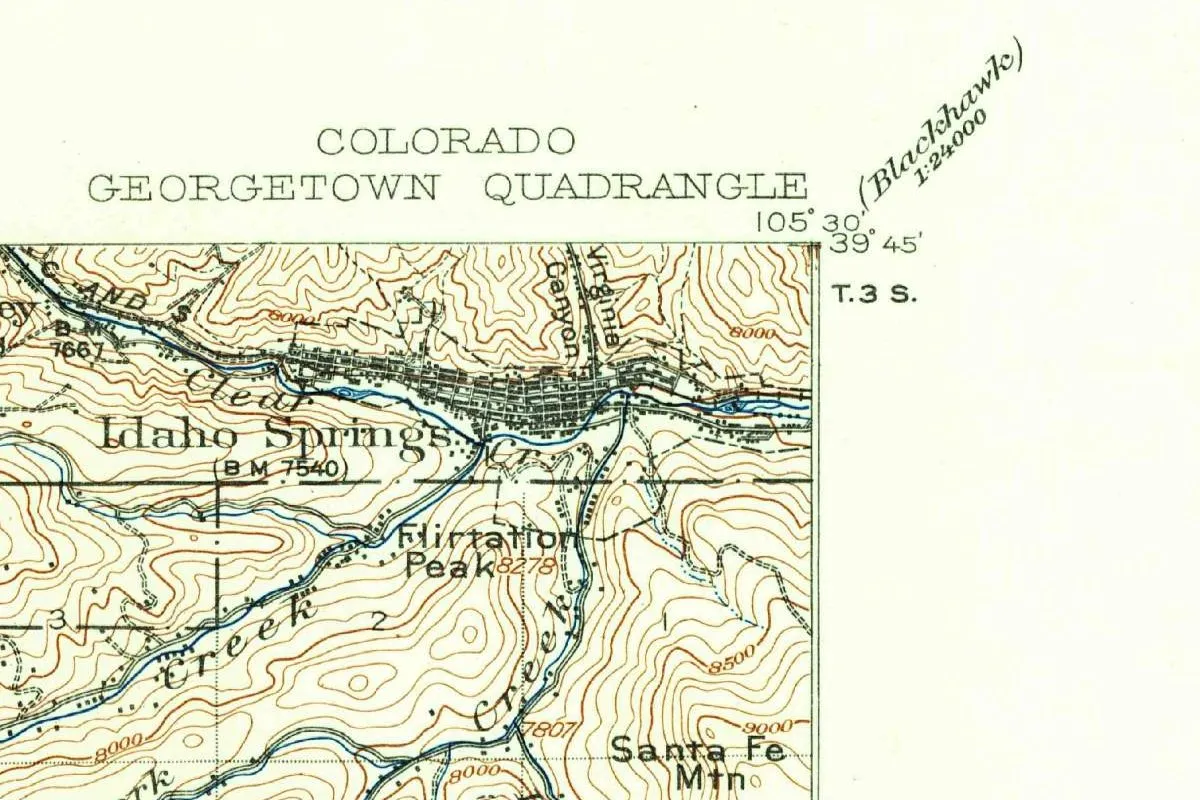
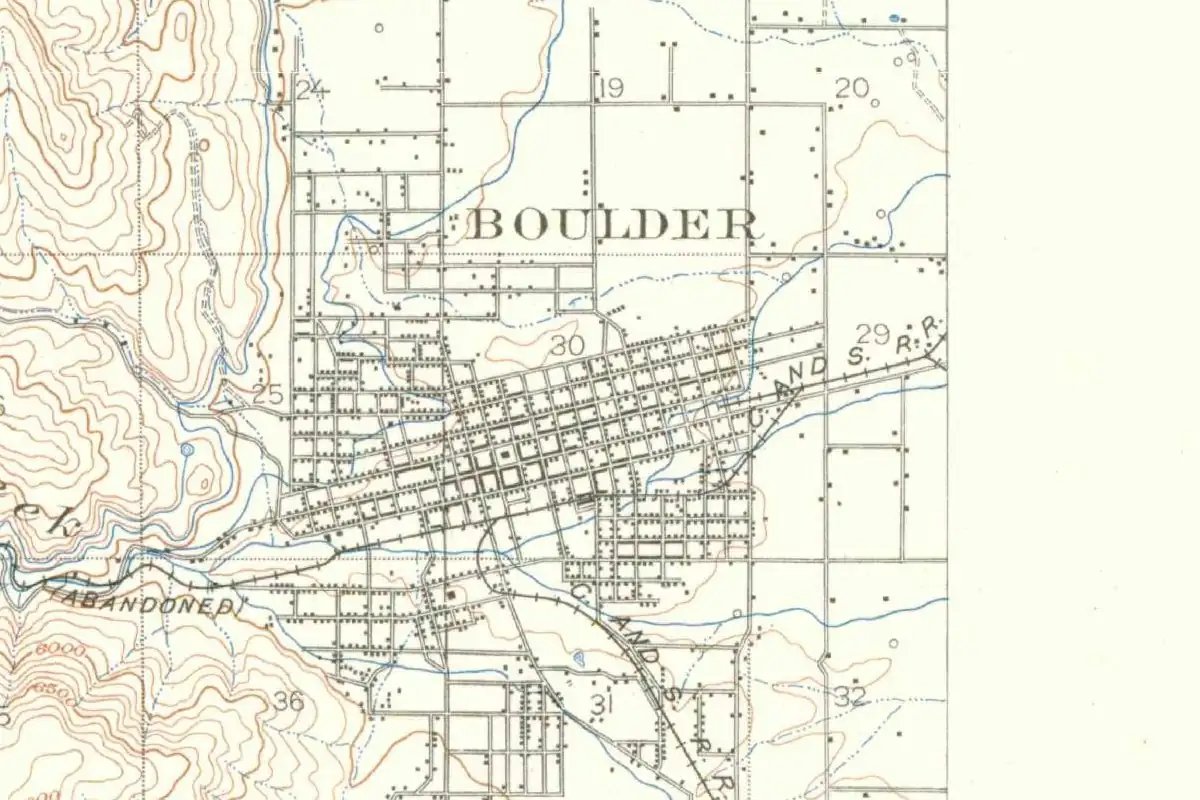
Look at the 1902 government map up top and you’ll find what came next: a neat grid on the plain where the creek leaves the hills, with the railroad heading east. Just up the road in the same county, Longmont filed its plat with the Boulder County clerk in 1872, so by then the county named for the rocks had more than one town to show for it.
The name never got fancier than the rocks it came from. In Colorado, Boulder City dropped its “City,” and kept the boulders.
Quick answers
Why is Boulder, Colorado, called Boulder?
Because of boulders. Visit Boulder says the 1859 town company was named for the large number of boulders the prospectors found in nearby streams, and Gannett’s 1905 guide says the same of the county’s huge boulders.
Was Boulder ever called Boulder City?
Yes. A Boulder County history from 1880 calls it “BOULDER CITY, as it was first called, now the town of Boulder.” The town company of 1859 was the Boulder City Town Company.
When was Boulder, Colorado, founded?
The Boulder City Town Company was organized on February 10, 1859. The town was incorporated in November 1871.
Key dates
- 1851The Treaty of Fort Laramie sets aside the area that becomes Boulder as Cheyenne and Arapaho territory.
- 1858In the fall, Thomas Aikins's party of prospectors camps at the mouth of Boulder Canyon. Niwot lets them stay the winter if they leave in spring.
- 1859On February 10, the Boulder City Town Company is organized, within a month of the first gold find in the hills to the west.
- 1864Niwot dies at the Sand Creek Massacre.
- 1871The town is incorporated in November as the Town of Boulder.
Things to do in Boulder, Colorado
Colorado Chautauqua
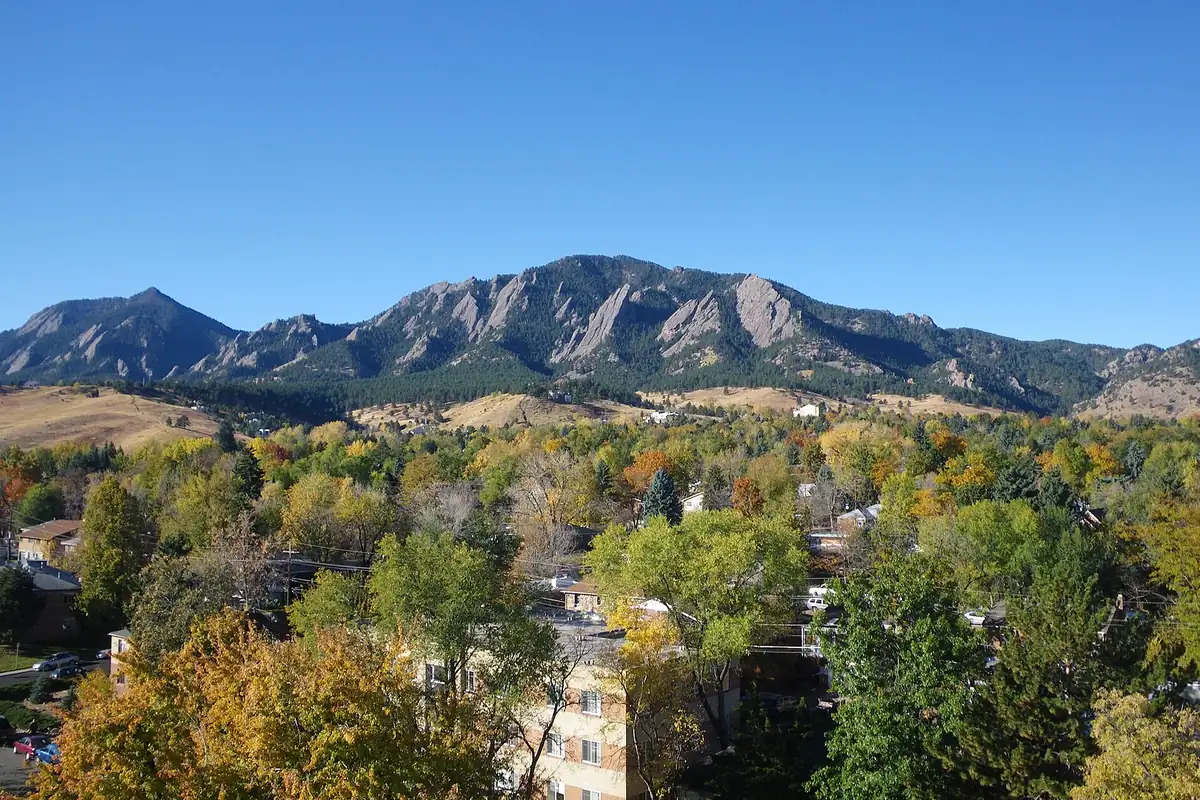
A National Historic Landmark at the foot of the Flatirons, with historic cottages, a century-old auditorium for music and talks, and front-door access to more than 40 miles (64 km) of open space hiking trails.
Museum of Boulder
The city's history museum in downtown Boulder at Broadway and Pine Street, which has spent 100 years preserving the community's stories through objects, with exhibitions such as The Boulder Experience on the city's innovations.
Pearl Street Mall
The heart of downtown Boulder, with shopping, dining and people-watching on the same Pearl Street where Boulder City's first log houses went up in 1859.
NSF NCAR Mesa Lab
The National Center for Atmospheric Research's lab against the foothills, whose visitor center has exhibits on Earth system science and a choice of public tours.
Getting there
Open Boulder in Google Maps
Opens in a new tab. The pin is the center of Boulder in the USGS place-name record.
The closest airports, Amtrak stations and intercity bus stops, measured in a straight line from the center of Boulder.
Airports
- Denver International (DEN) 33 mi 54 km
- Cheyenne Regional/Jerry Olson Field (CYS) 82 mi 133 km
Amtrak trains
- Denver station (DEN) 23 mi 37 km
- Winter Park station (WPR) 28 mi 44 km
Intercity buses
- Colorado Department of Transportation Bustang · Boulder Junction at Depot Square Station Gate S4 1 mi 2 km
- Limousine Express Denver (Joyeria El Nuevo Mundo) 20 mi 33 km
- Bustang Outrider Bustang · Federal Center Station Gate L 22 mi 35 km
Distances are as the crow flies, not by road. We don't list schedules or fares because they change; check with the airline, Amtrak or the bus company before you go. Official data (FAA commercial service airports (2025), FAA airport locations, Amtrak stations and Intercity Bus Atlas) from the FAA and the U.S. Bureau of Transportation Statistics, checked Nov 14, 2026.
Sponsored
Staying in Boulder?
Compare hotels in Boulder, Colorado, on Expedia.
See hotels in BoulderWe may earn a commission if you buy through this link. It never changes what we write. Read our affiliate disclosure
Sponsored
Want the spooky side of Boulder?
The name has its story above. For the ghost stories, US Ghost Adventures runs walking ghost tours in Boulder.
See ghost tours in BoulderWe may earn a commission if you book through this link. It never changes what we write. Read our affiliate disclosure
Historical Sources & References
- History of Clear Creek and Boulder Valleys, Colorado (O. L. Baskin & Co., 1880), p. 401. “BOULDER CITY, as it was first called”; the February 10, 1859, organization and its 56 shareholders; the surveyors’ “Its location is extremely beautiful”; the 1,240-acre plan and the $1,000 lots; the 70 log houses, Pearl Street and the first dance.
- Henry Gannett, The Origin of Certain Place Names in the United States (USGS, 1905), p. 53. Boulder County and city “named from the huge boulders found in the county.”
- Visit Boulder, “Boulder History”. The town company “named for the large number of boulders they found in nearby streams”; 60 prospectors; the broken promise to Niwot’s band; incorporation as the Town of Boulder in 1871 with just over 340 residents.
- “Boulder,” Colorado Encyclopedia. Aikins’s arrival in 1858; Niwot (“Left Hand”) and the winter agreement; the January 16, 1859, gold find; Aikins, Brookfield and 53 others; incorporation in November 1871.
- Museum of Boulder, “Timeline”. The 1851 Treaty of Fort Laramie; Niwot’s band wintering in the valley; the 1871 incorporation “in violation of the Treaty of Fort Laramie”; Niwot’s death at Sand Creek in 1864.
- GNIS feature 178680 (U.S. Geological Survey). The GNIS summary page for Boulder, a populated place in Boulder County.
- U.S. Geological Survey, Boulder sheet (1902). The 1:62,500 sheet behind the 1902 view of the town and its creek.
Spot something wrong, or know more? Tell us here. You can also email us or use our contact page. Corrections are noted here with their date, never made silently.