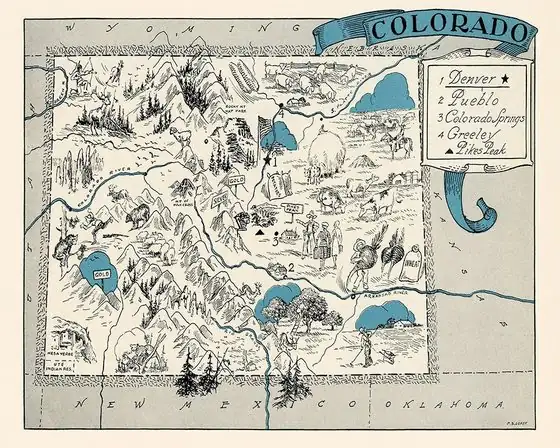
Lakewood, Colorado: An 1889 Name for a 1969 City
Lakewood, Colorado, is named for a subdivision that W. A. H. Loveland, president of the Colorado Central Railroad, platted in 1889 near West Colfax Avenue and Harlan Street. When the area incorporated in 1969, the new city was first called Jefferson City; residents favored Lakewood in an advisory vote, and the council changed it.
A subdivision’s name, borrowed 80 years later
Lakewood, Colorado, began in 1969 as Jefferson City, and residents traded that for the name of an 1889 subdivision laid out by W. A. H. Loveland. So the city is young, but its name isn’t. It had been on the ground west of Denver for 80 years before there was a city government to carry it.
The City of Lakewood tells the short version on its 50th-anniversary history page: “The name Lakewood originated long before the city existed,” and it came from a subdivision William Loveland established in 1889 near West Colfax Avenue and Harlan Street. The Colorado State Library’s history blog adds the key detail. Loveland “moved to the area and named the new subdivision ‘Lakewood.’”
Who was W. A. H. Loveland
Loveland wasn’t a small-time developer. The state library’s account says he came to Colorado in the 1859 gold rush, ran a store in Golden and was one of that town’s founders. He served as a territorial senator, as the first president of the Territorial School of Mines, as president of the Colorado Central Railroad and as mayor of Golden. The city’s page calls him the railroad’s owner. Either way, he was a railroad man, and his Lakewood sat on the road between Golden and Denver.
That road soon had tracks of its own. Wilbur Fisk Stone’s 1918 History of Colorado says the Denver, Lakewood & Golden railway company was incorporated in 1892 and that its line ran “from Denver via Lakewood to Golden,” with a branch to Barnum. In 1904 a successor company, the Denver & Intermountain, took over the line after a foreclosure, and in 1909, renamed the Intermountain Railway Company, it became a subsidiary of the Denver City Tramway Company.
Lakewood in the federal record
By 1906, the name was in a federal book. Henry Gannett’s Gazetteer of Colorado, published by the U.S. Geological Survey, listed the stops along that railroad one by one, and Lakewood got its own short line:
“Lakewood; station in Jefferson County on Denver, Lakewood and Golden Railroad.”
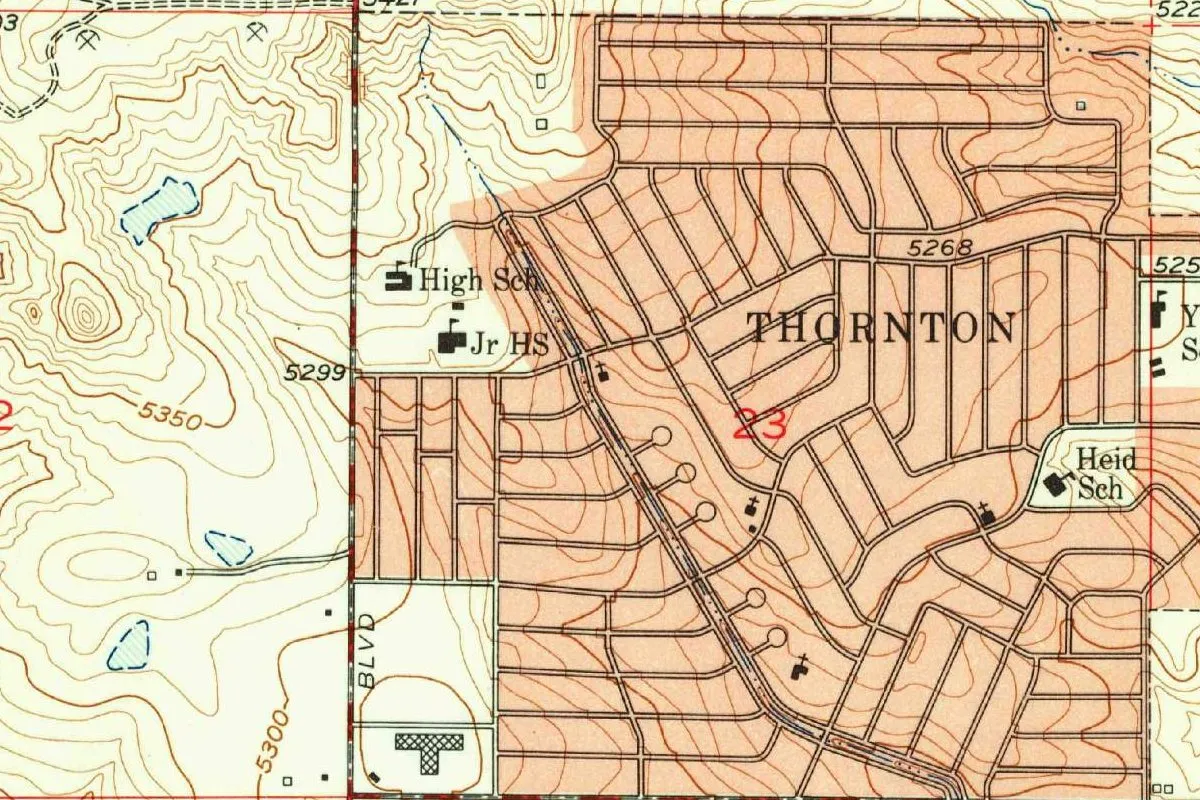
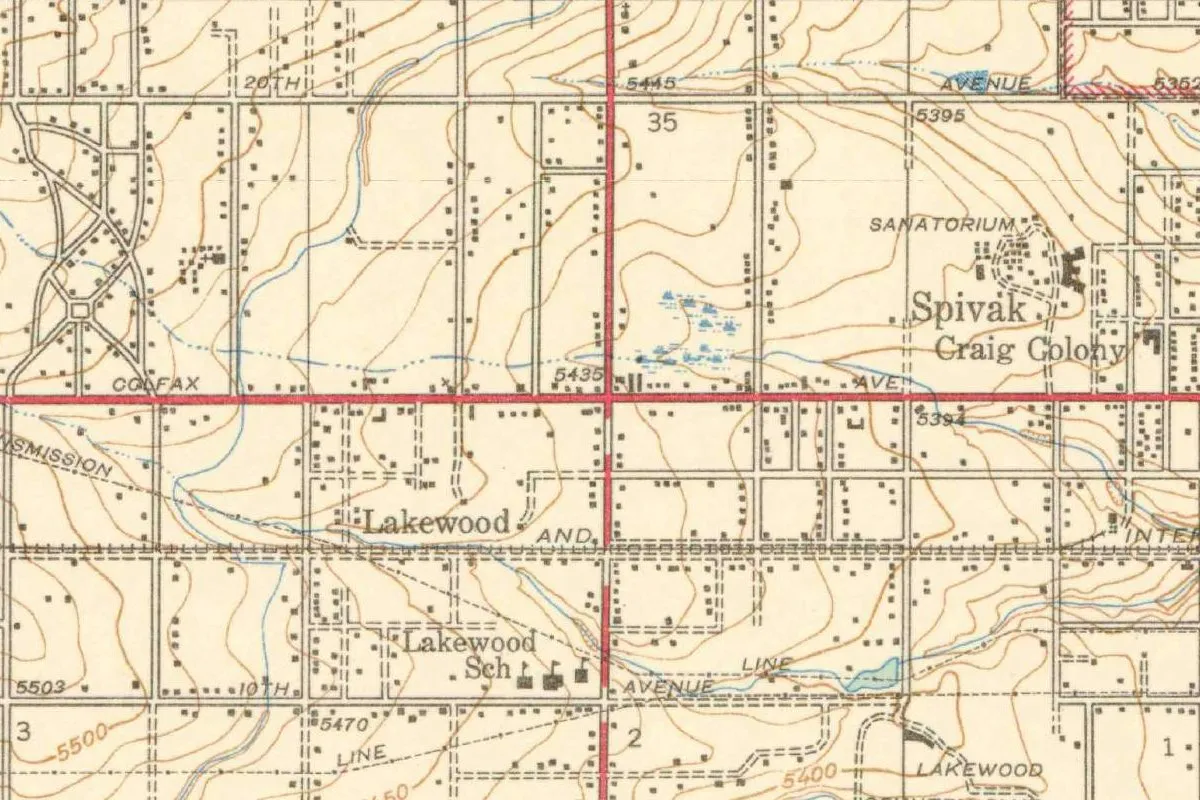
At that point Lakewood was a station and a subdivision, nothing more official. The same gazetteer describes the railroad as a “line connecting Denver and Lakewood, a distance of about 19 miles.” You can still see the name on the 1941 survey map at the top of this page, printed just south of Colfax Avenue, with a Lakewood school a little farther down.
Lake or woods?
Here’s where the record goes quiet. None of the sources above say why Loveland picked the word Lakewood. The city and the state library both stop at “he named it.” There’s no letter, ad or plat note in them that points to a particular lake or a stand of trees. So if you hear that the city was named for a lake in the woods, that’s a guess built from the word itself, not something the paperwork backs up.
From Jefferson City to Lakewood
For decades the area stayed a patchwork. The city’s history says early residents ranched, raised turkeys and ran dairies, and that in the 1940s the federal government bought the land now known as the Federal Center. Attempts to incorporate in the 1940s and 1950s failed.
By 1969 more than 90,000 people lived there, and the city says two worries pushed them to try again: being annexed to Denver and not having enough law enforcement. The boundaries of the new city were drawn on a basement ping-pong table in the home of James Jeff “Jim” Richey, chairman of the Citizens for Incorporation. In June 1969, people in Alameda, Green Mountain, Bear Creek, Applewood, Lakewood and other neighborhoods voted by more than two to one to create a city.
That city started out as Jefferson City. The name didn’t last. According to the city’s history, residents favored Lakewood in an advisory vote, and the City Council changed the name by resolution. The state library sums it up in one line: “Originally planned as Jefferson City, residents voted instead to name the new city Lakewood.”
So the city, which its own history now calls the fifth largest in Colorado, took its name from a single neighborhood inside its borders. The new government got a name that was already 80 years old.
Quick answers
Who named Lakewood, Colorado?
W. A. H. Loveland, a Golden founder and president of the Colorado Central Railroad, named the subdivision he platted in 1889. In 1969 residents favored the name in an advisory vote, and the City Council adopted it for the new city.
Was Lakewood once called Jefferson City?
Yes. The city incorporated in 1969 as Jefferson City, and the name was soon changed to Lakewood by council resolution, the City of Lakewood says.
When was Lakewood, Colorado, founded?
The Lakewood subdivision dates to 1889, but the city itself was created by a vote in June 1969.
Is Lakewood named after a lake?
There’s no record of that in the sources. They say Loveland named his subdivision Lakewood, but not why.
Key dates
- 1889W. A. H. Loveland plats a subdivision near West Colfax Avenue and Harlan Street and names it Lakewood.
- 1892The Denver, Lakewood & Golden railway company is incorporated; its line runs from Denver via Lakewood to Golden.
- 1906A U.S. Geological Survey gazetteer lists Lakewood as a station in Jefferson County on the Denver, Lakewood and Golden Railroad.
- 1969June: voters in Alameda, Green Mountain, Bear Creek, Applewood, Lakewood and other neighborhoods approve a new city, first called Jefferson City.
- 1969After residents favor Lakewood in an advisory vote, the City Council changes the name by resolution.
Getting there
Open Lakewood in Google Maps
Opens in a new tab. The pin is the center of Lakewood in the USGS place-name record.
The closest airports, Amtrak stations and intercity bus stops, measured in a straight line from the center of Lakewood.
Airports
- Denver International (DEN) 24 mi 39 km
- City of Colorado Springs Municipal (COS) 65 mi 105 km
Amtrak trains
- Denver station (DEN) 5 mi 9 km
- Winter Park station (WPR) 38 mi 62 km
Intercity buses
- Colorado Department of Transportation Bustang · Federal Center Station Gate L 3 mi 4 km
- Bustang Outrider Bustang · Federal Center Station Gate L 3 mi 4 km
- Express Arrow Denver (Limo Express Bus Terminal) 4 mi 7 km
Distances are as the crow flies, not by road. We don't list schedules or fares because they change; check with the airline, Amtrak or the bus company before you go. Official data (FAA commercial service airports (2025), FAA airport locations, Amtrak stations and Intercity Bus Atlas) from the FAA and the U.S. Bureau of Transportation Statistics, checked Nov 13, 2026.
Sponsored
Staying in Lakewood?
Compare hotels in Lakewood, Colorado, on Expedia.
See hotels in LakewoodWe may earn a commission if you buy through this link. It never changes what we write. Read our affiliate disclosure
Historical Sources & References
- Henry Gannett, A Gazetteer of Colorado (USGS, 1906), pp. 57 and 99. The Denver, Lakewood and Golden Railroad as a “line connecting Denver and Lakewood, a distance of about 19 miles” (p. 57), and “Lakewood; station in Jefferson County on Denver, Lakewood and Golden Railroad” (p. 99).
- Wilbur Fisk Stone, ed., History of Colorado, vol. 1 (1918), p. 377. The Denver, Lakewood & Golden railway company, incorporated in 1892, running “from Denver via Lakewood to Golden,” and its later owners.
- City of Lakewood, “A glimpse into Lakewood’s past”. The 1889 subdivision of William Loveland near West Colfax and Harlan, ranches, turkeys and dairies, the Federal Center, the failed incorporations, the ping-pong table, the June 1969 vote and the change from Jefferson City to Lakewood after an advisory vote.
- Amy Zimmer, “Time Machine Tuesday: Lakewood Turns 50” (Colorado State Library, 2019). Loveland’s career, “Loveland moved to the area and named the new subdivision ‘Lakewood,’” and “Originally planned as Jefferson City, residents voted instead to name the new city Lakewood.”
- GNIS feature 181620 (U.S. Geological Survey). Shows the Jefferson County placement and the city’s official coordinates.
- U.S. Geological Survey, Fort Logan sheet (1941). The source of the map at the top of this page.
Spot something wrong, or know more? Tell us here. You can also email us or use our contact page. Corrections are noted here with their date, never made silently.