Gainesville, Florida: A General's Name and a 'Gain' Story
General Edmund Pendleton Gaines gave Gainesville, Florida, its name. He commanded U.S. Army troops in Florida during the Second Seminole War. The town was created in 1853, when Alachua County moved its seat from Newnansville to a site on the planned Florida Railroad. Henry Gannett's 1905 book of American place names gives the same namesake.
A town built for a courthouse
Gainesville, Florida, began in 1853 as a new county seat beside a railroad that hadn’t been built yet, and it took the name of General Edmund P. Gaines. Gaines had commanded U.S. Army troops in Florida during the Second Seminole War, and that’s the namesake you’ll find on the state’s historical marker at City Hall, in the city’s own records and in a federal book of place names from 1905.
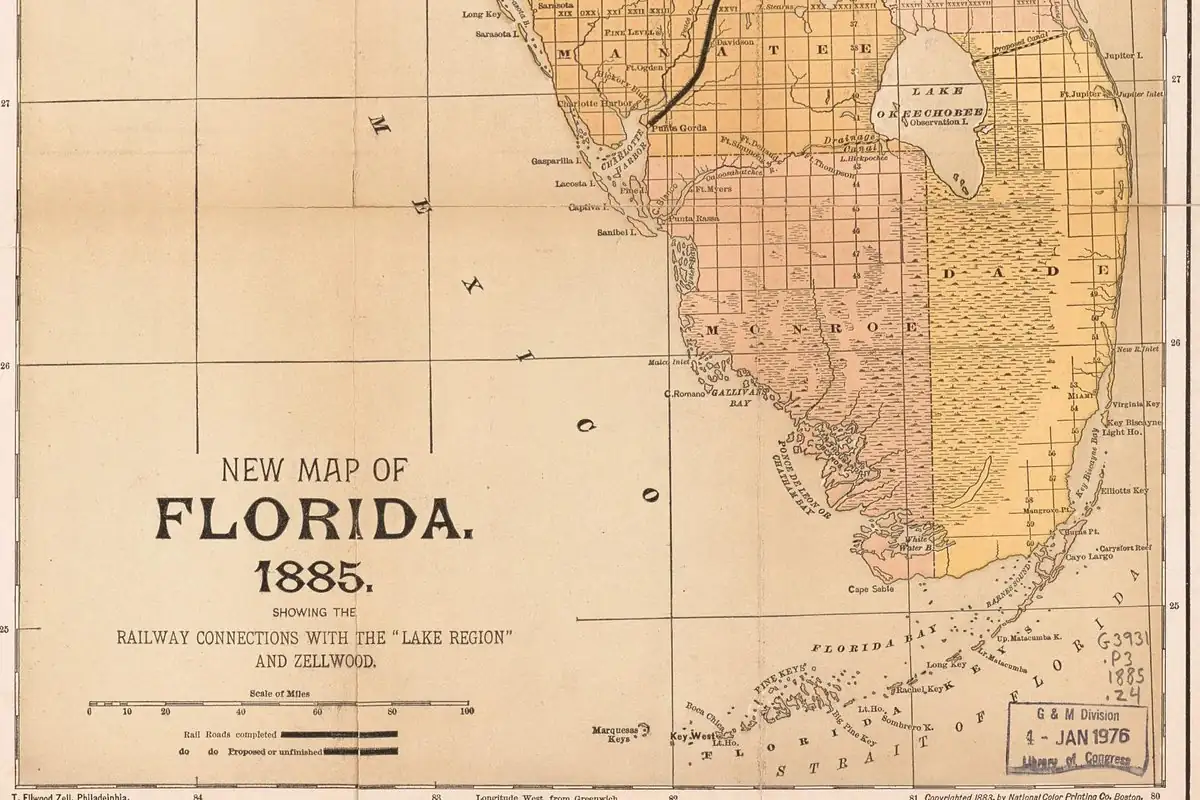
The town exists because of the Florida Railroad. Alachua County’s history explains that the route, which the City of Alachua says ran from Fernandina to Cedar Key, cut diagonally across the county and bypassed the county seat at Newnansville, off in the northwest. So at a meeting at Boulware Springs on September 6, 1853, the county decided to move its seat near the tracks and create a new town. The Gainesville Police Department’s history says the place “received its name in September, 1853, when the County Commission provided a site for a new town.”
The general on the marker
Edmund Pendleton Gaines is the man the official sources agree on. The state marker, put up in 1969, says Gainesville “takes its name from General Edmund Gaines, captor of Aaron Burr and commander of U.S. Army troops in Florida during the Second Seminole War.” The police history uses almost the same words and adds his middle name.
That isn’t just a modern plaque talking. In 1905 Henry Gannett’s guide for the U.S. Geological Survey put Gainesville, Florida, into a national list of place names in a single line that lumps it with three other Gainesvilles, in Georgia, New York and Texas, all “named for Gen. E. P. Gaines.” That’s a lot of towns for one officer.
Who actually suggested the name at that 1853 meeting is another matter. The county’s history passes along a tradition that some Seminole War veterans in the crowd proposed it in honor of the general they’d served under, but it labels that part a legend. So you’ve got a firm answer on the who, and only a story on the how.
A hotly contested vote, and the “gain”
Moving a courthouse wasn’t a quiet affair. In 1883 C. H. Webber, writing The Eden of the South, a guide to Alachua County for tourists and would-be settlers, described how Newnansville had held on to the county seat:
“Newnansville was formerly the county seat of Alachua, and held it with commendable pride until the wisdom of the people, in 1854, after a hotly contested election, removed it to the younger but more central settlement at Gainesville.”
That fight also left a story behind. The City of Alachua, which grew up near old Newnansville, tells it this way: the county commission’s vote at first went Newnansville’s way, until a landowner near the rail line talked several people into changing their minds. In a line about the origin of Gainesville’s name, the city adds that one story says the town “owes its importance to this ‘gain’ in votes.”
The version that ties the name itself to the vote comes from 1936. On November 9 of that year Dr. J. Dawkins Tench, whose family had moved to Gainesville in 1879, gave a Works Progress Administration interviewer his account of the county’s past. He said the usual explanation was wrong, that the town wasn’t named for General Gaines at all, and that it was named after its site won the county-seat election over Newnansville by a small margin. The transcript is in the state archives’ Florida Memory collection.
It’s a good story, and it fits the close vote Webber described. But Tench was recalling something that happened more than 80 years earlier, decades before his family arrived, and his account is a memory, not a record from 1853. Gannett’s book, the marker and the city all say Gaines. That’s why this page treats the general as the documented origin and the “gain” as a tradition worth knowing about.
Not a renamed Newnansville
One thing the “gain” story can make confusing: Gainesville didn’t replace Newnansville the way a new name replaces an old one. They were two different places. The City of Alachua says Newnansville, once the county seat, slowly declined after the railroad passed it by, and after another rail line bypassed it in 1884 its people moved to a new town that became Alachua.
Gainesville, meanwhile, grew into exactly what it was built to be. The county counts about 232 residents in 1860, and the marker says it was incorporated as a city in 1869 and was Alachua County’s fourth seat of government. When Gainesville was picked for the University of Florida in 1905, the courthouse town on the railroad had carried the general’s name for half a century. That same year, Gannett’s book put it in print.
Quick answers
Who was Gainesville, Florida, named after?
General Edmund Pendleton Gaines, who commanded U.S. Army troops in Florida during the Second Seminole War. The state’s 1969 marker, the city’s police history and Gannett’s 1905 place-name book all say so.
Was Gainesville named for “gaining” the county seat?
That’s a later tradition, not the documented answer. Dr. J. Dawkins Tench told a WPA interviewer in 1936 that the town was named for winning the county-seat election, and the City of Alachua mentions the “gain” in votes as “one story,” but the older and official sources name General Gaines.
Was Gainesville ever called Newnansville?
No. Newnansville was a separate town and the earlier county seat. The seat moved from there to the new town of Gainesville after a hotly contested election in 1854.
When was Gainesville, Florida, founded?
The county decided to create the town on September 6, 1853. It became the county seat in 1854 and was incorporated as a city in 1869.
Key dates
- 1853September 6: a meeting at Boulware Springs decides to move the Alachua County seat near the planned railroad and create the new town of Gainesville.
- 1854After a hotly contested election, the county seat moves from Newnansville to Gainesville.
- 1860Gainesville has about 232 residents, according to Alachua County's history.
- 1869Gainesville is incorporated as a city.
- 1905Henry Gannett's federal place-name book lists Gainesville, Florida, as named for Gen. E. P. Gaines.
- 1936November 9: Dr. J. Dawkins Tench tells a WPA interviewer the town was named for winning the county-seat election, not for Gaines.
Getting there
Open Gainesville in Google Maps
Opens in a new tab. The pin is the center of Gainesville in the USGS place-name record.
The closest airports, Amtrak stations and intercity bus stops, measured in a straight line from the center of Gainesville.
Airports
- Gainesville Regional (GNV) 4 mi 7 km
- Jacksonville International (JAX) 70 mi 112 km
Amtrak trains
- Palatka station (PAK) 41 mi 66 km
- Jacksonville station (JAX) 61 mi 98 km
Intercity buses
- FlixBus Gainesville under 1 mi 0.7 km
- Amtrak Chartered Vehicle Amtrak Connecting Service · Gainesville Amtrak Bus Stop 2 mi 2 km
- Greyhound Gainesville Bus Stop 4 mi 7 km
Distances are as the crow flies, not by road. We don't list schedules or fares because they change; check with the airline, Amtrak or the bus company before you go. Official data (FAA commercial service airports (2025), FAA airport locations, Amtrak stations and Intercity Bus Atlas) from the FAA and the U.S. Bureau of Transportation Statistics, checked Nov 13, 2026.
Sponsored
Staying in Gainesville?
Compare hotels in Gainesville, Florida, on Expedia.
See hotels in GainesvilleWe may earn a commission if you buy through this link. It never changes what we write. Read our affiliate disclosure
Historical Sources & References
- Henry Gannett, The Origin of Certain Place Names in the United States (USGS, 1905), p. 133. Gainesville, Florida, with the Gainesvilles of Georgia, New York and Texas, “named for Gen. E. P. Gaines.”
- C. H. Webber, The Eden of the South (1883), p. 67. Newnansville’s loss of the county seat to Gainesville “in 1854, after a hotly contested election.”
- Florida Historical Marker, “City of Gainesville” (1969). County seat in 1854, city in 1869, the name “from General Edmund Gaines, captor of Aaron Burr and commander of U.S. Army troops in Florida during the Second Seminole War,” and the fourth Alachua County seat.
- Gainesville Police Department, “Department History”. The name received in September 1853, when the county commission provided a site for a new town, in honor of General Edmund Pendleton Gaines.
- Alachua County, “County History”. The railroad that bypassed Newnansville, the Boulware Springs meeting of September 6, 1853, the legend of the Seminole War veterans, about 232 residents in 1860, and the choice of Gainesville for the University of Florida in 1905.
- City of Alachua, “Prelude to a Town”. The close county commission vote, the landowner who changed minds, the story that Gainesville “owes its importance to this ‘gain’ in votes,” and Newnansville’s decline after 1884.
- Florida Memory, “History of Alachua County as told by Dr. J. Dawkins Tench” (1936). Tench’s WPA account saying the town was named for winning the county-seat election rather than for General Gaines.
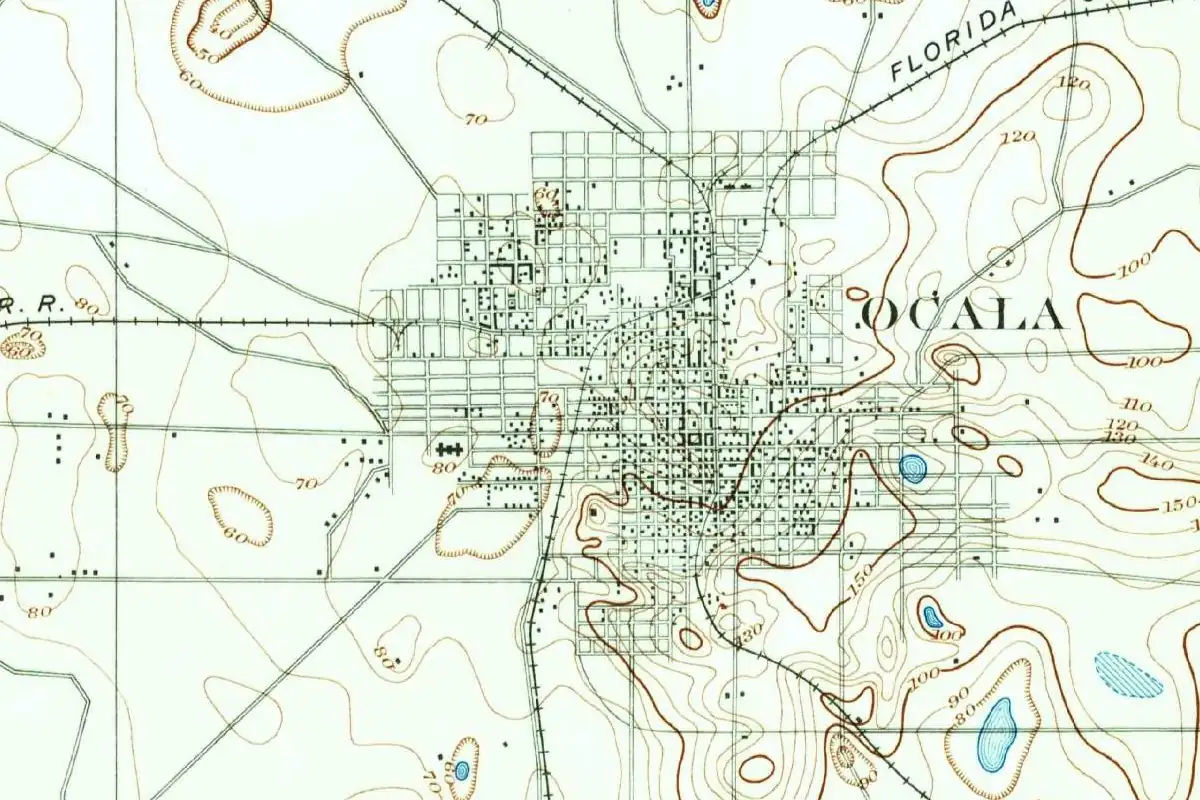
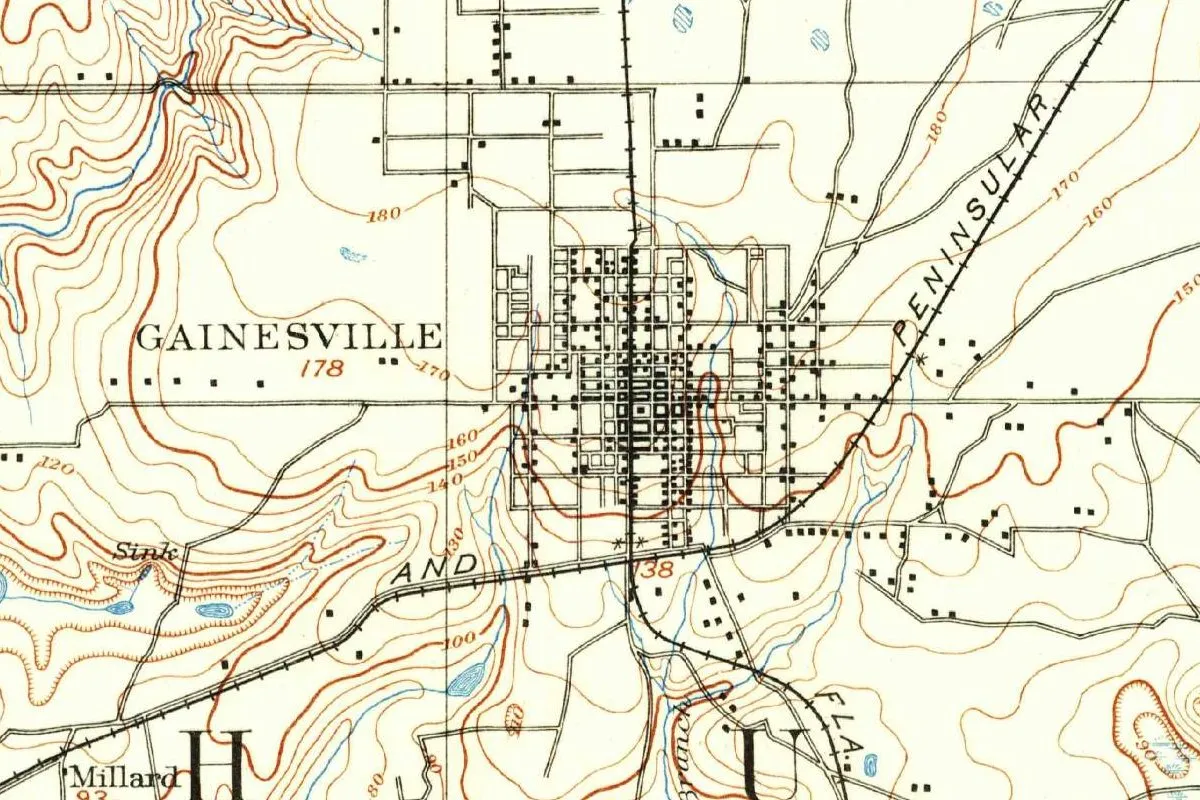
- GNIS feature 282874 (U.S. Geological Survey). Alachua County location; the topographic map is centered on this point.
- U.S. Geological Survey, Arredondo sheet (1890). The source of the map at the top of this page.
Spot something wrong, or know more? Tell us here. You can also email us or use our contact page. Corrections are noted here with their date, never made silently.