Why Panama City, Florida, Is Named After Panama
Panama City took its name from Panama in 1905 or 1906, while the United States was digging the Panama Canal. Developer George M. West chose it. Bay County Historical Society president Glenda Walters says the plan was a port here for canal cargo, shipped on by rail to Chicago on a straight line from Panama.
Lay a ruler on a map from Panama to Chicago and the line runs through Panama City, Florida, a local historian says, and that was the idea behind its name. The town on St. Andrews Bay took the name of a country while the United States was still digging a canal across it, and the man behind it, George M. West, had plans for that canal’s traffic, as the local historical society tells it.
Harrison, Park Resort or Park Place
Before it was Panama City, it wasn’t one name for long. The city’s own history says the downtown area “was originally called “Harrison” and briefly “Park Resort” in the 1800s.”
Glenda Walters, president of the Bay County Historical Society, told WJHG in 2020 that she counts it a little differently. “Our [city’s] first notable name was Park Place,” she said. Then it “was called Harrison because they got a post office during that period and the President at the time was Benjamin Harrison.” So you’ll see Park Resort in one telling and Park Place in the other. Both sources agree on Harrison.
And the switch to Panama City wasn’t a single day either, in Walters’s view. “It’s more of an evolution as Harrison moved into being called Panama City,” she said.
George West’s straight line
The city says the community “was named Panama City in 1906,” under the developer G. M. West. WJHG’s report puts it a little earlier, saying West coined the name around 1905. Either way, the timing matters, because the canal wasn’t finished. The State Department’s historians date the project from 1903, when Panama declared independence and signed the treaty that gave the United States a strip of land for the canal, to 1914, when it was completed.
West, Walters explained, had founded the Gulf Coast Development Company, and many of its stockholders were railroad men like him. “He had been with the railroad in Chicago,” she said. She also said businesses at the time were following the digging closely and the potential it would create. Then she laid out the plan: “So the almost magical idea was, we’ll bring things into a port here from the Panama Canal,” she said. “And then it can be transported by railroad to Chicago, and from Chicago to the rest of the country.”
Her proof is something you can try at home. “If you take a straight edge and you put it on a map from Panama to Chicago, you will see a straight line passes through this area,” Walters said. So in her telling, the name tied the town to the canal, and to the port-and-railroad route to Chicago that West had in mind.
Did it work? Not quite, by Walters’s account. “[It] didn’t quite pan out,” she said, though she added that West was right about the “marvelous potential for the port here.”
Another Panama City, on the Pacific
The canal story has its own Panama City. When Colombia’s congress turned down the first canal treaty, the State Department’s history says, President Theodore Roosevelt sent warships to “Panama City (on the Pacific)” and Colón to back Panamanian independence, which Panama declared on November 3, 1903. A few years later, a town on a Florida bay took the same name.
West’s newspaper and the new town
West didn’t just name the place. He also had a hand in its first newspaper. The city says a newspaper called The Panama City Pilot was organized in 1906 “under Mr. West’s guidance.” By the end of that decade the town had a schoolhouse and churches, and the Atlanta and St. Andrew Bay Railroad finally connected it with cities to the north. Panama City was incorporated in 1909, and in 1913 it became the seat of the newly formed Bay County.
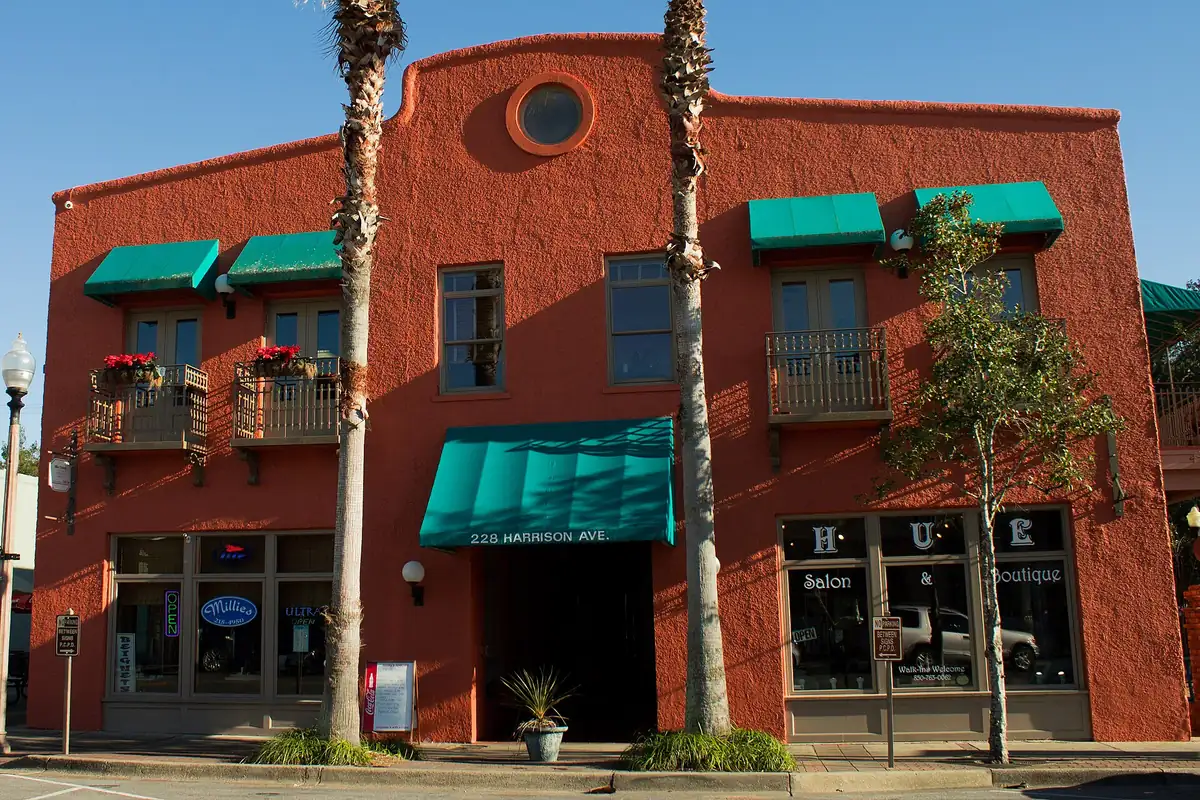
The Panama City Publishing Company Museum in St. Andrews remembers West as a writer, promoter, railroader, publisher and more, and says he “is credited as the founding father of Panama City.” He and his third wife, Lillian Carlisle West, put up the publishing company’s building in 1920. It became the home of Panama City’s first newspapers, the Pilot among them. West died in 1926, and Lillian kept the business going.
He left more than a newspaper behind. WJHG reported that West also published a number of books about the area, and that his diaries are still turning up surprises. “Lots of us that thought we knew a lot about Panama City history are learning from the revelations in his diaries,” Walters said. He’s buried in Oakland Cemetery in the city he named.
Harrison Avenue on the 1943 map
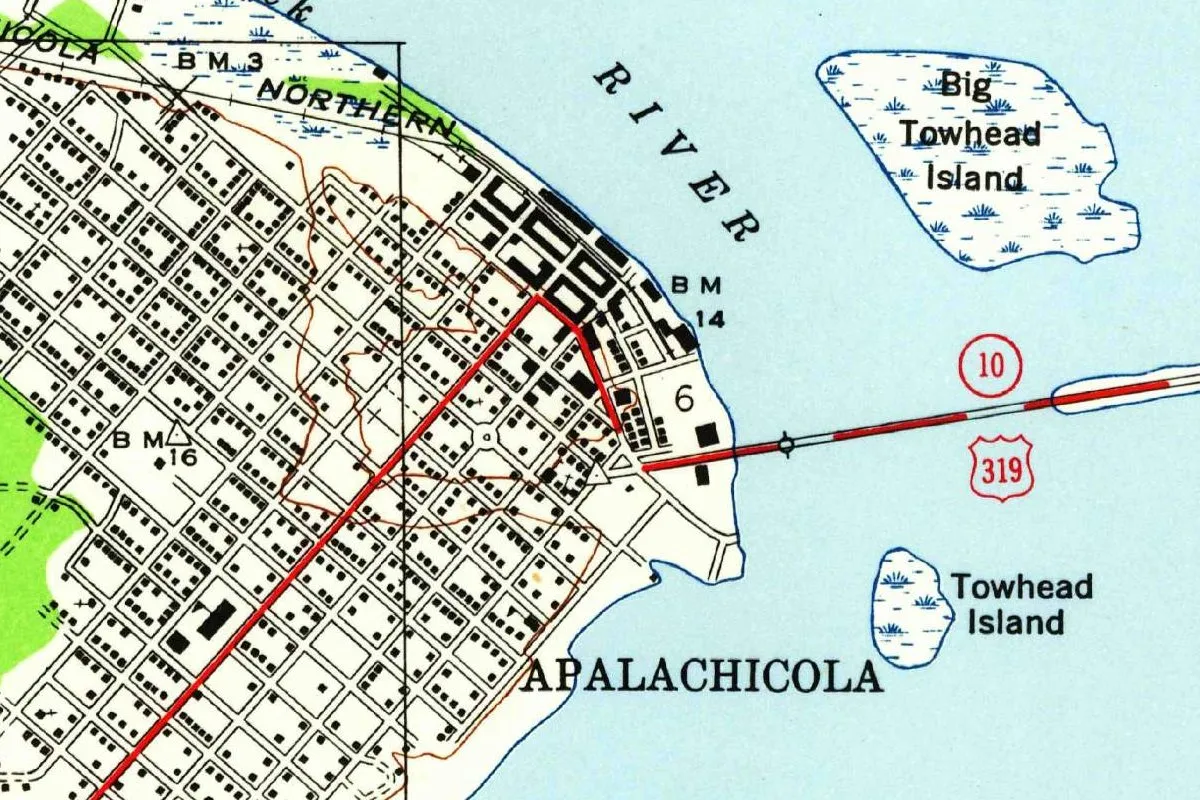
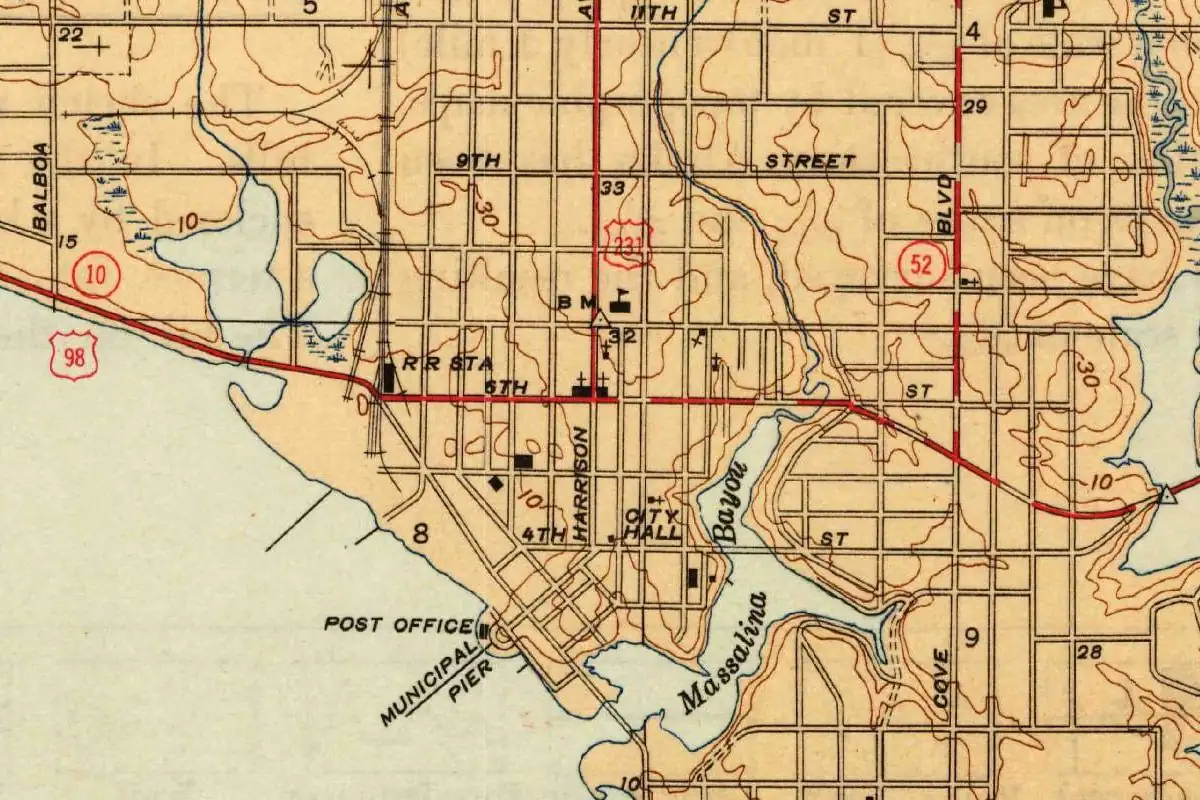
The map at the top of this page is the Geological Survey’s Panama City sheet from 1943. Look for Harrison running down through the grid to City Hall, and the Post Office and Municipal Pier at the water’s edge. The city says the waterfront was downtown’s focal point in the early years, with rough piers for shipping, a post office and the city jail.
By the time this sheet was drawn, the town West promoted had filled in. The city’s history lists banks, a public library, electricity and phone service arriving in the 1910s, a new City Hall on 4th Street in 1925 and the Dixie Sherman Hotel, the area’s first skyscraper, in 1926. In the late 1930s a semi-circular seawall with a dock and a turnaround went in at the end of Harrison Avenue. You can pick out that curve at the pier on the map.
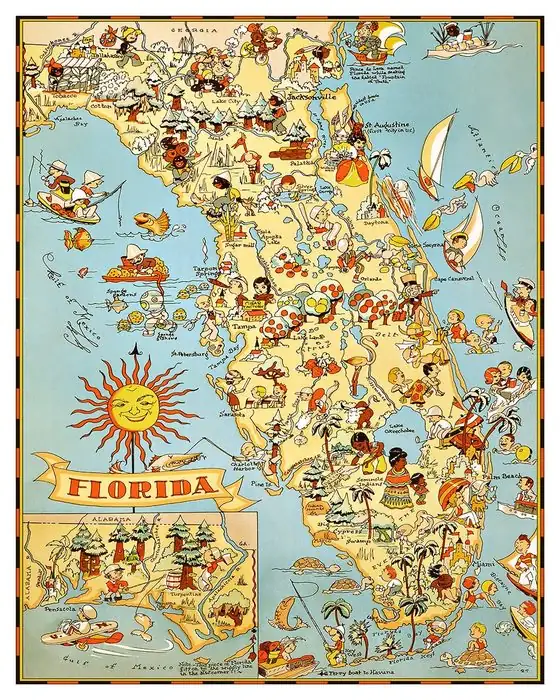
Florida has a few towns named for faraway cities. St. Petersburg got its Russian name from a railroad builder, and Naples took an Italian one. Up the Panhandle, Pensacola kept the name of a people who lived on its bay. You can find more on our Florida page.
Quick answers
Why is Panama City, Florida, called Panama City?
It was named for Panama while the Panama Canal was being dug. Glenda Walters of the Bay County Historical Society says developer George West pictured a port here for canal cargo headed by rail to Chicago.
Who named Panama City, Florida?
George M. West. The city says the community was named Panama City in 1906 under the developer, and WJHG reported in 2020 that West coined the name around 1905.
What was Panama City called before?
Harrison. The city adds “Park Resort,” while Walters names “Park Place” as the first notable name and says Harrison came with a post office.
When did Panama City get its name?
In 1906, according to the city, or around 1905, according to WJHG. Either way it was years before the Panama Canal was completed in 1914.
Key dates
- 1903Panama declares independence on November 3, and a treaty that year gives the United States a strip of land for a canal.
- 1906Under developer George M. West, the town is named Panama City (WJHG puts it around 1905), and The Panama City Pilot is organized.
- 1909Panama City is incorporated.
- 1913Panama City becomes the seat of the new Bay County.
- 1914The Panama Canal is completed.
- 1920George and Lillian West build the Panama City Publishing Company building in St. Andrews.
- 1926George M. West dies.
Things to do in Panama City, Florida
Panama City Publishing Company Museum
The 1920 building where George and Lillian West printed Panama City's first newspapers, including the Panama City Pilot, now a museum with the West family's artifacts and vintage printing presses.
Historic Downtown audio walking tour
A self-guided tour along Harrison Avenue and the bayside blocks that sets out to explain how Panama City got its name, with a stop at the 1914 courthouse where Gideon v. Wainwright was tried.
Shell Island
An uninhabited barrier island you can reach only by boat, with beaches stretching 7 miles (11 km) between the Gulf and St. Andrews Bay, where you can snorkel for shells and sand dollars and look for dolphins and sea turtles.
Panama City Mural Trail
More than 15 murals by local and nationally known artists, spread across Panama City's historic neighborhoods, from the Bay Arts Alliance's "Art on Every Corner" project.
Oaks by the Bay Park
A green space in historic St. Andrews with the Sentry Oak, nearly 300 years old, which survived Hurricane Michael in 2018, plus a Native American site, the historic Lion Fountain and a boardwalk to the bay.
Getting there
Open Panama City in Google Maps
Opens in a new tab. The pin is the center of Panama City in the USGS place-name record.
The closest airports, Amtrak stations and intercity bus stops, measured in a straight line from the center of Panama City.
Airports
- Northwest Florida Beaches International (ECP) Panama City 16 mi 26 km
- Eglin AFB/Destin-Ft Walton Beach (VPS) Valparaiso 56 mi 91 km
Intercity buses
- Greyhound Panama City Beach Bus Station 7 mi 11 km
Distances are as the crow flies, not by road. We don't list schedules or fares because they change; check with the airline, Amtrak or the bus company before you go. Official data (FAA commercial service airports (2025), FAA airport locations, Amtrak stations and Intercity Bus Atlas) from the FAA and the U.S. Bureau of Transportation Statistics, checked Nov 14, 2026.
Sponsored
Staying in Panama City?
Compare hotels in Panama City, Florida, on Expedia.
See hotels in Panama CityWe may earn a commission if you buy through this link. It never changes what we write. Read our affiliate disclosure
Historical Sources & References
- City of Panama City, “Downtown CRA”. “Harrison” and briefly “Park Resort”; named Panama City in 1906 under G. M. West; the waterfront piers, post office and jail; The Panama City Pilot; the railroad; incorporation in 1909; county seat of Bay County in 1913; the 1910s additions, the 1925 City Hall, the 1926 Dixie Sherman Hotel and the late-1930s seawall at the end of Harrison Avenue.
- WJHG, “Panama City named after early 1900s ‘big dig’” (2020). Glenda Walters on Park Place, Harrison and Benjamin Harrison; West coining the name around 1905; the Gulf Coast Development Company; the canal port and rail to Chicago; the straight line from Panama to Chicago; “[It] didn’t quite pan out”; West’s books and diaries; his burial in Oakland Cemetery.
- U.S. Department of State, “Building the Panama Canal, 1903–1914”. Panama’s independence on November 3, 1903; the 1903 treaty; warships sent to “Panama City (on the Pacific)”; the canal “Completed in 1914.”
- Historic St. Andrews, Panama City Publishing Company Museum. George Mortimer West “credited as the founding father of Panama City”; the 1920 building; the Pilot; West’s death in 1926 and Lillian West.
- GNIS feature 288448 (U.S. Geological Survey). Federal gazetteer data for Panama City, Bay County, with its coordinates.
- U.S. Geological Survey, Panama City sheet (1943). The 1:31,680 map that the image at the top of this page was cropped from.
Spot something wrong, or know more? Tell us here. You can also email us or use our contact page. Corrections are noted here with their date, never made silently.