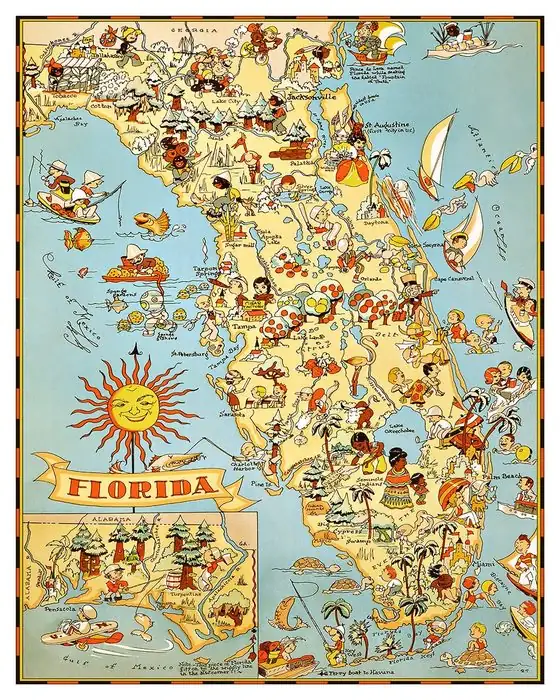
Miami Names: Brickell, Coconut Grove, Coral Gables and More
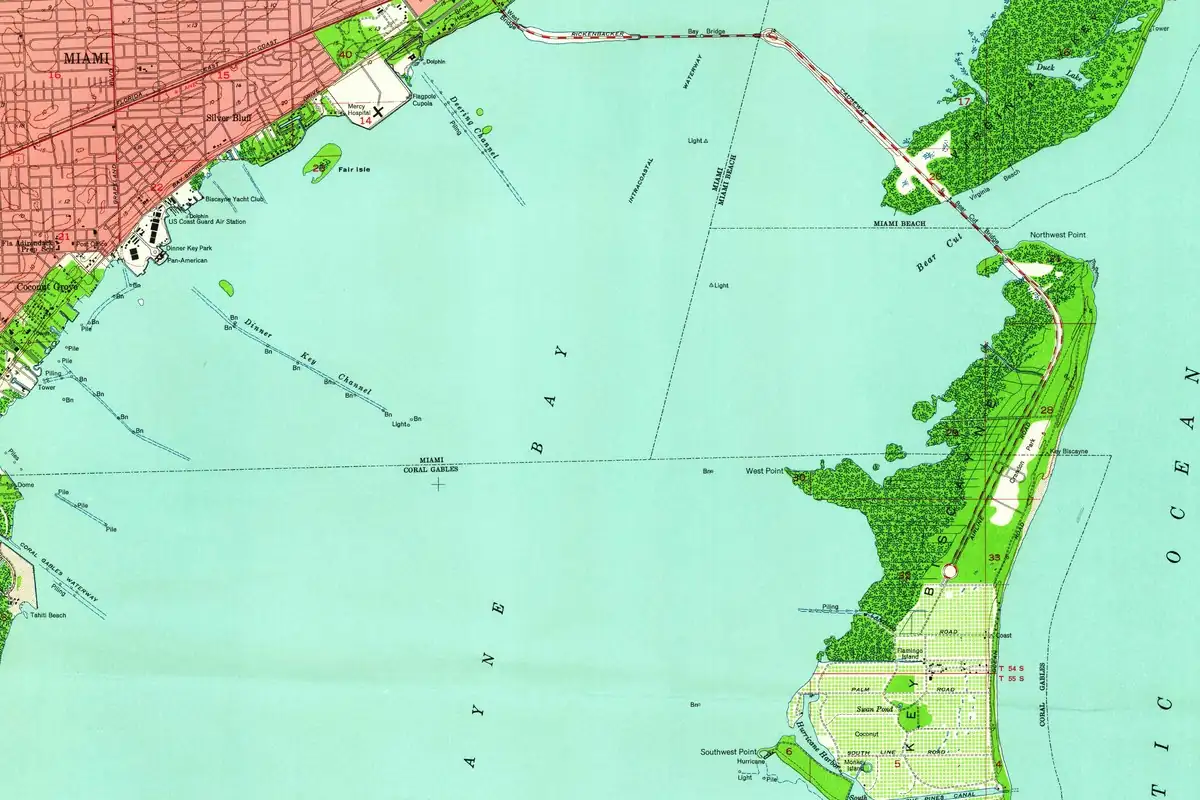
Many Miami place names go back to Biscayne Bay’s early settlers and what they planted, like the coconuts of Coconut Grove and the lemons of Lemon City. A 1921 history of Miami even has a short section on where the area’s community names came from, and most of what follows starts there.
Planning a trip? Here’s where the names on your map came from.
Where Miami got its name
Miami is named for the Miami River, and the story behind that word goes back to the 1500s. Our Miami page tells it.
The nickname is easier. E. V. Blackman wrote in his 1921 history, Miami and Dade County, Florida, that the name that stuck was the “Magic City,” and that he gave it himself: “This name was first given to the city by the author of this volume.” He’d used it in the Florida Homeseeker, which he edited, “declaring that the city was a ‘Magic City’ in the strides that it was making.”
The bay and the river
Biscayne Bay
Blackman called Biscayne Bay “probably the oldest name of all in this section,” and wrote that for many years the whole area was known as the “Biscayne Bay country.” Where it came from, he wasn’t sure: “It is said that the name was patterned after the Bay of Biscayne in Europe.”
Brickell
The old books we read don’t say in so many words why Brickell is called Brickell, but they do put one man right there. Blackman wrote that William B. Brickell, an early settler from Cleveland, Ohio, “had purchased the Lewis grants on the south side of the Miami River,” and that he and Ephraim T. Sturtevant settled “at the mouth of the Miami River, at what is now called Brickell’s Point.” Ralph Munroe, who later settled in Coconut Grove, tells of once helping get Brickell’s stranded sloop afloat, when Brickell was “bound to Biscayne Bay with merchandise for his Indian trading store on the Miami River.”
Fort Dallas
Before Miami had its name, the settlement had another one. “Prior to 1896, when Miami was incorporated,” Blackman wrote, “the settlement was known as Fort Dallas, from the army post maintained here.”
Downtown streets
Flagler Street
Flagler Street used to be Twelfth Street. Blackman, writing in 1921, calls it “Twelfth (now Flagler) Street.” He doesn’t say who the street is named for. He does say that when Miami incorporated in 1896, “Many desired to name the new city ‘Flagler,’ in honor of Henry M. Flagler,” before the town settled on Miami.
Miami Avenue
Miami Avenue was Avenue D. Blackman mentions the first Presbyterian services “at the corner of Avenue D (now Miami Avenue).”
Neighborhoods
Coconut Grove
Coconut Grove is named for coconut trees, but the two old accounts tell the story differently. Blackman’s 1921 history says the place “is named from a large grove of cocoanut trees on the bay shore,” and that the town spelled it “Cocoanut Grove” until the “a” was dropped from its charter, “through the efforts of Kirk Munroe.”
Ralph Munroe, whom Blackman calls “one of the first settlers of Coconut Grove,” told a different version in his 1930 memoir. A Dr. Horace P. Porter had settled on the bay in 1873, planted a large coconut grove, and opened a post office named Coconut Grove, which soon closed. A hurricane in 1876 “destroyed all but two of the coconuts.” When the settlers reopened the post office in the 1880s, the name came back with it:
“This gave, for the second time, the present name of ‘Coconut Grove’ to what had been known as Jack’s Bight. But as only two coconut trees were standing in the bight, the permanent name called for a deal of explanation to newcomers in the next few years, so I very shortly had the old Porter grove of coconuts replanted on a much larger scale.”
So the second time around, the name came first, and the grove was planted again to match it.
Coral Gables
Coral Gables is George E. Merrick’s city. Rex Beach, in a 1926 book about it, wrote that Merrick “calls it Coral Gables,” adding, “It is, indeed, a city of coral gables, and of soft-tinted coral walls and splendid coral gateways, too.” He added that “Even the streets are of ground coral—not the coral of which reefs and atolls are made, but a porous lime formation which resembles it and goes by that name.” Keep in mind that the book was copyrighted by Merrick himself, so it isn’t a neutral account.
Miami Beach
Miami Beach started out with a plainer name. “Miami Beach was originally called Ocean Beach,” Blackman wrote in 1921.
Lemon City, Buena Vista and Arch Creek
These three names all come from Blackman’s 1921 list. “Lemon City derived its name from a lemon grove planted by Samuel Filer.” “Buena Vista is said to have been named by Charles Crowley, a pioneer resident.” And “Arch Creek is named from the small stream that flows under a natural bridge near there.”
Dade County and the south
Dade County
“Dade County is named in honor of Major Francis L. Dade,” Blackman wrote, “whose forces were massacred by Seminoles near what is now Bushnell, in 1835.”
Homestead and Florida City
Blackman wrote that Homestead “was named from the fact that there were many people who secured homesteads in that vicinity under the federal land laws.” Its neighbor, Florida City, “was formerly known as Detroit, the name later being changed by the residents of that town.”
Perrine, Peters, Goulds and Larkin
“Names of pioneer families are perpetuated by the names of ‘Perrine,’ ‘Goulds,’ ‘Larkin’ and ‘Peters,’” Blackman wrote. He gives two of them in more detail: Perrine “was named after the late Dr. Henry Perrine,” and Peters “was named after Thomas J. Peters, the tomato king.”
Redlands and Princeton
The Redlands, Blackman wrote, “received its name from some reddish soil, and probably those who first gave the section the name had in mind the Redlands of California.” Princeton “was named by Gaston Drake, local lumberman, after the university of which he is a graduate.”
Names we’re still checking
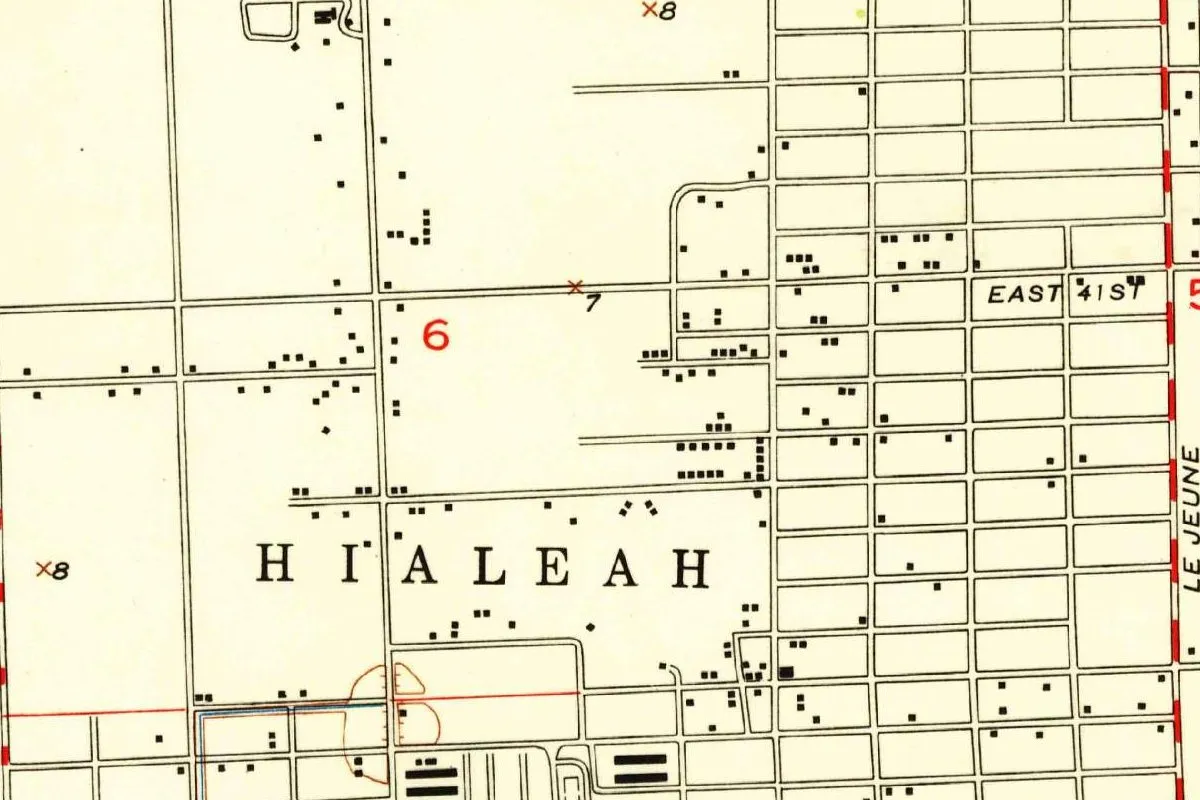
You might be wondering about Calle Ocho, Little Havana, Wynwood, Overtown, Allapattah, Little River, Hialeah, Key Biscayne, Virginia Key, the Tamiami Trail, Collins Avenue, Ocean Drive and South Beach. We haven’t yet found an old source we can show you that explains how those names ended up on the map. Until we do, they stay off this page.
Quick answers
Why is it called Brickell?
The old books we read don’t say it outright. They do place William B. Brickell, an early settler who bought land on the south side of the Miami River, “at what is now called Brickell’s Point.”
Why is it called Coconut Grove?
For coconut trees. A 1921 history says it was named for “a large grove of cocoanut trees on the bay shore,” but settler Ralph Munroe wrote that only two trees were standing when the name came back in the 1880s, so he had the grove replanted.
Why is it called Coral Gables?
Because George Merrick, who built it, named it that. Rex Beach’s 1926 book says Merrick “calls it Coral Gables” and that “It is, indeed, a city of coral gables.”
Why is Miami called the Magic City?
Because of how fast it grew. E. V. Blackman wrote in 1921 that he gave Miami the name himself, calling it a “Magic City” “in the strides that it was making.”
Key dates
- 1873Horace P. Porter applies for a post office named Coconut Grove on Biscayne Bay, according to Ralph Munroe's memoir.
- 1876A hurricane destroys all but two of Porter's coconut trees, Munroe writes.
- 1896Miami incorporates. Until then, says Blackman's 1921 history, the settlement was known as Fort Dallas.
- 1921E. V. Blackman's history of Miami and Dade County prints a section on where the area's community names came from.
- 1926Rex Beach's book on Coral Gables says George Merrick "calls it Coral Gables."
Sponsored
Planning a trip to Miami?
Compare hotels in Miami on Expedia.
See hotels in MiamiWe may earn a commission if you buy through this link. It never changes what we write. Read our affiliate disclosure
Sponsored
Read up before your trip
Browse digital travel magazines on Magzter.
Browse travel magazinesWe may earn a commission if you buy through this link. It never changes what we write. Read our affiliate disclosure
Historical Sources & References
- E. V. Blackman, Miami and Dade County, Florida (1921). William B. Brickell and the Lewis grants (p. 15); “Many desired to name the new city ‘Flagler’” (p. 20); “Twelfth (now Flagler) Street” and “Avenue D (now Miami Avenue)” (p. 27); Brickell’s Point (pp. 59-60); Ralph M. Munroe, “one of the first settlers of Coconut Grove” (p. 72); “originally called Ocean Beach” (p. 77); Perrine and Peters (p. 80); “Community Names”: Fort Dallas, the “Magic City,” Biscayne Bay, Dade County, Coconut Grove, Buena Vista, Lemon City, Arch Creek, Perrine, Goulds, Larkin, Peters and Princeton (p. 86); Redlands, Homestead and Florida City (p. 87).
- Ralph Middleton Munroe and Vincent Gilpin, The Commodore’s Story (1930). Brickell’s sloop and his “Indian trading store on the Miami River” (pp. 68-69); the post office and the two coconut trees (p. 115); Dr. Horace P. Porter, the 1873 grove and the 1876 hurricane (pp. 116-117).
- Rex Beach, The Miracle of Coral Gables (1926). Merrick “calls it Coral Gables” (p. 13).
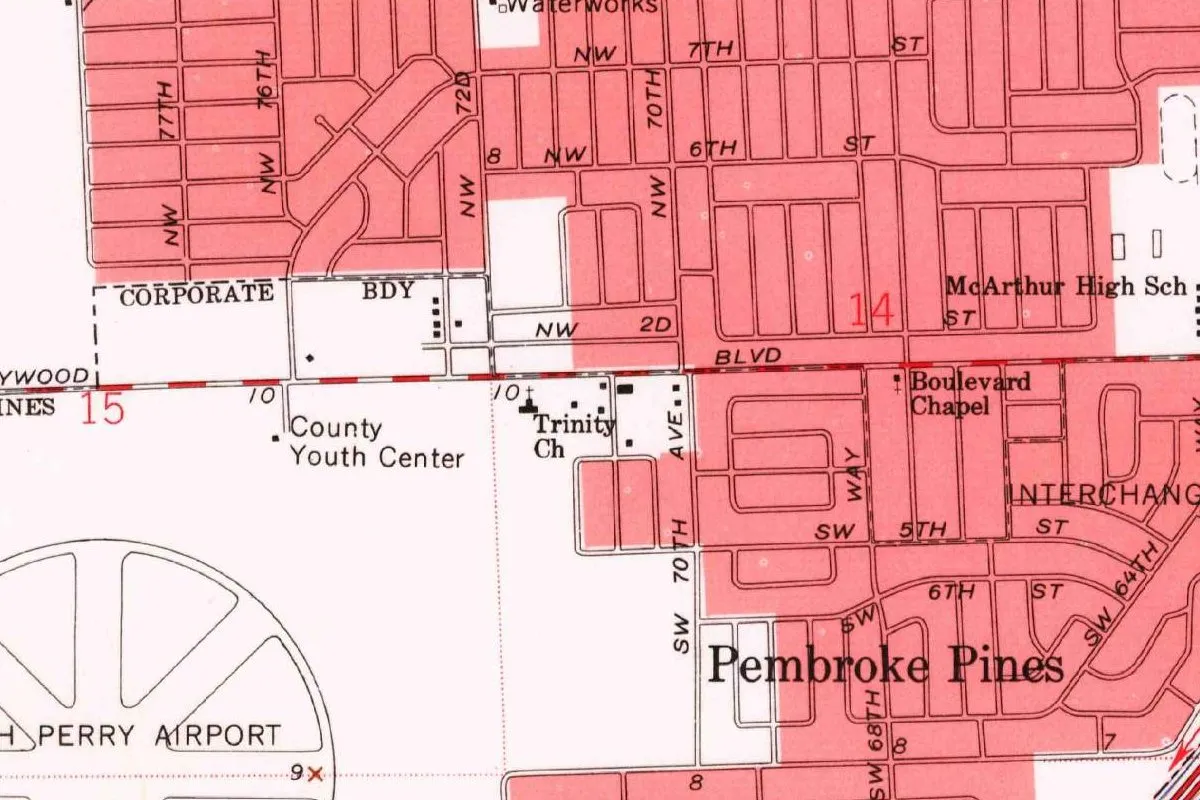
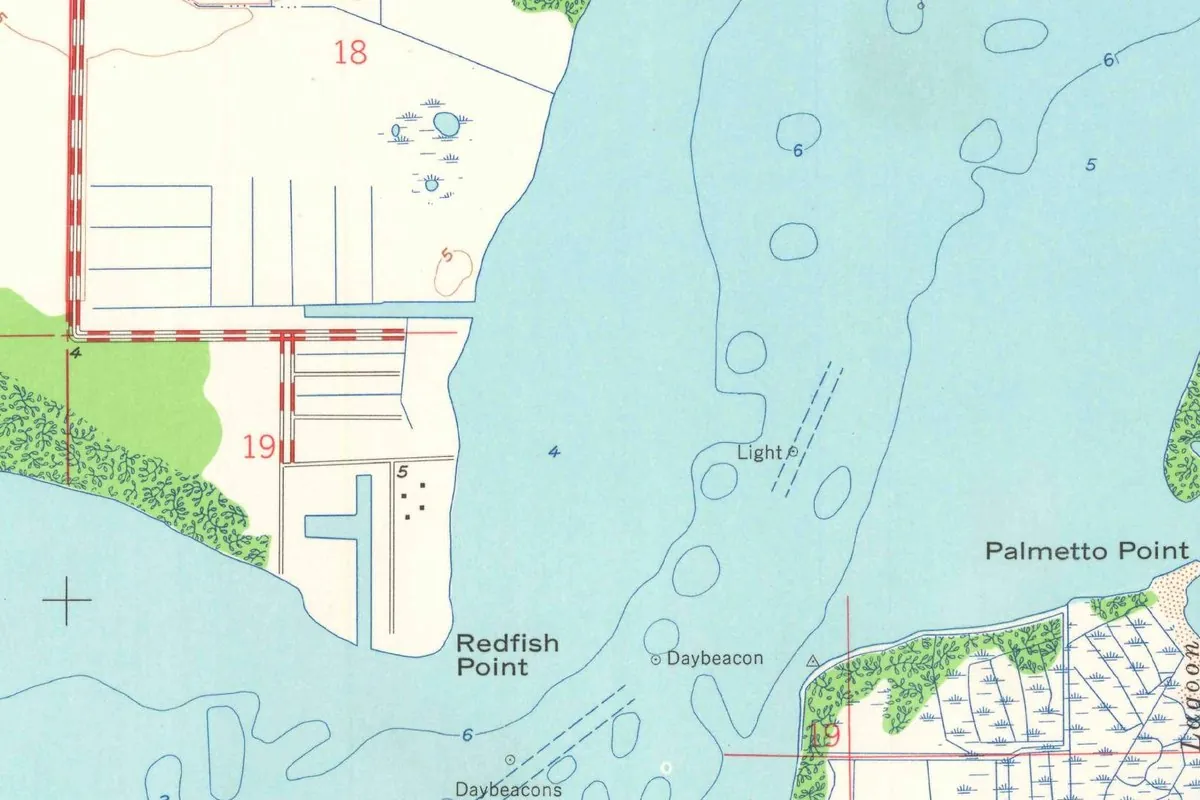
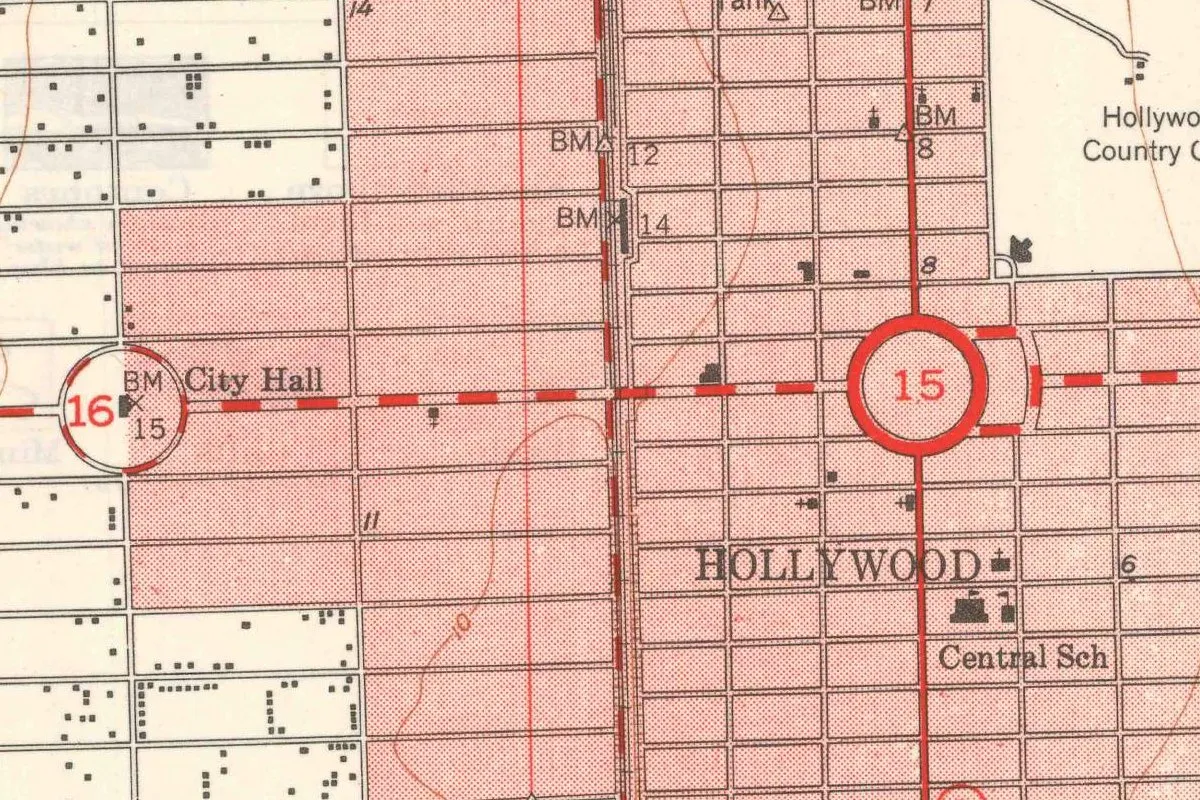
- U.S. Geological Survey, Key Biscayne sheet (1947). The map at the top of this page.
Sponsored
Want a local to show you around?
Book a private tour of Miami with a local guide on GoWithGuide. Each tour is just for your group, and you can change the plan with your guide before you go.
See private tours in MiamiWe may earn a commission if you buy through this link. It never changes what we write. Read our affiliate disclosure
Sponsored
Live in the Miami area with kids?
GetOut sells a yearly membership for family attractions around Miami and South Florida. Check which places are included before you buy, and keep in mind it renews automatically every year unless you turn renewal off in your account.
See GetOut South FloridaWe may earn a commission if you buy through this link. It never changes what we write. Read our affiliate disclosure
Spot something wrong, or know more? Tell us here. You can also email us or use our contact page. Corrections are noted here with their date, never made silently.