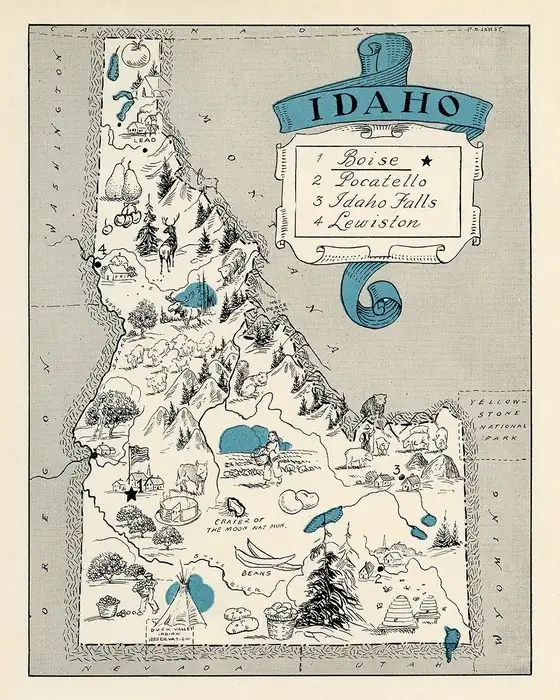
Sun Valley, Idaho: A Publicist Named It in 1936
Sun Valley got its name in 1936 from Steve Hannagan, the publicist Union Pacific chief Averell Harriman hired to market his new ski resort near Ketchum. The city says Hannagan named the lodge and its facilities Sun Valley; the resort says he coined the name and the tagline "Winter sports under a summer sun."
Sun Valley, Idaho, was named in 1936 by Steve Hannagan, the publicist hired to sell Union Pacific’s new ski resort, who called the lodge Sun Valley. The town that grew up around the resort kept the name.
A railroad looking for passengers
The resort came first, and the railroad came before that. The City of Sun Valley tells it this way. After the Great Depression, W. Averell Harriman, the head of the Union Pacific Railroad, was looking for a way to build up passenger traffic to the West. Alpine skiing had picked up momentum after the 1932 Olympic Games at Lake Placid, so Harriman commissioned Count Felix Schaffgotsch to search the Rocky Mountains for the right site.
A 2019 history of Blaine County’s roads, written by Jennifer Gorman for the Idaho Transportation Department, says Harriman’s search ruled out the Rockies (too many trees), Mount Hood (too much rain) and Mount Rainier (too close to Seattle). The city says that in 1936 Schaffgotsch “happened upon the mining town of Ketchum,” in the Wood River Valley. Visit Sun Valley dates his arrival to January 16, 1936, and says Ketchum had only about 100 year-round residents by then. Gorman’s history puts the town at 300.
The telegram, in two versions
Within three days, according to Visit Sun Valley, the count wired Harriman. You’ll find his words quoted two different ways. Visit Sun Valley gives them as:
“Among the many attractive spots I have visited, this combines the more delightful features of any place I have seen in the United States, Switzerland, or Austria for a winter ski resort.”
The city’s version is shorter: “It contains more delightful features for a winter sports center than any other place I have seen in the United States, Switzerland or Austria.” Same idea, same three countries, different wording. Neither page shows the original telegram, so we can’t tell you which is exact.
Building a resort on the Brass Ranch
Union Pacific moved fast. The resort says construction began in May 1936 on the “3,200-acre former Brass Ranch.” Gorman’s history says the railroad bought 3,888 acres from rancher Ernest F. Brass. The city says that “in a mere 7 months and at a cost of $1.5 million,” a four-story lodge went up on the old ranch, with ski runs on nearby Dollar and Proctor mountains. Sun Valley Lodge opened in December 1936.
Notice what wasn’t in the plan: Bald Mountain. The city says the slopes that now carry the resort’s main runs were “beyond the ski technology of the 1930s.” Baldy didn’t open for skiing until December 1939.
Steve Hannagan’s name
Harriman needed people to hear about the place, so he hired Steve Hannagan. The resort calls him a “New York publicity agent.” The city calls him a “public relations whiz” and credits him with having “transformed a sand dune into Miami Beach.” Gorman’s history says the same thing more modestly, describing a man credited with turning “a small sandbar in southern Florida into Miami Beach.”
On the name, the two Sun Valley sources agree. The city says, “It was he who named the lodge and its facilities ‘Sun Valley.’” The resort says Hannagan “coined the resort’s name and first tagline,” and gives the tagline: “Winter sports under a summer sun.”
That tagline is about as close as our sources come to his reasoning. Gorman’s history says the place “was called Sun Valley, named after the pleasant climate of the region,” citing Lalia Boone’s Idaho Place Names and Wendolyn Holland’s Sun Valley: An Extraordinary History. We haven’t seen those books ourselves, so that explanation comes to you secondhand.
Hannagan’s job didn’t end with the name. The city says he encouraged movie stars such as Errol Flynn and Clark Gable to visit, and Gorman notes that Life magazine ran a spread headlined “East goes West to Idaho’s Sun Valley, Society’s Newest Playground.”
Not a new name for Ketchum
Ketchum was already there, with its mining past, and it kept its own name. What the resort did was give the whole area a new label. Gorman’s history puts it plainly: “The name Sun Valley eventually became synonymous with the Wood River Valley area.”
The town of Sun Valley came later. The city says the Village of Sun Valley was incorporated on April 13, 1947. Its first mayor, Win Gray, served for 22 years.
A chairlift from banana boats
The resort’s other famous first was mechanical. The city says Harriman decided his guests should ride up the mountain in more comfort and told Union Pacific engineer James Curran to invent a way. Curran had worked in the tropics on equipment for hoisting bananas onto ships, and with some changes the chairlift was born. The resort calls Sun Valley “the birthplace of the modern chairlift,” on Dollar and Proctor mountains in 1936. Proctor Mountain itself was named for Charles Proctor, who designed the first ski runs, the resort says.
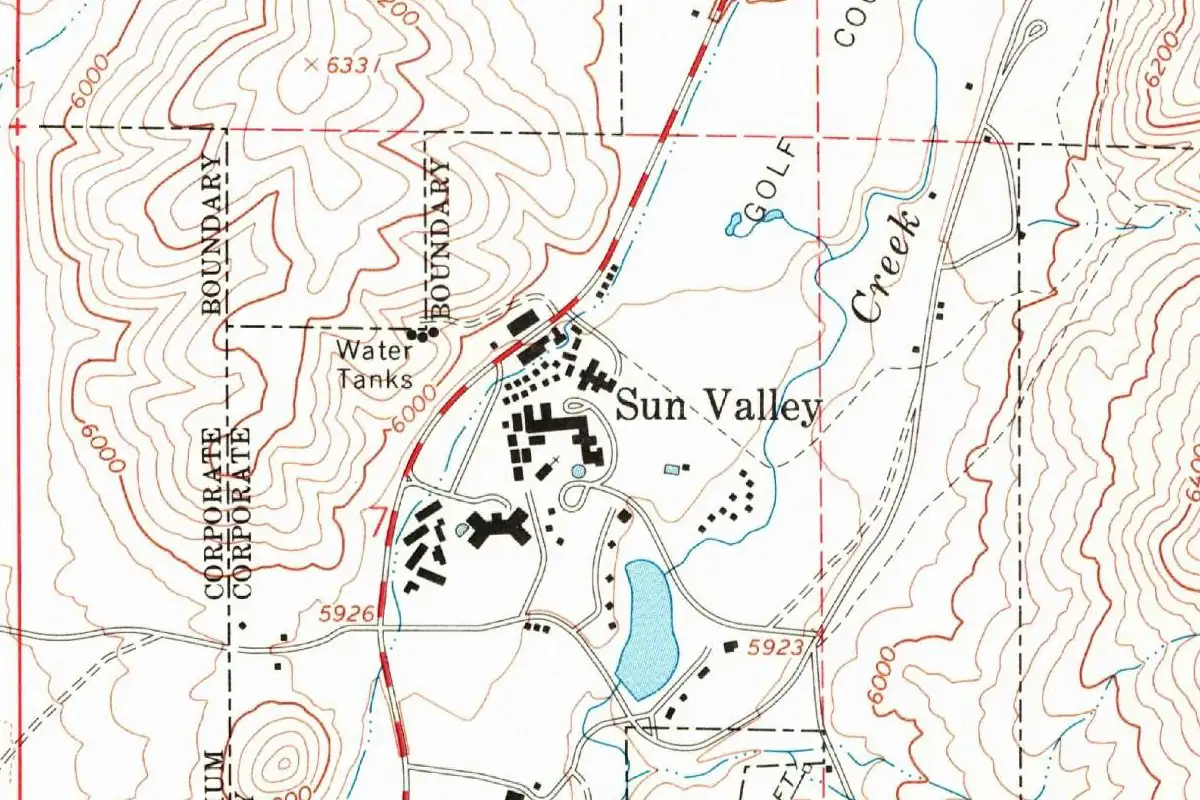
On the 1967 Geological Survey map at the top of this page, you can see the resort buildings with “Sun Valley” printed beside them, a pond, a golf course and the dashed corporate boundary of the village. The spot elevations near the buildings read 5,923 and 5,926 feet (1,805 and 1,806 m).
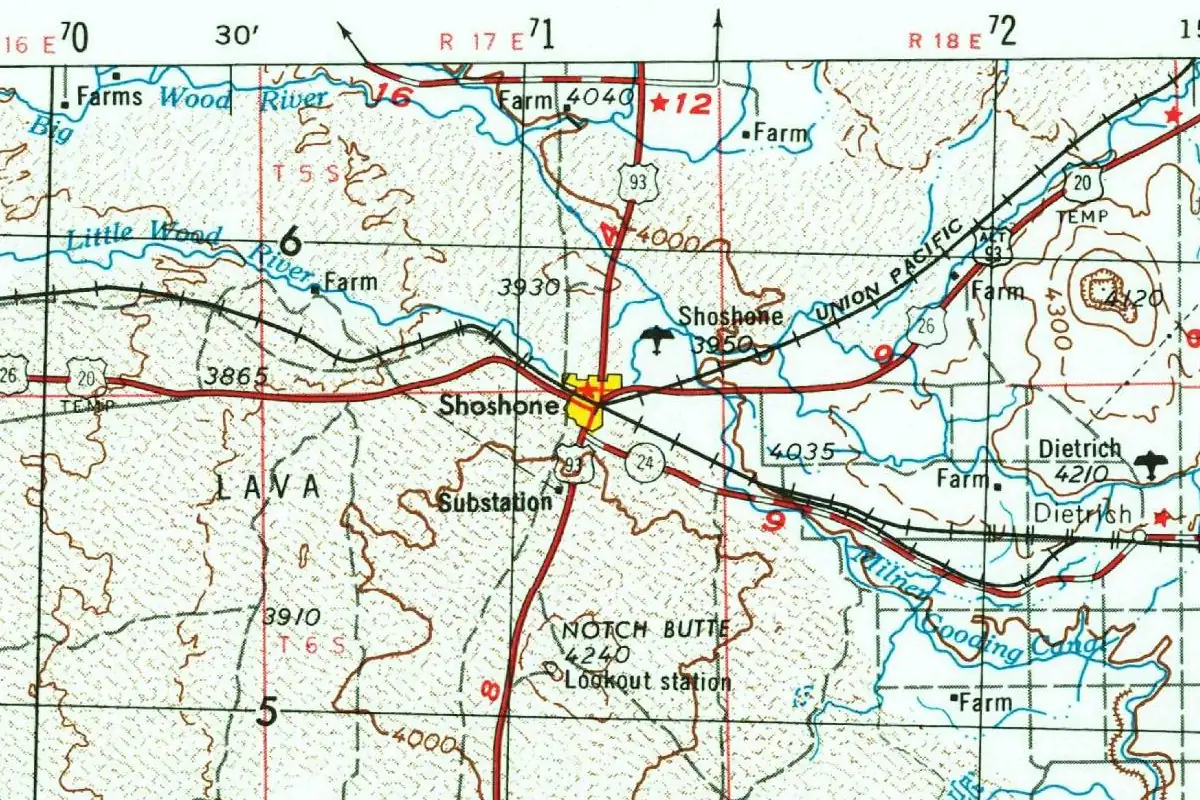
If you like railroad names, Union Pacific officials also renamed Shoshone, back in 1883. There’s more on Idaho’s names on our Idaho page.
Quick answers
Who named Sun Valley, Idaho?
Steve Hannagan, the publicist Averell Harriman hired to promote Union Pacific’s new resort. The City of Sun Valley says he named the lodge and its facilities Sun Valley, and the resort says he coined the name.
Why is it called Sun Valley?
For the sunshine, as far as the sources go. Hannagan’s first tagline was “Winter sports under a summer sun,” and an Idaho Transportation Department history says the place was “named after the pleasant climate of the region.”
Is Sun Valley the same as Ketchum?
No. Ketchum is the older mining town next door. Sun Valley began as Union Pacific’s resort in 1936, and the Village of Sun Valley was incorporated in 1947.
When did Sun Valley open?
Sun Valley Lodge opened in December 1936, after construction began that May on the former Brass Ranch.
Key dates
- 1936Count Felix Schaffgotsch reaches Ketchum on January 16; construction starts in May on the former Brass Ranch, and Sun Valley Lodge opens in December.
- 1937The Sun Valley Inn opens.
- 1939Bald Mountain opens for skiing in December.
- 1947The Village of Sun Valley is incorporated on April 13.
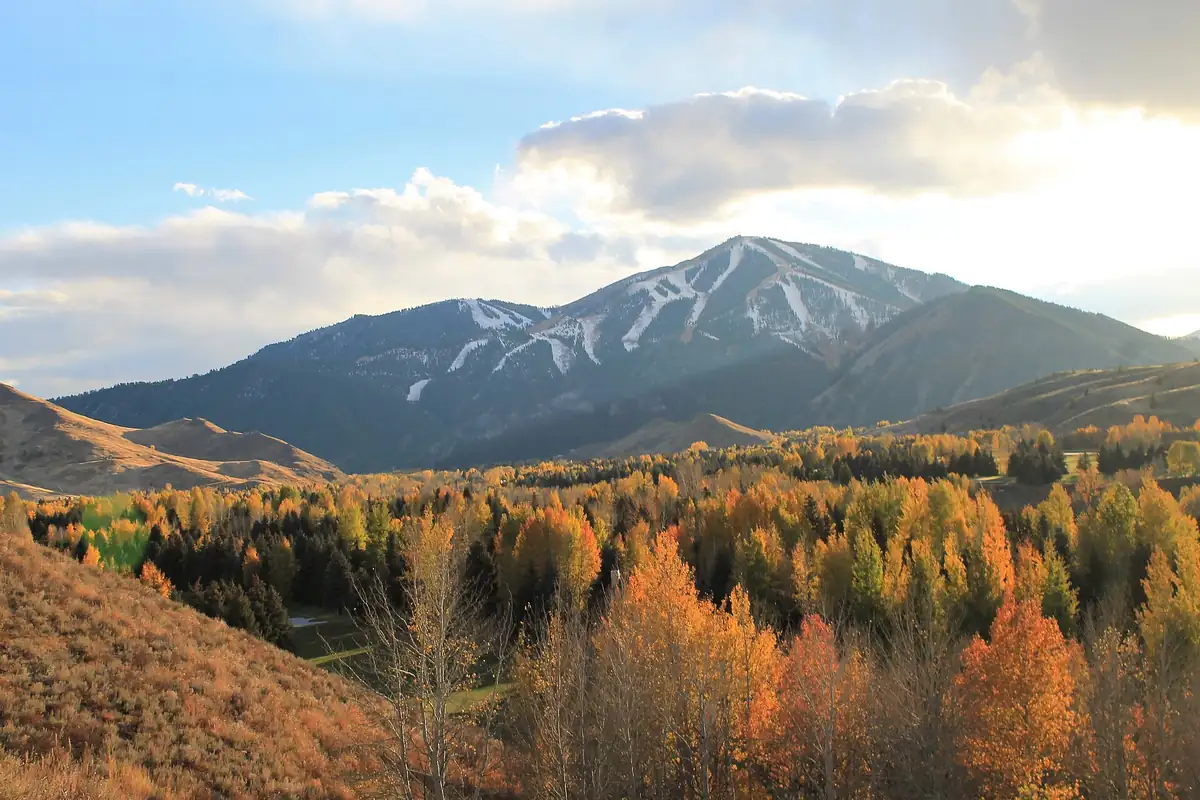
Things to do in Sun Valley, Idaho
Sun Valley Lodge
The lodge that opened the resort in December 1936, built on the former Brass Ranch. Ernest Hemingway finished For Whom the Bell Tolls in Room 206, the resort says.
Proctor Mountain
One of the two mountains where Sun Valley's first ski runs were laid out in 1936, named for ski pioneer Charles Proctor. The resort says remnants of the world's first chairlift terminal are still visible there.
Roundhouse on Bald Mountain
An octagonal restaurant with 46 windows, opened in January 1940 at 7,700 feet (2,347 m) on Bald Mountain. The Roundhouse Express Gondola has carried guests up from the River Run base since 2009.
Wood River Museum of History and Culture
The Community Library's museum in neighboring Ketchum, with a Tribal Room honoring the Shoshone and Bannock Tribes and an online database of the Ernest and Mary Hemingway House and Preserve Collection.
Getting there
Open Sun Valley in Google Maps
Opens in a new tab. The pin is the center of Sun Valley in the USGS place-name record.
The closest airports, Amtrak stations and intercity bus stops, measured in a straight line from the center of Sun Valley.
Airports
- Friedman Memorial (SUN) Hailey 14 mi 22 km
- Joslin Field/Magic Valley Regional (TWF) Twin Falls 84 mi 136 km
- Boise Air Trml/Gowen Field (BOI) 94 mi 151 km
Intercity buses
- Salt Lake Express Sun Valley under 1 mi 0.3 km
Distances are as the crow flies, not by road. We don't list schedules or fares because they change; check with the airline, Amtrak or the bus company before you go. Official data (FAA commercial service airports (2025), FAA airport locations, Amtrak stations and Intercity Bus Atlas) from the FAA and the U.S. Bureau of Transportation Statistics, checked Nov 14, 2026.
Sponsored
Staying in Sun Valley?
Compare hotels in Sun Valley, Idaho, on Expedia.
See hotels in Sun ValleyWe may earn a commission if you buy through this link. It never changes what we write. Read our affiliate disclosure
Historical Sources & References
- City of Sun Valley, “History”. Harriman’s search for passenger traffic, the Schaffgotsch quote in the city’s wording, the four-story lodge built in seven months for $1.5 million, Hannagan naming “the lodge and its facilities,” Curran’s chairlift, and the village incorporated on April 13, 1947.
- Sun Valley Resort, “About”. Construction from May 1936 on the 3,200-acre Brass Ranch, the lodge’s opening in December 1936, Hannagan coining the name and the tagline “Winter sports under a summer sun,” Proctor Mountain, and Baldy’s opening in December 1939.
- Visit Sun Valley, “History of Sun Valley, Idaho”. Schaffgotsch’s arrival on January 16, 1936, Ketchum’s population of about 100, and the telegram in its longer wording.
- Jennifer Gorman, Blaine County Transportation (Idaho Transportation Department, 2019), pp. 31-33. The sites Harriman’s team rejected, Ketchum’s 300 residents (p. 31), the 3,888 acres bought from Ernest F. Brass, the name “after the pleasant climate of the region” (citing Boone and Holland), Hannagan and Miami Beach, the Life headline, and the name becoming “synonymous with the Wood River Valley area” (p. 33).
- GNIS feature 398200 (U.S. Geological Survey). The federal gazetteer entry for Sun Valley, Blaine County, with its coordinates.
- U.S. Geological Survey, Sun Valley quadrangle (1967). The 1:24,000 map the image at the top of this page was cropped from.
Spot something wrong, or know more? Tell us here. You can also email us or use our contact page. Corrections are noted here with their date, never made silently.