Haleakalā: The Maui Volcano Called the House of the Sun
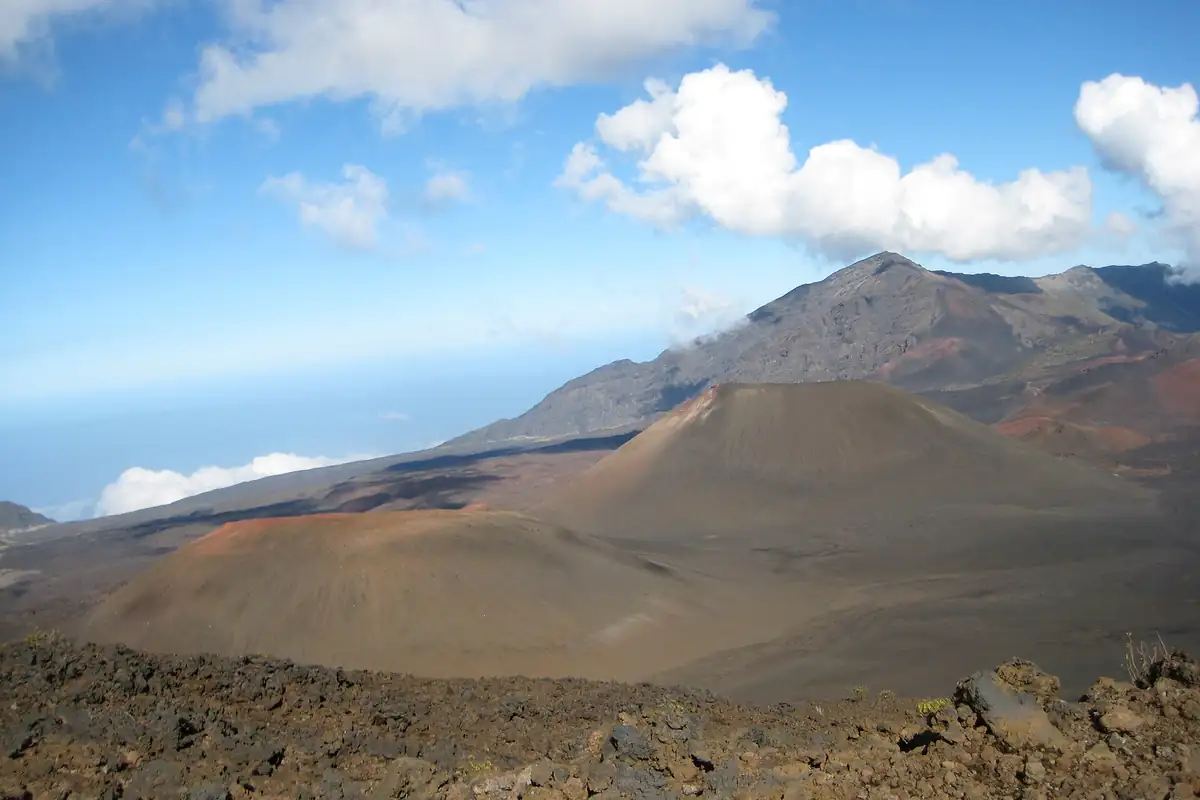
Haleakalā, the great volcano of East Maui, has a name that means “house of the sun,” and a Hawaiian moʻolelo says Māui snared the sun right there. The meaning sits in the old word lists without any argument. The story of why the sun would have a house on a mountain is a different kind of record, and it’s worth telling as what it is: a traditional story, told in more than one way.
Hale, a, ka lā
You can take the name apart like a sentence. The 1922 Hawaiian dictionary by Lorrin Andrews and Henry Parker spells it out in its entry: “Hale, house, a, of, and ka la, the sun. House of the sun.” It gives the word two jobs, too. It’s “the extinct volcano of east Maui,” in that old dictionary’s words, and it’s also “the high mountain peak on the rim of the crater.” The same entry adds that it was “also known as Heleakala.”
The translation was already settled before then. W. D. Alexander, who compiled a list of Hawaiian geographic names for the U.S. Coast and Geodetic Survey in 1903, put a meaning in brackets only “when known.” Haleakala got one: “[house of the sun]; (highest point); Maui; elevation, 10032 feet.” Thomas Thrum’s list of place names, printed in the back of the 1922 dictionary, says the same thing in fewer words: “house of the sun. Crater, Maui.”
Thrum was honest about his method. Because some names are so old, he warned, “not a few definitions are given literally.” So what you’ve got here is a literal reading that every one of these lists agrees on. None of them says who first called the mountain that, or when.
Māui and the sun’s sixteen legs
For the why, the National Park Service, which runs Haleakalā National Park, points to a moʻolelo, a Hawaiian story: “The moʻolelo of Maui plays a large role in this park being named Haleakalā- house of the sun.” In its telling, the sun used to race across the sky so fast that there was hardly time to cook and a prayer couldn’t be finished before dark, and Māui’s mother Hina couldn’t dry her kapa, the bark cloth Hawaiians wore and slept under.
So Māui climbed the ridges of Iao Valley, the valley whose brook turns up in the story of Wailuku, to watch the sun’s path, and saw it come up the eastern side of Haleakalā. Hina gave him fifteen strong cords and sent him up the mountain to a big wiliwili tree, where his grandmother cooked bananas for the sun. At Kaupō he stole her bananas, told her he was Hina’s son, and got one more cord and a stone for an adze. When the sun’s legs came into view, he snared them one by one, tied them to the tree and beat the sun until it begged for its life and promised to go slower.
W. D. Westervelt’s 1910 book, Legends of Ma-ui, tells the same story at greater length, leaning on an account by the missionary A. O. Forbes. In his telling, the sun had sixteen long legs, and the deal they struck meant longer days, though “half the time he might go quickly as in the winter time.” Westervelt also prints a second version, where Māui threw a lasso from the summit and broke off the sun’s strong rays one at a time until only the weak ones were left.
That’s not the only difference. The Park Service notes that the moʻolelo have been shared “by many Hawaiians over long periods of time,” and that versions “may vary, in some cases significantly.” Even on the basics, Westervelt says, some Hawaiian stories put Māui’s home at Kauiki, a foothill of Haleakalā, while most put it near Hilo, on the island of Hawaii.
Westervelt’s detours
Westervelt couldn’t resist a big idea. La, or Ra, he pointed out, is the word for the sun across parts of Polynesia, and Ra was the sun god of ancient Egypt, so “the antiquities of Polynesia and Egypt touch each other.” He offered no proof, and none of the other sources here goes anywhere near it. Treat it as a 1910 author thinking out loud.
He did leave one more thread on Maui. After the fight with the sun, he wrote, Māui chased down Moemoe, the man who’d mocked him, all the way through Lahaina. It’s a fitting stop, since the sun turns up in one of the stories told about Lahaina’s own name, too.
Haleakalā, with the kahakō
The federal place-names record lists the official name as Haleakalā, with the kahakō, or macron, over the last a. Its point for the summit sits in Maui County, Hawaii, on the Kaupo map sheet. The record also keeps other forms as variants: Haleakala, Haleakala Peak, Haleakala Volcano, Mauna Haleakala and Mauna Halakala. The crater has an entry of its own, Haleakalā Crater.
The National Park Service also asks something of visitors. To Hawaiians, it says, the rocks at Haleakalā are a physical form of the volcano goddess Pele, and taking them is disrespectful. It’s against the law in a national park, too.
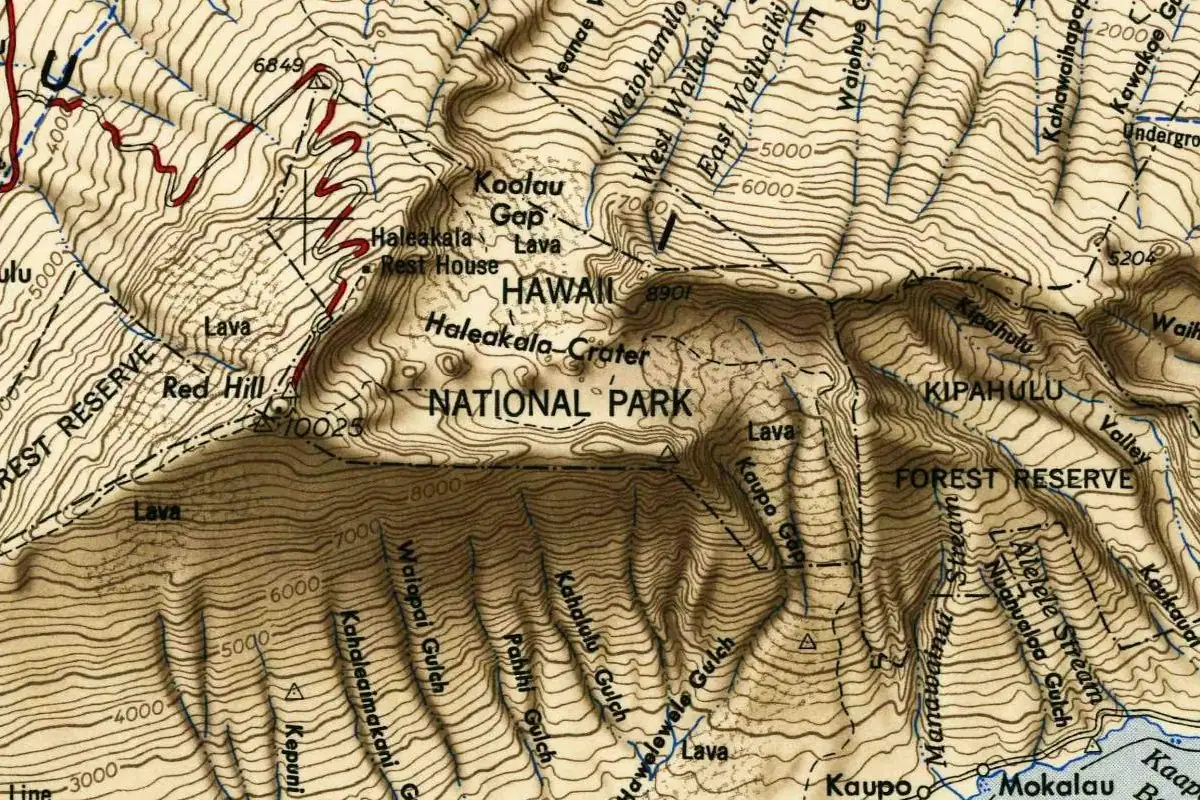
If you look at the 1954 Geological Survey map at the bottom of this page, you’ll find Koolau Gap at the top of the crater and Kaupo down by the coast. Westervelt thought the eastern gap, the Koolau, was where Māui “probably planned to catch the sun,” and his story sends Māui up the mountain to Kaupō. Both of them are still on the map.
Quick answers
What does Haleakalā mean?
“House of the sun.” The 1922 Andrews-Parker dictionary breaks it into hale (house), a (of) and ka lā (the sun), and W. D. Alexander’s 1903 list gives the same meaning.
Did Māui really snare the sun on Haleakalā?
It’s a traditional Hawaiian story, not a historical record. The National Park Service says the moʻolelo of Māui snaring the sun “plays a large role” in the park being named Haleakalā, and notes that versions of a moʻolelo can vary.
Is it Haleakala or Haleakalā?
Both show up. The federal place-names record makes Haleakalā, with the kahakō over the last a, the official spelling and keeps Haleakala as a variant. The 1922 dictionary adds that it was “also known as Heleakala.”
Where did Māui catch the sun?
At a wiliwili tree on the mountain. The Park Service’s version sends Māui up Haleakalā to Kaupō to find it, and Westervelt’s 1910 book guessed Māui meant to catch the sun at the Koolau Gap, on the crater’s east side.
Key dates
- 1903W. D. Alexander's federal list of Hawaiian names translates Haleakala as "house of the sun."
- 1910W. D. Westervelt prints the story of Māui snaring the sun from the top of Haleakalā.
- 1922The Andrews-Parker dictionary splits the name into hale, a and ka la: "House of the sun."
- 1954A USGS map of Maui labels Haleakala Crater, Koolau Gap and Kaupo.
Historical Sources & References
- National Park Service, Haleakalā National Park, “Deities”. The park’s own telling of “Māui Snaring the Sun”: “The moʻolelo of Maui plays a large role in this park being named Haleakalā- house of the sun”; Hina’s kapa, the ridges of Iao Valley, the fifteen cords, the wiliwili tree at Kaupō, the grandmother and the adze. Also the note on Pele and the request not to take rocks.
- National Park Service, Haleakalā National Park, “Moʻolelo (Stories)”. What a moʻolelo is, and the caution that versions shared “by many Hawaiians over long periods of time” may vary, “in some cases significantly.”
- W. D. Alexander, Hawaiian Geographic Names (U.S. Coast and Geodetic Survey, 1903), p. 402. “Haleakala; [house of the sun]; (highest point); Maui; elevation, 10032 feet.” The list’s key says the brackets hold “the meaning when known.”
- Andrews and Parker, A Dictionary of the Hawaiian Language (1922). Entry “Haleakala” (p. 98): “Hale, house, a, of, and ka la, the sun. House of the sun,” the volcano and the peak on the rim, “also known as Heleakala.” Thomas G. Thrum’s “Hawaiian Place Names” in the same volume (p. 629): “house of the sun. Crater, Maui,” with his warning that “not a few definitions are given literally.”
- W. D. Westervelt, Legends of Ma-ui, a Demi God of Polynesia, and of His Mother Hina (1910). Chapter IV, “Maui Snaring the Sun” (pp. 40–48): the story after A. O. Forbes, the sixteen legs, the winter and summer bargain, the lasso version, “Mt. Hale-a-ka-la… means House-of-the-sun,” the La and Ra comparison, the Koolau gap and Moemoe at Lahaina. P. 7: Māui’s home at Kauiki, “a foothill of the great extinct crater Haleakala,” or near Hilo. P. 13: Haleakala, “the mountain from which Maui the demi-god snared the sun.”
- GNIS feature 358929, Haleakalā (U.S. Geological Survey). The federal record: official name Haleakalā (Summit, Maui County, Kaupo map sheet), with the variant names Haleakala, Haleakala Peak, Haleakala Volcano, Mauna Haleakala and Mauna Halakala. The crater is a separate entry, GNIS 358930, Haleakalā Crater.
Spot something wrong, or know more? Tell us here. You can also email us or use our contact page. Corrections are noted here with their date, never made silently.