Olympic Mountains: Santa Rosalía Before It Was Olympus
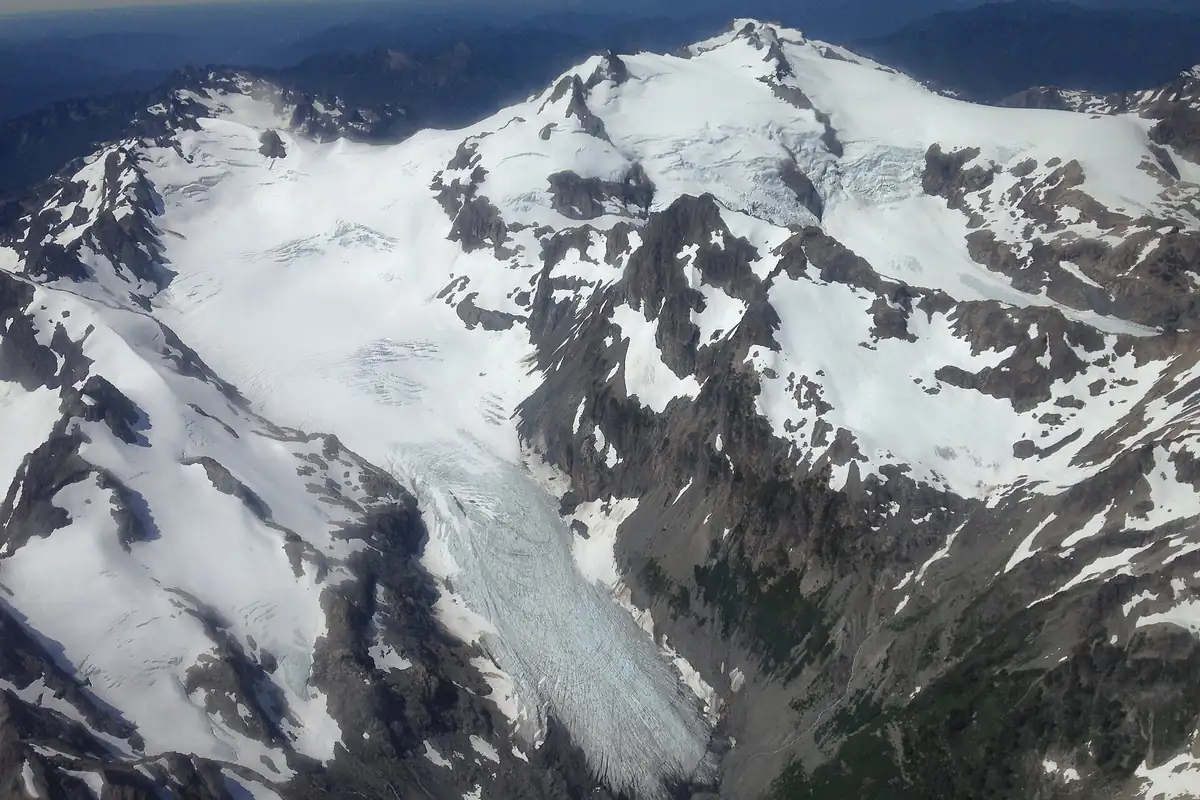
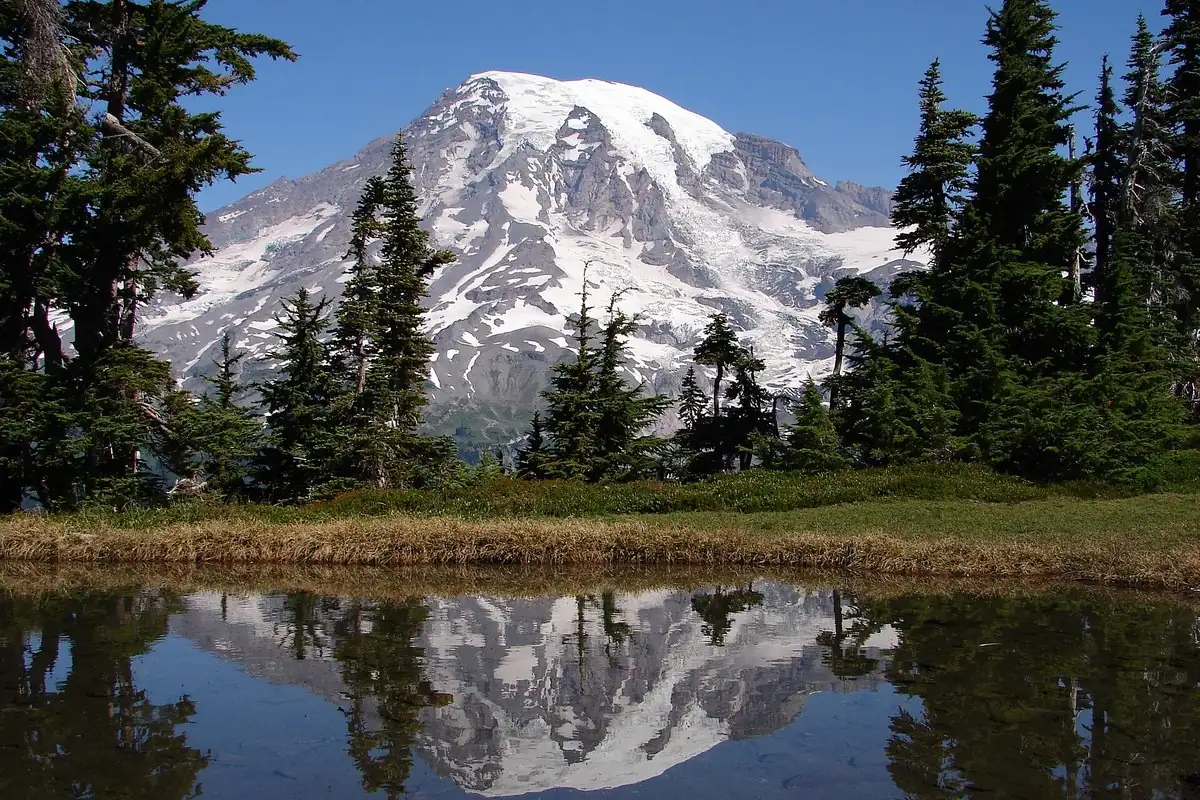
The Olympic Mountains are named for Mount Olympus, a peak an English trader named in 1788, 14 years after a Spanish captain called it Santa Rosalía. The trader, John Meares, apparently didn’t know about the Spanish name, and his stuck.
Santa Rosalía, 1774
The first European name for the mountain was Spanish. In 1774, Juan Pérez sailed up this coast, saw a snowy peak and named it Santa Rosalía. A National Park Service handbook on Olympic National Park, written by Gunnar Fagerlund in 1954, says that made Pérez the first European to name a geographic feature in what’s now the state of Washington.
Edmond Meany, the University of Washington historian who wrote the 1923 book on the state’s place names, records the name as “El Cero de la Santa Rosalia.” The federal place-names database keeps a longer form, “El Cerro Nevada de Santa Rosalia,” as a variant for Mount Olympus. Either way, it didn’t get far. Meany notes that the Spanish chart “was not published until years had elapsed.”
“Obtained the name of Mount Olympus”
Meares came along in the summer of 1788. His ship had a rough start to July: in thick weather and a hard wind, he wrote, he was hoping just to clear Destruction Island. Then the weather turned. On July 4 the land came into view to the north and northeast, and “in the Northern quarter it was of a great height, and covered with snow.” In his 1790 book, he named it in one sentence: “This mountain, from its very conspicuous situation, and immense height, obtained the name of Mount Olympus.”
That’s all he said about it. The word itself came from Greece: Henry Gannett’s 1905 place-name book for the U.S. Geological Survey says Washington’s capital was “named from the ancient mountain of Greece.” Meany puts the whole episode bluntly: “Not knowing or not caring that it had been named ‘El Cero de la Santa Rosalia,’ he called it Mount Olympus, which name has since remained.”
Vancouver wasn’t sure it was the same peak
Four years later, in the spring of 1792, the British captain George Vancouver sailed the same coast. In late April he saw a peak whose summit “was divided into a very elegant double fork.” It “was generally considered, though it was not confirmed by its latitude, to be the mount Olympus of Mr. Mears,” he wrote. Meares had put Olympus at 47°10’ north, and Vancouver’s ship was already at 47°38’, with the mountain still to the north of it.
He kept the name anyway, and then he started stretching it. From a harbor on the Strait of Juan de Fuca, he described “a ridge of high craggy mountains covered with snow” that he thought were “connected with the mountain we took for mount Olympus.” In May, from an anchorage that Meany places opposite today’s Seattle, he wrote of “the ridge of mountains on which mount Olympus is situated,” and admitted he couldn’t pick out the forked peak from that side. It was the same voyage on which he named Mount Rainier for a friend.
A century to settle on “Olympic”
Meany says the range “received its proper name through a century of evolution,” and you can follow it through the books he cites. The Wilkes Expedition of 1841 used both “Mount Olympus Range” and “Olympic Range.” Theodore Winthrop, the young writer who called Mount Rainier “Tacoma,” visited Puget Sound in 1853 and wrote in The Canoe and the Saddle that from his canoe “the noble group of the Olympian Mountains became visible.” A territorial map from 1857 shows “Olympic Range,” the Coast Survey’s George Davidson used “Olympus Range,” and a 1917 geographic dictionary of the state uses “Olympic Mountains.”
Meany didn’t love any of the “Range” versions. The mountains have “no general axis,” he wrote, so “it is therefore hardly proper to use the word ‘Range’ as part of the name.” The federal place-names database settled on Olympic Mountains as the official name, and it still lists Olympus Range, Olympian Mountains and Coast Range as variants. Meany also records two Native names: “Sun-a-do,” which J. A. Costello said the Duwamish used, and “S’ngaz-anelf,” which Winthrop gave for the Victoria Indians. Meany doesn’t say what either one means.
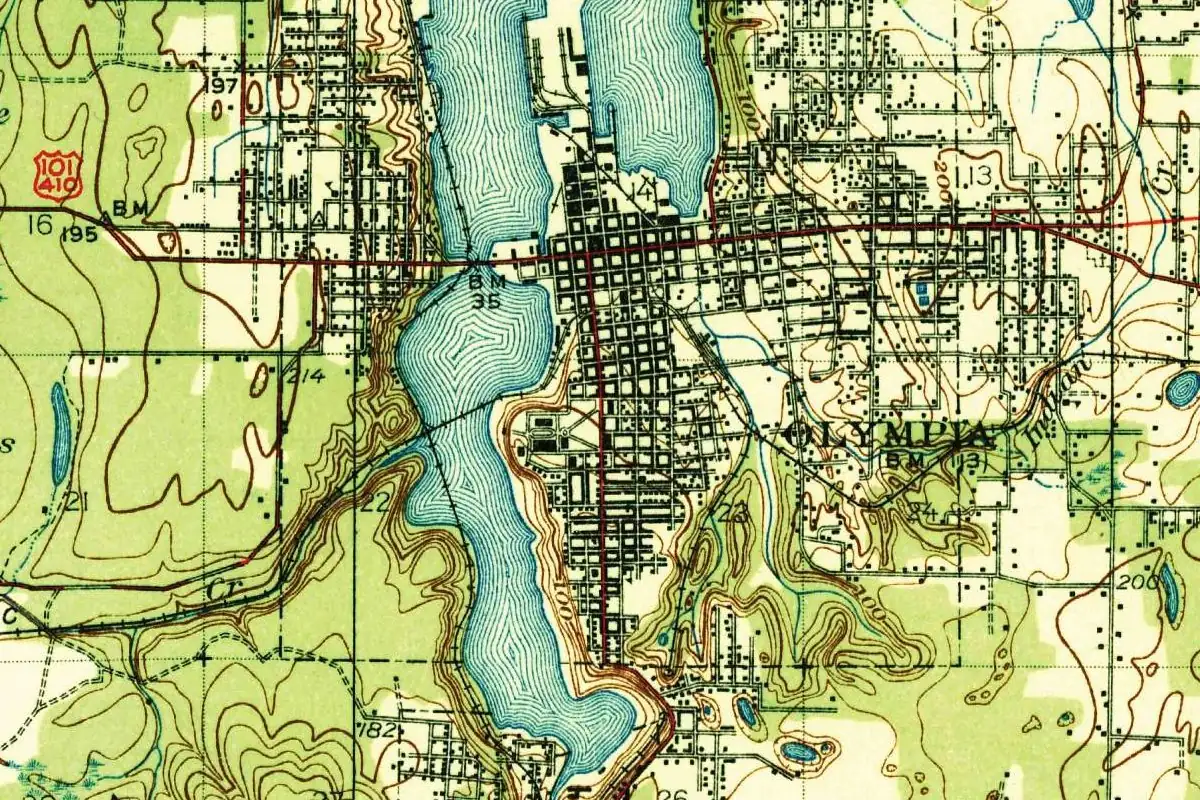
From the mountains, the word spread. On February 22, 1897, President Grover Cleveland created the Olympic Forest Reserve, which the park’s historic resource study says covered “the entire central portion of the Olympic Peninsula.” It became Olympic National Forest in 1907, Mount Olympus National Monument was proclaimed inside it on March 2, 1909, and Olympic National Park was established on June 29, 1938. Washington’s capital is part of the same family: Meany passes along an early account, by way of the historian Hubert Howe Bancroft, that the name Olympia “was obtained from the Olympic Mountains.”
The Hoh, and the rain forest on its banks
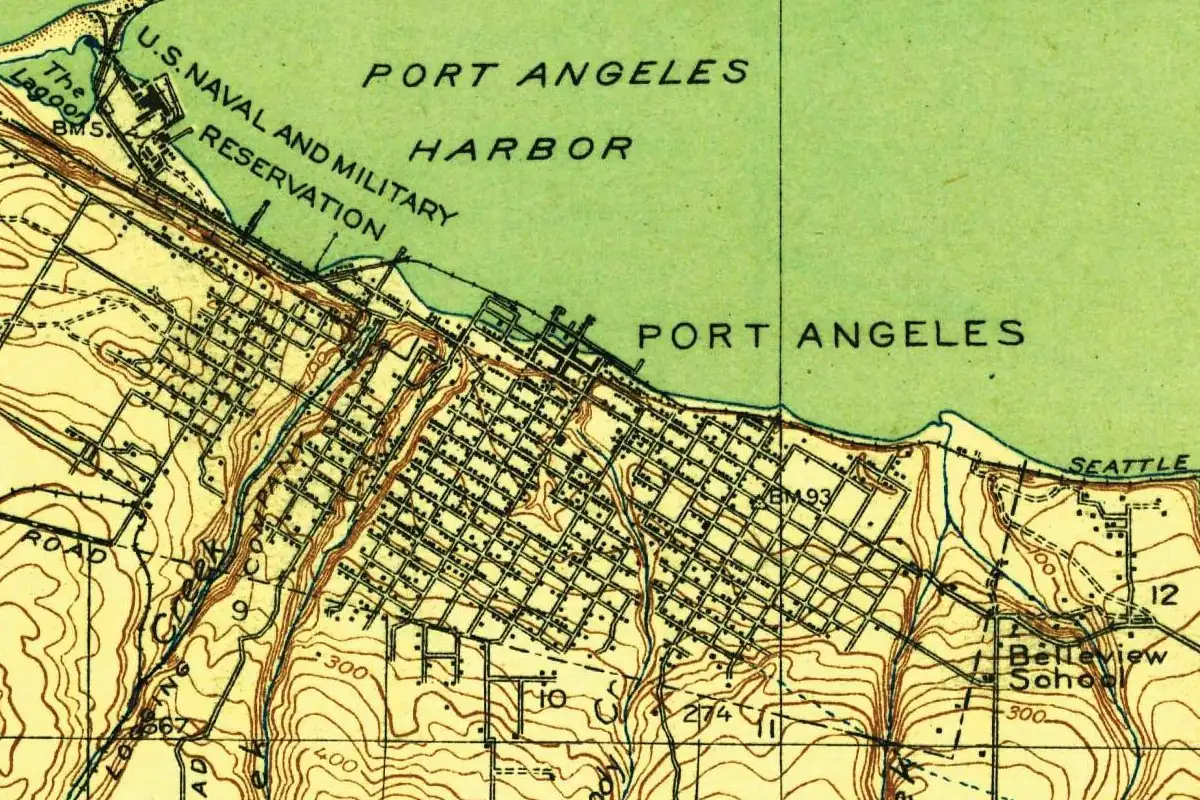
If you came here because of the rain forest, it has its own name story. The National Park Service says the Hoh Rain Forest takes its name from the Hoh River, which runs from Mount Olympus toward the Pacific. It’s pronounced “Hoe,” the park says. The forest gets about 140 inches (3.6 m) of rain a year, and you’ll find it on the west side of the park, about two hours by car from Port Angeles.
The river had an English name first. Meany says that in 1787 Indians killed a boat’s crew sent ashore for fresh water by Captain C. W. Barkley, who called it Destruction River. That name later moved to the island offshore, where the Spanish had suffered a similar loss in 1775, and the river “then obtained the Indian name of Hoh,” spelled at different times Hooch, Holes, Huch, Hooh and Ohahlat. The Smithsonian’s Handbook of American Indians, first published in 1907, describes the Hoh as a band of the Quileute living at the mouth of the river, without translating the word.
What “Hoh” means
Nobody has a settled answer. The Park Service lists three possibilities: a Quileute word, “Ohalet,” meaning “fast moving water” or “snow water”; a Quinault word, “Qu,” meaning “boundary”; and a claim that it means “man with quarreling wives.” Its own conclusion is that the real history behind the name “appears to be lost to time.” The Hoh Tribe, on its website, gives the river’s name as chalak’At’sit, “the southern river,” and says the Hoh call themselves Chalat’. So in this corner of Washington, a rain forest with a Native name nobody can fully explain grows at the foot of a mountain with a Greek one.
Quick answers
Why is it called the Olympic Peninsula?
None of the sources here say who first called it that. They do show the chain behind the word: Meares named Mount Olympus in 1788, the mountains around it took the name over the next century, and by 1923 Edmond Meany could write about “what is known as the Olympic Peninsula.”
Who named Mount Olympus in Washington?
John Meares, an English trader, on July 4, 1788. His book says that the mountain, “from its very conspicuous situation, and immense height, obtained the name of Mount Olympus.”
What was Mount Olympus called before?
Santa Rosalía. The Spanish captain Juan Pérez gave it that name in 1774, but his chart wasn’t published for years, and Meares, “not knowing or not caring,” renamed it.
What does Hoh mean in Hoh Rain Forest?
No one’s sure. The National Park Service lists three explanations, including a Quileute word for “fast moving water” or “snow water,” and says the real history “appears to be lost to time.” The Hoh Tribe gives the river’s name as chalak’At’sit, “the southern river.”
Key dates
- 1774Juan Pérez sees the mountain now called Mount Olympus and names it Santa Rosalía.
- 1787Capt. C. W. Barkley names today's Hoh River Destruction River after Indians kill a boat's crew there.
- 1788July 4: John Meares sees the snowy peak from his ship, and it "obtained the name of Mount Olympus."
- 1792George Vancouver takes a peak on the coast to be "the mount Olympus of Mr. Mears," though the latitude doesn't match.
- 1853Theodore Winthrop travels the Puget Sound country; his book later calls them "the Olympian Mountains."
- 1857The Surveyor General's map of Washington Territory shows "Olympic Range."
- 1897February 22: President Cleveland creates the Olympic Forest Reserve.
- 1909March 2: Mount Olympus National Monument is proclaimed.
- 1938June 29: Olympic National Park is established.
Historical Sources & References
- John Meares, Voyages Made in the Years 1788 and 1789 (1790), pp. 160, 165. The naming itself, July 4, 1788: “This mountain, from its very conspicuous situation, and immense height, obtained the name of Mount Olympus.” P. 160 has the stormy days off Destruction Island just before.
- George Vancouver, A Voyage of Discovery to the North Pacific Ocean, vol. 1 (1798), pp. 214, 227, 261. The forked peak “generally considered, though it was not confirmed by its latitude, to be the mount Olympus of Mr. Mears”; the “ridge of high craggy mountains” connected with it; and “the ridge of mountains on which mount Olympus is situated.”
- Edmond S. Meany, Origin of Washington Geographic Names (1923). Pérez’s “El Cero de la Santa Rosalia,” the unpublished Spanish chart and Meares’s renaming (“Mount Olympus,” pp. 176–177, and the introduction); the “century of evolution” of the range’s name, Native names and the forest and monument dates (“Olympic Mountains,” pp. 199–200); Olympia “obtained from the Olympic Mountains,” an account Meany takes from Bancroft (“Olympia”); Barkley’s Destruction River and the spellings of Hoh (“Hoh River,” p. 114, and “Destruction Island”).
- Gunnar O. Fagerlund, Olympic National Park, Washington (NPS Natural History Handbook No. 1, 1954). Pérez named the present Mount Olympus “Santa Rosalia” in 1774, the first European name for a feature in Washington; Meares, “not knowing of the earlier discovery,” christened it Mount Olympus.
- Gail H. E. Evans, Historic Resource Study, Olympic National Park (NPS, 1983), appendix A. The Olympic Forest Reserve of February 22, 1897, covering “the entire central portion of the Olympic Peninsula”; Olympic National Forest (1907); Mount Olympus National Monument (March 2, 1909); Olympic National Park (June 29, 1938).
- Theodore Winthrop, The Canoe and the Saddle (1862), pp. 28-29. “The noble group of the Olympian Mountains became visible.”
- Henry Gannett, The Origin of Certain Place Names in the United States (USGS, 1905), entry “Olympia”. Olympia “named from the ancient mountain of Greece.”
- National Park Service, “Visiting the Hoh Rain Forest”. The rain forest named for the Hoh River, which flows from Mount Olympus; “Hoe” as the pronunciation; three explanations of the word “Hoh” and the conclusion that its history “appears to be lost to time”; about 140 inches of rain a year.
- Hoh Tribe, “Culture”. The tribe’s own account: the Hoh River is chalak’At’sit, “the southern river,” and the Hoh call themselves Chalat’.
- Frederick Webb Hodge, ed., Handbook of American Indians, part 1 (BAE Bulletin 30), p. 556. Hoh: “A band of the Quileute living at the mouth of Hoh r.,” with old spellings Hooch, Holes, Hooh and Huch; no translation.
- GNIS feature 1531925, Olympic Mountains (U.S. Geological Survey). The official name, with Olympus Range, Olympian Mountains and Coast Range as variants. Also online: Mount Olympus, feature 1524047, with “El Cerro Nevada de Santa Rosalia” and “Sunh-a-do” as variants, and Hoh River, feature 1531464, with Destruction River among its variants.
Spot something wrong, or know more? Tell us here. You can also email us or use our contact page. Corrections are noted here with their date, never made silently.