Lake McDonald and How Glacier National Park Got Its Name
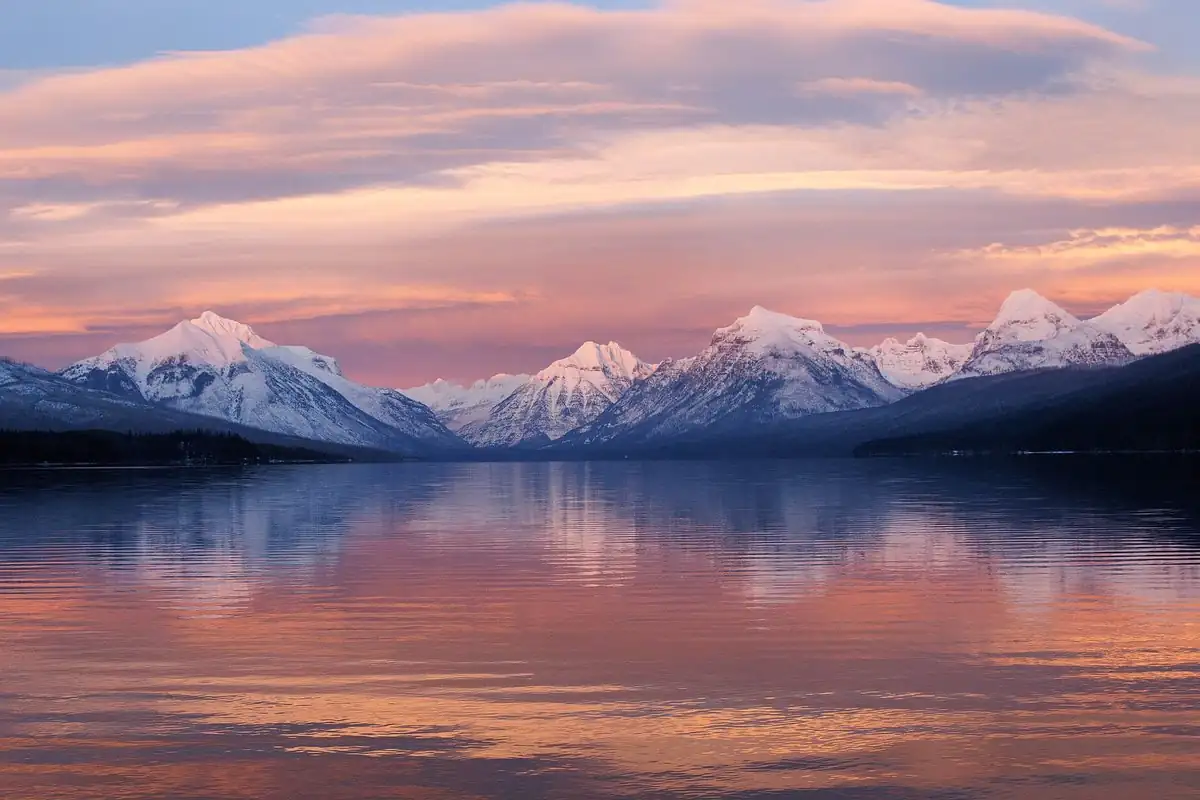
Lake McDonald, the biggest lake in Glacier National Park, is said to carry the name a fur trader carved into a tree on its shore around 1878. That’s his own story, at least, and the one the park’s histories tell, but one early park historian thought the name came from a different McDonald, a trapper with a cabin on the lake. The park around it got its name in a more obvious way: from the glaciers still clinging to its mountains when it was created in 1910.
A name cut into a tree
The trader was Duncan McDonald, son of Angus McDonald, a Hudson’s Bay Company factor. And unusually for a place-name story, you can read his own version. A 1970 Park Service study, the History Basic Data Study by James W. Sheire, says Duncan “claimed that in 1878 he named Lake McDonald,” and quotes an undated letter he wrote to a Mr. T. D. Duncan, now in the Glacier files of the Montana Historical Society.
“In the fall of 1878 in November, I camped at the foot of the lake,” Duncan wrote. He was packing a cargo from a Missoula firm, with two other packers, and had hired “Eneas, the Kootenai chief and another Indian” as guides as far as the lake, to show him the trail that forked north up the Flathead River. Then, while he waited for his horse herder, “there was a tree standing near the fire place. I took an ax and blazed it and put my name on the tree and the date just to pass the time.”
In his telling, the name simply caught on. “Everybody after I passed with the name on the tree had to be noticed,” he wrote. Hunters, prospectors and trappers had no other way to describe the place than by the inscription. Keep in mind the letter has no date, so you can’t tell how long after 1878 he wrote it, and it’s quoted here through Sheire’s study, not from the original.
Birch, cedar or just “a tree”?
The story got retold, and it changed a little each time. Donald H. Robinson’s 1960 history of the park, written with the National Park Service, puts it “in about the year 1878” and says Duncan’s companions were “a group of Selish Indians.” In his version, a band of unfriendly Indians blocked the North Fork route, so Duncan swung into the next valley, camped by the lake and “carved his name upon the bark of a birch tree.” People who saw it “gradually began to call the lake ‘McDonald’s Lake,’ and as such the name became fixed.”
A History of Apgar put together at the village school around 1950 tells it with Blackfeet waiting in a mountain pass and “one of the big cedar trees.” A 2012 study of the park’s headquarters area, written for the Park Service, repeats that cedar version and says the name “most likely” comes from Duncan McDonald. Duncan himself only says he blazed “a tree” with an ax. So the man, the year and the inscription hold steady. The species of tree, the guides and the reason for the stop don’t.
The other McDonald
There’s a second version, and it comes from the same place as the Terry Lake story below. Sheire writes that L. O. Vaught, whom he calls Glacier’s first historian, “disputes this story, saying that the lake was named after a trapper named McDonald who had a cabin on the lake.” Sheire doesn’t say where Vaught got that, and he doesn’t name the trapper.
Duncan’s version carries more weight. It’s a firsthand account, Sheire calls his description of the trail up the North Fork “probably accurate,” and Robinson, the Apgar school history and the 2012 study all go with Duncan. But Vaught spent years researching the park’s history, so his doubt is on the record, and that’s why this story is marked as disputed.
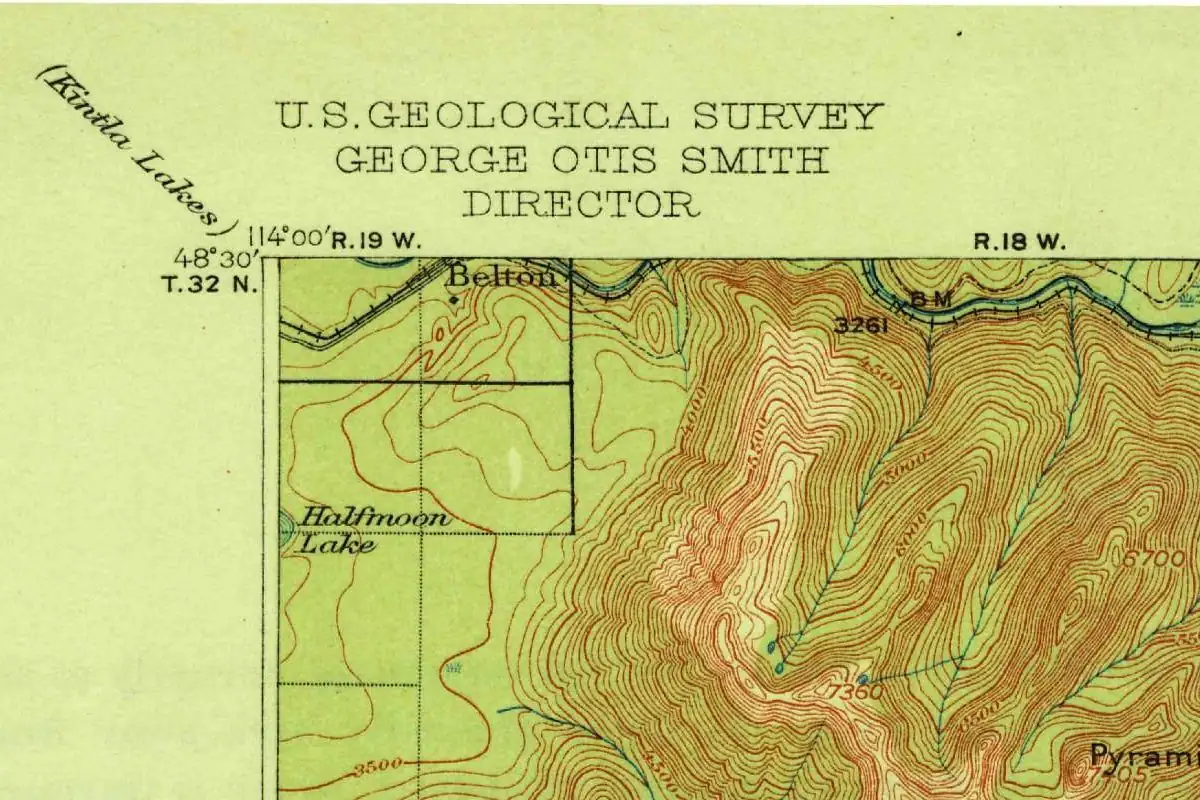
By 1900, the name was settled enough to print. That September, a botanist from Minnesota published “Lake McDonald and Vicinity,” describing the ride from the railroad stop at Belton to “the foot of Lake McDonald,” about 3 miles (5 km) away.
Terry Lake first
Before it was McDonald’s, the lake had another name. Robinson’s list of the park’s place names says it was “then known as ‘Terry Lake,’ for General Terry, an outstanding Indian fighter of the west.” The federal place-names database still keeps Terry Lake as a variant, from a Board on Geographic Names card dated 1900, alongside McDonald Lake from an 1894 card.
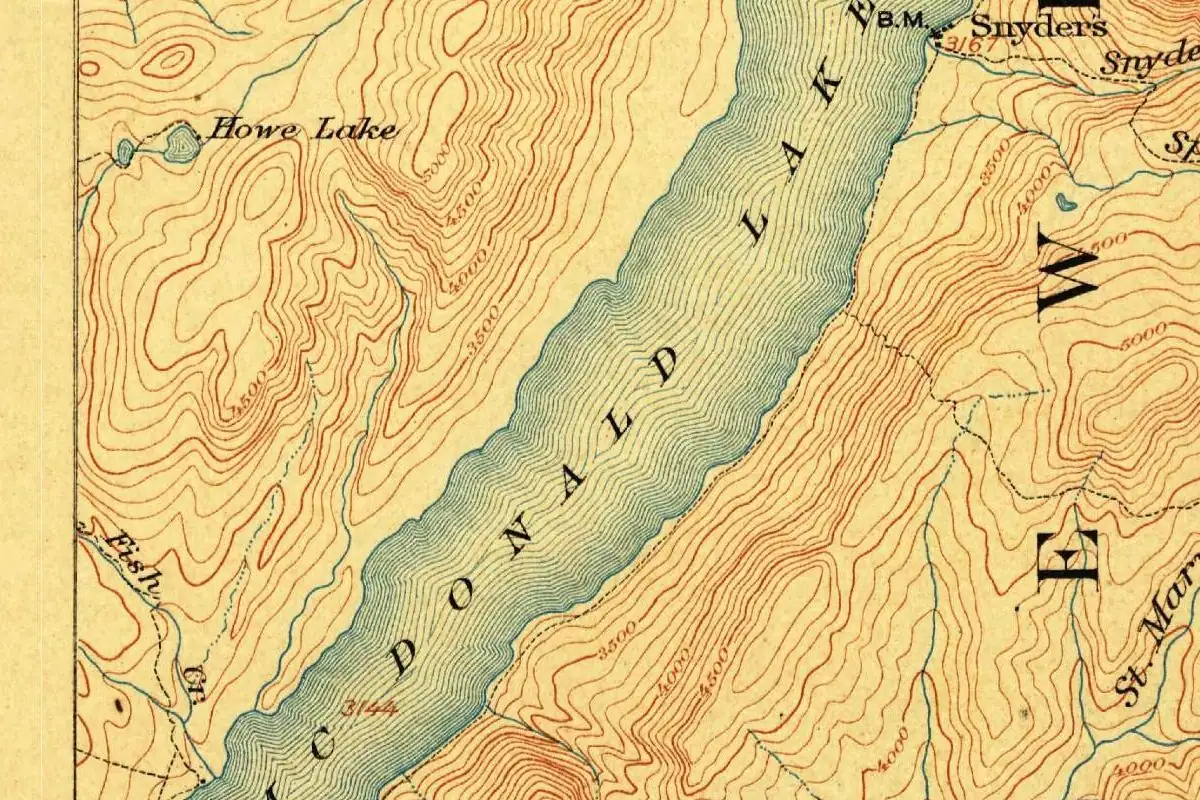
Who chose Terry? Sheire’s 1970 study has an answer, secondhand. It credits Vaught, the same early historian, with the story that two Army officers, Lieutenants Charles A. Woodruff and John Van Orsdale, reached the lake on a trip in 1873 and named it in honor of their department commander, Terry. Sheire adds that he couldn’t find Woodruff’s journal or map himself, so there’s no firsthand record behind it. The Army name didn’t survive the trader’s carving. The U.S. Geological Survey’s 1904 map, shown at the bottom of this page, already calls it McDonald Lake, and the federal record lists Lake McDonald as the official form, with a Board decision dated 1932.
Why is it called Glacier National Park?
Because of the ice. The National Park Service says it plainly: “The national park was named for its many active glaciers.” The Park Service also quotes a May 1906 letter from François Matthes, a U.S. Geological Survey mapmaker, to George Bird Grinnell, editor of the magazine Forest and Stream. The proposed park would hold “upward of 50 ice-bodies and over 200 lakes,” Matthes wrote. “It might fitly be called Glacier Park.”
Four years later it was. The act President William Howard Taft signed on May 11, 1910, set the land aside “under the name of ‘The Glacier National Park.’” Yes, with a “The” in front, in the law itself.
Grinnell’s “Crown of the Continent”
Robinson’s history says Grinnell first came to the area in 1885, and that to him “goes the credit, and justly so, for swinging public opinion in favor of making this area into a national park.” His best-known piece, “The Crown of the Continent,” ran in The Century Magazine in September 1901, and that phrase still follows the park around.
If you read the article itself, though, you won’t find the word “Glacier” used as a name for the place, and Grinnell doesn’t ask for a national park. He ends by praising the forest reserve the government had already set up in 1897. What he does describe are the glaciers: “slow-moving ice rivers” that “still plow their deliberate way, relics of mightier glaciers, the stiffened streams of which in a past age fashioned the majestic scenery of to-day.”
Small glaciers, big ones before them
Grinnell’s line holds the whole idea in one sentence, and the government said much the same thing in 1914. William C. Alden of the Geological Survey opened a booklet on the park’s ice this way: “Glacier National Park derives its name and much of its interest from the presence of many small glaciers.” The grand scenery, he went on, the carved valleys and “the basins of its many beautiful lakes,” came from “the more extended glaciers of the past.”
Lake McDonald is one of those basins. The Park Service calls it “a direct result of glacial carving,” sitting in a broad U-shaped valley that ice cut out thousands of years ago. Its fact sheet puts the lake at 9.4 miles (15 km) long and 464 feet (141 m) deep, the largest in the park.
A name that’s melting
Here’s the uncomfortable part. The Park Service says there were about 80 glaciers in what became the park at the end of the Little Ice Age, around 1850. Aerial images from 2015 showed 26 named glaciers still big enough to count, and the park calls their loss “the loss of the park’s namesake.” So the name is a snapshot of 1910. The lake will keep its trader’s name, but the park’s name is about something that’s slowly disappearing.
If you drive in from the west, you’ll pass through West Glacier, the gateway town near the foot of the lake that took the park’s name in 1949. The 1910 act placed the park “in the Rocky Mountains,” and you can follow that range’s own naming story on the Rocky Mountains page. Montana’s page on this site, fittingly, ends with a photo taken in Glacier.
Quick answers
Why is it called Glacier National Park?
For its glaciers. The National Park Service says the park “was named for its many active glaciers,” and a 1914 government booklet adds that its valleys and lake basins were carved by much bigger glaciers in the past.
Who is Lake McDonald named after?
The sources don’t all agree. Most point to Duncan McDonald, son of Hudson’s Bay Company factor Angus McDonald, and in his own letter, quoted in a 1970 Park Service study, he says he blazed a tree at the foot of the lake with his name and the date in November 1878. Early park historian L. O. Vaught disputed that and credited a trapper named McDonald who had a cabin on the lake.
What was Lake McDonald called before?
Terry Lake, after General Terry, according to the park’s 1960 history. A 1970 Park Service study passes on an account that two Army lieutenants gave it that name in 1873, though it couldn’t find their own records.
Who named Glacier National Park?
No source names one person. The Park Service quotes a 1906 letter in which USGS mapmaker François Matthes wrote that the park “might fitly be called Glacier Park,” and the 1910 act made it “The Glacier National Park.”
Key dates
- 1873Two Army lieutenants reach the lake and, by a park historian's account, name it Terry Lake for their department commander.
- 1878November, by his own account: Duncan McDonald camps at the foot of the lake and blazes a tree with his name and the date.
- 1900A botanist's article titled "Lake McDonald and Vicinity" describes the trip from Belton station to the lake.
- 1901George Bird Grinnell's "The Crown of the Continent" appears in The Century Magazine.
- 1904The USGS Chief Mountain map labels the lake McDonald Lake.
- 1906USGS mapmaker François Matthes writes to Grinnell that the proposed park "might fitly be called Glacier Park."
- 1910May 11: President Taft signs the act creating "The Glacier National Park."
- 1914A government booklet says the park "derives its name" from its many small glaciers.
Historical Sources & References
- National Park Service, “Glacier’s Glaciers” (last updated September 9, 2025). “The national park was named for its many active glaciers”; about 80 glaciers around 1850 and 26 named ones in 2015; the park quotes Matthes’s 1906 letter (“It might fitly be called Glacier Park”) and Alden’s 1914 booklet.
- National Park Service, “Lake McDonald Valley”. Lake McDonald as “a direct result of glacial carving,” nearly 500 feet deep, in a U-shaped valley cut by glaciers. Also online: the park’s fact sheet, with the lake at 9.4 miles long and 464 feet deep.
- Donald H. Robinson, Through the Years in Glacier National Park (1960), chapter 1. Duncan McDonald’s trip “in about the year 1878,” his “Selish” companions, the name carved “upon the bark of a birch tree,” and how the name “became fixed”; Grinnell’s role in the park’s creation. Also online: chapter 2, on Grinnell’s 1901 article and Taft’s signature on May 11, 1910.
- Donald H. Robinson, Through the Years in Glacier National Park (1960), appendix A. The place-name entry for Lake McDonald: once “Terry Lake,” for General Terry, and Duncan McDonald as “son of a Hudson’s Bay Company factor, Angus McDonald.”
- James W. Sheire, History Basic Data Study: Glacier National Park (NPS, 1970). Pp. 99-100: Duncan McDonald “claimed that in 1878 he named Lake McDonald,” with his undated letter to T. D. Duncan (Glacier files, Montana Historical Society), and L. O. Vaught’s contrary version of a trapper named McDonald with a cabin on the lake. P. 95: Vaught’s account that Lieutenants Woodruff and Van Orsdale named the lake for their department commander, Terry, in 1873, and the author’s note that he couldn’t find their journal or map.
- Ted Catton, At the Foot of the Belton Hills (NPS, 2012). The name “most likely derives” from Duncan McDonald, with the cedar-tree version of the story.
- Leona Harrington, compiler, History of Apgar (about 1950). Village school history: Duncan McDonald “carved his name on one of the big cedar trees,” and the lake was later named after him.
- John M. Holzinger, “Lake McDonald and Vicinity” (1900). The lake’s name in print by 1900, and the 3-mile trip from Belton station to its foot.
- George Bird Grinnell, “The Crown of the Continent,” The Century Magazine (September 1901). The phrase “Crown of the Continent,” the “slow-moving ice rivers” that “fashioned the majestic scenery,” and the closing praise for the 1897 forest reserve.
- Act of May 11, 1910, 36 Stat. 354. The law that set the land aside “under the name of ‘The Glacier National Park.’”
- William C. Alden, Glaciers of Glacier National Park (1914). “Glacier National Park derives its name and much of its interest from the presence of many small glaciers.”
- U.S. Geological Survey, Chief Mountain sheet (1904). The map at the bottom of this page, labeling the lake McDonald Lake.
- GNIS feature 787038, Lake McDonald (U.S. Geological Survey). The official name, with a Board decision dated 1932, and the variants McDonald Lake (1894 card) and Terry Lake (1900 card).
Spot something wrong, or know more? Tell us here. You can also email us or use our contact page. Corrections are noted here with their date, never made silently.