Why Is Norfolk, Virginia, Called Norfolk? A Settler's Home
Norfolk, Virginia, is named for the county of Norfolk in England. The Library of Virginia says the name came from the home of early settler Adam Thoroughgood, a native of that county, and an 1853 history says he gave it to the area. The town laid out under a 1680 law then took the county's name.
An English county with a silent l
Norfolk, Virginia, carries the name of an English county, and an 1853 history insisted it was correctly pronounced Norfoke, with no l at all. The Library of Virginia says the city took its name from the former home of an early settler, Adam Thoroughgood, “who was a native of the county of Norfolk in England.”
The pronunciation note comes from William S. Forrest, who published a history of Norfolk and its neighbors in 1853. He wrote the word as “Norfoke,” said people in the city and around it dropped the sound of the l, and grumbled that it was “often improperly sounded by persons residing abroad.” He also called the name a Saxon word made of north and folk, which he said could be rendered “North people.” In old county and state records, he added, the name was often cut down to “Norff.” or spelled “Norfolke.” If you’ve been saying the l, you’re in the company Forrest was complaining about.
Colonel Thorogood’s home county
Forrest spelled the settler’s name Thorogood, and he gave him credit for the name itself:
“This name was given to this section of the State by Colonel Thorogood… in honour of his native county in England (celebrated for its woollen goods, sheep, turnips, turkeys, fish, &c.)”
According to Forrest, Thorogood came over early, settled first in Elizabeth City County, which he later represented in the General Assembly, and then moved across the water to the bay shore. “To the town was afterwards given the old English name of the county,” Forrest wrote. So the order runs from England to a stretch of colonial Virginia, and only then to a town.
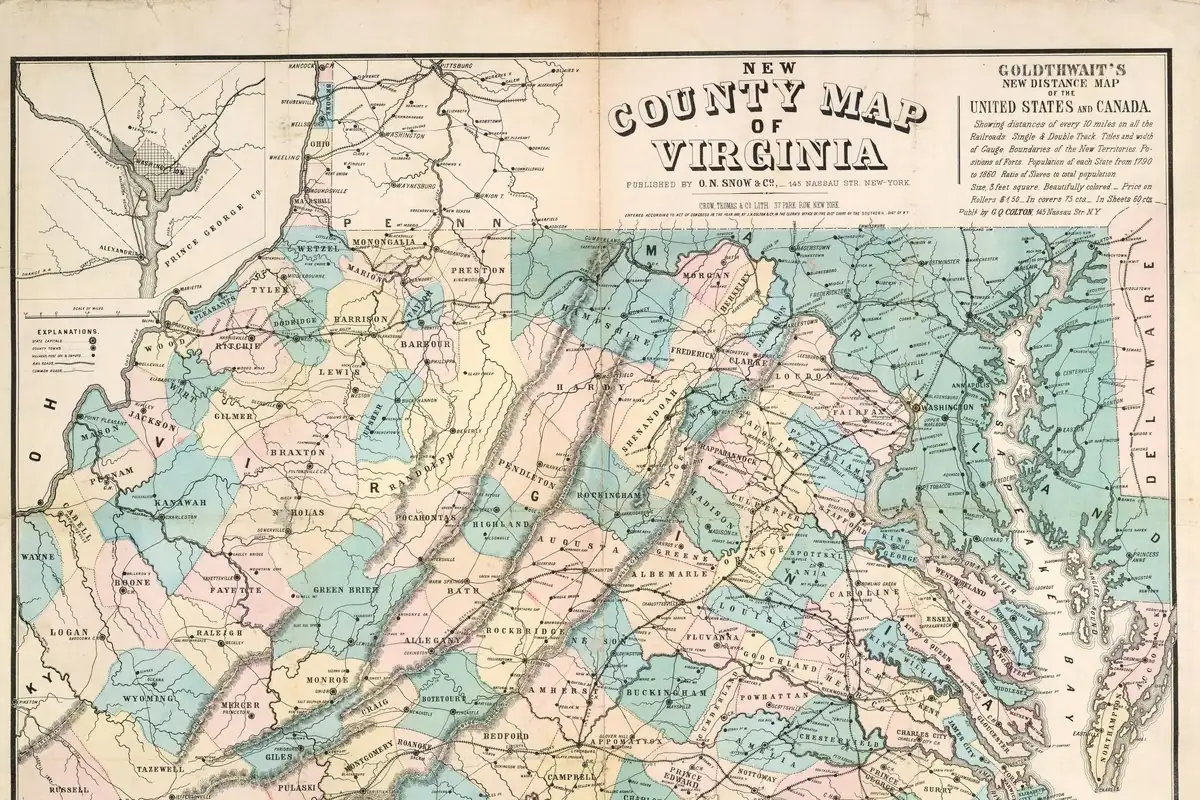
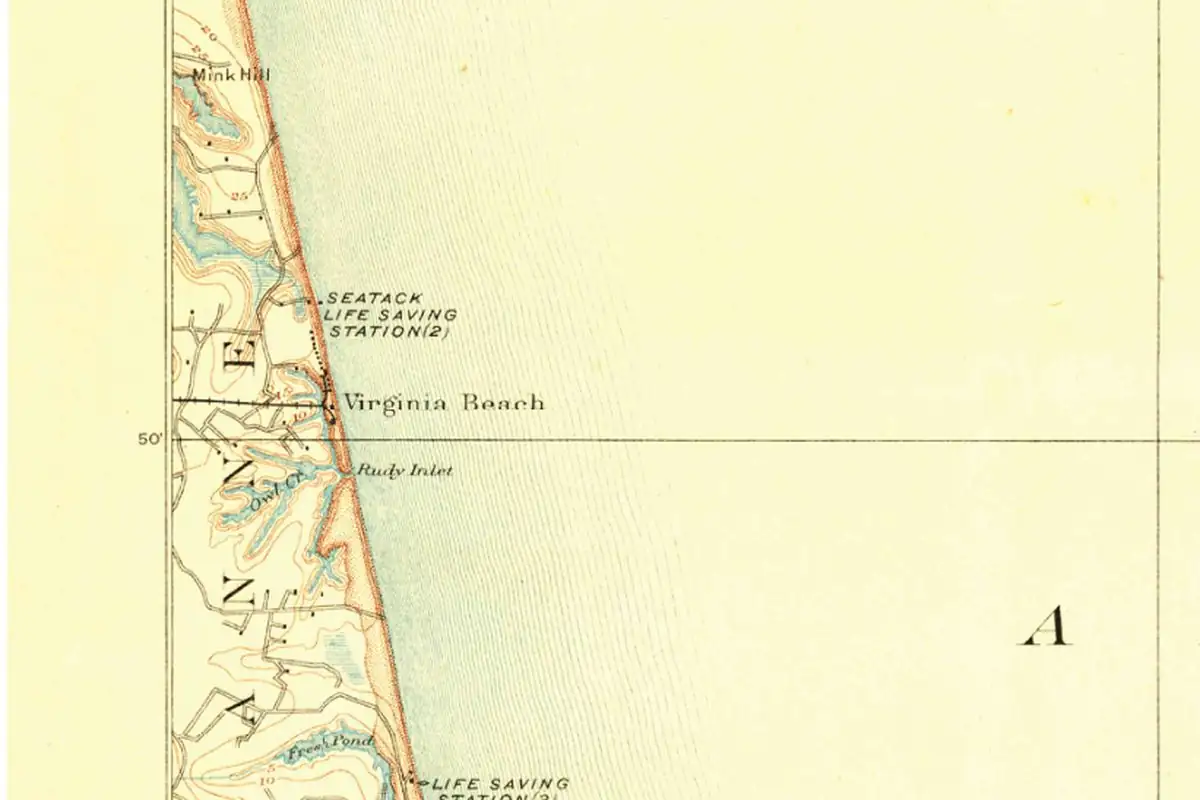
That stretch was big. Forrest says the original Norfolk area was split into Upper Norfolk, later renamed Nansemond, and Lower Norfolk, which held what became Norfolk County and Princess Anne County. In 1691 Princess Anne was formed out of Lower Norfolk, over the protests of people in some parishes who didn’t want a higher poll tax. That’s the county that, centuries later, became Virginia Beach.
Fifty acres for ten thousand pounds of tobacco
The town itself was made on purpose. Forrest writes that in 1662 Lewis Vandermull sold 200 acres of the land the city now covers to Nicholas Wise, a shipwright. Then, on June 8, 1680, the colony passed an “Act for cohabitation and encouragement of trade and manufacture,” meant to create towns where tobacco and other goods had to be brought, stored and shipped. One of the 50-acre sites was in “Lower Norfolk County, on Nicholas Wise, his land on eastern branch of Elizabeth River, at the entrance of the branch.” The price for each county’s 50 acres was set at “tenn thousand pounds of tobacco and caske.” Forrest says the act directed the purchase of land “for the Town of Norfolk.”
The actual sale came later. On August 16, 1682, trustees bought the land from Nicholas Wise, a house carpenter and the son of the first Nicholas Wise, for 10,000 pounds of tobacco and cask. That gap probably explains why you’ll find two founding dates. The Library of Virginia says Norfolk was established in 1680 by an act of assembly, while the state’s charter records say it was established in 1682, as stated in the preamble to an 1882 law. Most likely one marks the law and the other the land changing hands.
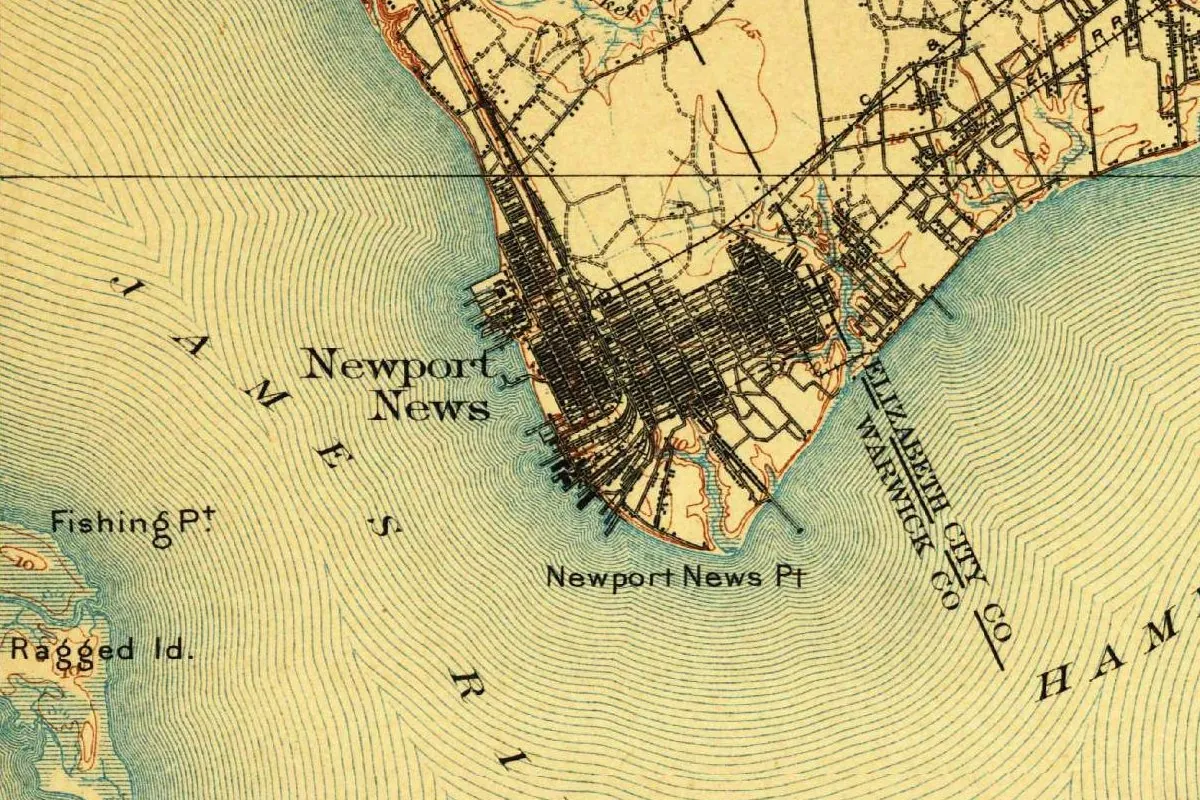
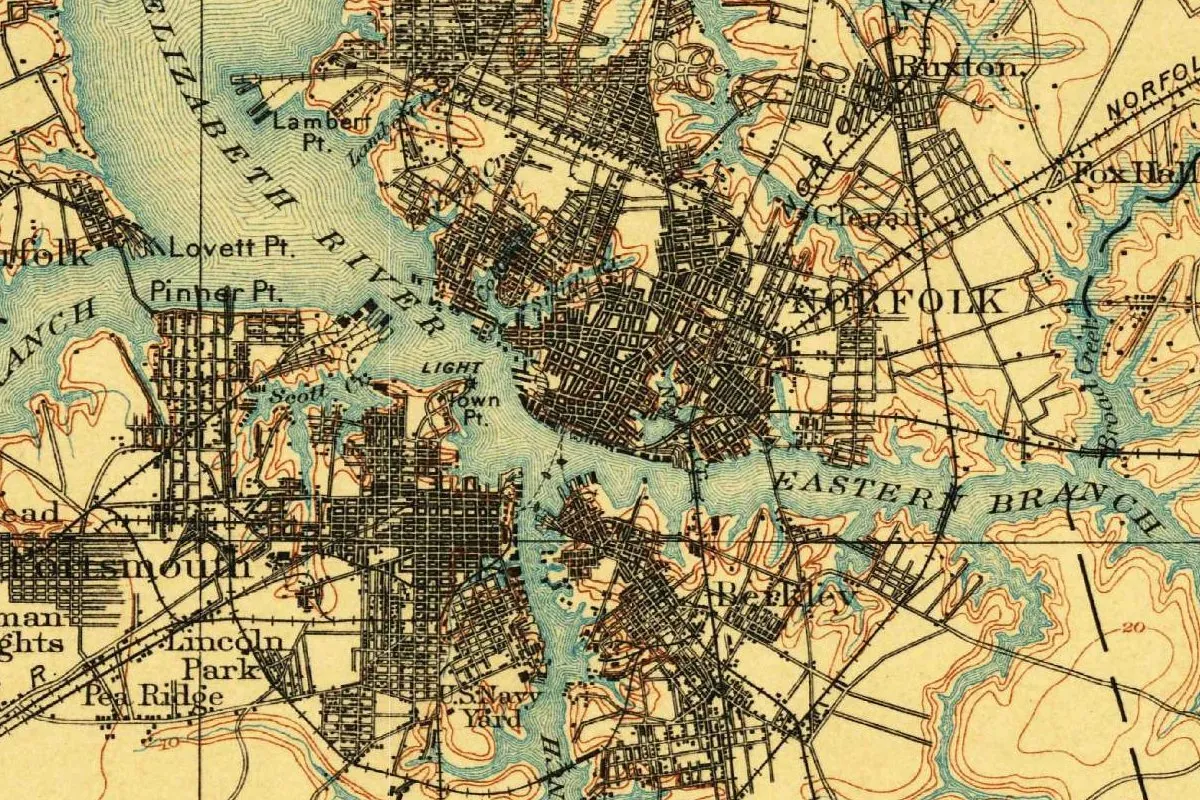
If you look at the 1907 map at the top of this page, you can still see the spot the act described: Norfolk’s grid sits right where the Eastern Branch meets the Elizabeth River. The royal charter of September 15, 1736, made it a borough and spoke of a place “laid out for a town, called by the name of Norfolk.” It became a city in 1845, and in 1906, the Library of Virginia says, it annexed the town of Berkeley, which shows up on that map as Berkley.
Not every Norfolk is this Norfolk
A 1905 place-name book by Henry Gannett lumped several Norfolks into one line: the county in Massachusetts, the city in Nebraska, and the county and town in Virginia, all “named from the county in England.” For Virginia, the older local sources back him up. For Norfolk, Nebraska, the founders’ own account says otherwise: they meant Nor’fork, for the North Fork of the Elkhorn River, and the post office changed the spelling.
So two towns ended up with the same English county’s name for completely different reasons. Virginia’s came on purpose, from a settler’s home county. Nebraska’s came from a post office correction.
Quick answers
Why is Norfolk, Virginia, called Norfolk?
For the county of Norfolk in England. The Library of Virginia ties it to the home of early settler Adam Thoroughgood, and Forrest’s 1853 history says Thorogood named the area for his native county.
How do you pronounce Norfolk, Virginia?
Forrest’s 1853 history said it was “correctly pronounced Norfoke,” and that people in and around the city left out the l.
Was Norfolk founded in 1680 or 1682?
Both dates show up. A 1680 act set aside 50 acres for the town, and trustees bought the land from Nicholas Wise on August 16, 1682.
Is Norfolk, Virginia, named after the Duke of Norfolk?
No. Gannett, Forrest and the Library of Virginia all point to the English county, not to a duke.
Key dates
- 1662Lewis Vandermull sells 200 acres of today's Norfolk to Nicholas Wise, a shipwright.
- 1680June 8: the Act for Cohabitation orders 50 acres bought in Lower Norfolk County, on Nicholas Wise's land, for a town.
- 1682August 16: trustees buy the 50 acres from Nicholas Wise, the son, for 10,000 pounds of tobacco and cask.
- 1691Princess Anne County is formed out of Lower Norfolk.
- 1736September 15: a royal charter makes Norfolk a borough.
- 1845Norfolk is incorporated as a city.
- 1906Norfolk annexes the town of Berkeley.
Getting there
Open Norfolk in Google Maps
Opens in a new tab. The pin is the center of Norfolk in the USGS place-name record.
The closest airports, Amtrak stations and intercity bus stops, measured in a straight line from the center of Norfolk.
Airports
- Norfolk International (ORF) 6 mi 9 km
- Newport News/Williamsburg International (PHF) 23 mi 37 km
Amtrak trains
- Norfolk station (NFK) under 1 mi 0.9 km
- Newport News station (NPN) 23 mi 37 km
Intercity buses
- Amtrak Chartered Vehicle Amtrak Connecting Service · Norfolk under 1 mi 0.9 km
- OurBus Norfolk, VA (Old Dominion University - W 49th St In front of bus shelter at Diehn Center for the Performing Arts) 3 mi 5 km
- Virginia Breeze, Operated by Academy Virginia Breeze · Norfolk (Park & Ride) 4 mi 6 km
Distances are as the crow flies, not by road. We don't list schedules or fares because they change; check with the airline, Amtrak or the bus company before you go. Official data (FAA commercial service airports (2025), FAA airport locations, Amtrak stations and Intercity Bus Atlas) from the FAA and the U.S. Bureau of Transportation Statistics, checked Nov 13, 2026.
Sponsored
Staying in Norfolk?
Compare hotels in Norfolk, Virginia, on Expedia.
See hotels in NorfolkWe may earn a commission if you buy through this link. It never changes what we write. Read our affiliate disclosure
Sponsored
Want the spooky side of Norfolk?
The name has its story above. For the ghost stories, US Ghost Adventures runs walking ghost tours in Norfolk.
See ghost tours in NorfolkWe may earn a commission if you book through this link. It never changes what we write. Read our affiliate disclosure
Historical Sources & References
- William S. Forrest, Historical and Descriptive Sketches of Norfolk and Vicinity (1853), pp. 44-50. “Correctly pronounced Norfoke,” the silent l, “North people,” Colonel Thorogood naming the area for his native county, Upper and Lower Norfolk, Princess Anne County in 1691, the 1662 sale to Nicholas Wise, the act of June 8, 1680, the purchase of August 16, 1682, and the borough charter of September 15, 1736.
- Library of Virginia, “Maps and Formation Information for Cities”. The name from the former home of Adam Thoroughgood, “a native of the county of Norfolk in England,” established in 1680, a town in 1736, a city in 1845, and the annexation of Berkeley in 1906.
- Virginia Law, Norfolk charter: history of incorporation. Established in 1682 as stated in the preamble to chapter 70 of 1882, incorporated as a borough in 1736 and as a city in 1845.
- Henry Gannett, The Origin of Certain Place Names in the United States (USGS, 1905), p. 226. Norfolk in Massachusetts, Nebraska and Virginia, “named from the county in England.”
- GNIS feature 1497051 (U.S. Geological Survey). Norfolk’s listing as a populated place, an independent city, with its coordinates.
- U.S. Geological Survey, Norfolk sheet (1907). The source of the map at the top of this page.
Sponsored
Sailing from Norfolk?
Compare cruises that leave from the port of Norfolk on CruiseDirect.
See cruises from NorfolkWe may earn a commission if you buy through this link. It never changes what we write. Read our affiliate disclosure
Spot something wrong, or know more? Tell us here. You can also email us or use our contact page. Corrections are noted here with their date, never made silently.