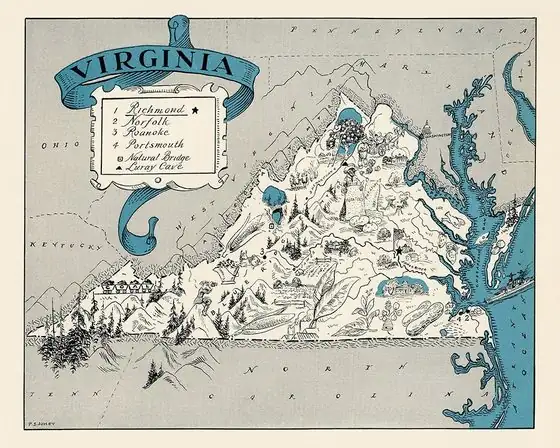
Charlottesville, Virginia: Named for a New Queen in 1762
Charlottesville honors Queen Charlotte, born a princess of Mecklenburg-Strelitz, who had recently become queen as the wife of George III. Virginia's assembly named the town in a November 1762 act covering 50 acres by the Albemarle courthouse. A 1905 federal bulletin credited a different royal, Charlotte Augusta, Princess of Wales.
In November 1762, Virginia’s lawmakers made 50 acres by the Albemarle County courthouse a town and named it Charlottesville, for George III’s new queen. She was Charlotte of Mecklenburg-Strelitz, and she’d only recently become queen when the town got her name.
A courthouse that had to move
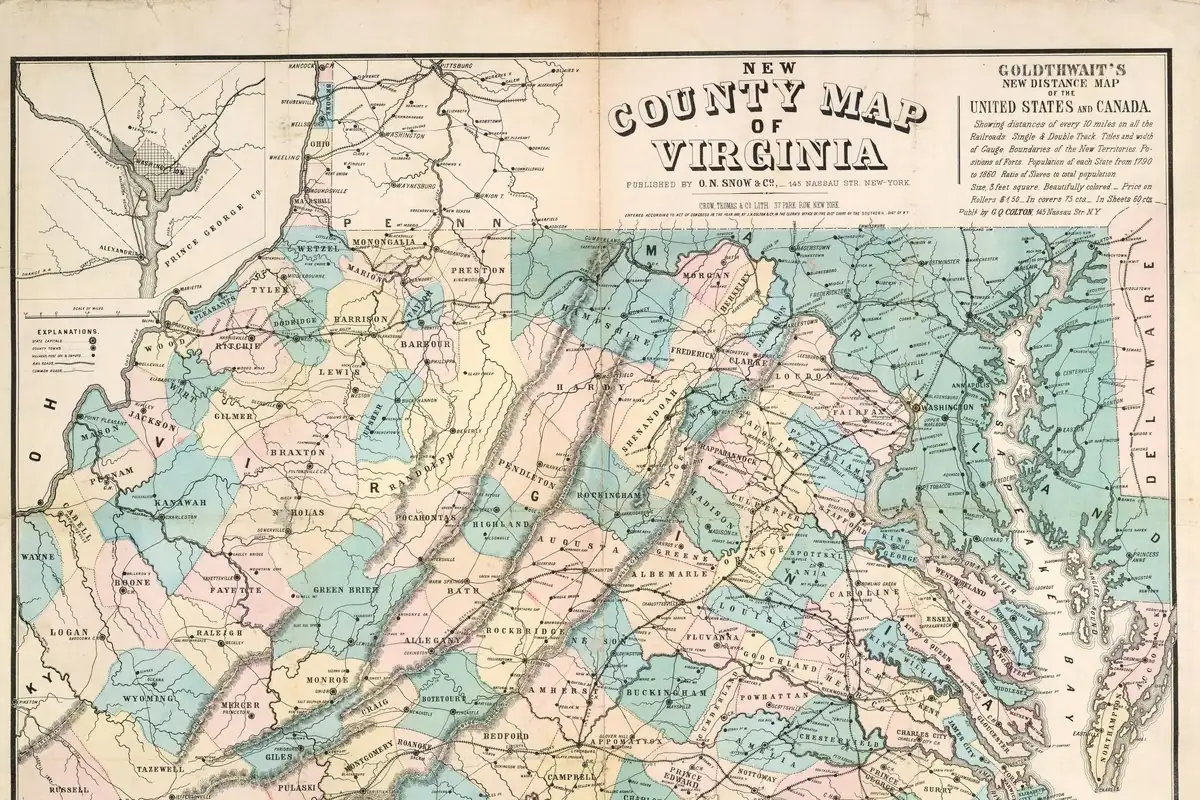
The town exists because the county got cut down to size. Edgar Woods, who wrote the history of Albemarle County in 1901, explains that in 1761 the land south of the James River was split off to form Buckingham County and a western piece became Amherst. That left the old courthouse on the county’s far southern border, a long ride for anyone living up north.
So a new seat was needed. Woods admits nobody recorded how the spot was picked, whether by the county court or by a vote, but he couldn’t imagine a better one: almost the exact center of the county. A thousand acres were bought from Colonel Richard Randolph of Henrico, running south past Moore’s Creek, and Dr. Thomas Walker held the title as trustee. The town itself was planned on the eastern edge of that tract, four rows of squares stretching from Jefferson Street to South Street.
The act that named it
The General Assembly made it official in the session of November 1762. Chapter XX, “An Act for establishing the town of Charlottesville, in the County of Albemarle,” says the 50 acres next to the courthouse had “lately” been laid off into lots and streets, and that a town there would help “the reception of traders.” Then comes the line that gives the place its name:
“…the said fifty acres of land, so laid off as aforesaid, shall be, and are hereby established a town, to be called and known by the name of Charlottesville.”
That’s on page 597 of the seventh volume of Hening’s Statutes at Large, the standard printed collection of Virginia’s colonial laws. The act never says who Charlotte was. Lawmakers in 1762 didn’t need to spell it out.
Which Charlotte?
Woods filled in the gap. “Dictated by the spirit of loyalty then prevalent,” he wrote, “the name was given in honor of Princess Charlotte of Mecklenburg Strelitz, who had recently become Queen of England as the wife of King George III.” Encyclopedia Virginia, the state’s online reference from Virginia Humanities, says the same thing today: Charlottesville was named for Charlotte of Mecklenburg-Strelitz and established in 1762.
Henry Gannett picked a different woman. His 1905 bulletin for the U.S. Geological Survey, the big federal list of where American place names came from, says Charlottesville was “named for Charlotte Augusta, Princess of Wales.” Look at the entry right above it on the same page, 76, and you’ll find Charlotte, North Carolina, “named for the wife of George III of England.” Same queen, two neighboring entries, two different answers. Gannett gave no source for either.
The 1762 timing points to the queen. Woods ties the name to a woman who had only just become queen, and the act was passed in her husband’s third year on the throne, as the heading of Hening’s page puts it: “November 1762—3d George III.”
Lots, a university and a city
The town filled in slowly. Woods counts 56 half-acre lots, two to a square, and says only 14 sold at the first sale in September 1763, to just seven buyers.
Jefferson’s name, which you might expect to find behind the city’s, comes much later. Encyclopedia Virginia says Thomas Jefferson founded the University of Virginia in 1819, about a mile (1.6 km) west of town. Charlottesville was incorporated as a town in 1801 and as a city in 1888, and today it’s an independent city that still serves as the seat of Albemarle County.
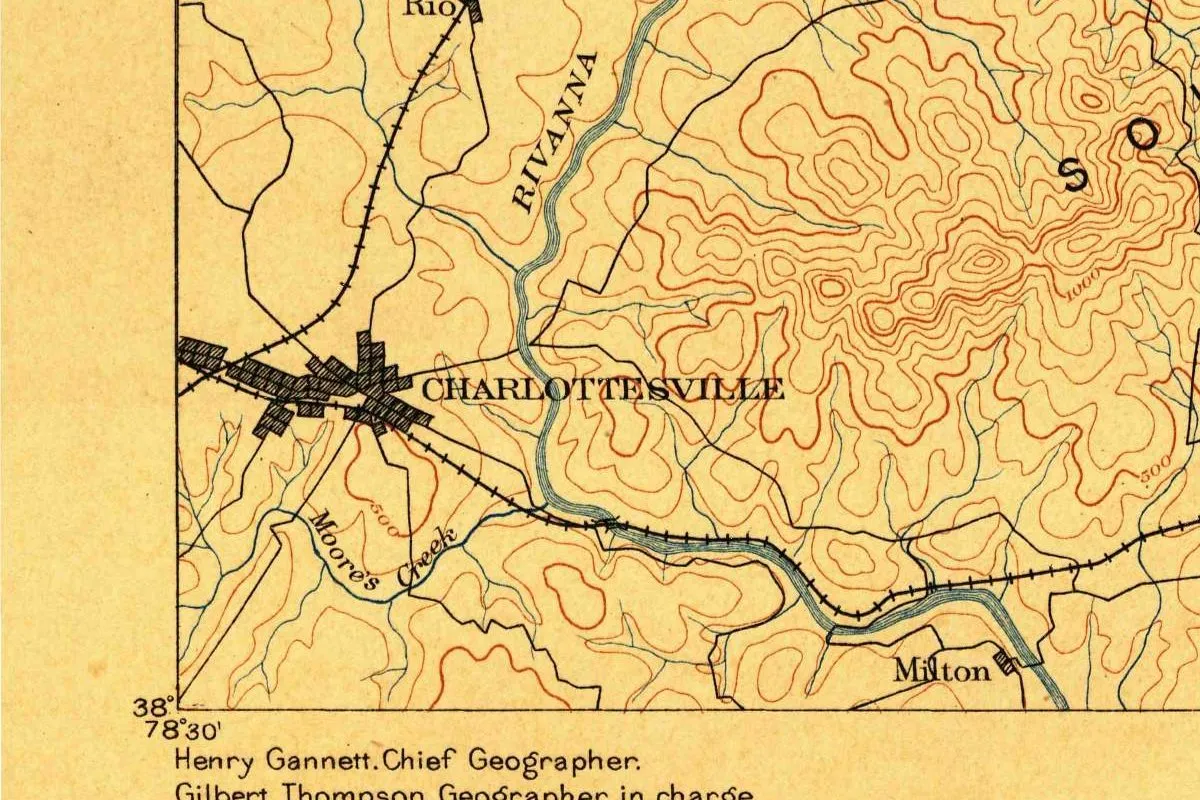
One small irony sits on the old map above. The 1892 Gordonsville sheet that shows the young city by the Rivanna River was made by the Geological Survey, and the credit printed along its bottom edge reads “Henry Gannett, Chief Geographer.” Thirteen years later, the same man would put a different Charlotte in his book. If you want the right one, the date on the Virginia law of 1762 and the county’s own historian are the better guides.
Quick answers
Who was Charlottesville, Virginia, named after?
Queen Charlotte, born Princess Charlotte of Mecklenburg-Strelitz, wife of King George III. That’s what Woods’s 1901 county history and Encyclopedia Virginia say.
Was Charlottesville named after Thomas Jefferson?
No. The town was named in a 1762 act of the colonial assembly, and Jefferson founded the University of Virginia in 1819.
Why does one old book say Charlotte Augusta?
Gannett’s 1905 federal bulletin named Charlotte Augusta, Princess of Wales, without giving a source. The 1901 county history and Encyclopedia Virginia both name the queen.
When was Charlottesville founded?
The General Assembly established the town in its November 1762 session. It became an incorporated town in 1801 and a city in 1888.
Key dates
- 1761Albemarle County is split to form Buckingham and Amherst, leaving its courthouse on the county's southern edge.
- 1762November: an act makes 50 acres beside the new Albemarle courthouse a town, to be known as Charlottesville.
- 1763September: at the first sale, 14 of the town's 56 half-acre lots go to seven buyers.
- 1801Charlottesville is incorporated as a town.
- 1819Thomas Jefferson founds the University of Virginia about a mile west of town.
- 1888Charlottesville is incorporated as a city.
Getting there
Open Charlottesville in Google Maps
Opens in a new tab. The pin is the center of Charlottesville in the USGS place-name record.
The closest airports, Amtrak stations and intercity bus stops, measured in a straight line from the center of Charlottesville.
Airports
- Charlottesville-Albemarle (CHO) Charlottesville-Albemarle Airport 8 mi 12 km
- Lynchburg Regional/Preston Glenn Field (LYH) Timberlake 63 mi 101 km
- Richmond International (RIC) Highland Springs 73 mi 117 km
Amtrak trains
- Charlottesville station (CVS) under 1 mi 1 km
- Staunton station (STA) 33 mi 54 km
Intercity buses
- Greyhound Charlottesville Union Station under 1 mi 1 km
- Amtrak Chartered Vehicle Amtrak Connecting Service · Charlottesville under 1 mi 1 km
- OurBus Charlottesville, VA (555 Alderman Road, VA (Near UVA Columbarium Parking)) 2 mi 3 km
Distances are as the crow flies, not by road. We don't list schedules or fares because they change; check with the airline, Amtrak or the bus company before you go. Official data (FAA commercial service airports (2025), FAA airport locations, Amtrak stations and Intercity Bus Atlas) from the FAA and the U.S. Bureau of Transportation Statistics, checked Nov 13, 2026.
Sponsored
Staying in Charlottesville?
Compare hotels in Charlottesville, Virginia, on Expedia.
See hotels in CharlottesvilleWe may earn a commission if you buy through this link. It never changes what we write. Read our affiliate disclosure
Sponsored
Want the spooky side of Charlottesville?
The name has its story above. For the ghost stories, US Ghost Adventures runs walking ghost tours in Charlottesville.
See ghost tours in CharlottesvilleWe may earn a commission if you book through this link. It never changes what we write. Read our affiliate disclosure
Historical Sources & References
- William Waller Hening, ed., The Statutes at Large, vol. 7 (1820), p. 597. Chapter XX of the November 1762 session, “An Act for establishing the town of Charlottesville, in the County of Albemarle”: the 50 acres by the courthouse, “the reception of traders” and the clause naming the town.
- Edgar Woods, Albemarle County in Virginia (1901), pp. 26-27. The 1761 partition that left the courthouse on the southern border (p. 26); the thousand acres bought from Richard Randolph, Thomas Walker as trustee, the town plan, the 1762 act, the name given for Princess Charlotte of Mecklenburg Strelitz, the 56 lots and the first sale of September 1763 (p. 27).
- Henry Gannett, The Origin of Certain Place Names in the United States (USGS, 1905), p. 76. Charlottesville “named for Charlotte Augusta, Princess of Wales,” and, just above it, Charlotte, North Carolina, “named for the wife of George III of England.”
- Encyclopedia Virginia, “Cities of Virginia”. Named for Charlotte of Mecklenburg-Strelitz, established in 1762, incorporated as a town in 1801 and as a city in 1888, and county seat of Albemarle.
- Ervin L. Jordan, “Charlottesville during the Civil War,” Encyclopedia Virginia. Founded in 1762 and named for Queen Charlotte; the University of Virginia founded by Jefferson in 1819 about a mile west of town.
- GNIS feature 1498463 (U.S. Geological Survey). Charlottesville’s populated-place entry, filed under the independent city of Charlottesville rather than under Albemarle County.
- U.S. Geological Survey, Gordonsville sheet (1892). The oldest sheet in the Survey’s historical collection that shows Charlottesville, credited at the foot to Henry Gannett as chief geographer.
Spot something wrong, or know more? Tell us here. You can also email us or use our contact page. Corrections are noted here with their date, never made silently.