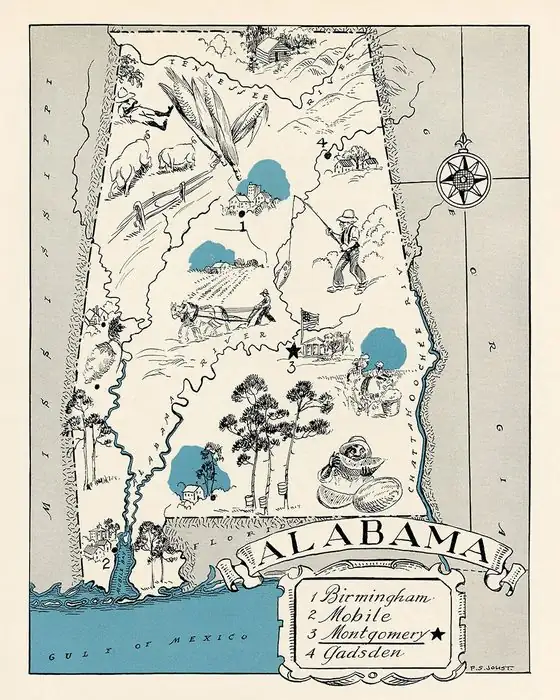
Birmingham, Alabama: A City Named Before It Existed
Birmingham is named for Birmingham, England, the center of Britain's iron industry. The Elyton Land Company wrote the name into its bylaws in Montgomery in January 1871, before the city was built. Who suggested it is less certain: Ethel Armes credited the banker Josiah Morris, while the Encyclopedia of Alabama and Samford's library point to James R. Powell.
A name voted on in Montgomery
Birmingham, Alabama, was named in a Montgomery office in January 1871, from investors who borrowed it from England’s iron town before any lot was sold. The city it named was still a plan on paper, up in Jones Valley in Jefferson County.
The City of Birmingham puts the reason plainly: the city “was named for Birmingham, England, the center of Great Britain’s iron industry.” The Encyclopedia of Alabama says the same, and adds that the new Alabama town boomed so fast it came to be called the “Magic City.”
The Elyton Land Company writes it down
The company behind the city was formed to build it from scratch. H. M. Caldwell wrote its history in 1892, and his name is on the list of original stockholders printed in it. He copied the paperwork right into the book. On January 26, 1871, the incorporators met at the office of Josiah Morris & Co. in Montgomery and organized the Elyton Land Company. The next day, the directors made Col. James R. Powell its president.
Then the stockholders met again and adopted bylaws. Caldwell reprints one of them:
“The city to be built by the Elyton Land Company, near Elyton, in the County of Jefferson, State of Alabama shall be called ‘Birmingham’.”
That’s the whole act of naming, one sentence in a set of company bylaws. Notice what it doesn’t say. There’s no mention of England, iron or who came up with the idea. The why comes from later writers, and the who is where they part ways.
Morris or Powell?
Ethel Armes, in her 1910 book The Story of Coal and Iron in Alabama, gives the credit to the banker. “A suitable name was suggested by Josiah Morris,” she wrote, “whereupon there was unanimous approval,” and the clause went into the bylaws at once. Morris, a Montgomery banker, had bought the land at the planned rail crossing, 4,150 acres by the Samford University Library’s count.
The Encyclopedia of Alabama tells it differently. It says Powell “had recently returned from Birmingham, England’s iron and steel center, and suggested that the new Alabama industrial center be given the same name.” The Samford library’s account is more careful: “It is believed that it was Powell who suggested the name of Birmingham because of its similarities to the industrial city in Great Britain.”
So you get two candidates, a banker and a promoter, and the bylaws don’t settle it. On the model, though, the sources agree. Armes says the town was named “for the seat of iron manufacture in the mother country, Birmingham the best workshop town in all England.”
Powellton, Milnerville and the Muddtown joke
The name could easily have been something else. Samford’s history lists the other suggestions: Mudd Town, Powellton, Milnerville and Morriston. Each one pointed at a man connected to the company. Powell was the president, William S. Mudd was a stockholder, and Armes credits the plan itself to the engineer John T. Milner.
Armes tucked the best version into a footnote, told by Truman H. Aldrich, who later co-owned the Pratt Coal and Coke Company, according to the Encyclopedia of Alabama. “Some suggested calling it Powellton after Colonel Powell,” Aldrich said; “others wanted to name it Milnerville or Morrisville.” Morris objected strongly to those, and, looking out the window, proposed honoring Judge Mudd instead and calling the place Muddtown. Aldrich’s verdict was that “nothing could have suited the place more at that particular time, and indeed for a good while later.”
In the end the company skipped every local name and went with England’s. Armes adds one more wrinkle: there was already a little village named Birmingham in northeast Alabama, though she says it had no further character beyond a name on an old map.
England’s iron town, copied a dozen times
The Alabama city wasn’t the only American place to borrow the name. Henry Gannett’s 1905 guide to American place names, put out by the U.S. Geological Survey, counted “twelve places in the country, named from the manufacturing town in England.”
The Encyclopedia of Alabama traces the climb. Lots went on sale on June 1, 1871, and the legislature chartered the city on December 19, the date the city still treats as its birthday. In 1873 Powell, by then mayor, won the county seat away from Elyton. That same year cholera hit and the Panic of 1873 froze the real estate boom, and thousands left.
What saved the town was the ground underneath it. The encyclopedia says the city sat near one of the world’s richest deposits of minerals, at the crossing of two rail lines. Once the Pratt mines and the big furnaces got going in the late 1870s and 1880s, the town that had borrowed an iron name started making iron in earnest. It even picked up a second nickname, the “Pittsburgh of the South.”
Old Elyton, now a neighborhood
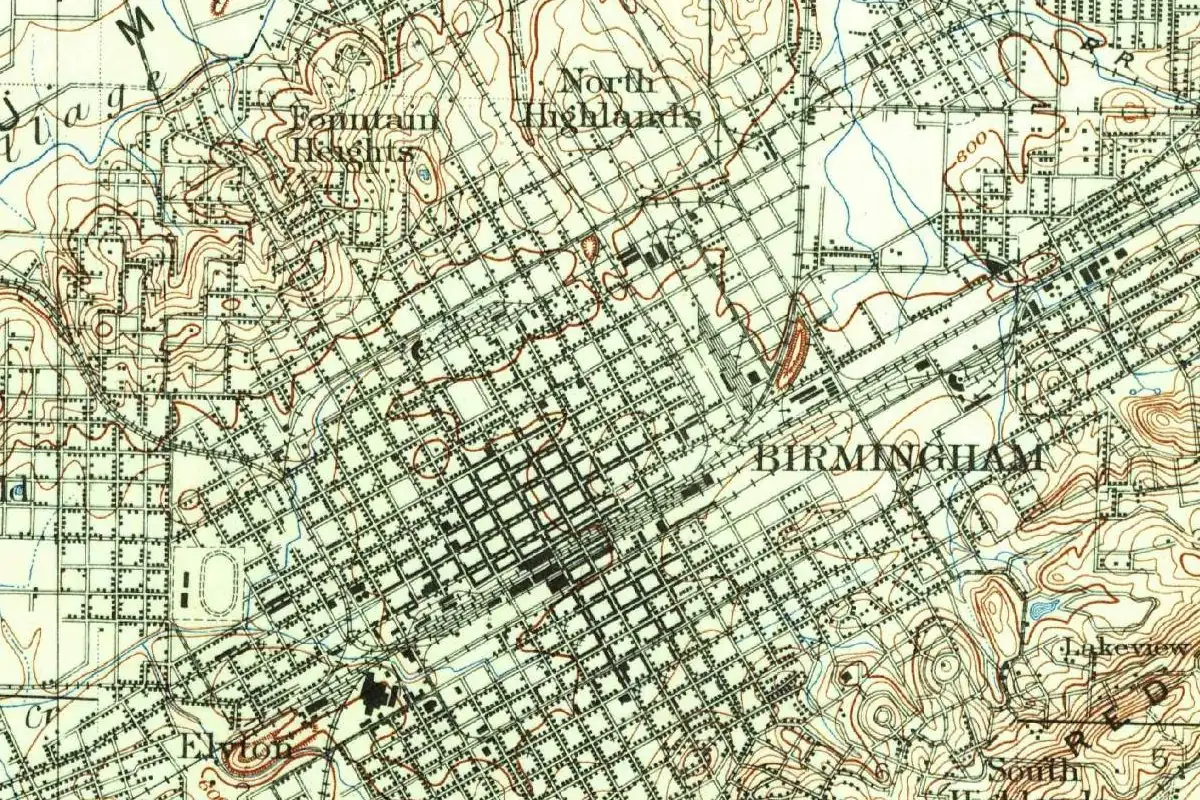
On the 1904 Geological Survey map at the top of this page, you can see how the plan turned out. The streets run on a slant, not north and south, and Caldwell explains why: the railroads ran parallel through the property, so the avenues were laid out parallel to the tracks. Down in the lower left corner is Elyton, the older county seat that gave the company its name. The encyclopedia now calls it a neighborhood in southwest Birmingham.
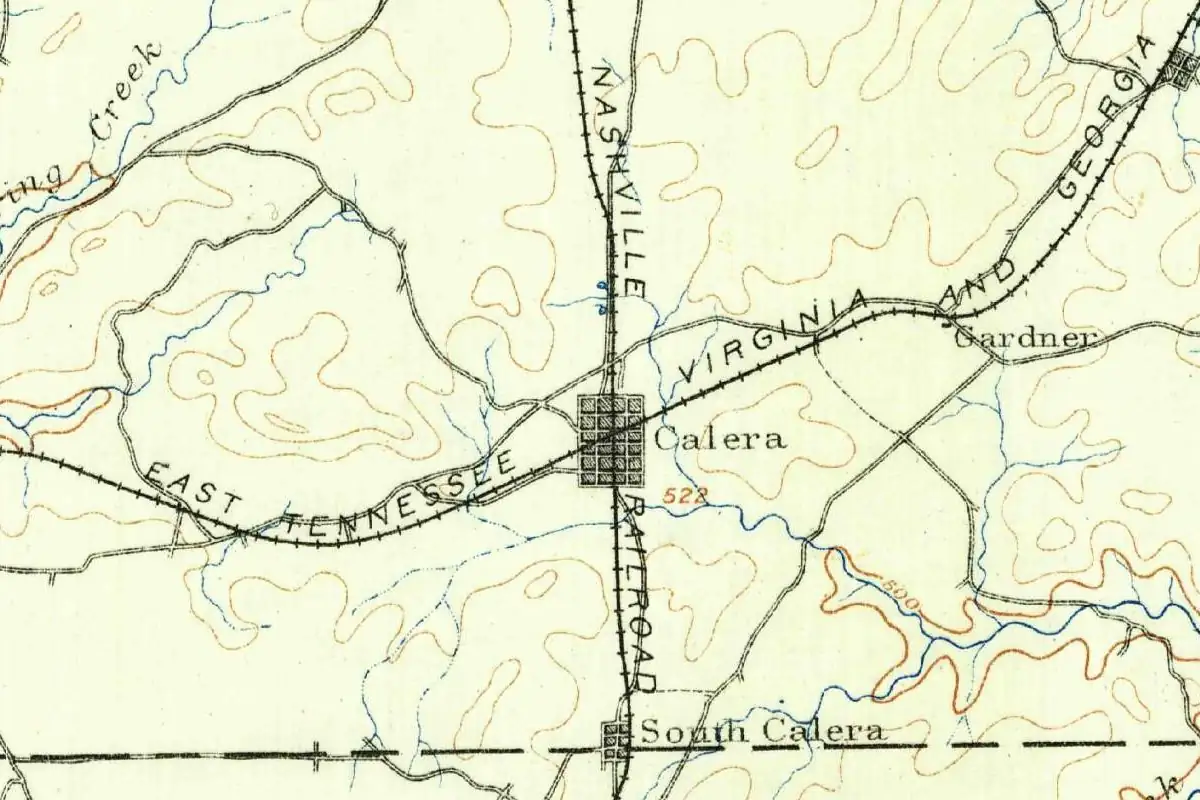
The men who met in that Montgomery office were promoters of the North and South Railroad, which, the encyclopedia says, later became the Louisville and Nashville, the same line that made Calera a junction to the south. They named a city for England’s iron town before they had poured any iron at all, and then the valley made the name fit. You’ll find it today as the second-largest city in Alabama, by the encyclopedia’s count.
Quick answers
Why is Birmingham, Alabama, called Birmingham?
It’s named for Birmingham, England, which the City of Birmingham calls the center of Great Britain’s iron industry. The Alabama city was planned as an iron and railroad town.
Who named Birmingham, Alabama?
The stockholders of the Elyton Land Company put the name in their bylaws in January 1871. Ethel Armes said Josiah Morris suggested it; other accounts say it is believed to have been James R. Powell.
What else almost became Birmingham’s name?
Powellton, Milnerville and Morrisville or Morriston, plus a joking Muddtown. Truman H. Aldrich recalled the debate in Armes’s 1910 history.
When was Birmingham, Alabama, founded?
The company was organized and the name chosen in January 1871, lots went on sale June 1, and the state chartered the city on December 19, 1871.
Key dates
- 1871On January 26, the Elyton Land Company is organized in Montgomery. Its stockholders then adopt bylaws saying the new city will be called Birmingham.
- 1871Lots go on sale on June 1. The state legislature charters the city on December 19.
- 1873Birmingham wins the Jefferson County seat from Elyton, then suffers a cholera epidemic and the Panic of 1873.
Things to do in Birmingham, Alabama
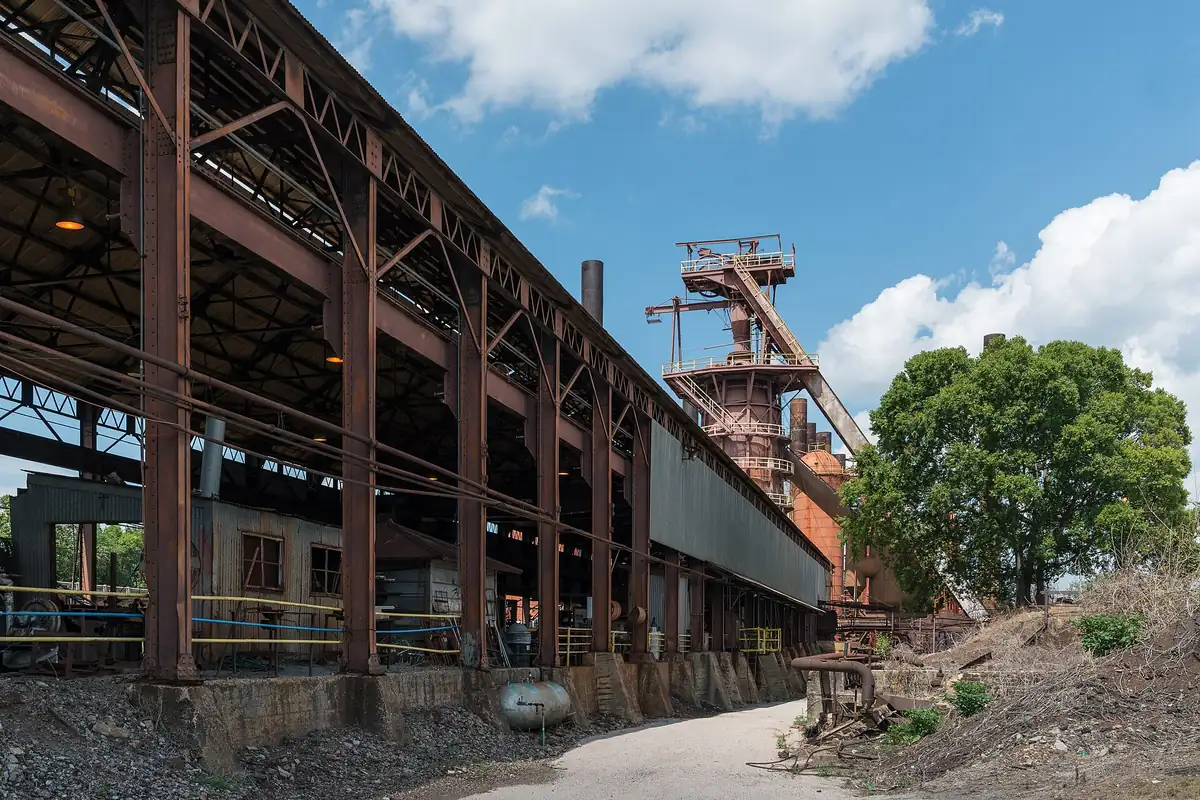
Sloss Furnaces National Historic Landmark
The blast furnace plant that made pig iron here from 1882 to 1970, kept with its stoves and tangle of pipes as a National Historic Landmark you can walk through on your own or with a guide.
Vulcan Park and Museum
The giant statue of Vulcan, the Roman god of fire and forge, stands on top of Red Mountain as a symbol of the city's iron origins, with a park and museum around it.
Birmingham Civil Rights Institute
A museum in the downtown Civil Rights District whose mission is to enlighten each generation on civil and human rights by exploring the common past, with limited-time exhibitions alongside.
Railroad Park
A 19-acre green space along 1st Avenue South, hailed as Birmingham's front lawn, that celebrates the city's industrial and artistic heritage with concerts, family activities and room to stretch out downtown.
Getting there
Open Birmingham in Google Maps
Opens in a new tab. The pin is the center of Birmingham in the USGS place-name record.
The closest airports, Amtrak stations and intercity bus stops, measured in a straight line from the center of Birmingham.
Airports
- Birmingham-Shuttlesworth International (BHM) 4 mi 7 km
- Huntsville International-Carl T Jones Field (HSV) 77 mi 124 km
- Hartsfield/Jackson Atlanta International (ATL) 137 mi 220 km
Amtrak trains
- Birmingham station (BHM) under 1 mi 1 km
- Tuscaloosa station (TCL) 49 mi 79 km
Intercity buses
- Greyhound Birmingham Central Bus Station under 1 mi 1 km
Distances are as the crow flies, not by road. We don't list schedules or fares because they change; check with the airline, Amtrak or the bus company before you go. Official data (FAA commercial service airports (2025), FAA airport locations, Amtrak stations and Intercity Bus Atlas) from the FAA and the U.S. Bureau of Transportation Statistics, checked Nov 14, 2026.
Sponsored
Staying in Birmingham?
Compare hotels in Birmingham, Alabama, on Expedia.
See hotels in BirminghamWe may earn a commission if you buy through this link. It never changes what we write. Read our affiliate disclosure
Sponsored
Want the spooky side of Birmingham?
The name has its story above. For the ghost stories, US Ghost Adventures runs walking ghost tours in Birmingham.
See ghost tours in BirminghamWe may earn a commission if you book through this link. It never changes what we write. Read our affiliate disclosure
Historical Sources & References
- H. M. Caldwell, History of the Elyton Land Company and Birmingham, Ala. (1892), p. 5. The January 26, 1871, meeting in Montgomery, Powell’s election, and the bylaw that the city “shall be called ‘Birmingham’.” Also the reason the streets follow the railroad tracks (p. 6).
- Ethel Armes, The Story of Coal and Iron in Alabama (1910), pp. 222-223. Credits Josiah Morris with suggesting the name; Aldrich’s footnote on Powellton, Milnerville, Morrisville and Muddtown; the earlier village named Birmingham; the city named for “the best workshop town in all England” (p. 223).
- Henry Gannett, The Origin of Certain Place Names in the United States (USGS, 1905), p. 47. Twelve U.S. places named for “the manufacturing town in England.”
- Birmingham Public Library, “The Founders of Birmingham, Alabama”. The same meeting, the bylaw and the list of stockholders.
- “Birmingham,” Encyclopedia of Alabama. Powell’s trip to England and his suggestion; the 1871 lot sale and charter; the 1873 county-seat vote, cholera and panic; the mineral deposits, the furnaces and the nicknames; Vulcan; Elyton today.
- Jennifer Taylor, “The Early Days of Birmingham,” Samford University Library (2005). Morris’s 4,150 acres; the rejected names; “It is believed that it was Powell who suggested the name.”
- City of Birmingham, “Did You Know? Birmingham History”. Named for Birmingham, England; December 19, 1871, as the city’s official birthday.
- GNIS feature 158174 (U.S. Geological Survey). GNIS, the federal place-name database, lists Birmingham as a populated place in Jefferson County.
- U.S. Geological Survey, Birmingham Coal District sheet (1904). The 1:62,500 map the view of the street grid and Elyton was cut from.
Spot something wrong, or know more? Tell us here. You can also email us or use our contact page. Corrections are noted here with their date, never made silently.