Redlands, California: Named for the Color of Its Soil
E. G. Judson, who founded the town with Frank E. Brown, suggested the name because the soil was reddish. In letters printed in 1897, Brown said they wanted a name that told buyers the soil was good for oranges, like Riverside's, and unlike Lugonia's gray. The Redlands Water Company carried the name by October 1881.
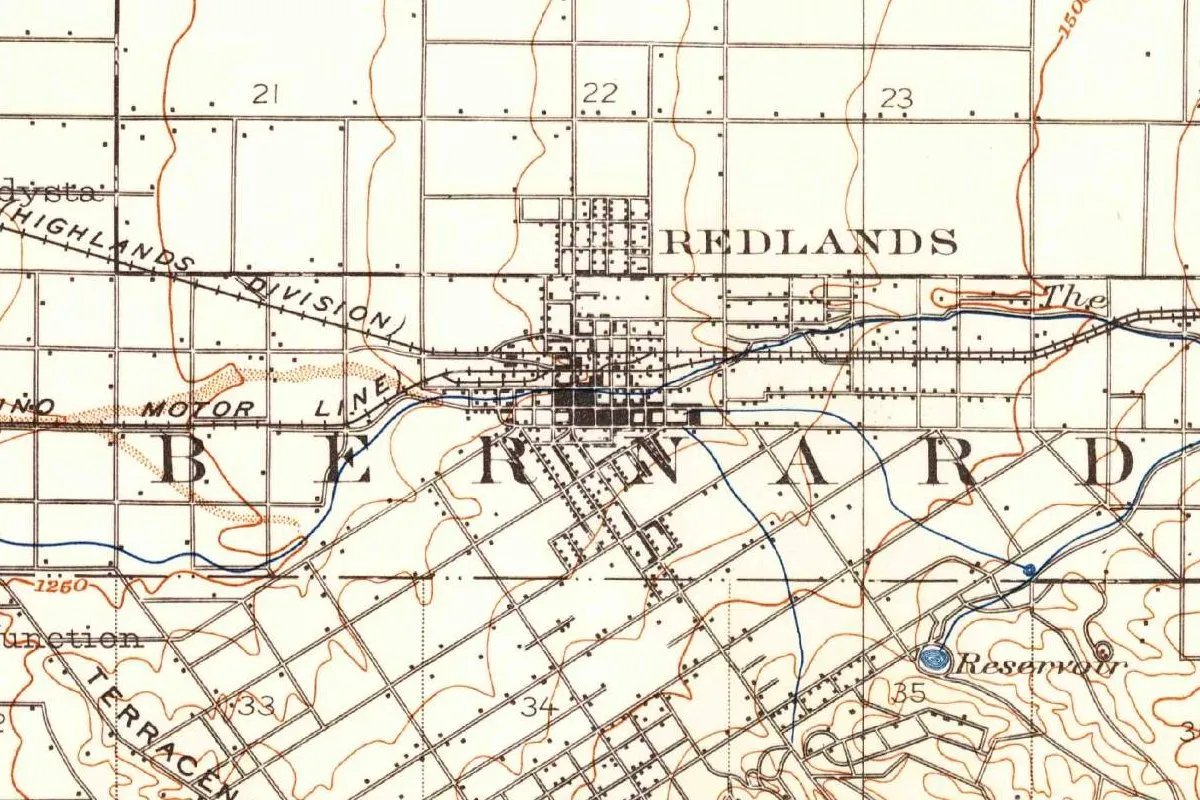
A color for a name
Redlands, California, owes its name to the reddish soil of a bare mesa and to E. G. Judson, the town founder who suggested the word around 1881. It’s one of the plainer names in California to explain, and two of the people who were there left their own accounts of how it happened.
A 1922 county history describes what Frank E. Brown and E. G. Judson found along the foothills of the San Bernardino Range in 1881: “a stretch of bare, reddish mesa and upland.” The two men had become interested in it in 1880, the book says, convinced that water could be brought to ground most people thought sat too high to irrigate. After they had put together some 4,000 acres, they planned a settlement, “choosing the name of Redlands because, as pointed out by Mr. Judson, the name was suggestive of the character of the soil.”
The name went to work right away. The Redlands Water Company was incorporated on October 27, 1881, and lots in the Residence Tract went on sale that December.
The founders tell it themselves
The fullest account comes from 1897, when a book called Illustrated Redlands printed two letters on the subject. The Redlands Area Historical Society has put that page online as a transcription.
L. M. Holt, writing from Los Angeles, said many names had been suggested and rejected until one day he came over from Riverside and met Judson and Brown. In his words:
“Mr. Brown spoke up and said that Mr. Judson had found the name. I asked what it was and he said ‘Redlands,’ because the soil of that section was of a reddish hue and was in such contrast to the soil across the Zanja in Lugonia.”
Holt added that they discussed it a few minutes and decided to adopt it. Brown, writing from Chicago, said the town was named “essentially in the way that Mr. Holt mentions,” and he remembered it as quicker still. “All at once Mr. Judson broke out with ‘Why not call it Redlands?’” he wrote, and in less than two minutes, by his account, everyone present adopted it.
Keep in mind that these are memories written about 16 years later. Holt himself counts back “17 years ago” to the start of the settlement. Brown says he can’t recall who else was there, but the two men agree on the man and the reason, and the 1922 history says the same.
Red soil, good oranges
Brown’s letter explains why a color made a good sales pitch. “We wished to covey the idea that the soil was good for oranges and similar to that of Riverside, and distinct from Lugonia’s gray,” he wrote. (“Covey” is how the transcription prints it.)
That one sentence names two neighbors. Riverside was the citrus town the new colony wanted to be compared with, and Holt says the young settlement was “advertised as the second Riverside.” Lugonia was the settlement across the zanja, an irrigation ditch, with soil the founders called gray. It wasn’t an older name for Redlands. It was a separate place, and Judson himself had come to Lugonia in 1877, according to the historical society.
You can also find a small sign in Brown’s letter that the name caught on. Not long afterward, he recalled, a letter from the Sandwich Islands arrived addressed simply to “Redlands, Cal.,” and it came “direct via San Bernardino, without detention en route.”
When the neighbors joined
The neighbors didn’t stay apart. In 1887, the 1922 history says, people proposed that Redlands, Lugonia, Brookside and at least part of Crafton unite as one city. For a time the plan looked ready to fall through over what the book calls “the seemingly inconsequential argument over the choice of a name.”
The history doesn’t say which names were in the running. It does say how it ended. After a first incorporation meeting on January 18, 1888, and months of delay, voters on November 26, 1888, approved the City of Redlands by 218 to 68.
The 1897 book closed its page on the name with a line that still fits: “Redlands it was, Redlands it is.” If you look at the city’s own history page today, you’ll see it still counts 1881 as the founding year and 1888 as the year of incorporation.
Quick answers
Why is Redlands called Redlands?
Because of the reddish color of the soil. E. G. Judson suggested the name, and Frank E. Brown later wrote that they wanted it to tell people the land was good for oranges.
Who named Redlands?
E. G. Judson, who founded the town with Frank E. Brown. The letters from L. M. Holt and Brown printed in 1897 and the 1922 county history all credit him.
Was Redlands once called Lugonia?
No. Lugonia was a neighboring settlement with grayer soil. In 1887 people proposed uniting Redlands, Lugonia, Brookside and part of Crafton, and the City of Redlands was incorporated in 1888.
When was Redlands founded?
The city gives 1881 as its founding year and 1888 for incorporation. The Redlands Water Company was incorporated October 27, 1881.
Key dates
- 1877E. G. Judson comes to Lugonia, according to the Redlands Area Historical Society.
- 1880Frank E. Brown and E. G. Judson take an interest in a bare, reddish mesa along the foothills of the San Bernardino Range.
- 1881October 27: the Redlands Water Company is incorporated. Lot sales in the Residence Tract begin in December.
- 1887A plan to unite Redlands, Lugonia, Brookside and part of Crafton nearly falls through over the choice of a name.
- 1888November 26: voters approve the City of Redlands, 218 to 68.
- 1897Illustrated Redlands prints letters from L. M. Holt and Frank E. Brown on how Judson came up with the name.
Getting there
Open Redlands in Google Maps
Opens in a new tab. The pin is the center of Redlands in the USGS place-name record.
The closest airports, Amtrak stations and intercity bus stops, measured in a straight line from the center of Redlands.
Airports
- San Bernardino International (SBD) 4 mi 7 km
- Ontario International (ONT) 24 mi 39 km
Amtrak trains
- San Bernardino station (SNB) 8 mi 13 km
- Riverside station (RIV) 12 mi 19 km
Intercity buses
- Mexicoach San Bernardino (Limo Express) 7 mi 11 km
- Limousine Express San Bernardino (Limo Express) 7 mi 11 km
- International Bus Lines San Bernardino (Limo Express) 7 mi 11 km
Distances are as the crow flies, not by road. We don't list schedules or fares because they change; check with the airline, Amtrak or the bus company before you go. Official data (FAA commercial service airports (2025), FAA airport locations, Amtrak stations and Intercity Bus Atlas) from the FAA and the U.S. Bureau of Transportation Statistics, checked Nov 13, 2026.
Sponsored
Staying in Redlands?
Compare hotels in Redlands, California, on Expedia.
See hotels in RedlandsWe may earn a commission if you buy through this link. It never changes what we write. Read our affiliate disclosure
Historical Sources & References
- Illustrated Redlands (1897), p. 6, “The Name,” transcribed by the Redlands Area Historical Society. The letters of L. M. Holt and Frank E. Brown: the quotation about the reddish soil and Lugonia, “Why not call it Redlands?”, the wish to show the soil was “good for oranges and similar to that of Riverside,” “the second Riverside,” the letter from the Sandwich Islands, and “Redlands it was, Redlands it is.”
- John Brown Jr. and James Boyd, History of San Bernardino and Riverside Counties, vol. 1 (1922), pp. 201, 203 and 205. The “bare, reddish mesa,” Brown and Judson in 1880, the name chosen because it “was suggestive of the character of the soil,” the Redlands Water Company on October 27, 1881, and lot sales in December 1881 (p. 201). The 1887 plan to unite and the argument “over the choice of a name” (p. 203), and the vote of November 26, 1888 (p. 205).
- Advisory Council on Historic Preservation, “Redlands, California”. Redlands founded in 1881 by Frank E. Brown and E. G. Judson and named for the color of its soil.
- Redlands Area Historical Society, “E. G. Judson Home”. Judson’s arrival in Lugonia in 1877 and his naming of Redlands for its red soil.
- City of Redlands, “History & Landmarks”. Founding in 1881 and incorporation in 1888.
- GNIS feature 252966 (U.S. Geological Survey). Redlands as the names database spells and places it, in San Bernardino County.
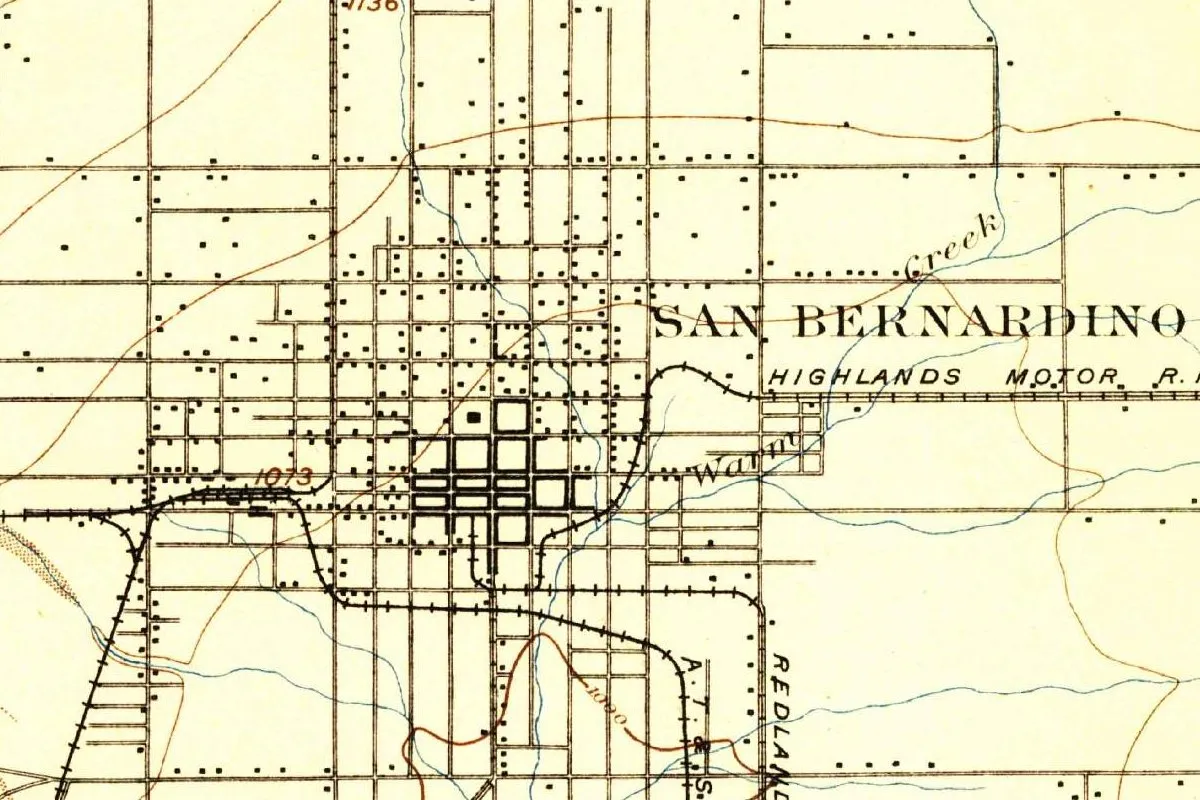
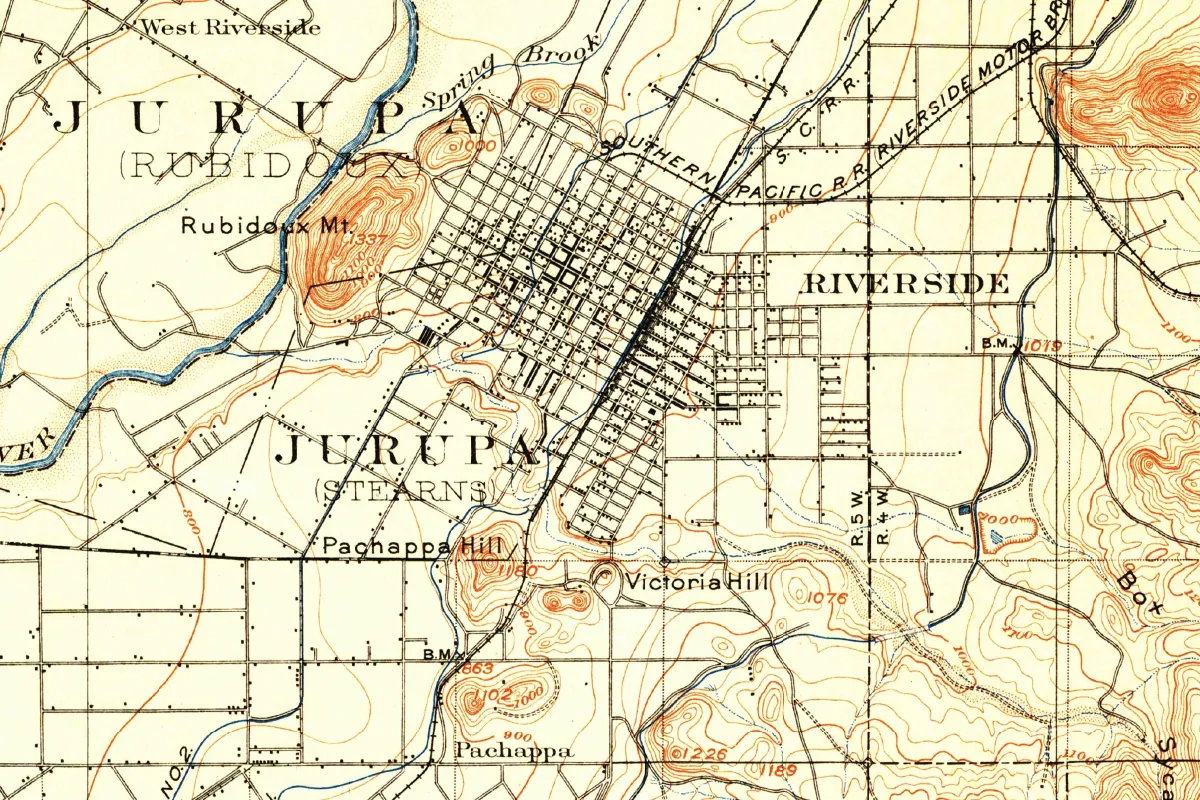
- U.S. Geological Survey, Redlands sheet (1899). Source of the 1899 map image.
Spot something wrong, or know more? Tell us here. You can also email us or use our contact page. Corrections are noted here with their date, never made silently.