San Bernardino, California: A Saint's Day Name From 1810
The name honors Saint Bernardino of Siena. By the tradition the city repeats, Father Francisco Dumetz and a party from Mission San Gabriel reached the valley on May 20, 1810, the saint's feast day, and named it for him. The town that grew there kept the name and became a city in 1854.
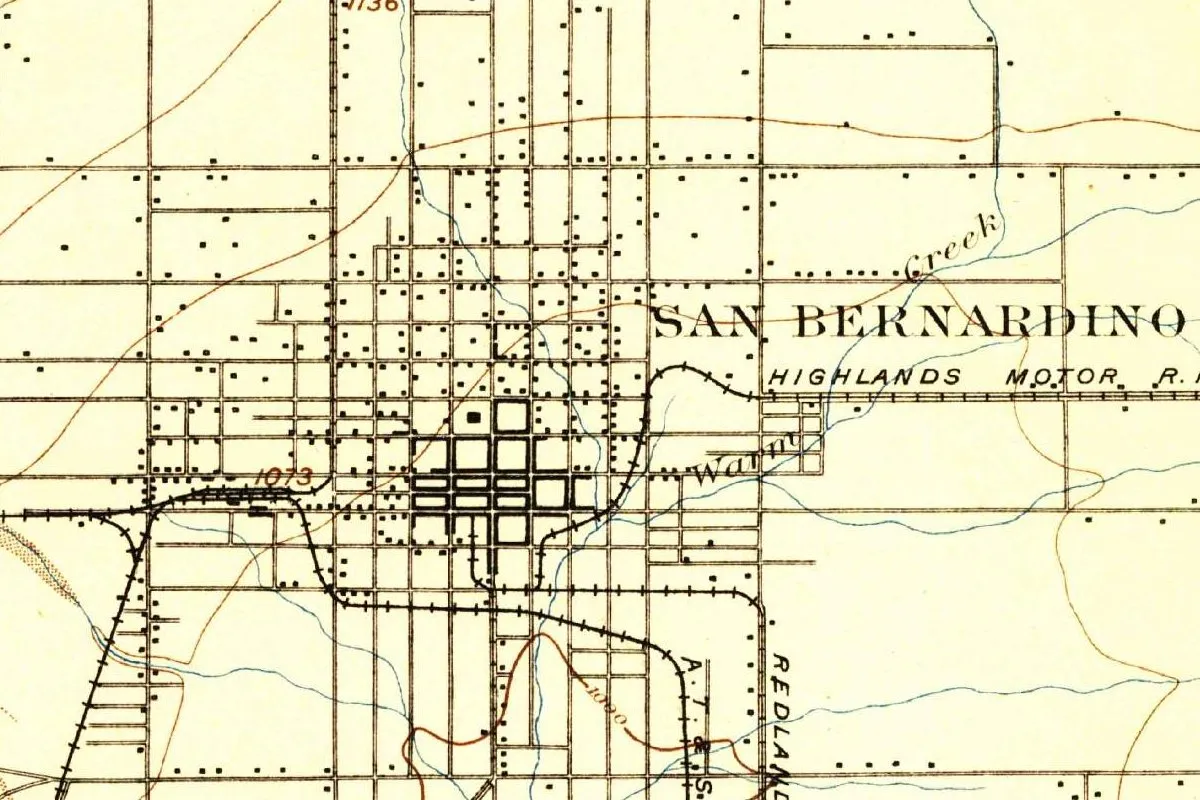
A birthday for a name
San Bernardino, California, had its 100th birthday in May 1910, counting from a saint’s day in 1810, when a mission party is said to have named the valley. The saint was Bernardino of Siena, an Italian friar, and the town that grew up decades later simply kept the name the valley already had.
The city tells it this way. Tradition has it that Father Francisco Dumetz made a trip from Mission San Gabriel into the valley and, on May 20, 1810, set up an altar. He named the area for Saint Bernardino of Siena, the saint of that day on the Catholic calendar. Notice the first two words, though. The city itself calls this a tradition, and no diary or letter from Dumetz is quoted for it.
The story in print in 1902
The oldest full telling in print among these sources is a 1902 book by Father Juan Caballeria, History of San Bernardino Valley from the Padres to the Pioneers. He explains that travelers on the road from Sonora needed a supply station between the mission and the mountains, and that a party “under the leadership of Padre Dumetz” went out to pick one. Then:
“On the 20th of May, 1810, they came into the San Bernardino Valley. This, according to the Roman Calendar of Saints, was the feast day of San Bernardino of Sienna and they named the valley in his honor.”
So the account comes down to two things: a date on a church calendar, and a valley named to match it. A three-volume county history from 1922 repeats the story in nearly the same words, without naming Dumetz. It says the party of missionaries, soldiers and mission Indians arrived May 20, 1810, and named the valley “in honor of San Bernardino of Sienna, whose feast day it was according to the Roman Calendar of Saints.”
The valley had another saint first
Caballeria also records an earlier Spanish name. When Juan Bautista de Anza’s expedition came through in 1774, he writes, “San Bernardino valley was called valle de San Joseph.” It didn’t stick. The feast-day name did, and it spread from the valley to everything else.
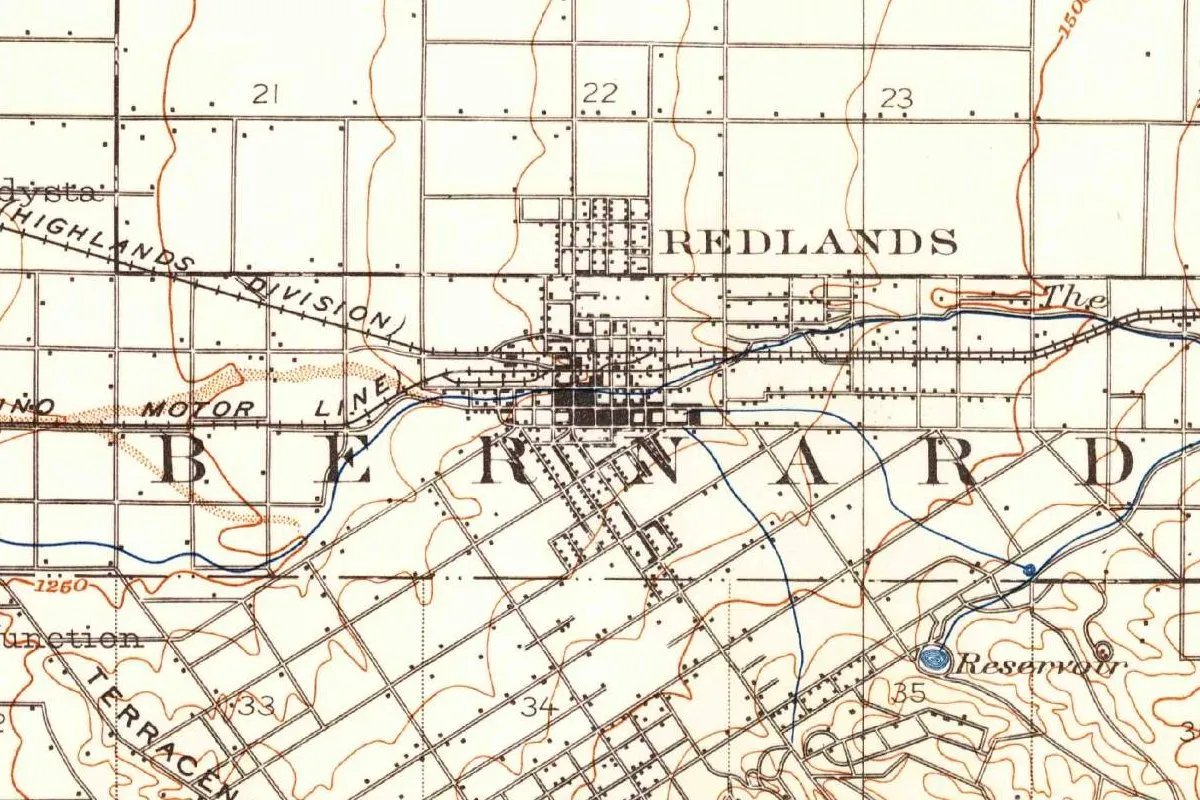
You can follow that spread in the city’s own history. Mission San Gabriel set up Rancho San Bernardino in 1819. In 1842 Antonio Maria Lugo helped his sons and a nephew buy the rancho. In 1851 a company of Mormon settlers bought 35,000 acres of it for $77,500 and built a stockade they called Fort San Bernardino. The City of San Bernardino was incorporated in 1854. By then the name was more than 40 years old. Even Redlands, laid out in 1881, began as a colony in what the 1922 history calls the East San Bernardino Valley.
A 1905 U.S. Geological Survey bulletin on place names, compiled by Henry Gannett, skips the saint’s day and goes straight to the institution. It says the county and the city were “named for an old Spanish mission.” That’s not a contradiction, just a shorter route: the saint’s name came to the valley, the mission’s outpost and ranch carried it, and the town took it from there.
The county’s mountain version
If you read San Bernardino County’s own history page, you’ll find a different reason for the same saint. It says the missionaries who founded the San Gabriel outpost “called it after Bernardino of Siena because of the snowcapped mountains which reminded the monks of Siena, Italy.”
Both versions agree on the saint. They split on why. The city and the 1902 and 1922 histories point to the calendar, while the county points to the view. Neither offers a document from 1810, so the feast-day account is best read as the older printed tradition, and the mountain account as a later explanation sitting next to it.
The city clearly picked the calendar. When San Bernardino threw its centennial on May 20, 1910, the 1922 history says, the celebration actually ran from May 17 to 21 and told the story of the place “since the brown-robed padres pronounced its name, on one bright May morning 100 years before.” In other words, a city founded in the 1850s celebrated a hundred years of a name it got from a saint’s day in California’s mission era.
Quick answers
Who is San Bernardino named after?
Saint Bernardino of Siena, an Italian friar. The city, a 1902 history and a 1922 county history all say the valley was named for him.
Why is May 20, 1810, tied to the name?
May 20 is Bernardino of Siena’s feast day. By tradition, a mission party from San Gabriel, led by Father Dumetz, reached the valley that day and named it for the saint.
Was San Bernardino founded in 1810?
No. The city was incorporated in 1854. The 1810 date is for the name of the valley, and the 1910 centennial counted from it.
Did snowy mountains remind the padres of Siena?
That’s the county’s explanation. The city and the early histories credit the saint’s feast day instead, and neither version is backed by a document from 1810.
Key dates
- 1774The Anza expedition crosses the valley and, according to a 1902 history, calls it valle de San Joseph.
- 1810May 20, by tradition: a mission party from San Gabriel reaches the valley on the feast of San Bernardino of Siena and names it for him.
- 1819Mission San Gabriel sets up Rancho San Bernardino in the valley, according to the city.
- 1842Antonio Maria Lugo helps his sons and a nephew buy Rancho San Bernardino.
- 1851Mormon settlers buy 35,000 acres of the rancho and build Fort San Bernardino.
- 1854The City of San Bernardino is incorporated.
- 1910May 20: San Bernardino holds its centennial, a celebration that runs from May 17 to 21.
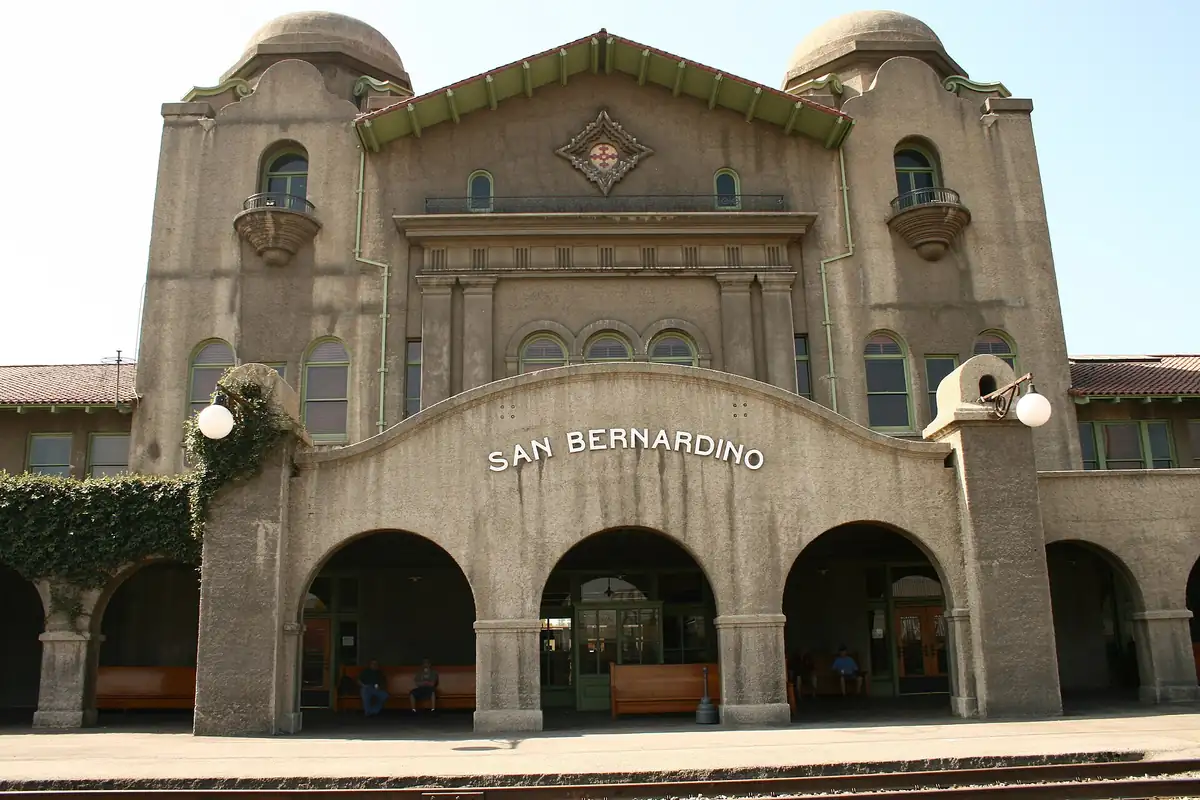
Getting there
Open San Bernardino in Google Maps
Opens in a new tab. The pin is the center of San Bernardino in the USGS place-name record.
The closest airports, Amtrak stations and intercity bus stops, measured in a straight line from the center of San Bernardino.
Airports
- San Bernardino International (SBD) 3 mi 5 km
- Ontario International (ONT) 18 mi 29 km
Amtrak trains
- San Bernardino station (SNB) 1 mi 2 km
- Riverside station (RIV) 10 mi 17 km
Intercity buses
- FlixBus San Bernardino Downtown under 1 mi 1 km
- Limousine Express San Bernardino (Limo Express) 1 mi 2 km
- Mexicoach San Bernardino (Limo Express) 1 mi 2 km
Distances are as the crow flies, not by road. We don't list schedules or fares because they change; check with the airline, Amtrak or the bus company before you go. Official data (FAA commercial service airports (2025), FAA airport locations, Amtrak stations and Intercity Bus Atlas) from the FAA and the U.S. Bureau of Transportation Statistics, checked Nov 13, 2026.
Sponsored
Staying in San Bernardino?
Compare hotels in San Bernardino, California, on Expedia.
See hotels in San BernardinoWe may earn a commission if you buy through this link. It never changes what we write. Read our affiliate disclosure
Historical Sources & References
- Juan Caballeria, History of San Bernardino Valley (1902), pp. 37-38. The supply station on the road from Sonora, the party “under the leadership of Padre Dumetz,” the quotation about May 20, 1810, and the Anza expedition’s name “valle de San Joseph.”
- John Brown Jr. and James Boyd, History of San Bernardino and Riverside Counties, vol. 1 (1922), pp. 9 and 193. The arrival on May 20, 1810, and the naming “in honor of San Bernardino of Sienna, whose feast day it was” (p. 9), and the centennial of May 20, 1910 (p. 193). Also online: p. 193.
- Henry Gannett, The Origin of Certain Place Names in the United States (1905), p. 273. San Bernardino county and city “named for an old Spanish mission.”
- City of San Bernardino, “Local History”. The tradition of Father Dumetz and May 20, 1810, the saint “of the day on the Catholic Calendar,” Rancho San Bernardino in 1819, the Lugo purchase of 1842, the Mormon purchase of 1851 and Fort San Bernardino, and incorporation in 1854.
- San Bernardino County, “County History”. The version in which snowcapped mountains reminded the missionaries of Siena.
- GNIS feature 1661375 (U.S. Geological Survey). San Bernardino’s entry in the names database, listed in San Bernardino County.
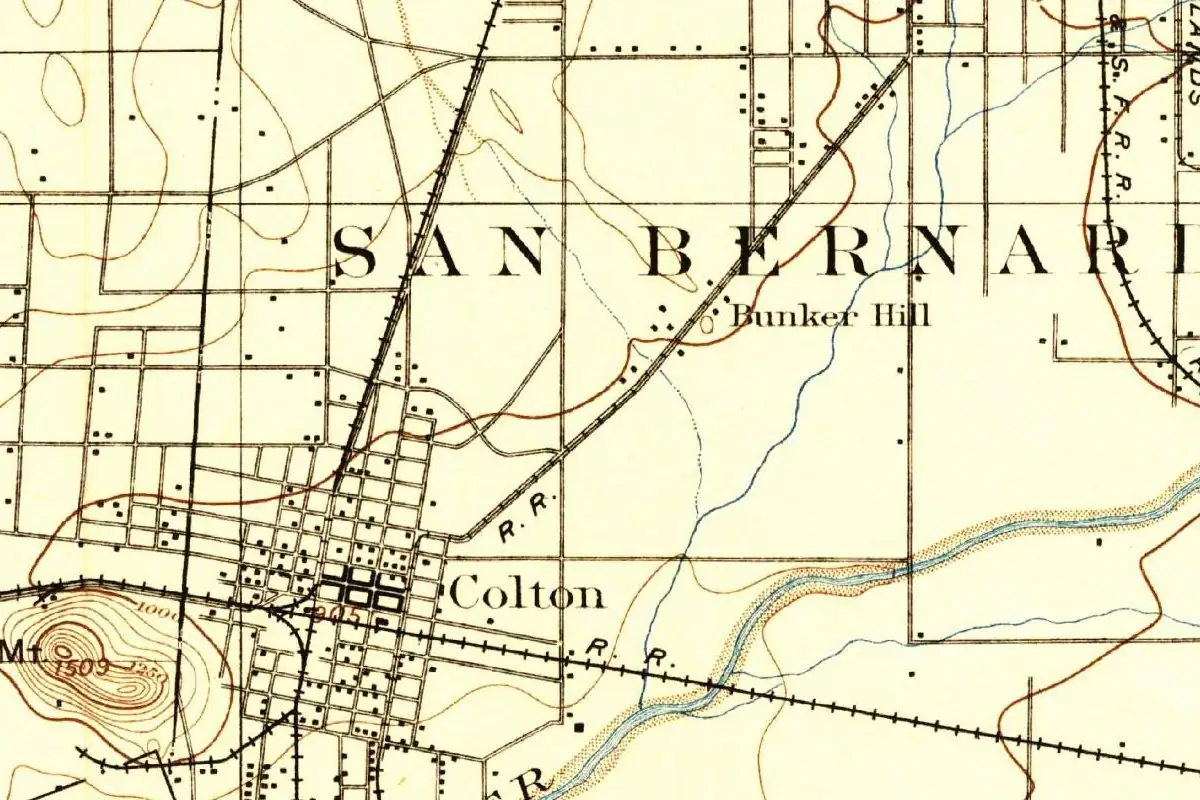
- U.S. Geological Survey, San Bernardino sheet (1896). The 1896 sheet the map image was cropped from.
Spot something wrong, or know more? Tell us here. You can also email us or use our contact page. Corrections are noted here with their date, never made silently.