Why Is Santa Ana Called Santa Ana? A River, a Rancho
Santa Ana, California, is named for Saint Anne, but it got the name secondhand. Spanish soldiers called the river Santa Ana in 1769, a ranch grant took the name, and in 1869 William H. Spurgeon gave his new town the name of that grant. He was unwilling, a 1921 history says, to use his own.
Soldiers named the river first
Santa Ana means Saint Anne in Spanish, and the saint reached the city by a roundabout route: first a river, then a cattle ranch, then a town. It started in the summer of 1769, when Gaspar de Portolá’s expedition reached the river on July 28. Four earthquakes shook the camp that day, and Father Crespí, the expedition’s diarist, recorded the name the spot was given: El Dulce Nombre de Jesús de los Temblores, the Sweet Name of Jesus of the Earthquakes. Then he added a line that settled things. “This river is known to the soldiers as the Santa Ana.”
Nellie Van de Grift Sanchez, who quoted the diary in her 1922 book on California place names, called it one of the rare cases where the soldiers chose the saint’s name. She also quoted a later diarist, Father Font, who traveled with Anza’s second expedition and wrote that Portolá reached the river on Saint Anne’s day and gave it the name himself. So you get two versions of who picked it, but the same saint either way. Saint Anne was the mother of the Virgin Mary.
From the river to the rancho
The name spread from the water to the land. The Rancho Santiago de Santa Ana was a Spanish grant of 1810 to José Antonio Yorba, according to a centennial history by Francelia and Allen Goddard that the Santa Ana Historical Preservation Society reprints. Yorba had served with Portolá’s 1769 expedition and came back to settle. Diann Marsh’s history of the rancho, which the society also reprints, says it ran along the east bank of the Santa Ana River from the mountains to the sea, and that its name joins two of Portolá’s 1769 camps: Santiago, for Saint James, and Santa Ana. You’d think a name like that was fixed from the start, but it wasn’t. Yorba’s petition asked for the “Paraje de Santiago,” and the rancho went by several names until an American land commission settled on the official one in 1868. A year earlier, a Los Angeles court had divided the grant in a lawsuit.
Spurgeon’s town and Spurgeon’s name
William H. Spurgeon, a Kentuckian, rode through on his fortieth birthday, October 10, 1869. The wild mustard was higher than his head, so he climbed a sycamore to look around. He liked the view and bought about 74 acres of the old grant for $594. His townsite of 24 blocks was surveyed by George Wright and recorded on December 13, 1870.
He could have named it after himself. The 1921 History of Orange County, in a chapter by Linn L. Shaw, says plainly why he didn’t:
“The place was called Santa Ana from the name of the grant, Mr. Spurgeon being unwilling to call it by his own name.”
Historian Diann Marsh, in a passage the preservation society also reprints, adds that years later residents wanted to rename the town Spurgeon, and he still said no. Spurgeon Street was the east edge of his first 24 blocks. He became postmaster in 1870 and the first mayor when Santa Ana incorporated on June 1, 1886. When Orange County split from Los Angeles County in 1889, Santa Ana became its county seat.
A federal guide that guessed wrong
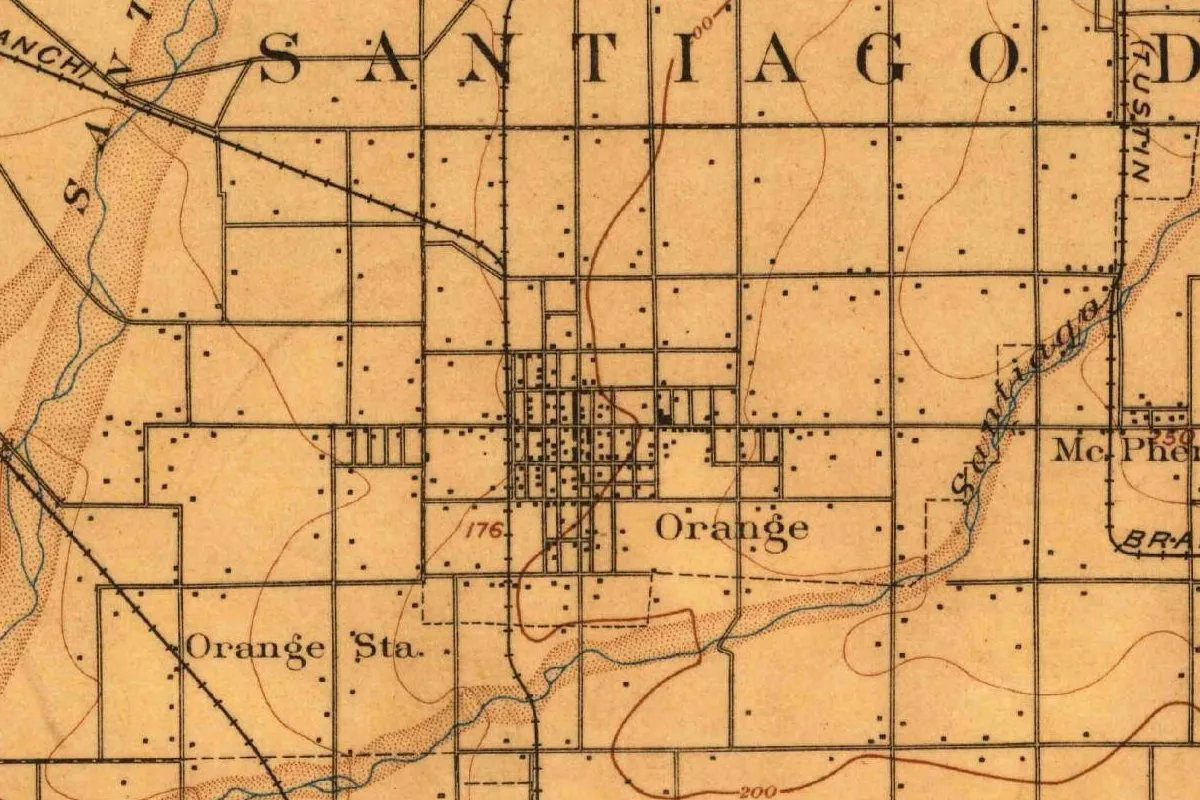
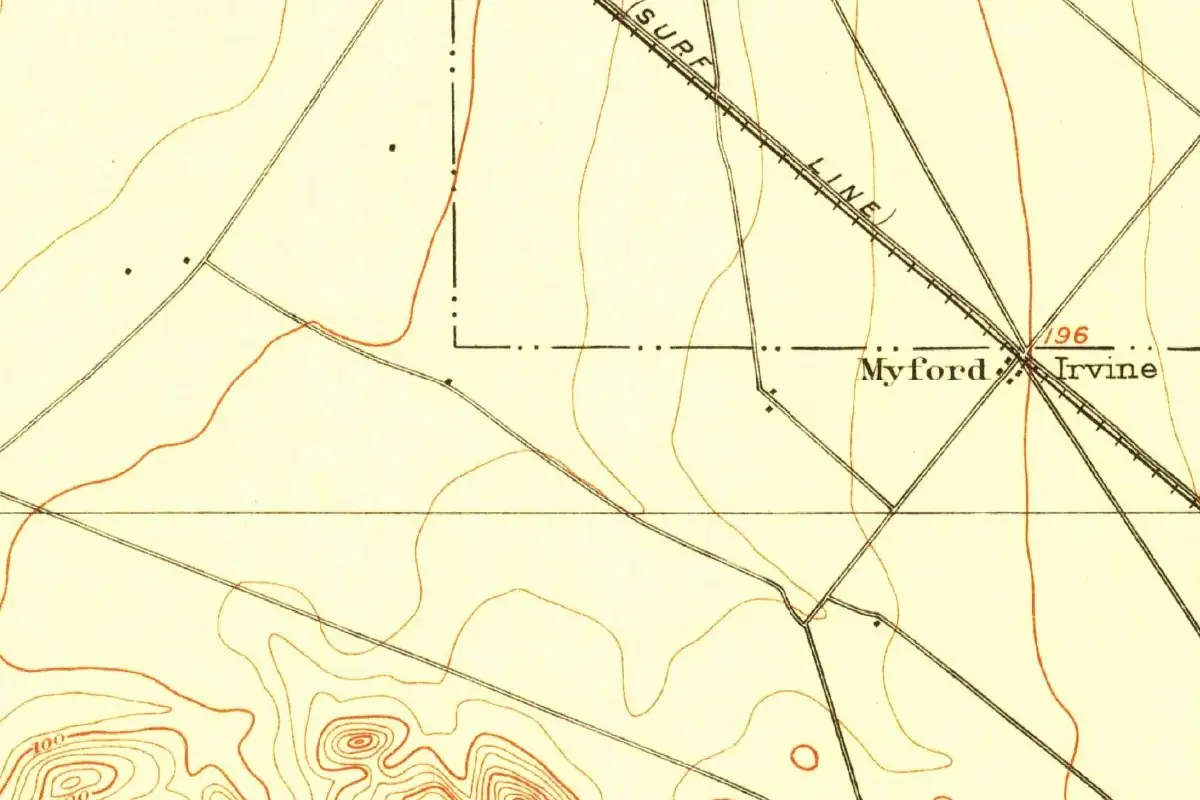
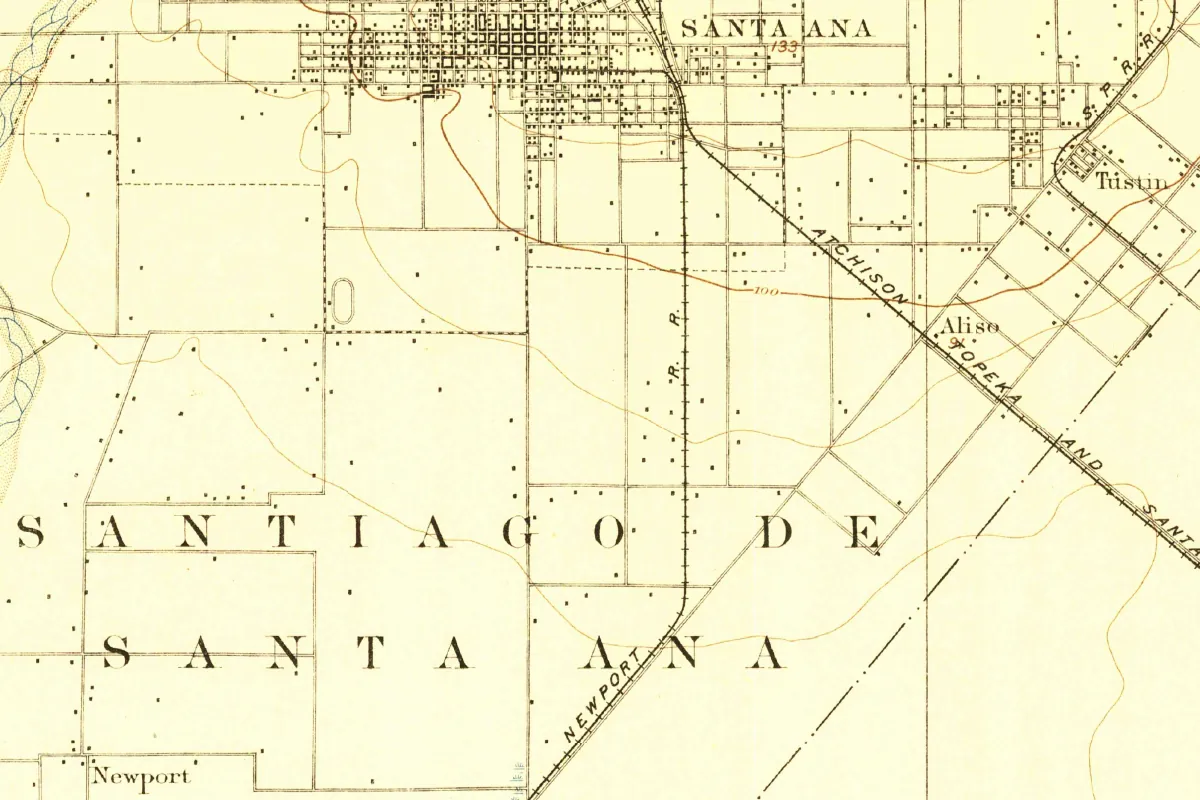
Not every source tells it this way. Henry Gannett’s federal guide to American place names, in its 1905 edition, says Santa Ana was “named for an old Spanish mission.” He gives Santa Barbara and Santa Clara the same line. The local histories cited here mention no mission at all. Each of them traces the name to the river and the grant, and the 1896 map at the top of this page still prints “Santiago de Santa Ana” across the fields south of town.
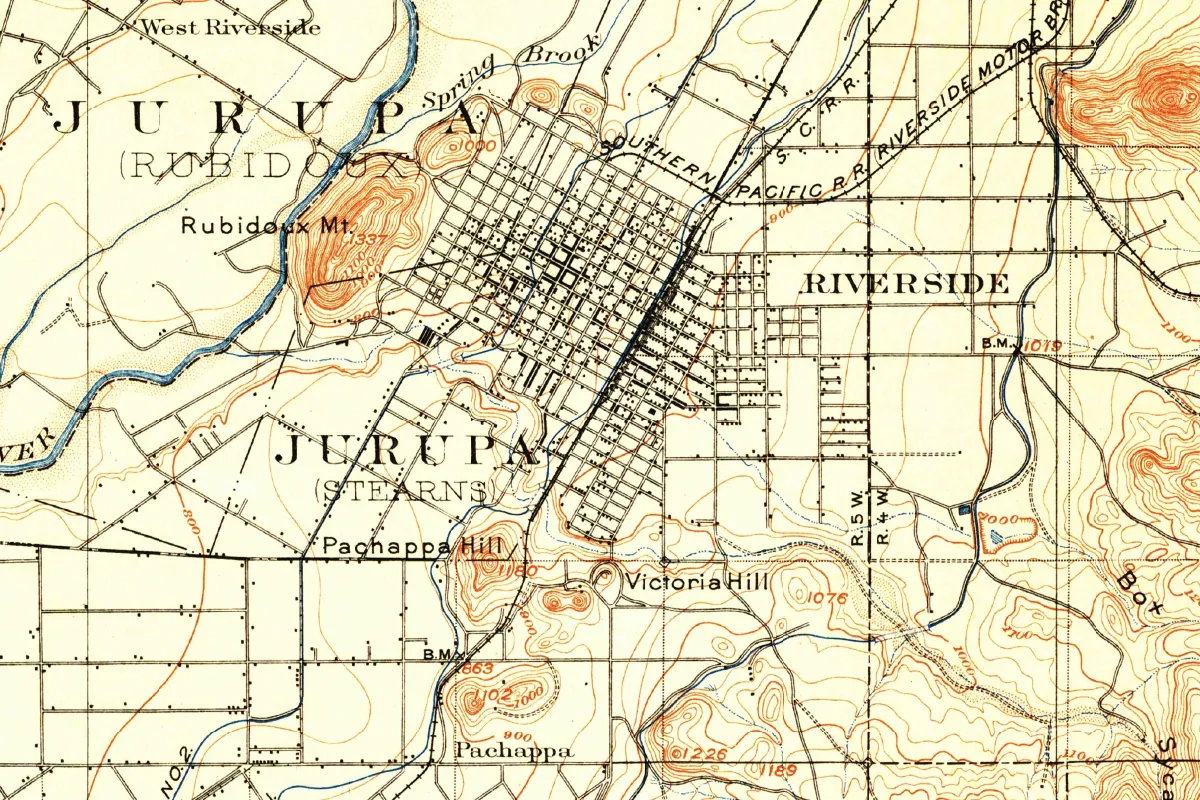
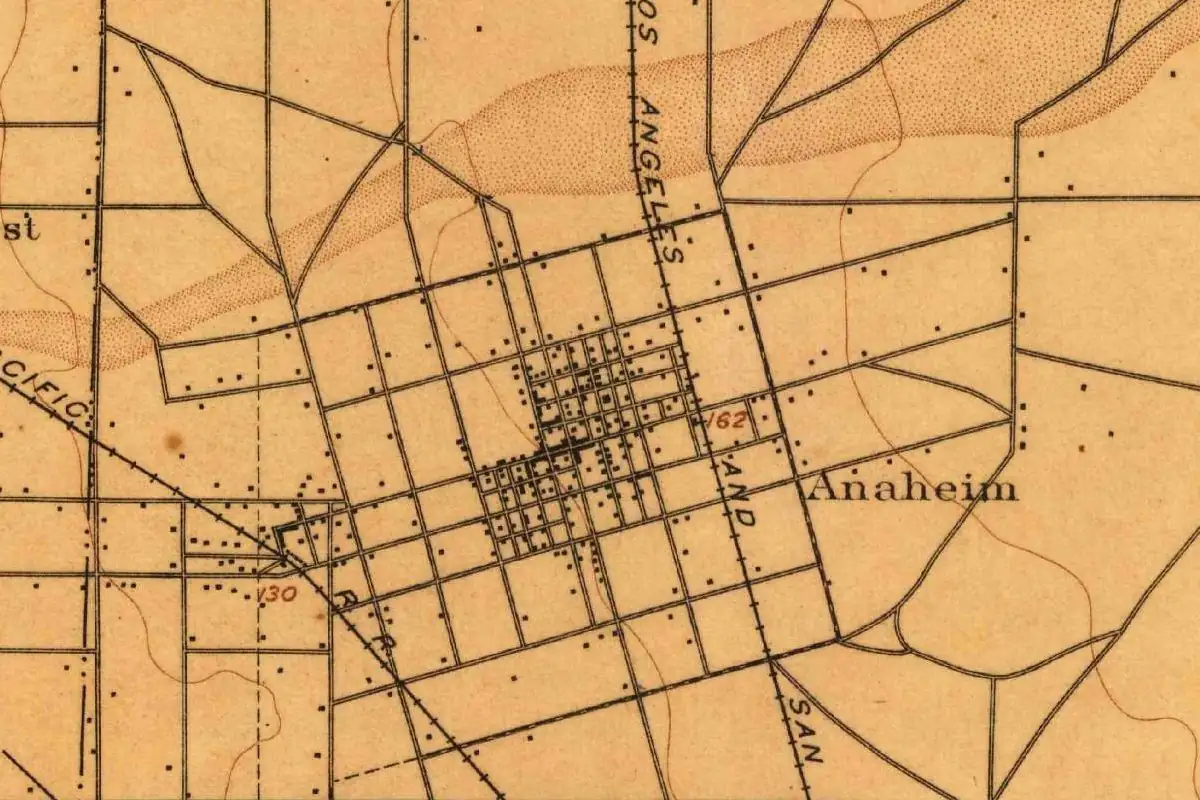
The river’s name didn’t stop at one town, either. Anaheim, about 7 miles (11 km) north, borrowed the Ana from it. And farther inland, about 31 miles (49 km) from Santa Ana, the same water fed the orange groves of Riverside, as Sanchez noted in 1922. The saint came first, and the river carried her name down to the town.
Quick answers
Why is Santa Ana, California called Santa Ana?
Because William H. Spurgeon named his 1869 town after the Rancho Santiago de Santa Ana, which shared its name with the Santa Ana River. Spanish soldiers had called the river Santa Ana since 1769.
What does Santa Ana mean?
Saint Anne in Spanish. She was the mother of the Virgin Mary.
Why isn’t Santa Ana called Spurgeon?
Its founder didn’t want that. The 1921 county history says he was “unwilling to call it by his own name,” and residents who later wanted to rename the town Spurgeon got the same answer.
Who named the Santa Ana River?
Father Crespí’s 1769 diary says the expedition’s soldiers already called it the Santa Ana. Father Font later wrote that Portolá named it, on Saint Anne’s day.
Key dates
- 1769July 28: the Portolá expedition reaches the river, which Father Crespí says the soldiers know as the Santa Ana.
- 1810The Rancho Santiago de Santa Ana is granted to José Antonio Yorba, who had served with Portolá's expedition.
- 1869October: William H. Spurgeon buys about 74 acres of the old grant and founds the town, naming it Santa Ana.
- 1870December 13: Spurgeon's 24-block townsite plat is recorded.
- 1886June 1: Santa Ana incorporates as a city, with Spurgeon as its first mayor.
- 1889Orange County is formed, and Santa Ana is chosen as its county seat.
Getting there
Open Santa Ana in Google Maps
Opens in a new tab. The pin is the center of Santa Ana in the USGS place-name record.
The closest airports, Amtrak stations and intercity bus stops, measured in a straight line from the center of Santa Ana.
Airports
- John Wayne/Orange County (SNA) Santa Ana 5 mi 8 km
- Long Beach (Daugherty Field) (LGB) 17 mi 27 km
Amtrak trains
- Santa Ana station (SNA) under 1 mi 1 km
- Anaheim station (ANA) 4 mi 7 km
Intercity buses
- Amtrak Chartered Vehicle Amtrak Connecting Service · Santa Ana under 1 mi 1 km
- Greyhound Santa Ana East Santa Ana Boulevard 1000 under 1 mi 1 km
- Gold Runner Santa Ana under 1 mi 1 km
Distances are as the crow flies, not by road. We don't list schedules or fares because they change; check with the airline, Amtrak or the bus company before you go. Official data (FAA commercial service airports (2024), FAA airport locations, Amtrak stations and Intercity Bus Atlas) from the FAA and the U.S. Bureau of Transportation Statistics, checked Nov 11, 2026.
Sponsored
Staying in Santa Ana?
Compare hotels in Santa Ana, California, on Expedia.
See hotels in Santa AnaWe may earn a commission if you buy through this link. It never changes what we write. Read our affiliate disclosure
Historical Sources & References
- Nellie Van de Grift Sanchez, Spanish and Indian Place Names of California (1922 edition), pp. 60-62. The arrival on July 28, 1769, the earthquakes, Crespí’s diary (“This river is known to the soldiers as the Santa Ana”), Font’s version that Portolá named it on Saint Anne’s day, and the town on the river’s bank with Riverside’s orchards upstream.
- Linn L. Shaw, “The City of Santa Ana,” in Samuel Armor, History of Orange County, California (1921), pp. 68, 80-81. The founding in October 1869, the 24 blocks with Spurgeon Street on the east and the plat recorded December 13, 1870 (p. 68), the incorporation on June 1, 1886, the birthday ride, the 74 acres for $594, the 1867 division of the grant, and the passage quoted above (pp. 80-81).
- Santa Ana Historical Preservation Society, The History of Santa Ana. Reprinted excerpts from Diann Marsh (the rancho along the east bank of the river, named for two Portolá camps, the “Paraje de Santiago” petition, the official name of 1868; Spurgeon named the town after the grant and later refused to rename it Spurgeon) and from Francelia and Allen Goddard (Spurgeon from Kentucky, the 1810 grant to José Antonio Yorba, Spurgeon as postmaster and first mayor, Orange County and the county seat in 1889).
- Advisory Council on Historic Preservation, Santa Ana, California. A federal summary that ties the name to Portolá’s 1769 expedition and the rancho, and says Spurgeon “maintained tradition” when he named the town.
- Henry Gannett, The Origin of Certain Place Names in the United States, 2nd ed. (USGS, 1905), p. 275. The entry that says “named for an old Spanish mission,” which the local histories don’t support.
- GNIS feature 1652790 (U.S. Geological Survey). The national gazetteer record for Santa Ana as a populated place in Orange County, with its coordinates, used for the straight-line distances above.
- U.S. Geological Survey, Santa Ana sheet (1896). The source of the map at the top of this page.
Spot something wrong, or know more? Tell us here. You can also email us or use our contact page. Corrections are noted here with their date, never made silently.