Old Saybrook, CT: How the First Saybrook Became 'Old'
Saybrook is usually traced to two English patentees, Viscount Saye and Sele and Lord Brooke, as the town and the state's Register say. A 2021 paper for the Old Saybrook Historical Society notes there's no written record of that naming and reports a theory of a Dutch name, Zeebroeck or Seabrook. The Old dates from 1852-1854.
Old Saybrook, Connecticut, holds the site of the 1635 Saybrook fort, but its own name dates to 1854, after a town called Old Saybrook split in two. So the “Old” part has a clear paper trail. The “Saybrook” part, the older of the two, is the one people still argue about.
A fort at the mouth of the river
The town’s history begins with the Nehantic, who had a village at Saybrook Point, and with the Dutch, who tried to plant a small colony there in 1623. Then came the English. In 1631, the town says, the Earl of Warwick signed a deed called the Warwick Patent to eleven friends and relatives, among them Viscount Saye and Sele and Lord Brooke. Colonel George Fenwick joined the patentees a little later.
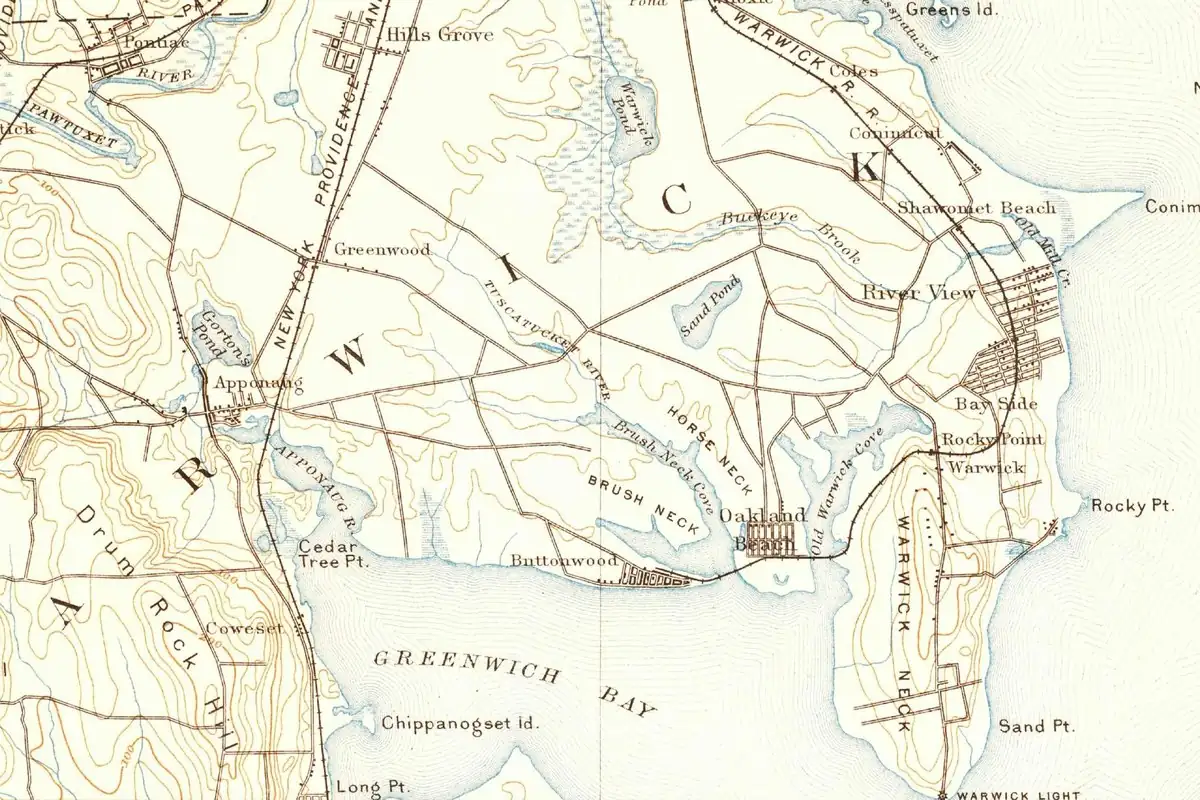
That earl has his own town. Warwick, Rhode Island, was named for Robert, Earl of Warwick, the earl who backed its leader, Samuel Gorton.
In 1635 the patentees made John Winthrop Jr. governor of the territory. According to the town, Winthrop heard the Dutch meant to occupy the point for good, and sent a small vessel with twenty men, who landed on November 24, 1635. Lion Gardiner sailed in March 1636 to build the fort, and Winthrop followed a month later. Then, in the town’s words, he “shortly thereafter named the settlement Saye-Brooke in honor of Viscount Seye and Sele and Lord Brooke.” The town calls it “the oldest English town name in Connecticut.”
The state’s Museum of Connecticut History tells it almost the same way. In July 1635, it says, Lord Brooke, Lord Saye and Sele and others hired Winthrop to start a colony at the mouth of the river, and “He named the area ‘Say-Brook’ in honor of his employers.” Winthrop moved on later to found a settlement at Pequot harbor, the place that became New London.
Who named it, and when?
Here’s where it gets slippery. The sources agree on the two lords but not on the details. Henry Gannett’s 1902 gazetteer of origins for the Geological Survey simply says Saybrook was “named for Lords Say and Brook.” The Connecticut Register and Manual, which keeps the state’s official list of towns, says Saybrook was a fort and soon a settlement in 1635, “named 1639 from Lord Say & Sele, and Baron Brook.” That’s three years after the town’s version.
A paper written in August 2021 by Lamar LeMonte for the Old Saybrook Historical Society adds a third candidate for the namer. A 1935 book from the Saybrook Tercentenary Committee, it says, credited George Fenwick, in 1636. And about the Winthrop story it’s blunt: “There is no written record of this official designation by Governor Winthrop.”
The case for Seabrook
The same paper lays out a rival theory. The late Harold Elrod, a retired professor and past president of the historical society, argued that the first name was Dutch, Zeebroeck, which English speakers wrote as Seabrook. He pointed out that Lion Gardiner had lived in Holland, spoke Dutch and had a Dutch wife.
Elrod’s evidence was spelling. When Connecticut bought the jurisdiction of the colony from Fenwick in 1644, the paper says, the agreement wrote of “Seabrooke.” A petition of 1659 lists “the inhabitants of Seabrook.” In 1660 Gardiner sent his history of the Pequot War with a letter about “the passages of God’s providence at Seabrooke,” and in 1662 the General Court let “Sea Brooke Inhabitants” set up a ferry.
Elrod didn’t oversell it. In a 1991 letter quoted in the paper, he wrote that “though the evidence may be convincing, it is not conclusive.” The paper is just as careful about the Dutch side, noting that for the Dutch outpost names, too, “there is no written record of these designations.” Two lords or a sea brook: you can see why this page calls it disputed.
How Saybrook came apart
The “Old” part is much easier, because the state wrote it down. Over the years, the town says, outlying parishes split off from Saybrook and became Lyme, Old Lyme, Westbrook, Chester, Essex and Deep River. The Register says Lyme was set off in 1665 and had been called East Saybrook.
Then came a tangle of names. According to the Register, on September 13, 1852, a new town was incorporated out of Saybrook under the name Old Saybrook. On July 8, 1854, that town changed its name to Essex. On the same day, the present Old Saybrook was “incorporated from Essex (then Old Saybrook)” and “named at the same time.” Meanwhile the rest of the original town, upriver, kept the plain name Saybrook. It held on to it until July 1, 1947, when the General Assembly changed it to Deep River.
So the town at the mouth of the river, where the fort stood, is the one called Old, and the one that kept the name Saybrook for nearly a century gave it up. The Register’s list is the same one that dates the name of Litchfield to 1719. Its introduction says that until 1700 the colonial government of Connecticut did little more than authorize each town’s name, “usually chosen by its leading man, from his home in England.” Saybrook’s own entry doesn’t fit that pattern: the Register names it for two lords, not for an English hometown.
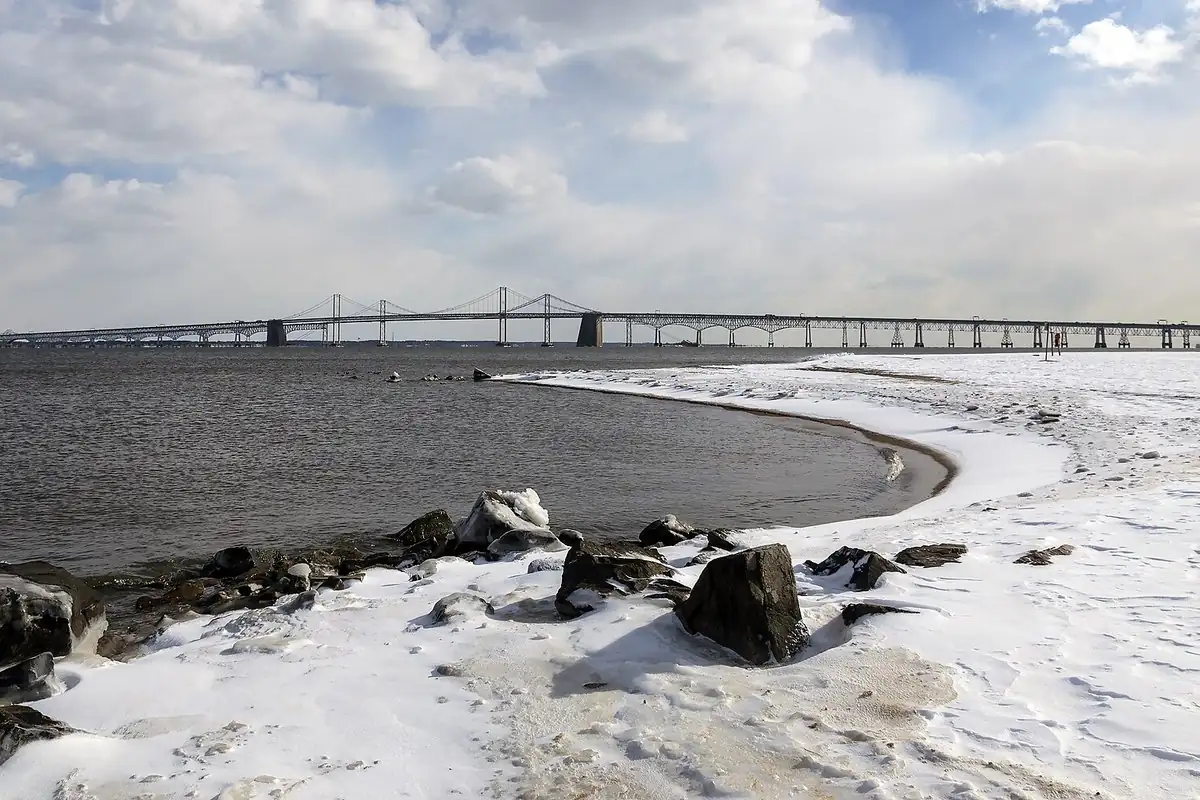
Saybrook wasn’t the only colony to carry the names of English lords. Out in the Chesapeake, Baltimore carries the title of the Calverts, the Lords Baltimore.
Old Saybrook on the 1893 map
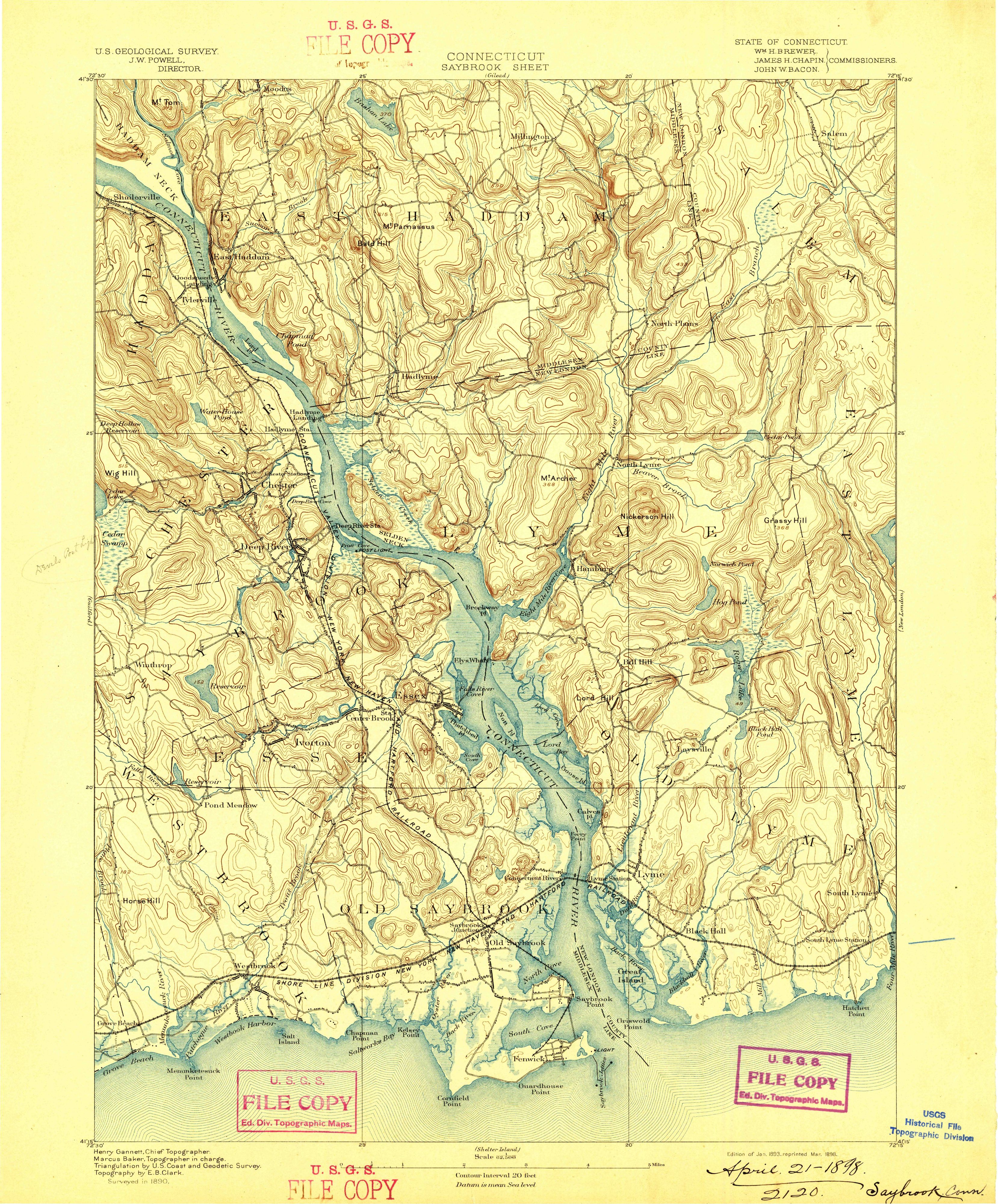
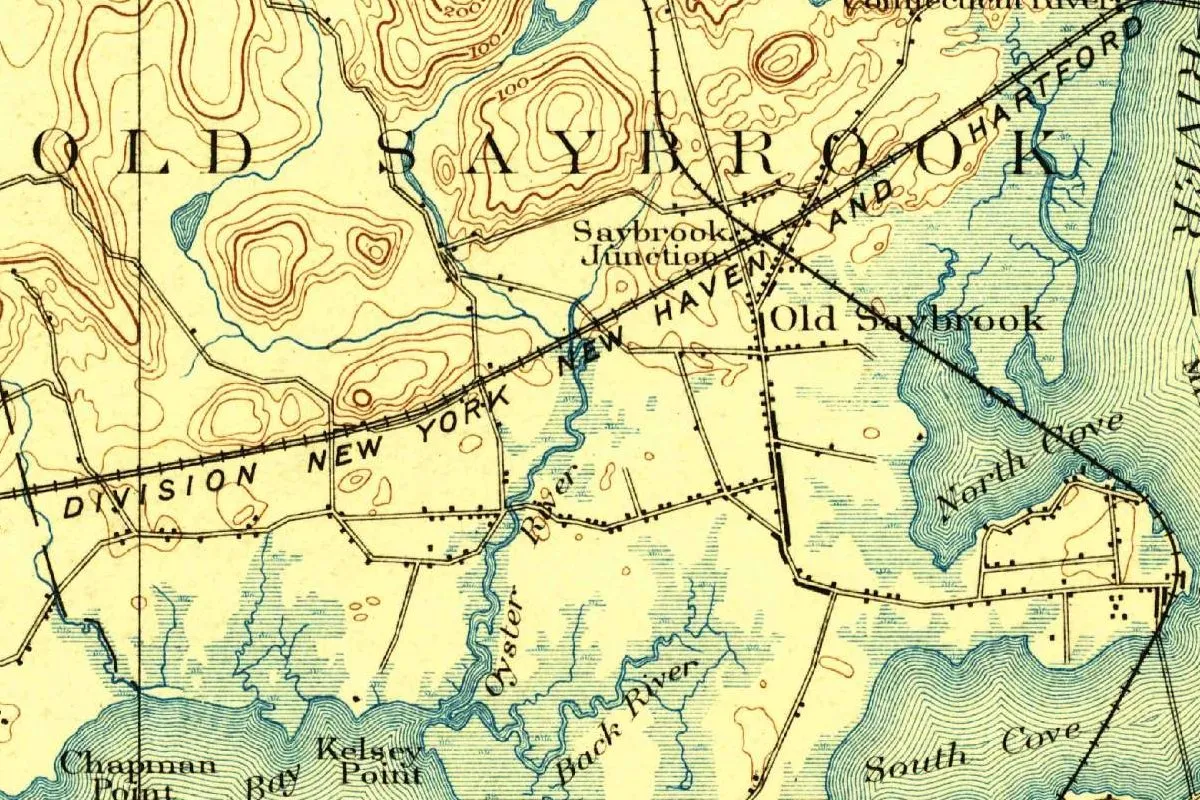
The map at the top comes from the Saybrook sheet, surveyed in 1890 under Henry Gannett as chief topographer, with the State of Connecticut. This copy is the edition of January 1893, reprinted in March 1898, as the line in its margin says. In the crop, you’ll see “OLD SAYBROOK” spelled out across the town, with the village of Old Saybrook, Saybrook Junction on the New York, New Haven and Hartford railroad, North Cove and South Cove on the river, and the Oyster River winding down to the bay.
The full sheet shows both halves of the story. Upriver, past Essex, the big letters “SAYBROOK” still cross the town that held the village of Deep River, with Chester and a place called Winthrop nearby. The Museum of Connecticut History notes a community called Winthrop in Deep River, with a school named in the governor’s honor.
Quick answers
Who is Old Saybrook named after?
Usually Viscount Saye and Sele and Lord Brooke, two holders of the 1631 Warwick Patent, according to the town, the state’s Register and Gannett. A paper for the town’s historical society notes there’s no written record of the naming and reports a theory that the name began as the Dutch Zeebroeck, or Seabrook.
Why is it called Old Saybrook?
In 1852 a new town was split off from Saybrook under the name Old Saybrook. In 1854 that town became Essex, and the present Old Saybrook was incorporated from it and named the same day, according to the Register.
What happened to the original town of Saybrook?
The rest of the original town kept the name Saybrook until July 1, 1947, when the General Assembly renamed it Deep River.
When was Saybrook founded?
The town says twenty men landed at Saybrook Point on November 24, 1635, and Lion Gardiner came in 1636 to build the fort. The Register gives 1635 for the fort and 1639 for the name.
Key dates
- 1631The Earl of Warwick signs the Warwick Patent, whose holders include Viscount Saye and Sele and Lord Brooke.
- 1635November 24: twenty men sent by John Winthrop Jr. land at Saybrook Point.
- 1636Lion Gardiner arrives to build the fort; the town says Winthrop names the settlement soon after.
- 1639The year the state's Register gives for the naming of Saybrook.
- 1644Connecticut buys the jurisdiction of the colony from George Fenwick; the agreement spells it Seabrooke.
- 1852September 13: a new town is incorporated from Saybrook under the name Old Saybrook.
- 1854July 8: that town becomes Essex, and Old Saybrook is incorporated from it and named.
- 1898The Geological Survey reprints its 1893 Saybrook sheet, surveyed in 1890.
- 1947July 1: the remaining town of Saybrook changes its name to Deep River.
Things to do in Old Saybrook, Connecticut
Fort Saybrook Monument Park
A 17-acre (6.9 ha) park with storyboards on the history of the Saybrook Colony, founded in 1635, a boardwalk, bird watching and wide views over the mouth of the Connecticut River.
General William Hart House
The home of the Old Saybrook Historical Society, built shortly after William Hart, a merchant in the West Indies trade, married Esther Buckingham in 1767. It's listed on the National Register of Historic Places.
Self-guided historic tour
The historical society's tour of 52 locations from the train station to Saybrook Point. Most of the houses on it are private, so it's a tour to see from the street.
Katharine Hepburn Museum
A museum at The Kate, the arts center at 300 Main Street, with letters, photos, home movies, costumes, wardrobe items and other memorabilia of the actress.
Getting there
Open Old Saybrook in Google Maps
Opens in a new tab. The pin is the center of Old Saybrook in the USGS place-name record.
The closest airports, Amtrak stations and intercity bus stops, measured in a straight line from the center of Old Saybrook.
Airports
- Tweed/New Haven (HVN) 27 mi 43 km
- Westerly State (WST) 30 mi 48 km
- Bradley International (BDL) Windsor Locks 47 mi 76 km
Amtrak trains
- Old Saybrook station (OSB) under 1 mi 1 km
- Westbrook station (WSB) 4 mi 6 km
Intercity buses
- FlixBus New Haven Union Av 29 mi 46 km
- Greyhound New Haven Bus Stop 29 mi 46 km
- OurBus New Haven, CT (Union Station area- bus will stop in front of Union Station Parking Garage on Union Avenue) 29 mi 46 km
Distances are as the crow flies, not by road. We don't list schedules or fares because they change; check with the airline, Amtrak or the bus company before you go. Official data (FAA commercial service airports (2025), FAA airport locations, Amtrak stations and Intercity Bus Atlas) from the FAA and the U.S. Bureau of Transportation Statistics, checked Nov 18, 2026.
Sponsored
Staying in Old Saybrook?
Compare hotels in Old Saybrook, Connecticut, on Expedia.
See hotels in Old SaybrookWe may earn a commission if you buy through this link. It never changes what we write. Read our affiliate disclosure
Historical Sources & References
- Connecticut Register and Manual, “Connecticut Towns in the Order of their Establishment”. Saybrook “named 1639 from Lord Say & Sele, and Baron Brook,” Lyme as East Saybrook in 1665, the Old Saybrook of 1852 that became Essex in 1854, the present Old Saybrook of July 8, 1854, and Deep River in 1947.
- Town of Old Saybrook, “Our History”. The Nehantic and the Dutch, the Warwick Patent of 1631, the landing of November 24, 1635, Gardiner, Winthrop’s “Saye-Brooke,” and the parishes that split off.
- Museum of Connecticut History, “John Winthrop, Jr.”. Winthrop’s hiring in July 1635, “He named the area ‘Say-Brook,’” his move to New London, and the community called Winthrop in Deep River.
- Lamar LeMonte, “Seabrook and Saybrook and Dutch Mapmaking” (2021). No written record of Winthrop’s naming, the 1935 Tercentenary book on Fenwick, Elrod’s Seabrook spellings of 1644, 1659, 1660 and 1662, and his 1991 “not conclusive.”
- Henry Gannett, The Origin of Certain Place Names in the United States (1902), p. 233. “Saybrook; town in Middlesex County, Connecticut, named for Lords Say and Brook.”
- Fort Saybrook Monument Park; Hart House; Tour Map; Katharine Hepburn Museum. The details in the things-to-do list.
- GNIS feature 209498. The federal names database entry for Old Saybrook, a populated place in Middlesex County, with its coordinates.
- Saybrook sheet, surveyed 1890, edition of January 1893, reprinted March 1898. The sheet the map at the top was cropped from, with topography by E. B. Clark under Marcus Baker.
Sponsored
Put this 1893 map on your wall
The Geological Survey's 1893 Saybrook sheet (this copy is an 1898 reprint), with Old Saybrook at the mouth of the Connecticut River and a second Saybrook upriver, is in the public domain. Download the full-size scan for free, then have it printed on canvas with CanvasOnTheCheap.
Print a map on canvasDownload the full-size mapWe may earn a commission if you buy through this link. It never changes what we write. Read our affiliate disclosure
Spot something wrong, or know more? Tell us here. You can also email us or use our contact page. Corrections are noted here with their date, never made silently.