Covington, Georgia: From Newtonsboro to a General's Name
The town was laid out in 1822 as Newtonsboro, the seat of the new Newton County, and renamed later that year for Leonard Covington of Maryland. He was a cavalry officer in the 1790s and a brigadier general who died in 1813 of wounds from a War of 1812 battle.
Newtonsboro for a few months
Covington, Georgia, started out in 1822 as Newtonsboro, and before the year was out it carried the name of Leonard Covington, a general of the War of 1812. The first name came from the county, and the second from a soldier who had died less than ten years earlier.
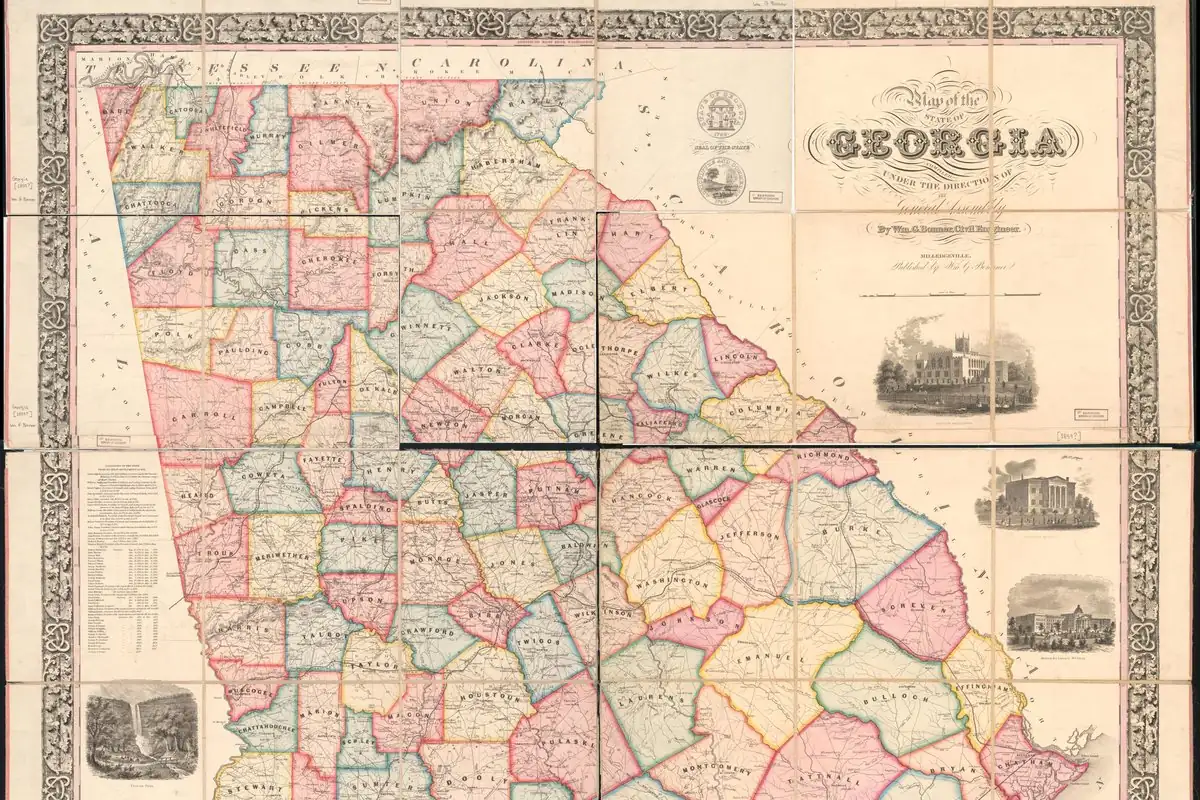
Newton County itself was brand new. Marshall McCart, writing a history column for The Covington News, says the county was formed on December 24, 1821. On April 15, 1822, the county’s Inferior Court picked the site for its seat “and named it Newtonsborough.” The New Georgia Encyclopedia spells it Newtonsboro. Either way, it echoed the county, which George White’s 1854 Historical Collections of Georgia says was “named after Sergeant John Newton.” Gannett’s 1905 bulletin adds that Newton was a sergeant of the Revolutionary War.
The first name didn’t last. McCart writes that “in December of 1822, the state legislature changed the name,” and the encyclopedia’s Newton County article also puts the switch in December, eight months after the founding. The same encyclopedia says Covington was incorporated as a town in 1822 and as a city in 1854.
So for most of its first year the town shared its name with the county. After that it had one of its own.
Three old books, three different wars
The oldest description of the town we found is in Adiel Sherwood’s A Gazetteer of the State of Georgia, in its second edition of 1829. On page 98 it reads:
“Covington, p. t. and cap., Newton county, named after General Covington, an officer in our late war, is situated on a ridge of land 3½ miles E. of the Yellow river…”
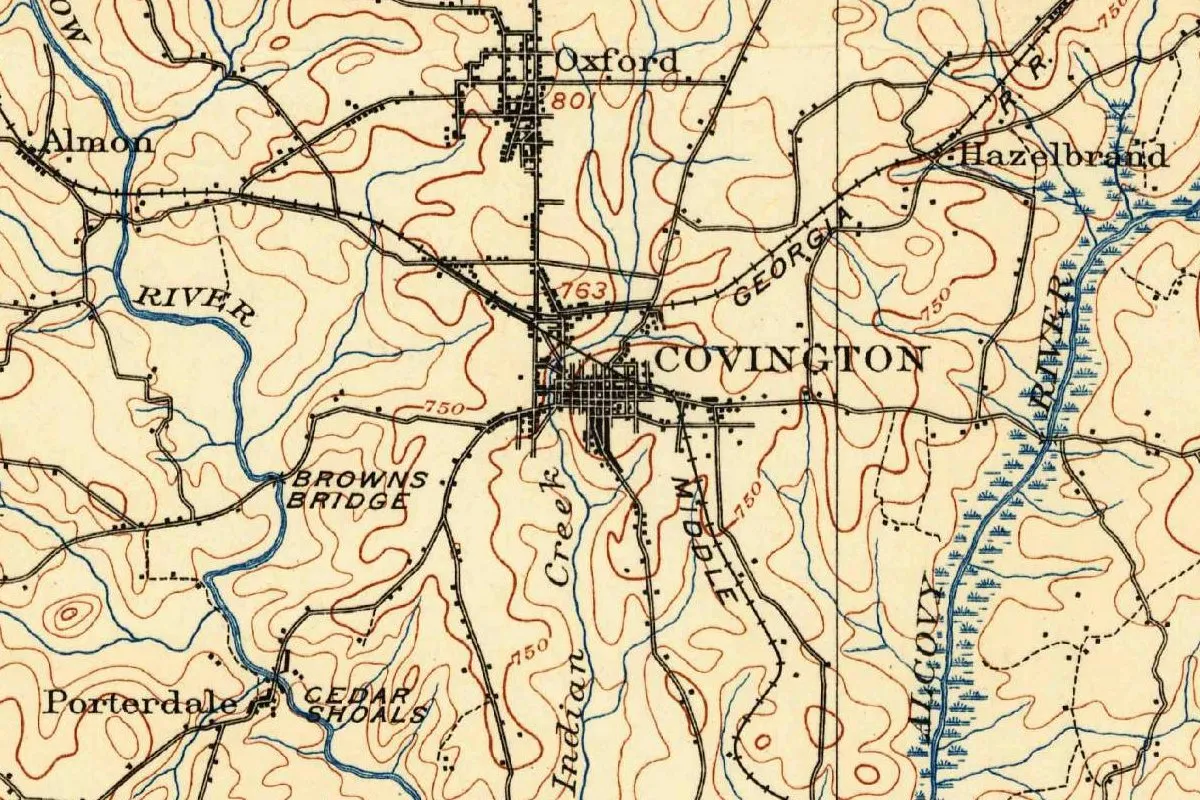
In Sherwood’s shorthand, “p. t.” means post town and “cap.” marks the county seat. “Our late war,” written in 1829, means the War of 1812, the most recent one. You can see that setting on the 1896 map: the town sits on the Georgia Railroad with the Yellow River off to the west, which Sherwood put 3.5 miles (5.6 km) away.
Twenty years later, George White’s Statistics of the State of Georgia (1849) gave the general his full name and a different era: “The place was named after General Leonard Covington, an officer of 1776. Incorporated in 1822.”
Then, in 1905, Henry Gannett’s bulletin on American place names moved him again. Gannett says the Georgia town and several other Covingtons were “named for Gen. Leonard Covington, distinguished at Fort Recovery, 1794.”
That’s three books putting the same man in three wars: the War of 1812, the Revolution and the frontier fighting of the 1790s.
What the Army’s records say
Francis B. Heitman’s Historical Register and Dictionary of the United States Army, published in 1903, lists the career in one dense entry. Leonard Covington of Maryland became a cornet, a junior cavalry officer, in the light dragoons on March 14, 1792. He made lieutenant that October and captain on July 11, 1794, and resigned in September 1795. He came back as a lieutenant colonel of light dragoons in January 1809, was promoted to colonel a month later and to brigadier general on August 1, 1813. The entry ends with his death on November 14, 1813, “of wds recd in battle of Chrystlers field 11 Nov. 1813.”
That record fits Gannett and Sherwood well enough. Covington was a dragoon officer in 1794, the year Gannett connects with Fort Recovery, and he died a general in the War of 1812, Sherwood’s “late war.” White’s “officer of 1776” is the one that doesn’t fit, because Heitman shows no service before 1792.
The City of Covington’s own history page calls him a U.S. Army brigadier general and a U.S. congressman.
Why there are so many Covingtons
Gannett’s entry isn’t only about Georgia. It lists a county in Alabama, a city in Kenton County, Kentucky, a county in Mississippi and a town in Wyoming County, New York, all named for the same general. If you’ve met the name in another state, there’s a fair chance it’s the same man.
The Georgia town just got there in a hurry, swapping a county name for a general’s less than a year after it was laid out.
Quick answers
What was Covington, Georgia, called before?
Newtonsboro, or Newtonsborough in a Covington News history column. The county court picked the site and that name on April 15, 1822, and the legislature changed it to Covington that December, the column says.
Who was Leonard Covington?
A Maryland cavalry officer of the 1790s who came back to the Army in 1809, became a brigadier general in 1813 and died that November of wounds from the battle Heitman’s register calls Chrystlers field.
Is Newton County named for the same person?
No. White’s 1854 history and Gannett’s 1905 bulletin both say Newton County was named for Sergeant John Newton, a soldier of the Revolutionary War.
Key dates
- 1792Leonard Covington of Maryland is commissioned a cornet of light dragoons on March 14, the Army's register shows.
- 1794Covington becomes a captain in July. Gannett later ties his fame to Fort Recovery in that year.
- 1813Covington is made a brigadier general on August 1 and dies on November 14 of wounds from the battle at Chrystlers field, as Heitman writes it.
- 1821December 24: Newton County is created, according to a Covington News history column.
- 1822April 15: the county court names the town site Newtonsborough. In December the legislature renames it Covington.
- 1829Adiel Sherwood's gazetteer lists Covington as a post town and county seat named after General Covington.
- 1854Covington, a town since 1822, is incorporated as a city, says the New Georgia Encyclopedia.
Getting there
Open Covington in Google Maps
Opens in a new tab. The pin is the center of Covington in the USGS place-name record.
The closest airports, Amtrak stations and intercity bus stops, measured in a straight line from the center of Covington.
Airports
- Hartsfield/Jackson Atlanta International (ATL) 33 mi 53 km
- Middle Georgia Regional (MCN) Macon 64 mi 102 km
Amtrak trains
- Atlanta station (ATL) 34 mi 54 km
- Gainesville station (GNS) 48 mi 77 km
Intercity buses
- Greyhound Conyers Texaco 11 mi 18 km
- FlixBus Atlanta Downtown 33 mi 52 km
Distances are as the crow flies, not by road. We don't list schedules or fares because they change; check with the airline, Amtrak or the bus company before you go. Official data (FAA commercial service airports (2025), FAA airport locations, Amtrak stations and Intercity Bus Atlas) from the FAA and the U.S. Bureau of Transportation Statistics, checked Nov 13, 2026.
Sponsored
Staying in Covington?
Compare hotels in Covington, Georgia, on Expedia.
See hotels in CovingtonWe may earn a commission if you buy through this link. It never changes what we write. Read our affiliate disclosure
Sponsored
Want the spooky side of Covington?
The name has its story above. For the ghost stories, US Ghost Adventures runs walking ghost tours in Covington.
See ghost tours in CovingtonWe may earn a commission if you book through this link. It never changes what we write. Read our affiliate disclosure
Historical Sources & References
- Adiel Sherwood, A Gazetteer of the State of Georgia, 2nd ed. (1829), p. 98. Covington as post town and county seat of Newton County, “named after General Covington, an officer in our late war,” on a ridge 3½ miles (5.6 km) east of the Yellow River.
- George White, Statistics of the State of Georgia (1849), p. 451. The town “named after General Leonard Covington, an officer of 1776,” and incorporated in 1822.
- George White, Historical Collections of Georgia (1854), Newton County. Newton County laid out in 1821 from Jasper, Walton and Henry counties and “named after Sergeant John Newton.”
- Henry Gannett, The Origin of Certain Place Names in the United States (USGS, 1905), pp. 94 and 224. The Covingtons in Alabama, Georgia, Kentucky, Mississippi and New York “named for Gen. Leonard Covington, distinguished at Fort Recovery, 1794” (p. 94); Newton County named for Sergeant John Newton of the Revolutionary War (p. 224).
- Francis B. Heitman, Historical Register and Dictionary of the United States Army (1903), vol. 1, p. 330. Leonard Covington’s commissions from 1792 to 1813 and his death on November 14, 1813, of wounds from the battle of November 11.
- Laura McCarty, “Covington,” New Georgia Encyclopedia. Founded in 1822 as Newtonsboro, renamed several months later for Leonard Covington, incorporated as a town in 1822 and as a city in 1854.
- Susan D. Morris, “Newton County,” New Georgia Encyclopedia. The name change to Covington in December 1822, eight months after the founding.
- Marshall McCart, “History of the City of Covington,” The Covington News. Newton County formed December 24, 1821; the Inferior Court naming the site Newtonsborough on April 15, 1822; the legislature’s change of name that December.
- City of Covington, Our History. Incorporation in 1822 as the seat of Newton County and Covington described as a brigadier general and congressman.
- GNIS feature 355354 (U.S. Geological Survey). Covington under Newton County, entry 355354, in the Geographic Names Information System.
- U.S. Geological Survey, Monroe sheet (1896). Source sheet for the map detail with Covington on the Georgia Railroad.
Spot something wrong, or know more? Tell us here. You can also email us or use our contact page. Corrections are noted here with their date, never made silently.